Woody Essential Oils Compared: Which Job Each Does
"Woody" is a smell, not a source. The oils sold under that word come from trunks, roots, needles and leaves of plants that have little in common, and they behave very differently once they are in a blend. Choosing between them gets easier when you stop asking "which is best?" and start asking "what job do I need done?"
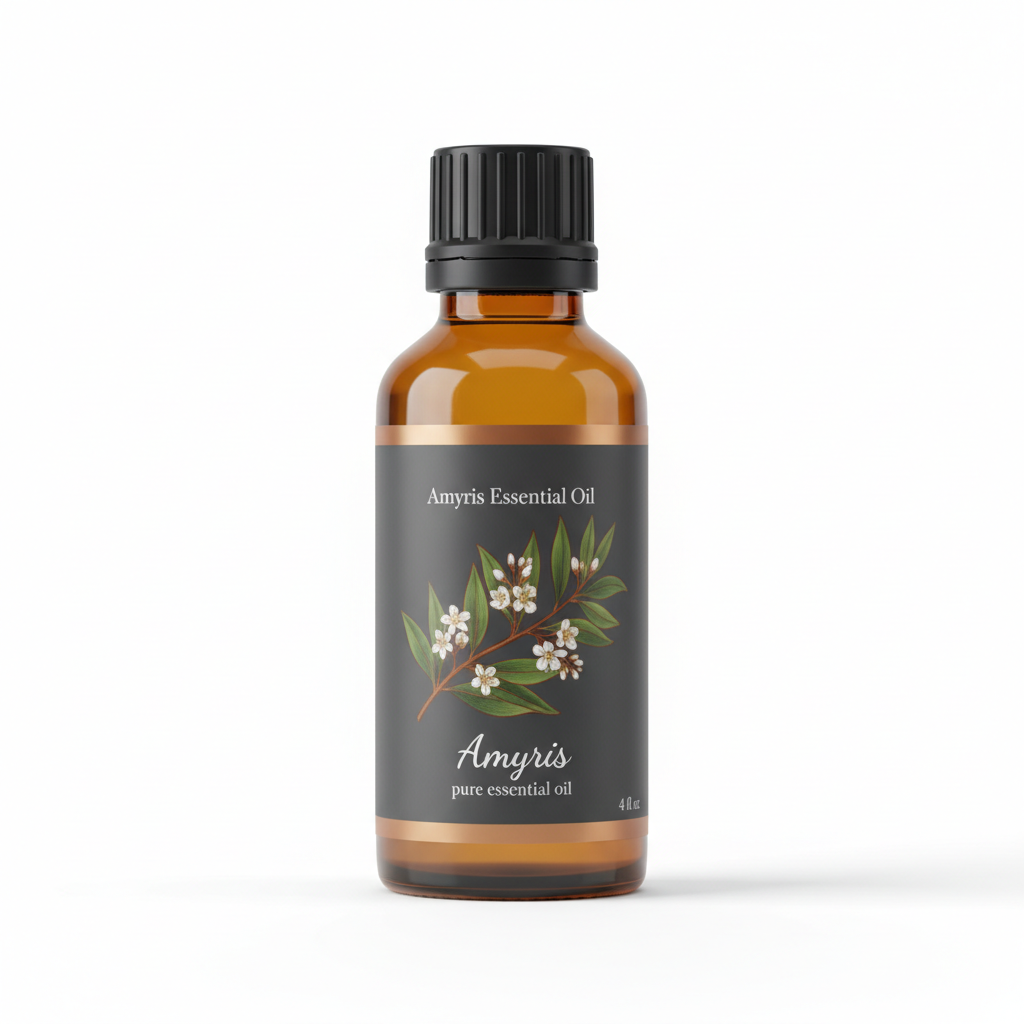
Amyris Essential Oil
Our own Amyris Essential Oil, in sizes from 0.5 oz to bulk.
From $23.99
Shop Now →First, find out what it is made from
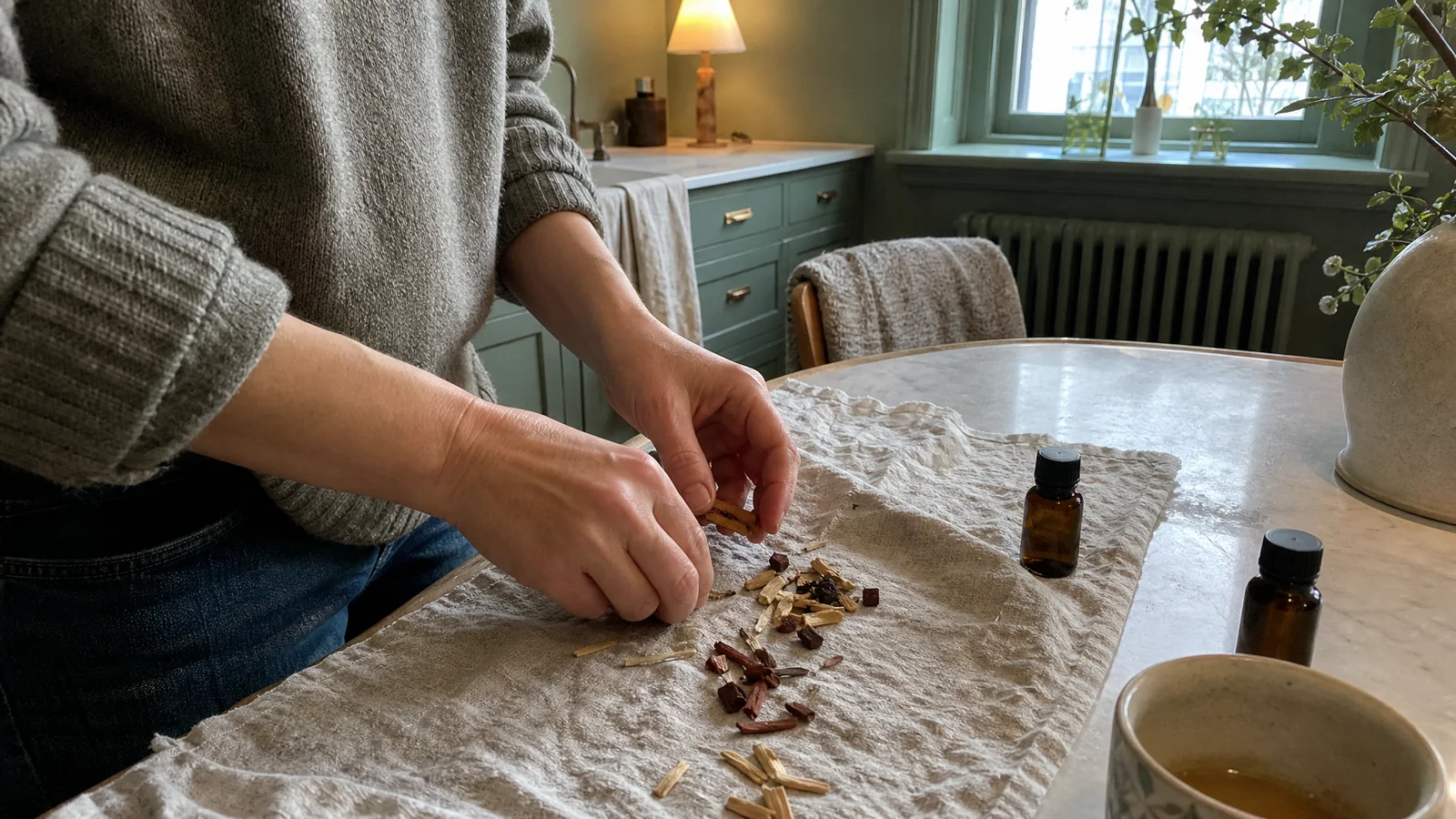
Steffen Arctander's 1960 reference, Perfume and Flavor Materials of Natural Origin, is a good place to see how mixed the category is. Amyris, cedarwood and sandalwood come from wood. Vetiver is a root oil from a grass. Cypress is distilled from needles and twigs, and patchouli from the leaves of a herb. All of them end up on the same "woody" shelf.
The practical point is that a bottle labelled only "cedarwood" or "sandalwood" has not told you which tree it is. Atlas and Virginia cedarwood come from different trees and smell different. Ask for the Latin name, and when it is a plant with conservation concerns, such as sandalwood, look it up before you buy.
How they differ in the blend
Here is how we would sort them by the work they do, drawing on Arctander's descriptions and the ordinary perfumer's vocabulary.
- Dry, pencil-shaving wood: Virginia cedarwood. A crisp, clean backbone that suits blends wanting a sharp edge, and usually the economical one.
- Warm, sweet, creamy wood: sandalwood. Soft and milky, and the benchmark everything else is compared to.
- Earthy, deep and long-lasting: vetiver. A root oil with a damp, smoky richness that Arctander says stays with you well into the dry-down.
- Rosy, smooth wood: guaiacwood, soft and a little floral.
- A fresh, resinous opening: cypress, from needles rather than wood.
- A quiet woody-balsamic floor: amyris.
Where amyris sits
Amyris is the soft-spoken one. We describe ours as creamy, woody and balsamic, and it works as a base note, the foundation under brighter oils. Arctander called its odour faintly woody, slightly sweet and balsamic, and noted that it lingers on a blotter for a long time before fading to a faint woody-balsamic whisper. In practice that makes it a very good supporting oil. It rounds out citrus and floral notes rather than competing with them.
That also tells you when to reach for something else. If you want the sharp, dry edge of cedar, the heavy earthiness of vetiver or the milky depth of sandalwood, amyris will give you a different, gentler wood in that slot rather than a copy. It is not sandalwood, and that is not a flaw, since it has a charm of its own. We cover the head-to-heads in amyris vs cedarwood, amyris vs sandalwood and amyris vs vetiver.
A small story about amyris and its neighbours
Woody oils have a long history of standing in for one another. Arctander recorded that Haitian vetiver was conventionally exported with about 5% amyris added, and that sandalwood oil was sometimes stretched with amyris and cedarwood. Those were 1960 observations and they say nothing about oils on sale today, but they explain why the woody family can be hard to tell apart by nose alone. A 2021 study of six commercial oils sold as sandalwood found that none met the international sandalwood standard, and that some carried amyris-type chemistry instead (Kucharska et al., Molecules, 2021). The takeaway is friendly rather than alarming: choose a seller who gives you the botanical name and a lot report, because the plant name does the work the smell cannot. If you want to understand what such a report shows, our guide to reading a GC-MS report is a good start. For our own oil, the Certificate of Analysis we publish for one batch lists density, refractive index and optical rotation, and if you need GC-MS, ask us in writing through the contact page before ordering.
Supply, in a sentence
Sandalwood is the outlier. It grows slowly, and published figures for Indian sandalwood oil output have fallen sharply from earlier decades (Yan et al., Biomolecules, 2024), which is much of the reason people look to other woods for a soft, warm base.
How to compare woods side by side
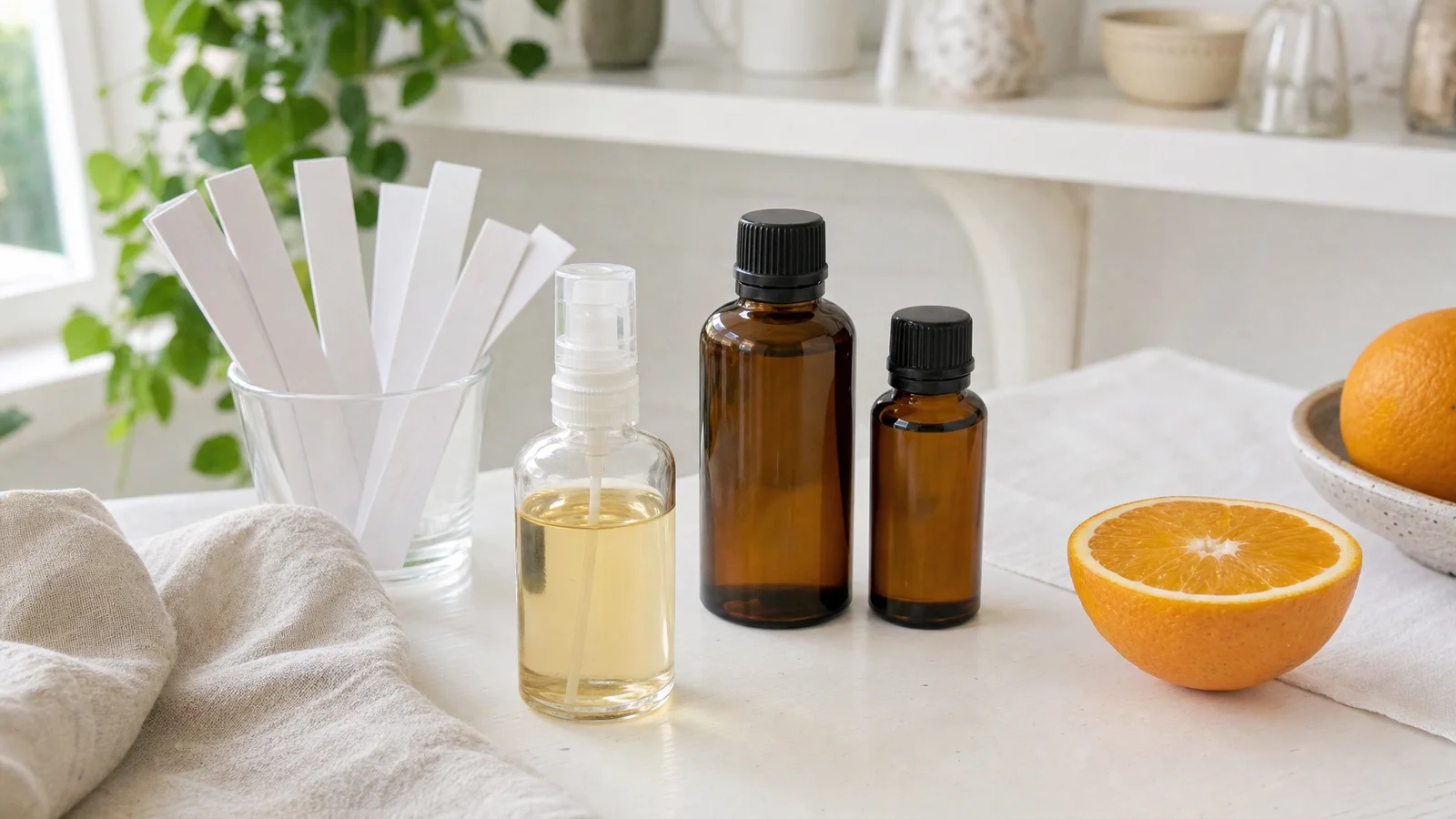
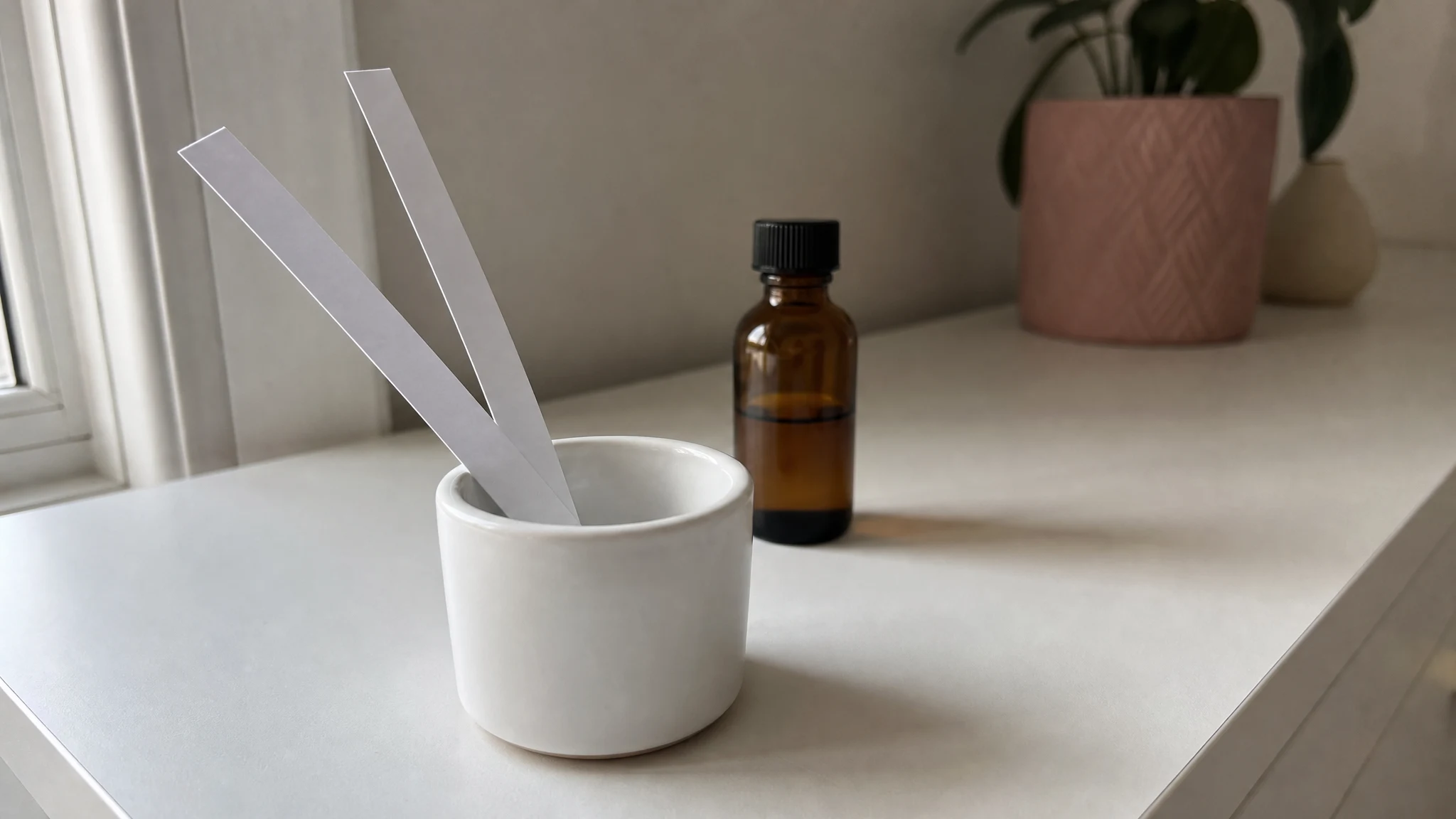
The easiest way to learn the family is to line up paper strips, one per oil, each labelled in pencil. Smell them straight away, again after ten minutes, and again after an hour. Woody oils show their differences late: one turns dry and clean, another deepens, and another quietly disappears. Keep a notebook with one line per oil, and use words like dry, sweet, smoky, creamy or earthy. Those few words will do more for your next blend than any ranking.
Choosing one
If you are building a blend, start with the job. A woody oil for structure, one for depth, and one for softness is a good trio, and amyris happily takes the third seat. Our blending guide walks through the method, and the list of base note oils shows who else belongs at the bottom of a blend. We sell amyris only, so for the others you will find a perfumery or aromatherapy supplier. For amyris on skin, we recommend 0.5% to 2% in a carrier oil with a patch test first.
Whichever you pick, smell the lot you actually have over a few hours before it goes into anything you want to keep. Woody oils reveal themselves slowly, which is half their charm.
Amyris Essential Oil
Amyris Essential Oil from our own shop, in sizes from 0.5 oz to bulk.
From $23.99
Shop Now →Sources & Further Reading
- Arctander S., 1960. Perfume and Flavor Materials of Natural Origin (full text). archive.org
- Kucharska M. et al., 2021. A Comparison of the Composition of Selected Commercial Sandalwood Oils with the International Standard. Molecules 26(8):2249. pmc.ncbi.nlm.nih.gov
- Yan et al., 2024. Santalum album and sandalwood oil review. Biomolecules 14(8):971. pmc.ncbi.nlm.nih.gov