Amyris in Perfumery: The Quiet Woody Base Note
Every fragrance needs a floor: something quiet under the sparkle that lets bright notes sit comfortably and fade gracefully. Amyris is a very good floor. It is not the star of the formula and it does not try to be, which is exactly why perfumers and home makers keep reaching for it.
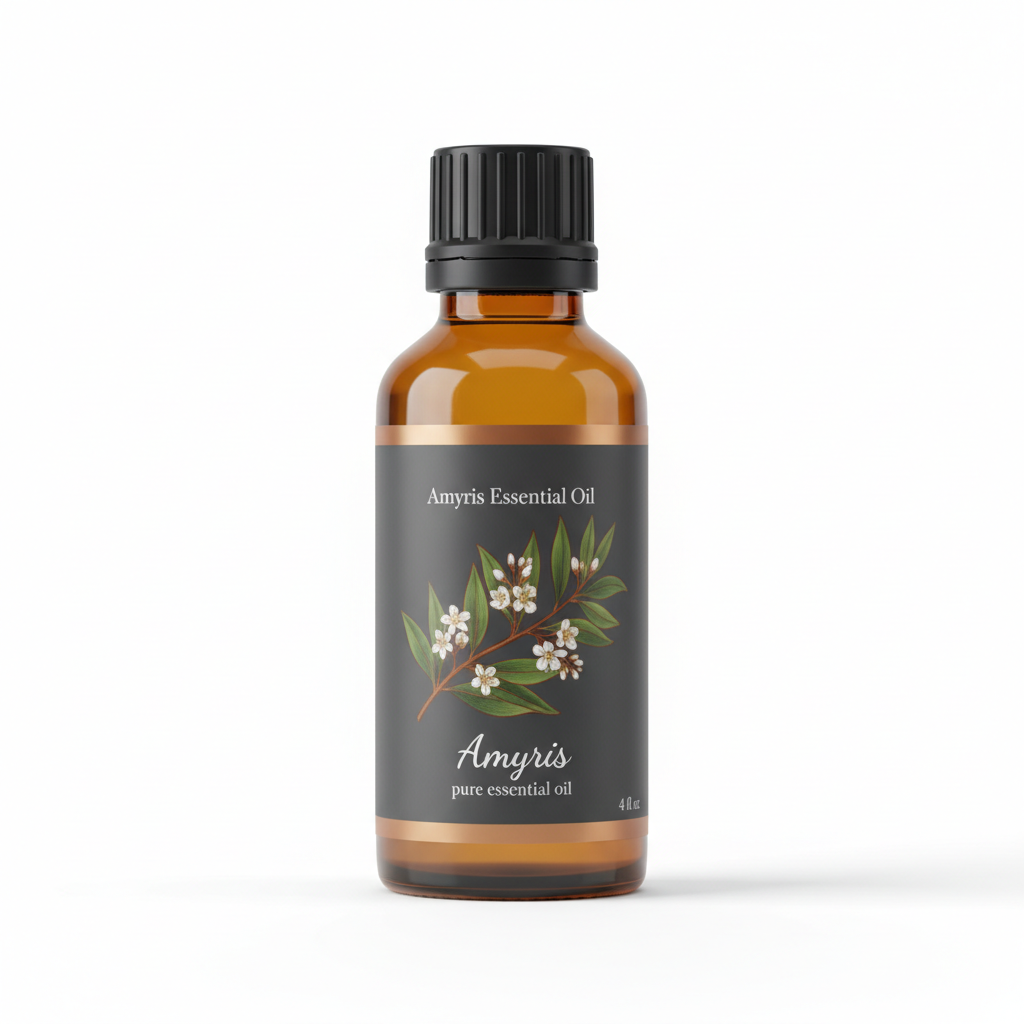
Amyris Essential Oil
Our own Amyris Essential Oil, in sizes from 0.5 oz to bulk.
From $23.99
Shop Now →What it brings
We describe our amyris as creamy, woody and balsamic with a soft vanilla undertone, and as a base note. In a blend, base notes are the slow ones. A 2021 review of how perfumes unfold on skin puts base notes at more than four hours of wear, against minutes for top notes (Rodrigues et al., Molecules, 2021). Amyris sits in that slow group, and it has a gentle, rounded character that tends to knit a blend together rather than stand out from it.
Three jobs are worth separating:
- Body in the dry-down. It is the soft wooden floor under citrus, florals and spices.
- A bridge between notes. A calm wood between a sharp top and a heavy base can make the transition feel smoother. That is a craft idea, and your own nose is the judge.
- Helping lighter notes linger. Heavier, slower molecules are traditionally thought to hold lighter ones in a mix for longer, which is why we describe amyris as a natural fixative. The best way to know is the old perfumer's test: smell a blotter at hour one, hour four and hour eight.
It is the wrong choice if you want smoke, leather or resin. Our comparison of amyris and cedarwood shows what a drier wood does differently, and base note essential oils covers the neighbours.
Try it on a blotter first
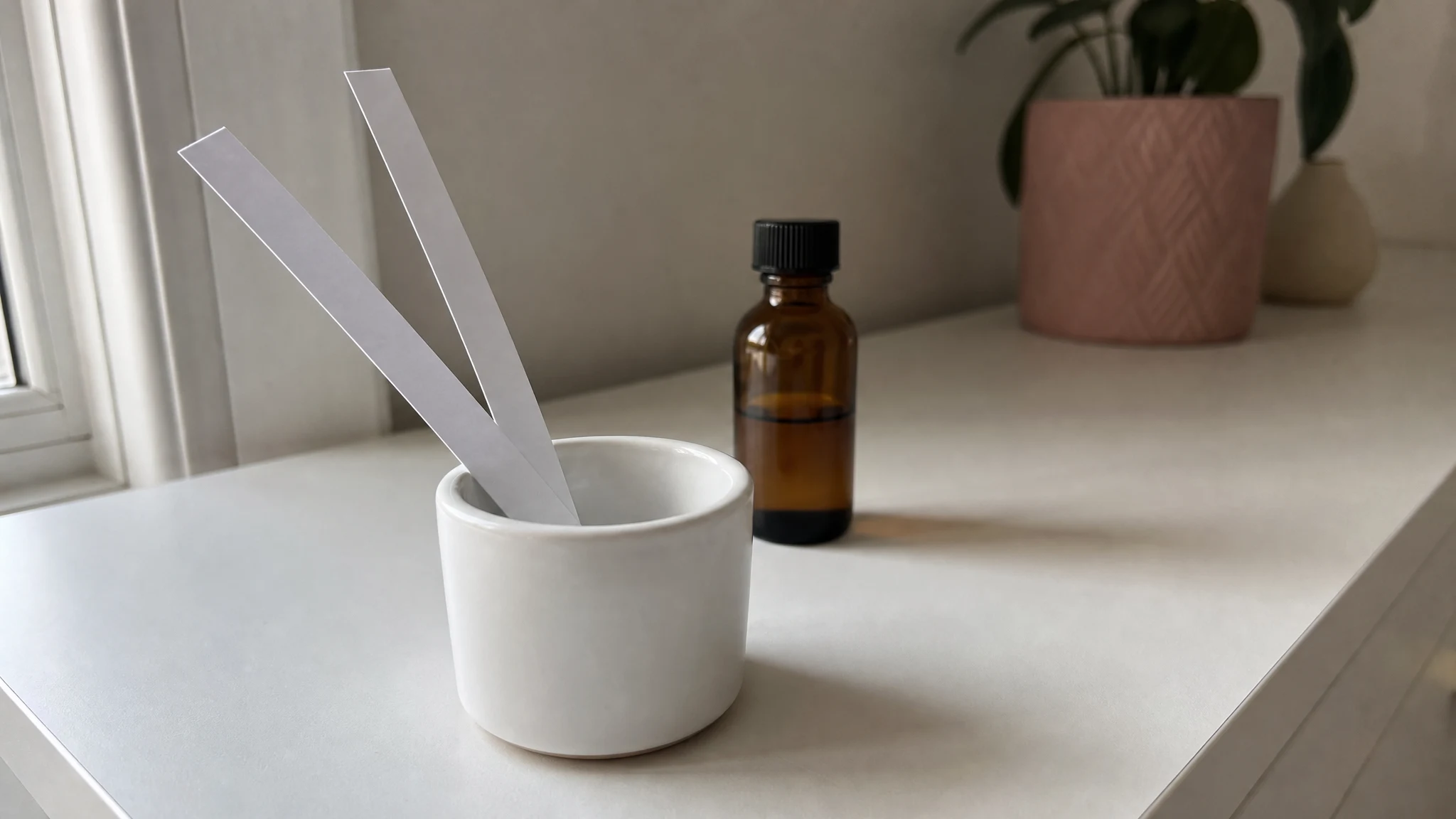
Before you build a formula around any base note, spend a little time with it alone. Dip a paper strip into the oil, label it with the date, and smell it straight away, after an hour, and again at the end of the day. You will notice the creamy, woody and balsamic character settle, and you will start to hear what it contributes in the background. That quiet familiarity makes it far easier to decide how much to give it in a blend.
Not sandalwood, and better for knowing it
"West Indian sandalwood" is a nickname. Amyris is a different tree and a different scent, and we do not describe it as sandalwood. Choose it because you like a quiet, creamy wood, not as a stand-in. The naming story is in our post on amyris and sandalwood.
If you keep a notebook, you will quickly see a pattern. The blends you end up loving are rarely the ones with the most oils in them. A small number of ingredients, a clear role for each, and a base you trust usually beat a crowded shelf.
How much to use
It helps to keep two questions apart. One is how strong the finished perfume is. A retailer's guide lists eau de cologne at 2% to 5% perfume oil, eau de toilette at 6% to 12%, eau de parfum at 10% to 20% and parfum at 20% to 35%, and notes these are averages and not legal standards (Perfume Lounge). Those numbers describe commercial perfume, not a starting point for a home batch.
The other is how much of an essential oil is safe to put on skin. The Tisserand Institute gives roughly 0.5% to 1.2% for facial products and 1% to 3% for body oils and lotions (Tisserand Institute, dilution). We recommend 0.5% to 2% for amyris in a carrier oil with a patch test first. For a first skin-scent batch, we would keep the total essential oil at or under that 3% ceiling, and let a close, quiet scent be the result. It is a pleasant way to wear something woody.
Within the blend, you work in parts. A common starting structure for a woody-floral skin scent is about three parts base, two parts heart and one part top. That is a conventional note-pyramid ratio, not a tested recipe, so adjust a part at a time and write each draft down. How to blend essential oils has a simple log method, and blending amyris with citrus, spice and floral oils suggests partners.
If you plan to sell what you make
Fragrance ingredients come with rules. IFRA sets use limits for each ingredient across 12 product categories, applied to the finished product, and fine fragrance is the strictest category for skin products. IFRA's standards are a voluntary industry code, and binding law comes from regulation (Scento, IFRA guide). One reference lists amyris as not subject to any IFRA Standard as of the 51st Amendment, though the constituents of your whole blend still count (ScenTree). In the EU, Regulation 2023/1545 added 56 more fragrance allergens to the list that must be named on labels above set thresholds (ALS Global). A cosmetic safety assessor is the right person to check a product before sale.
Paperwork for a formula you repeat
If you plan to scale a formula, ask us for details on your lot. The Certificate of Analysis we publish for one batch lists relative density, refractive index and optical rotation, all within the standards printed alongside them. If you need GC-MS or want to match a lot to a formula, ask us in writing through the contact page before ordering.
Amyris Essential Oil
Amyris Essential Oil from our own shop, in sizes from 0.5 oz to bulk.
From $23.99
Shop Now →Sources & Further Reading
- Rodrigues et al., 2021. Perfume composition and skin evaporation (base notes over four hours). Molecules. pmc.ncbi.nlm.nih.gov
- Perfume Lounge. Perfume concentrations explained. perfumelounge.eu
- Tisserand Institute. Essential oil dilution. tisserandinstitute.org
- Scento. Guide to IFRA-compliant fragrances. scento.com
- ScenTree. Amyris oil. scentree.co
- ALS Global, 2024. EU Regulation 2023/1545 fragrance allergen labeling. alsglobal.com