Amyris vs Vetiver: Soft Floor or Smoky Earth?
Here is a bit of perfumery trivia that makes these two oils feel like old neighbours. In 1960, Steffen Arctander recorded a trade custom in Haiti: 5% amyris oil was added to locally produced vetiver oils before they were exported. If that rule held for long, plenty of vintage Haitian vetiver carried a little amyris inside it. Whether or not it still happens, it hints at how well the two get along.
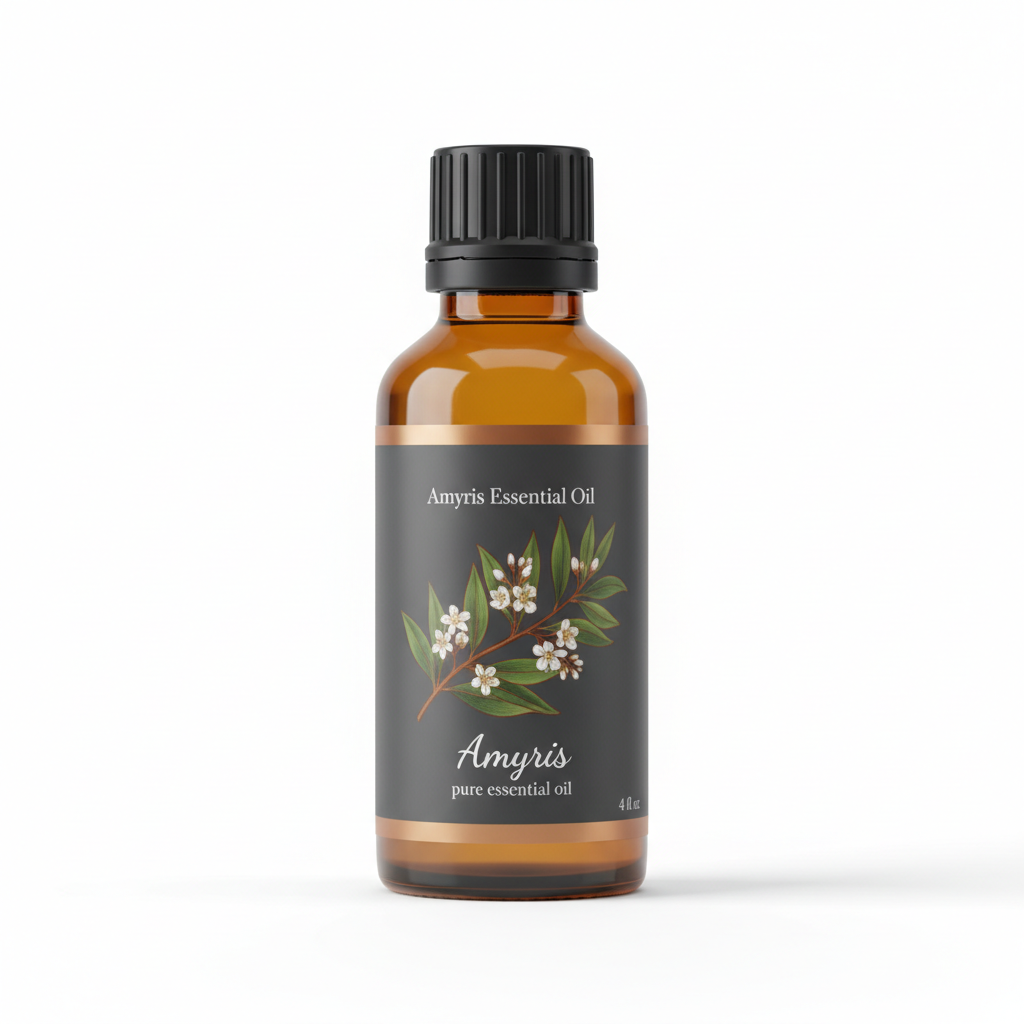
Amyris Essential Oil
Our own Amyris Essential Oil, in sizes from 0.5 oz to bulk.
From $23.99
Shop Now →The quick way to choose
Think about what your base needs. If it fades within an hour or two and you want something soft that stays out of the way, amyris is the candidate; Arctander calls it a mild blender with a very tenacious body odour (Arctander, 1960). If the base is sweet and gentle and you want dryness, smoke or earth, that is vetiver's territory. ScenTree describes Haitian vetiver as woody and dry with smoky, almost roasted notes, and says it is used extensively to provide duration (ScenTree on Haitian vetiver). We describe our amyris as creamy, woody and balsamic, a base note that helps brighter notes hold on.
Root against wood
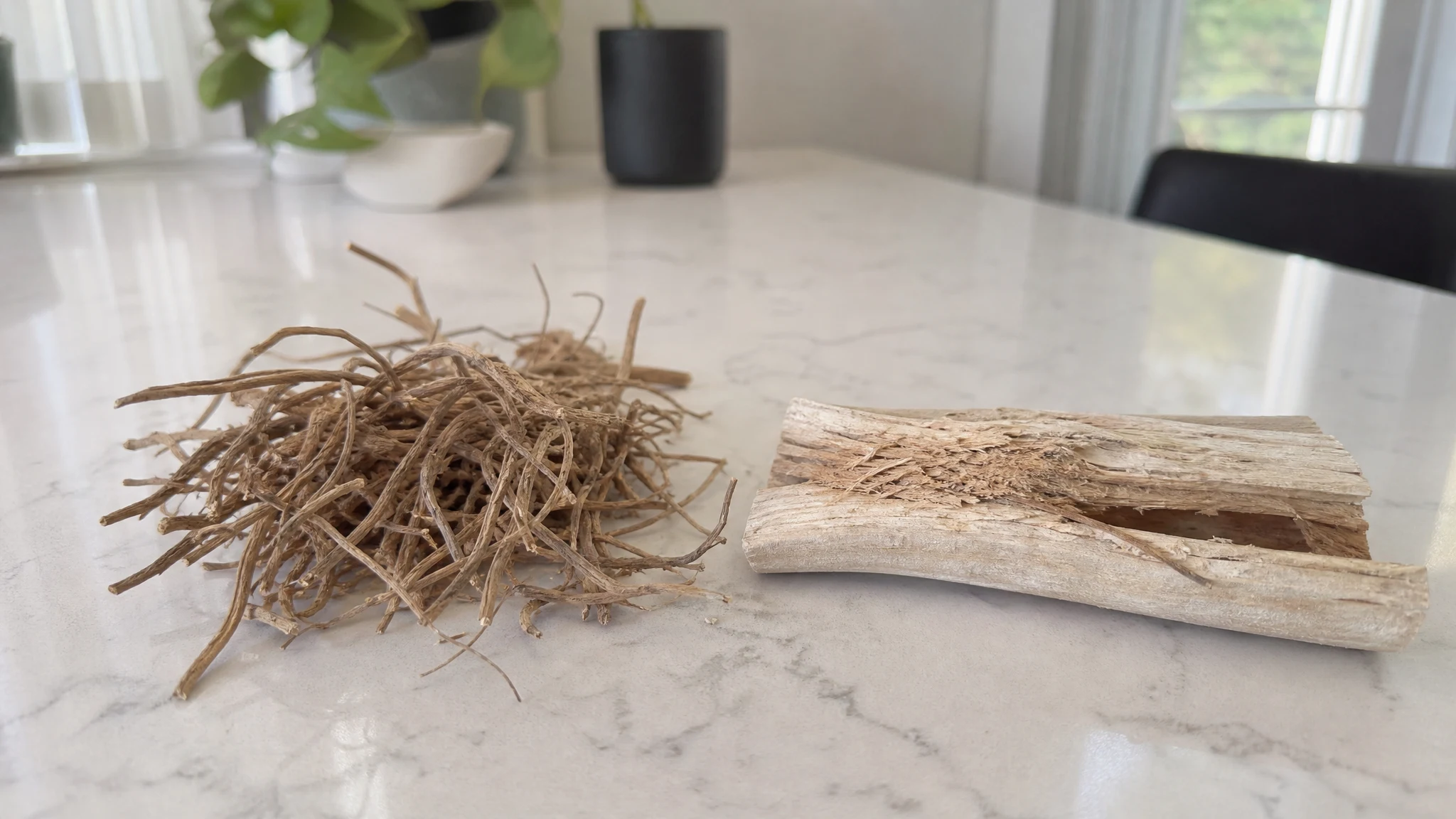
The two come from entirely different parts of different plants. Vetiver is a grass and the oil comes from its roots, dried for a couple of days and then water-distilled for around ten hours. A 2024 review reports 12-hour distillations at a yield near 0.6% (Pandey and Tiwari, 2024). Amyris is a wood oil, steam-distilled from crushed chips (ScenTree on amyris). Both are strongly linked to Haiti, and our amyris wood is sourced there.
Their chemistry points the same way as their character. Haitian vetiver is built around molecules such as khusimol and the vetivones, while amyris is built around valerianol, elemol and eudesmols. We would not claim a precise line from each compound to each scent descriptor, but the two profiles have almost nothing in common, and you can smell that.
Vetiver is also notably variable. The review above shows the same compound swinging widely between Indian oils, and Arctander himself wrote that a general description of vetiver oil is not easy to give. If you switch lots or origins, re-smell before you scale up.
What each one feels like in a blend
Think of a blend as a room. Vetiver is like a stone floor or a rug woven from earth: you feel it under your feet as soon as you walk in, and it gives the room weight. Amyris is more like a soft wooden floor warmed by afternoon light. It is gentler underfoot, and it lets the furniture, which is your lighter oils, stand out. Neither is better. They simply suit different rooms.
If you smell a blend and think "this is too sweet and floaty", reach for the dry, earthy one. If you smell it and think "this is too heavy and serious", reach for the softer one. It is a simple rule of thumb, and your nose will tell you if it is right.
A way to try them together
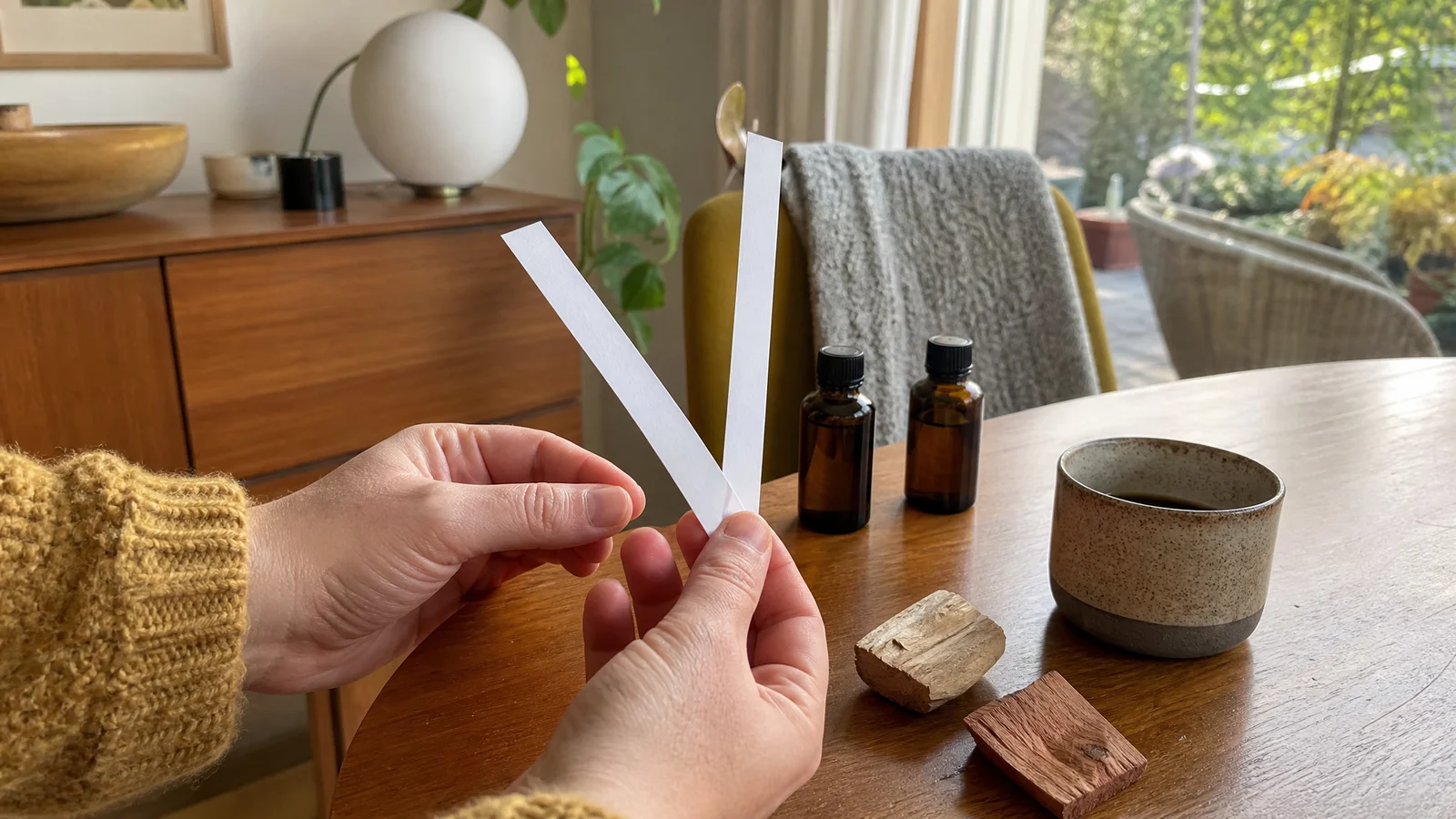
We do not have a magic ratio, and it depends on what else is in your blend. What works is a simple method. Build the blend with vetiver alone at a small share and smell it at the start and again after several hours. Rebuild it with amyris replacing part of the vetiver, changing nothing else, and compare. Trust your skin over a paper blotter; Jellinek noted in 1960 that a material can behave differently on skin than on a strip. Our guides to blending essential oils and natural perfume fixatives walk through the habits that make this easy.
Choosing by job
If you are making a blend for a room or a candle, either oil works as the anchor, so let the mood decide. A drier, earthier feel suggests vetiver. A creamier, easier feel suggests amyris. If you are making something for skin, think about how close you want it to sit. Both are base notes and both linger, so a little goes a long way, and it is worth making a small test before you commit to a full batch.
It also helps to keep the proportions small. A drop is a lot in a tiny blend, and both oils can take over quickly. Start with less than you think you need, smell it, and add a drop at a time. You can always put more in, but you cannot take it out again.
Keep a note of the order you added each oil in, too. Sometimes it is the sequence that makes the difference, and a note saves you from trying to remember a great blend that came together by accident.
If vetiver is dominating a blend you otherwise like, swapping in a little amyris is a gentle first experiment. If your blend needs more grit, go the other way.
Keeping skin in mind
Our guidance for amyris is 0.5% to 2% in a carrier oil with a patch test first. Because the limit that matters belongs to the whole blend, check every oil in it, and see our safety guide and patch test guide. We sell amyris only; vetiver comes from a perfumery or aromatherapy supplier. Any health question belongs with a pharmacist or physician.
In short, reach for vetiver when a base needs character and for amyris when it needs a softer floor.
Amyris Essential Oil
Amyris Essential Oil from our own shop, in sizes from 0.5 oz to bulk.
From $23.99
Shop Now →Sources & Further Reading
- Arctander S., 1960. Perfume and Flavor Materials of Natural Origin. archive.org
- ScenTree. Vetiver oil (Haiti). scentree.co
- ScenTree. Amyris oil. scentree.co
- Pandey and Tiwari, 2024. A review on chemical composition, oil quality and bioactivity of vetiver essential oil. Indian Journal of Pharmaceutical Sciences. ijpsonline.com
- Jellinek J.S., 1960. Journal of the Society of Cosmetic Chemists 12(3). library.scconline.org