Essential Oil vs Fragrance Oil: What You're Really Buying
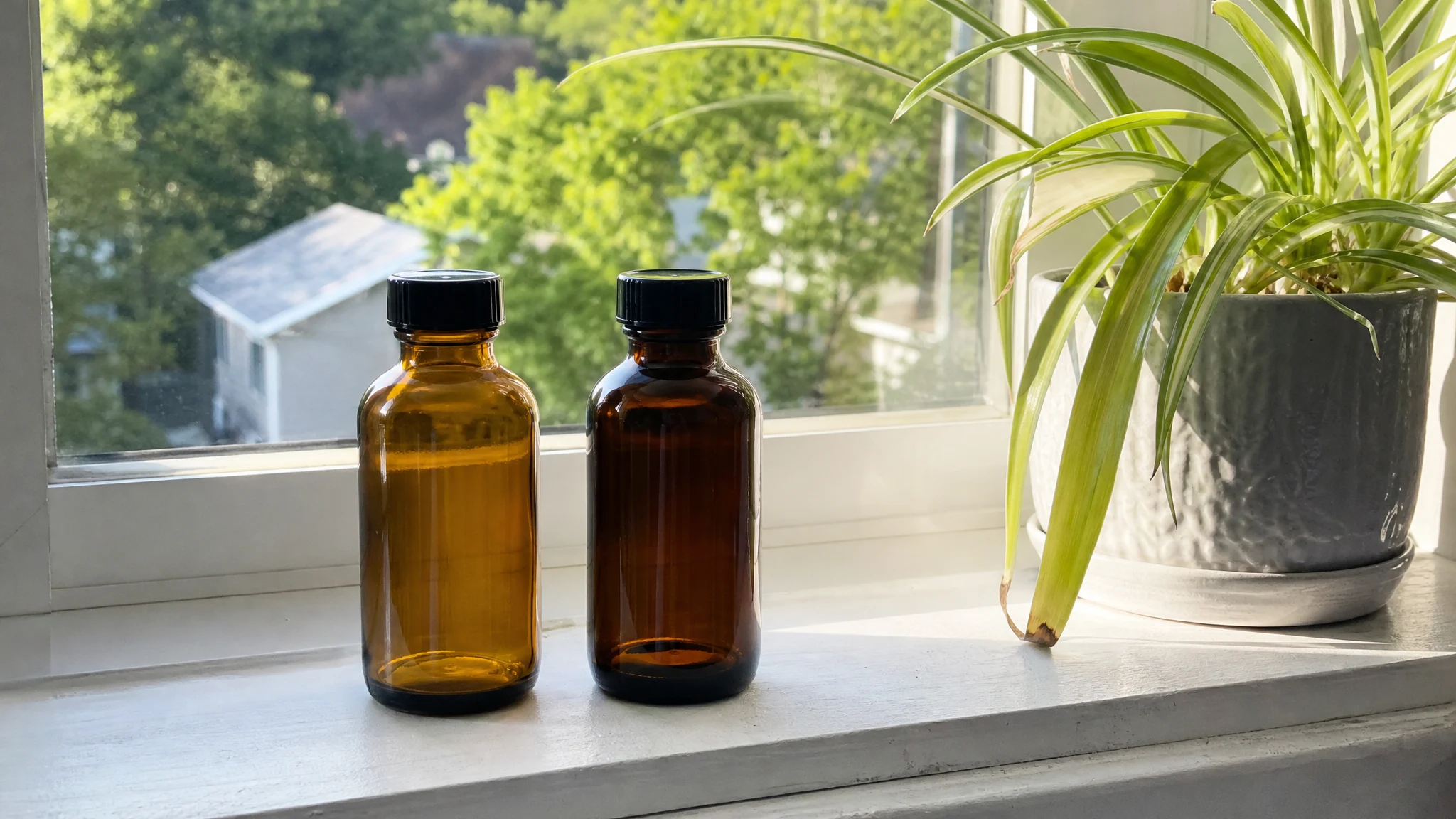
Two bottles sit side by side. One says "lavender essential oil," the other "lavender fragrance oil," and the second is half the price. Both smell like lavender. So what are you actually paying for? The short answer is that one is a named plant material and the other is a designed scent, and the difference shows up less in the aroma than in what the label lets you find out.
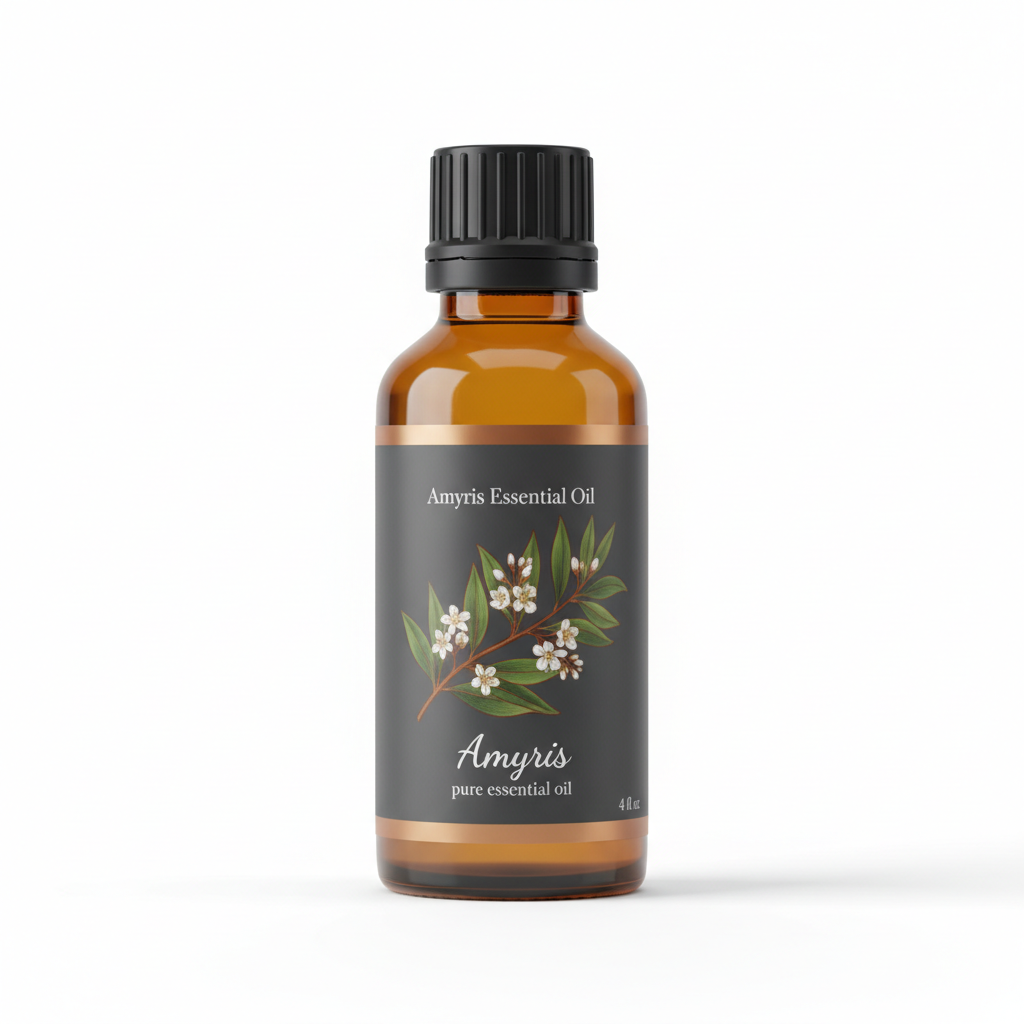
Amyris Essential Oil
Our own Amyris Essential Oil, in sizes from 0.5 oz to bulk.
From $23.99
Shop Now →A plant on one side, a recipe on the other
An essential oil comes from a particular plant, a particular part and a particular process. Ours is Amyris balsamifera, steam-distilled from wood, and the Latin name is the first thing worth checking on any bottle. A fragrance oil is a composed scent. The FDA describes fragrance formulas as complex mixtures of many natural and synthetic ingredients, and notes that they are among the cosmetic components most likely to be kept as trade secrets (FDA, Fragrances in Cosmetics). A fragrance oil label therefore tells you what the product is for, not necessarily what is in it.
Neither is wrong. They are simply built for different jobs.
Why fragrance oils exist, and when they are the right call
Fragrance oils can do things plants cannot. They can capture the smell of a warm cookie, a sea breeze or a flower that gives no oil at all. And they can be designed to smell the same every time, which matters to a candle maker filling a thousand jars. A plant product varies with its harvest, as it should. Researchers who compared six commercial oils sold as sandalwood found that the ones made from amyris-type material differed noticeably from one another in composition (Kucharska et al., Molecules, 2021). If you need perfect consistency, a designed fragrance is a reasonable tool.
If you want one named botanical, with the gentle variation that comes with it, an essential oil is the better fit. That is the whole choice.
Plenty of makers keep both kinds on the shelf: a fragrance oil for the playful scents, a few real botanicals for the quiet ones. There is no loyalty test here.
"Natural" does not mean "gentle"
It is tempting to treat essential oils as the safe pick. The FDA is clear that this does not follow: many plants contain materials that can irritate or cause allergic reactions on skin, and the agency has no regulation defining "natural" or "organic" for cosmetics (FDA, Aromatherapy). Essential oils are concentrated, so we always recommend diluting ours to 0.5% to 2% in a carrier oil, patch testing first and keeping it away from eyes, children and pets. Fragrance oils deserve the same respect, and in the formulas that matter, both kinds of ingredient are measured against the same industry limits. IFRA, the fragrance industry's standards body, says explicitly that essential oils may contain constituents subject to its restrictions (IFRA Standards).
Same molecule, not always the same sample
A fair question is whether linalool from lavender and linalool from a reactor are really different. At the level of the molecule, no. But analytical chemists point out that plants often make particular ratios of mirror-image forms of a compound, while synthetic routes may produce a mixture, and a standard GC-MS report may not distinguish the two (St-Gelais, Tisserand Institute). So "natural and synthetic are the same" holds for the molecule, and it does not always hold for the bottle.
The sandalwood study shows why it matters. Of the six oils sold as sandalwood, two were judged to be imitation scents, one built on synthetic sandalwood-type molecules and one mostly benzyl benzoate. A perfumer might use either as a fragrance, perfectly honestly. The trouble was only in what the label implied.
What you notice with the caps off
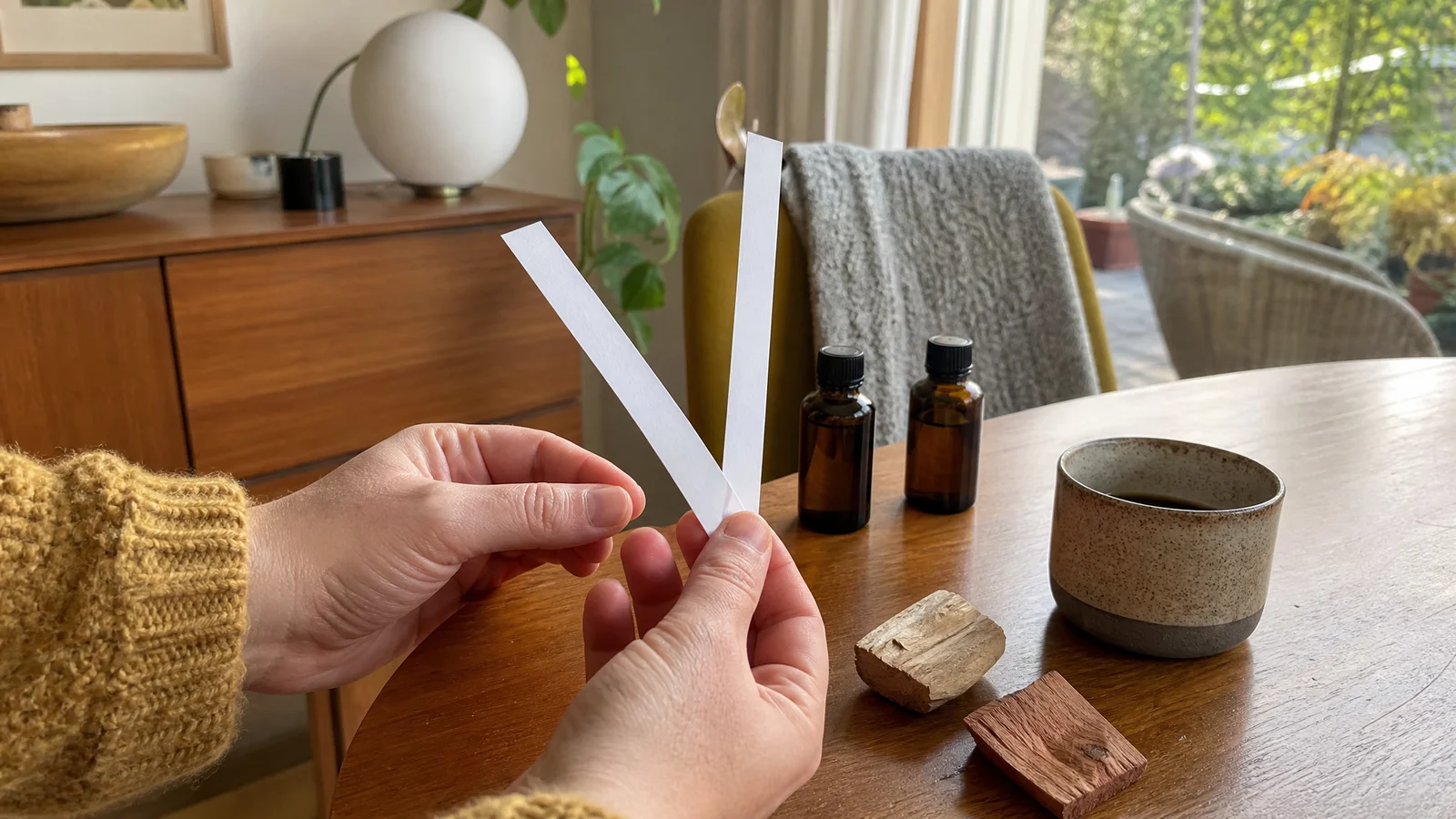
Put the two bottles side by side and the difference often shows up in the first ten seconds. A fragrance oil tends to arrive all at once, full and rounded, because it was designed to. A plant oil usually unfolds: a brighter edge first, then the body, then a quieter tail. Smell each on a paper strip, set it down, and come back after a few minutes and again after an hour. You will see which one still has something to say as it dries.
That unfolding is a big part of why we like working with a single botanical. Ours is creamy and woody with a balsamic heart, and it sits low in a blend rather than shouting over everything else.
How to shop either way
- For an essential oil: look for the botanical name, the plant part, the process and a lot number. Our guide to choosing essential oils walks through it.
- For a fragrance oil: ask the supplier for the ingredient disclosure and the safety documentation for your type of product, especially for candles, soap or anything worn on skin.
- For either: a document beats a word on the front of the bottle.
Where amyris comes in
We sell a single oil, amyris, which is creamy, woody and balsamic, and we think it is a lovely thing to have in a blend or on its own. It is not sandalwood, and we do not sell it as such. If you want a food or fruit scent, a fragrance oil from a craft supplier is the way to go. If you want a quiet, real wood in the background of a candle, a diffuser blend or a perfume, you will find amyris in our shop, and the candle details are in our soy candle guide. For blending, try how to blend essential oils, and for scenting a home generally, the natural home fragrance guide.
Ask what is in it, who says so, and for which batch. A plant name with a lot report answers that for an essential oil, and an ingredient list answers it for a fragrance. That one habit will serve you better than any rule about natural versus synthetic.
Amyris Essential Oil
Amyris Essential Oil from our own shop, in sizes from 0.5 oz to bulk.
From $23.99
Shop Now →Sources & Further Reading
- FDA. Fragrances in Cosmetics. fda.gov
- FDA. Aromatherapy. fda.gov
- IFRA. IFRA Standards. ifrafragrance.org
- St-Gelais A., Tisserand Institute. The Highs and Lows of GC-MS in Essential Oil Analysis. tisserandinstitute.org
- Kucharska M. et al., 2021. A Comparison of the Composition of Selected Commercial Sandalwood Oils with the International Standard. Molecules 26(8):2249. pmc.ncbi.nlm.nih.gov