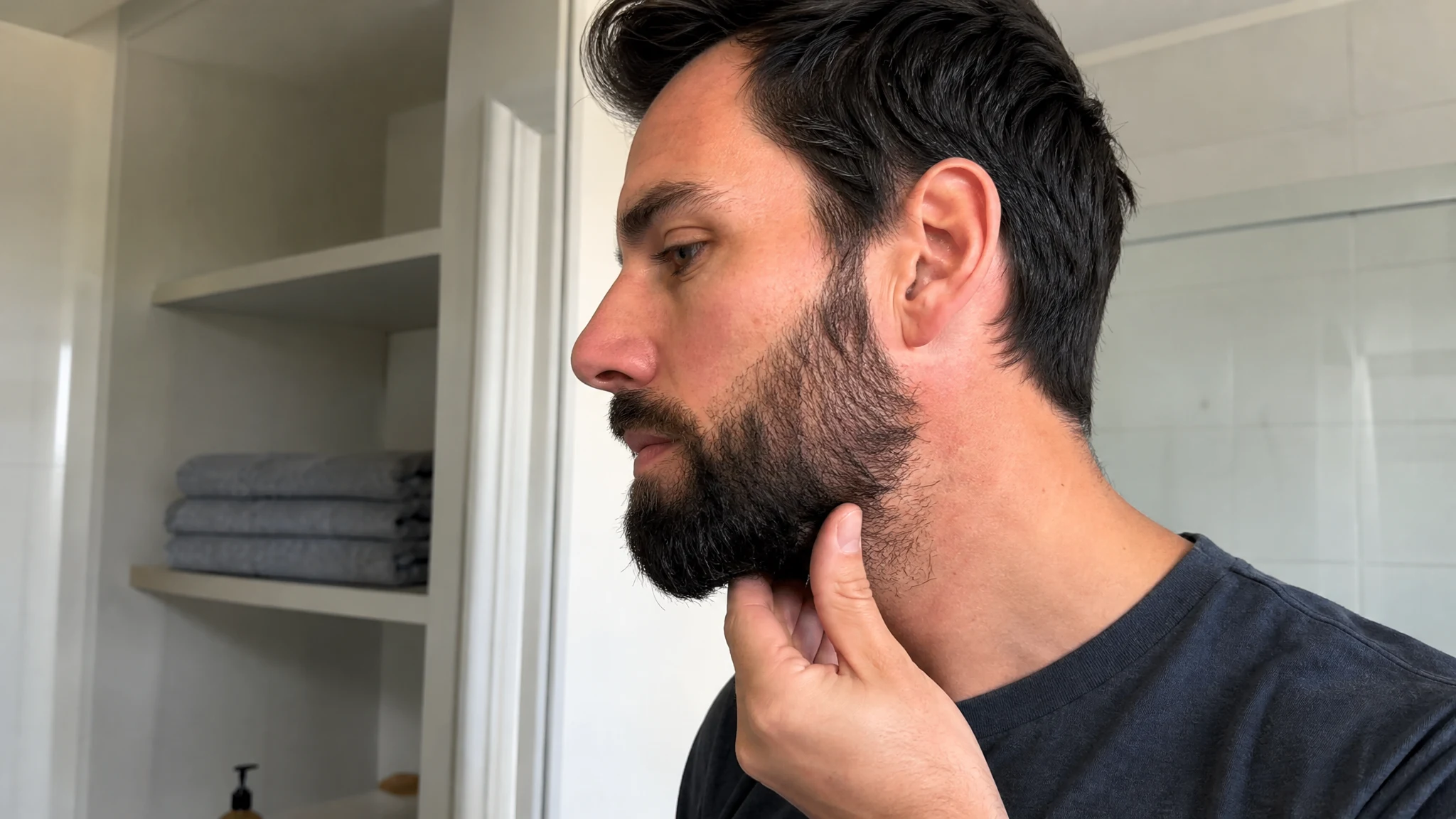
Amyris Beard Oil: A Simple Woody DIY Recipe
A beard oil looks like a hair product, but the oil lands on the skin underneath, which makes it a facial product. That one fact sets the strength, and it is why this recipe uses far less amyris than our body oil or solid perfume. What you get is a soft, dry wood scent that sits close and does not shout.

Amyris Essential Oil
Our own Amyris Essential Oil, in sizes from 0.5 oz to bulk.
From $23.99
Shop Now →Why the number is 1%
The Tisserand Institute gives 0.5% to 1.2% for facial cosmetics and 1% to 3% for body oils (Tisserand Institute). Our general guidance for amyris on skin is 0.5% to 2% in a carrier oil. For anything that stays on the face we use the lower ceiling and stay at or under 1%. A beard oil is worn all day and rubbed in daily, so a small margin is sensible. A scent you notice only when you lean in is exactly the goal.
The 30 ml formula
| Ingredient | Amount | Share |
|---|---|---|
| Jojoba oil or another liquid carrier | 29.7 ml | 99% |
| Amyris essential oil | 0.21 ml (about 4 drops) | 0.7% |
| Lavender essential oil | 0.09 ml (about 2 drops) | 0.3% |
The oils total 0.3 ml in 30 ml, which is 1%. Drop counts use the rough convention of 20 drops per ml, and the Tisserand Institute reminds us that no two drops are equal, so a pipette that reads to 0.05 ml is more reliable than counting. If you want a stronger scent, do not raise the percentage. Warm a little oil in your palms first so the aroma opens up.
We sell only the amyris. Carrier oil, lavender and the bottle come from a craft or supply shop, and our carrier oils guide helps with the choice. If you have a nut allergy or skin that reacts easily, check with a dermatologist before using any oil on your face.
What it smells like on a beard
Because a beard sits right under your nose all day, the scent has to be one you do not tire of. Amyris is creamy, woody and balsamic with a soft vanilla undertone, which makes it an easy companion rather than a loud one. Warm a few drops of the finished oil between your palms before you apply it, and you will notice the aroma open up for a moment and then settle into something close and quiet.
Why this pairing
Amyris is creamy, woody and balsamic with a soft vanilla undertone, and lavender is one of the oils we suggest blending with it. Close to the nose all day, a quiet wood with a little floral is a comfortable choice. If you prefer amyris alone, use 4 to 5 drops in 30 ml (about 0.7% to 0.8%) and leave the lavender out. For more pairings, see how to blend amyris with citrus, spice and floral oils.
Leave out pressed citrus peel oils, because the face meets sunlight and those oils have sun related limits (our phototoxic oils guide explains). Spice oils such as clove or cinnamon have their own limits in the IFRA standards, so read the entry for any you add.
Making it
- Wash and fully dry an amber glass bottle with a dropper.
- Pour in the carrier, leaving a little room at the top.
- Add the amyris, then the lavender.
- Close and roll the bottle between your palms for 30 seconds. Shaking only adds air.
- Label it with the ingredients, the date and "for beard and face only".
With no water in it, the blend needs no preservative, but oils can still go rancid. Make 30 ml at a time, store it away from heat and light, and bin it if it smells sharp. See essential oil shelf life and storage.
Putting it on
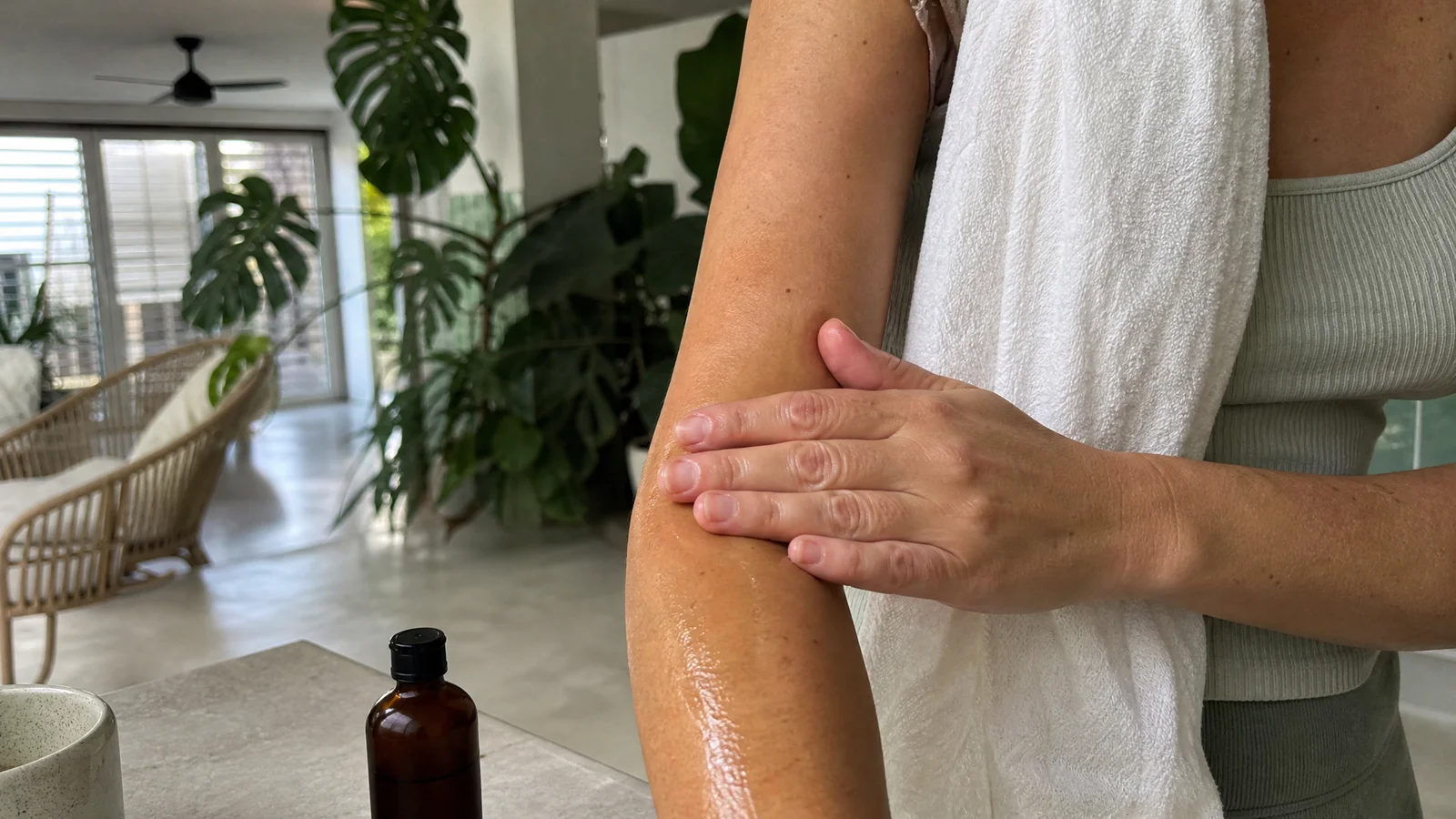
Less is more here. Put a few drops in your palm, rub your hands together, and press the oil in from underneath, working toward the tips. Then comb or brush it through so it spreads evenly instead of pooling in one spot. If your hands feel slick afterward, you used more than you needed, and next time you can drop one. Wash your hands before you touch your eyes or anything pale and absorbent, like a good shirt collar.
Choosing the bottle
A dark glass bottle with a dropper is the easy choice. It keeps light off the oil, it lets you count out small amounts, and it looks right on a shelf. Whatever you pick, wash and dry it fully before you fill it, since a drop of water left inside is the quickest way to cloud a blend.
Patch test, then use
Dab a little on the inner forearm, cover it and wait 24 hours. If that is clear, try it near the jaw for a day before using it on the whole beard. A clear patch is not a guarantee, as our patch test guide explains, because sensitivity can build with repeated use. Stop if you see redness, itching, burning or flaking. With a history of fragrance allergy, rosacea or eczema on the face, ask a dermatologist first.
Start with three or four drops of the finished oil, keep it out of the eyes, and remember that beards touch children, pets and pillows. Our guidance is to keep amyris away from children and pets. If you wear cologne, count the beard oil as part of your total fragrance. Selling it changes the rules: a product sold to others needs a safety assessment and proper labelling.
Want to try it?
Amyris Essential Oil
Amyris Essential Oil from our own shop, in sizes from 0.5 oz to bulk.
From $23.99
Shop Now →Sources & Further Reading
- Tisserand Institute. Essential oil dilution. tisserandinstitute.org/safety/dilution
- IFRA. IFRA Standards library. ifrafragrance.org