Does Amyris Make a Scent Last Longer?
"Fixative" is one of those perfumery words that sounds more precise than it is. We describe amyris as a natural fixative that helps citrus and floral top notes hold their scent longer in a blend, and we stand by that as a practical description. It is worth knowing what is going on underneath, because it will make your blends better.
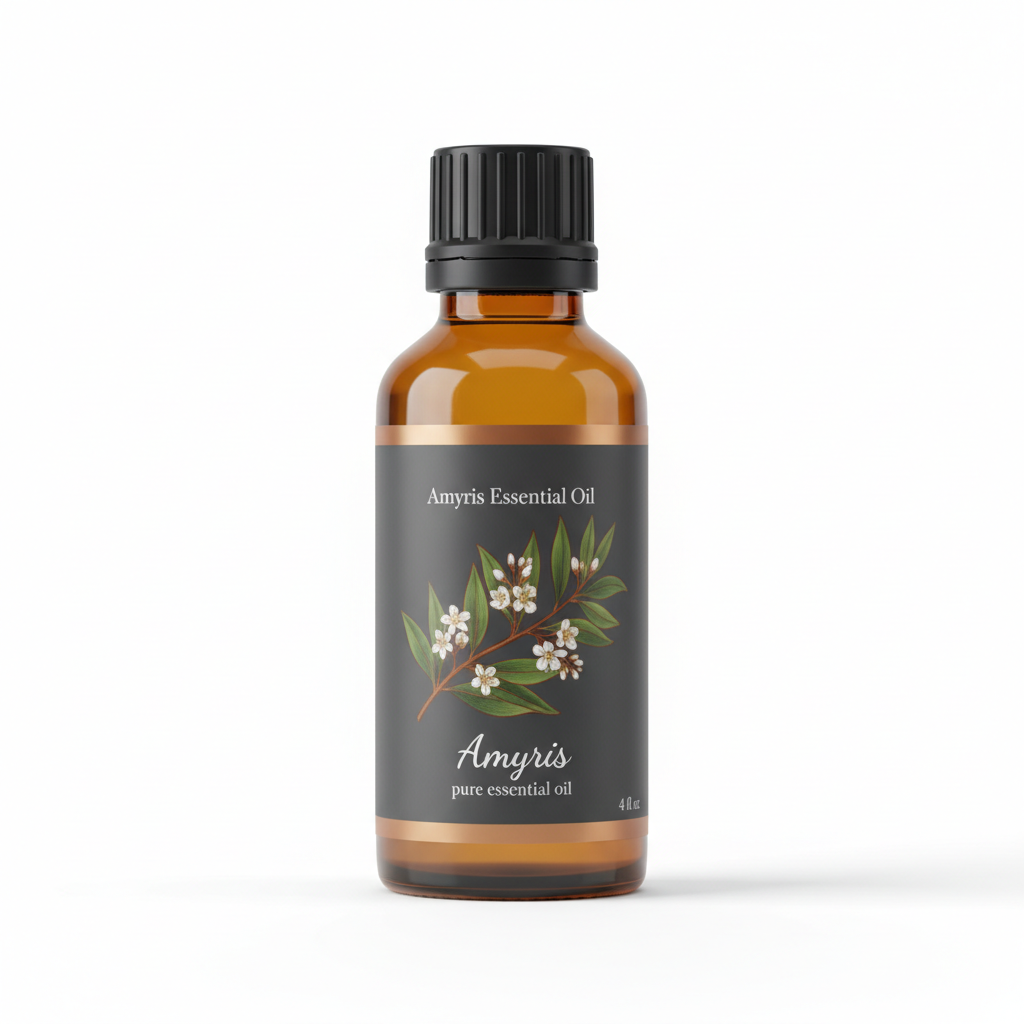
Amyris Essential Oil
Our own Amyris Essential Oil, in sizes from 0.5 oz to bulk.
From $23.99
Shop Now →What a fixative actually does
In perfumery, fixation means making a scent last, and the classic idea is a low-volatility material that slows the escape of lighter ones. A 1960 paper in the Journal of the Society of Cosmetic Chemists defines fixation and warns that results on a smelling strip are not always what happens on skin (Jellinek, J Cosmet Sci 1960). Arctander, the mid-century perfumery reference, calls amyris faintly woody and its body odour very tenacious, and lists it among "so-called" fixatives (Arctander, Perfume and Flavor Materials of Natural Origin). That wording is honest: amyris contributes something that lingers, and a fixing effect is real but modest.
Base notes in general stay on skin for hours, where top notes fade in minutes (Rodrigues et al., Molecules 2021). Amyris is a base note, and ScenTree lists its main component valerianol at about 15 to 35% of the oil (ScenTree). In plain terms, it gives a blend a soft floor to stand on.
Using amyris as a floor, not a flavour
Think of a blend as a short piece of music. Citrus is the opening note, florals the middle, and amyris the held chord at the end. A few ideas in that spirit:
- Bright over wood. Bergamot or sweet orange on top, with amyris making up the largest share of the base.
- Floral with a spine. Geranium or ylang ylang with amyris underneath, so the flower does not vanish after the first hour.
- Wood on wood. Amyris with sandalwood or cedarwood, where amyris adds a soft, creamy depth. It is unrelated to true sandalwood, so treat it as its own scent.
ScenTree mentions solubility problems for amyris in perfumes, so give a blend a day or two to settle, and check clarity if you are using alcohol. Our blending post goes through partners in detail.
How we would use it in a blend
Add the bright oils last and the amyris first, because a base note is easier to judge on its own before the top notes crowd it. Smell the blend after a few minutes and again after a day, since blends round off as the oils get to know each other. If the result is too woody, take amyris away by a drop. If it feels thin, add one. Small moves are the whole game with a quiet oil.
What you will notice at the blotter
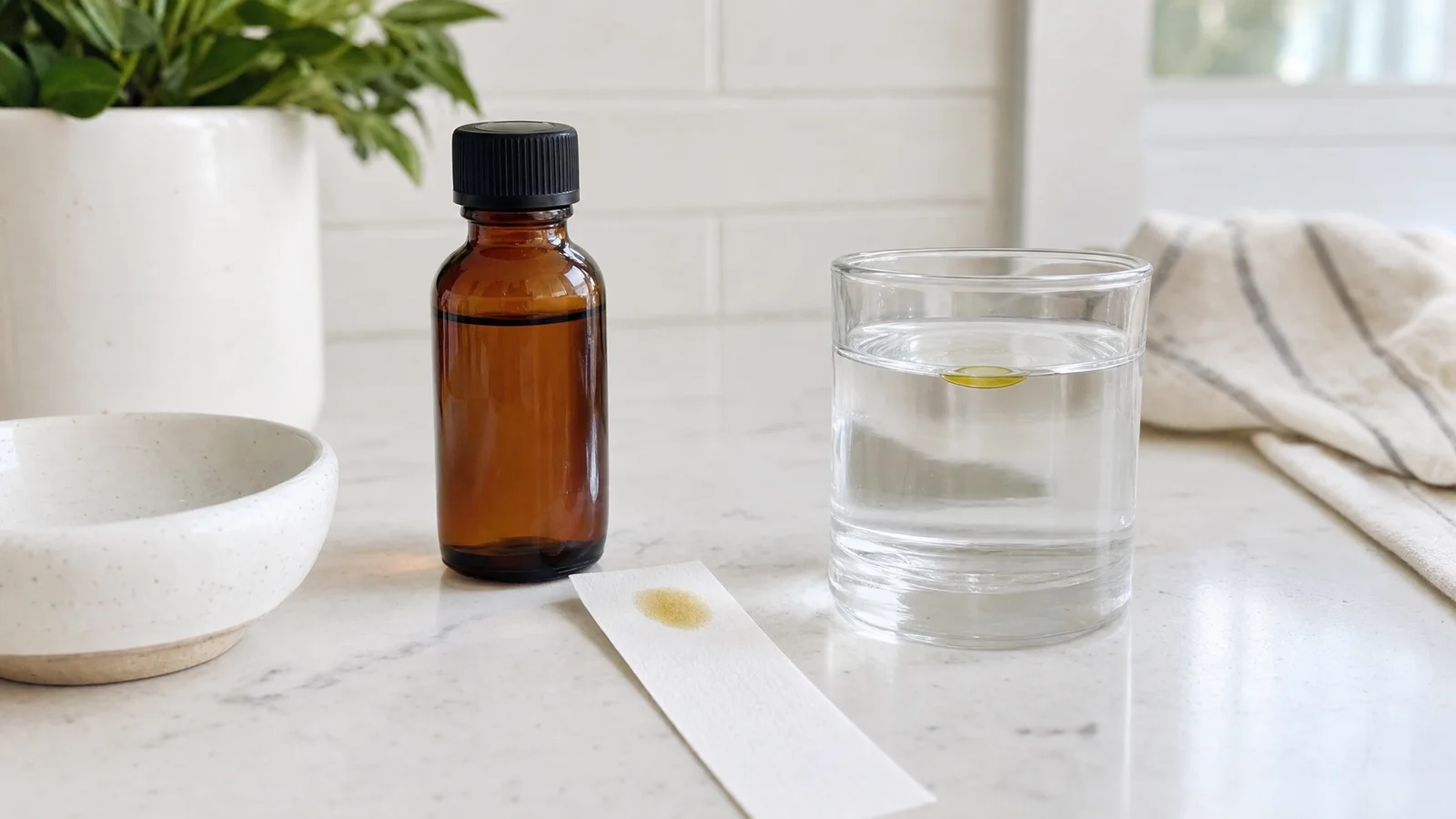
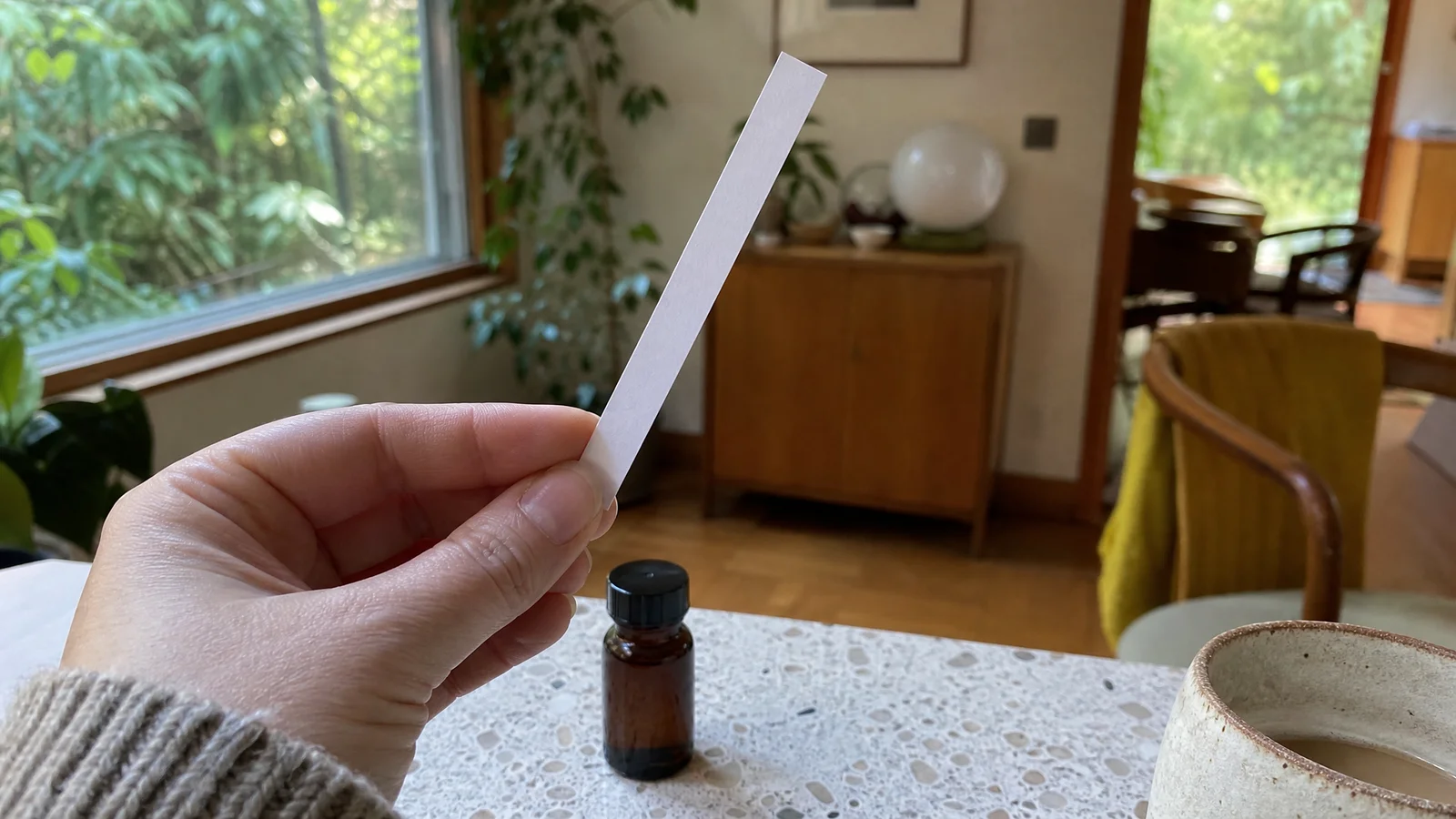
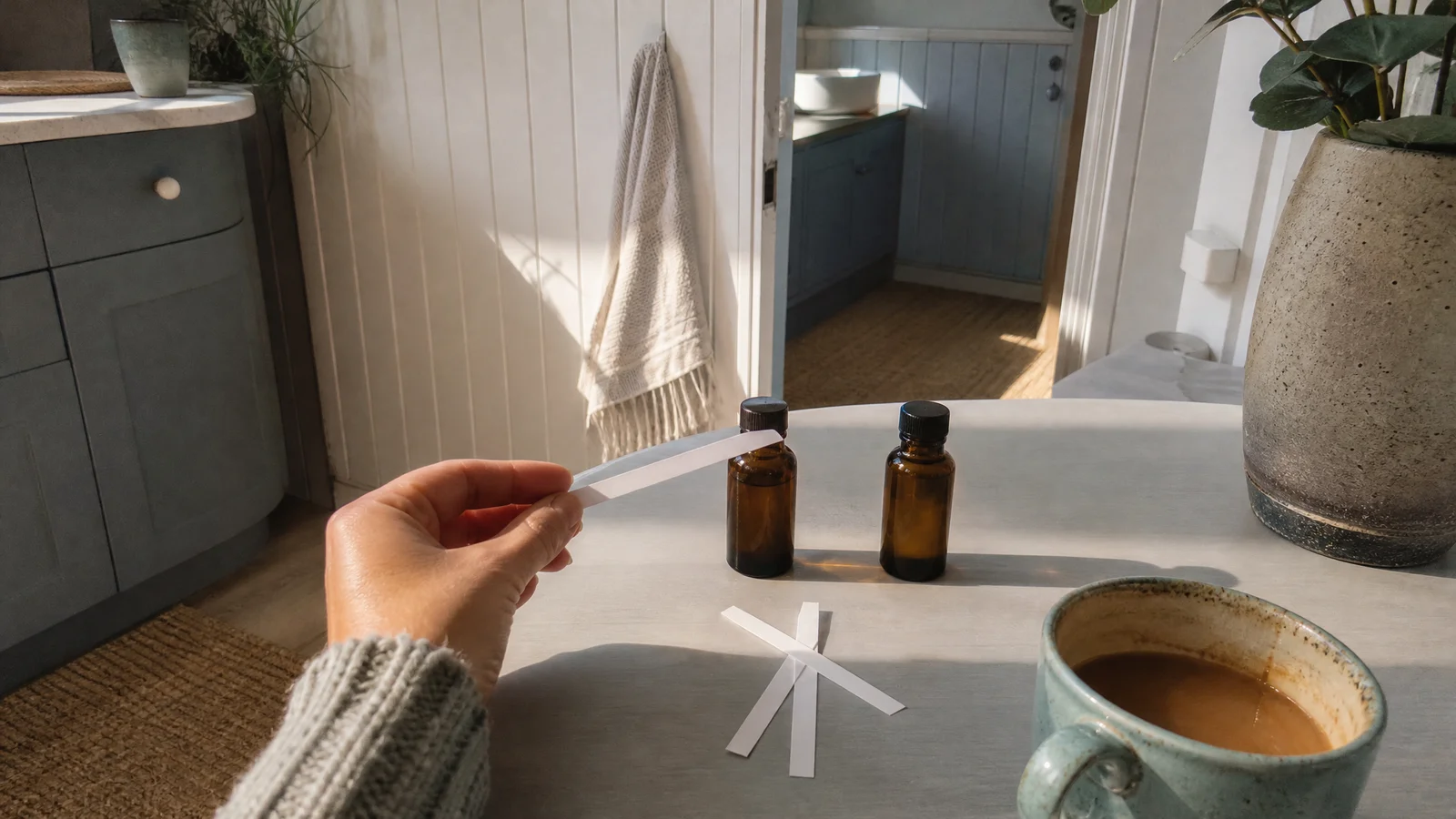
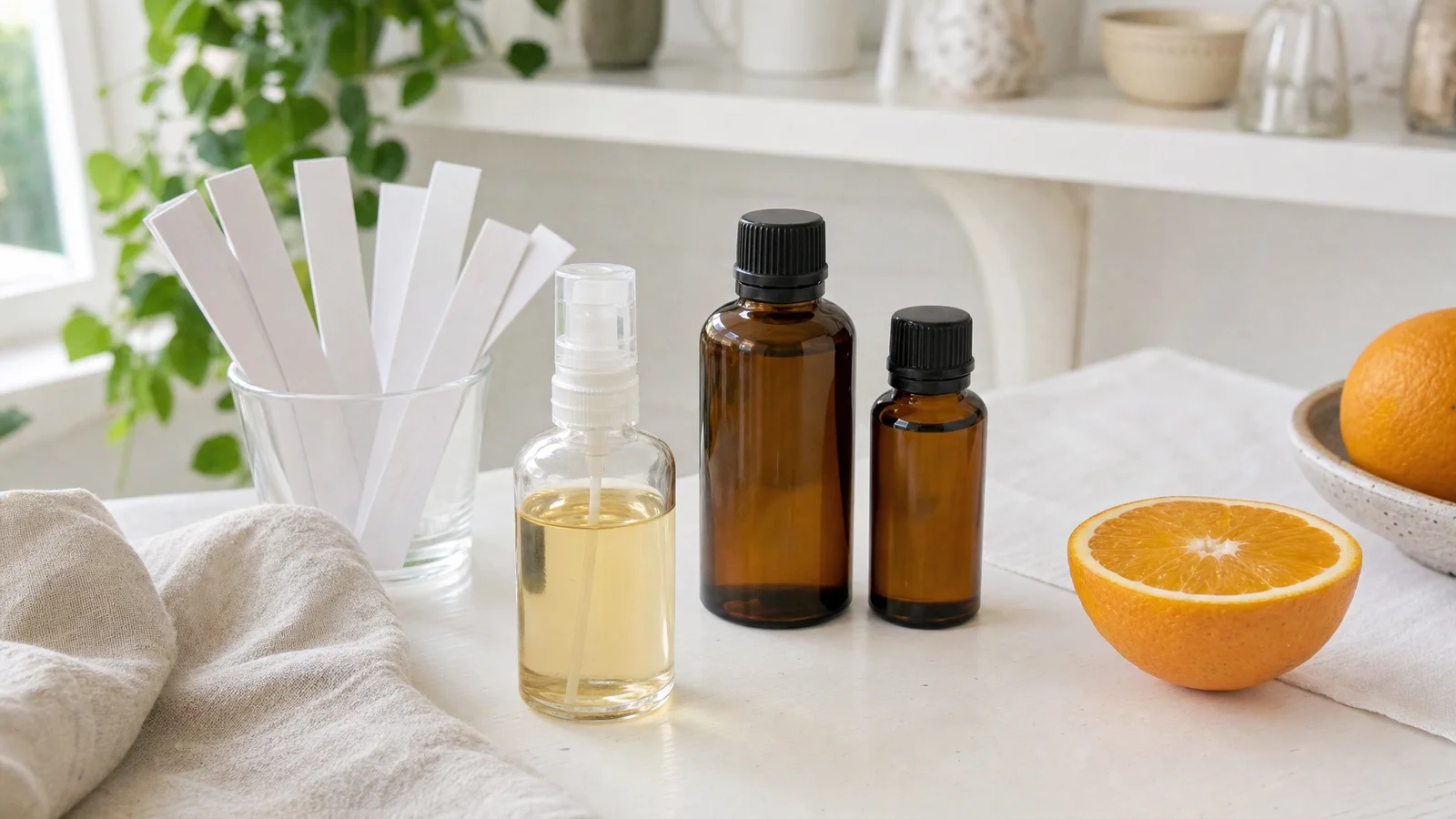
Dip a paper strip in your blend and smell it at the start, after an hour and again later. Bright citrus tends to be the first thing to fade, so by hour two the middle of the blend takes the lead. By hour four you will mostly smell the base, and that is where a quiet wood like amyris does its work. If the base still smells pleasant by itself, you have built the blend on a solid floor.
Layering it by feel
If you like to build blends from the bottom up, think of amyris as the first coat of paint. Put it down, let it dry in your nose for a minute, and then add colour on top. It is a quiet base, so you can be generous with it without crowding the oils that sit above. The goal is a blend where nothing sticks out and nothing disappears, and a steady wood underneath makes that easier to reach.
Keeping notes pays off
Blending is a memory game, and memory is unreliable. Write down each trial with the date, the oils, the drops and what you thought at the one hour mark. A week later you will be glad of it, because a blend that smelled wonderful on Tuesday can feel flat on Friday, and the notes tell you why. Even two lines per trial are enough to turn guesswork into a habit.
A simple way to judge it yourself
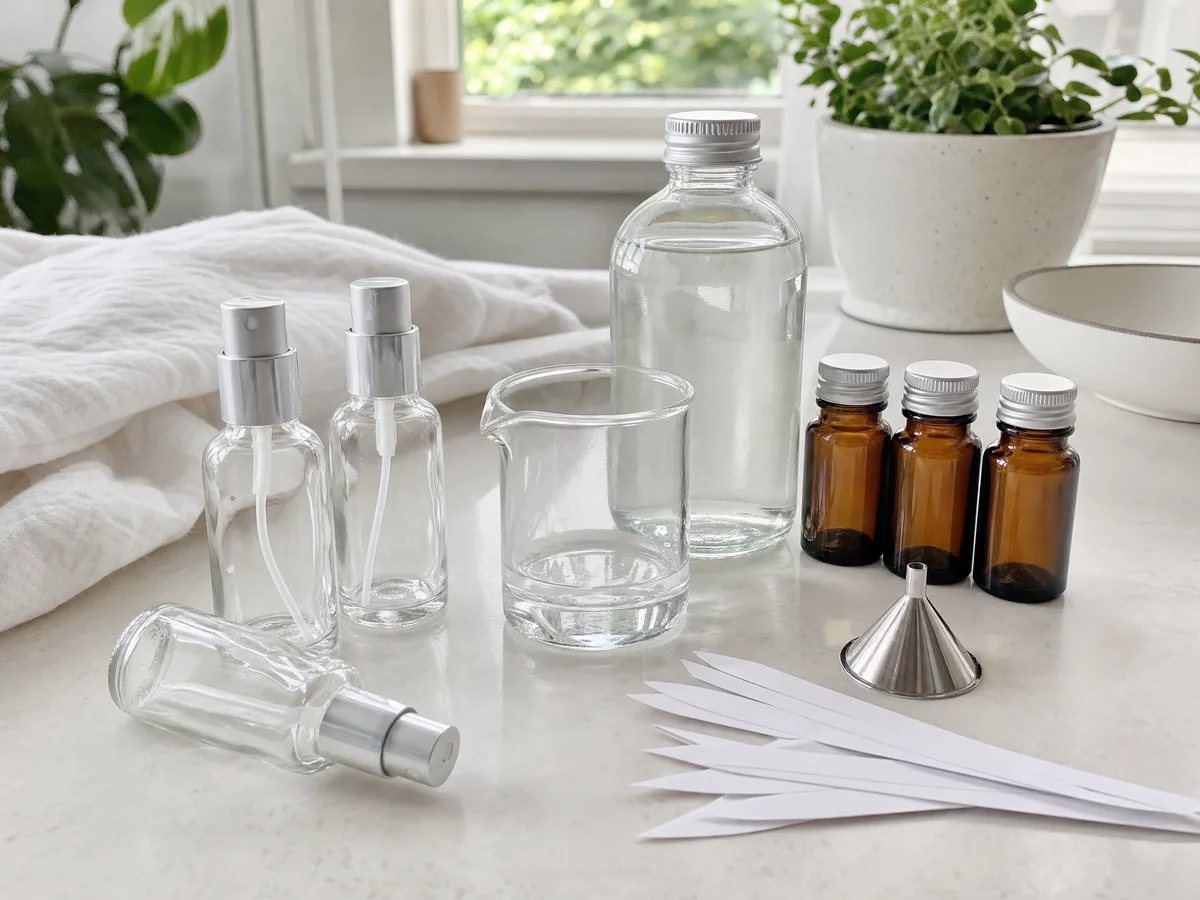
If you want proof rather than promises, make two small versions of the same blend: one with amyris, one with the same total number of drops of a neutral carrier in its place. Dilute both within the 0.5% to 2% range we suggest for skin, apply to the same spot on each wrist and note when you stop smelling each. Your own skin is the only test that counts, because chemistry and temperature vary person to person. Keep everything else identical, and do not judge at the first sniff.
Where fixative talk goes wrong
Online, "fixative" is sometimes spoken of as a magic ingredient that rescues any weak scent. It is not. A fixative can help a blend hold together, but it cannot make a fleeting citrus last all day, and a heavy hand with the base can flatten the lift that made you choose citrus in the first place. A modest amount, matched to the rest of the blend, is the honest way to use it.
Because amyris is a quiet scent, it works as a team player: it will not shout over other oils, and it will not vanish either.
Amyris Essential Oil
Amyris Essential Oil from our own shop, in sizes from 0.5 oz to bulk.
From $23.99
Shop Now →