Amyris vs Sandalwood: Same Scent Family, Different Tree
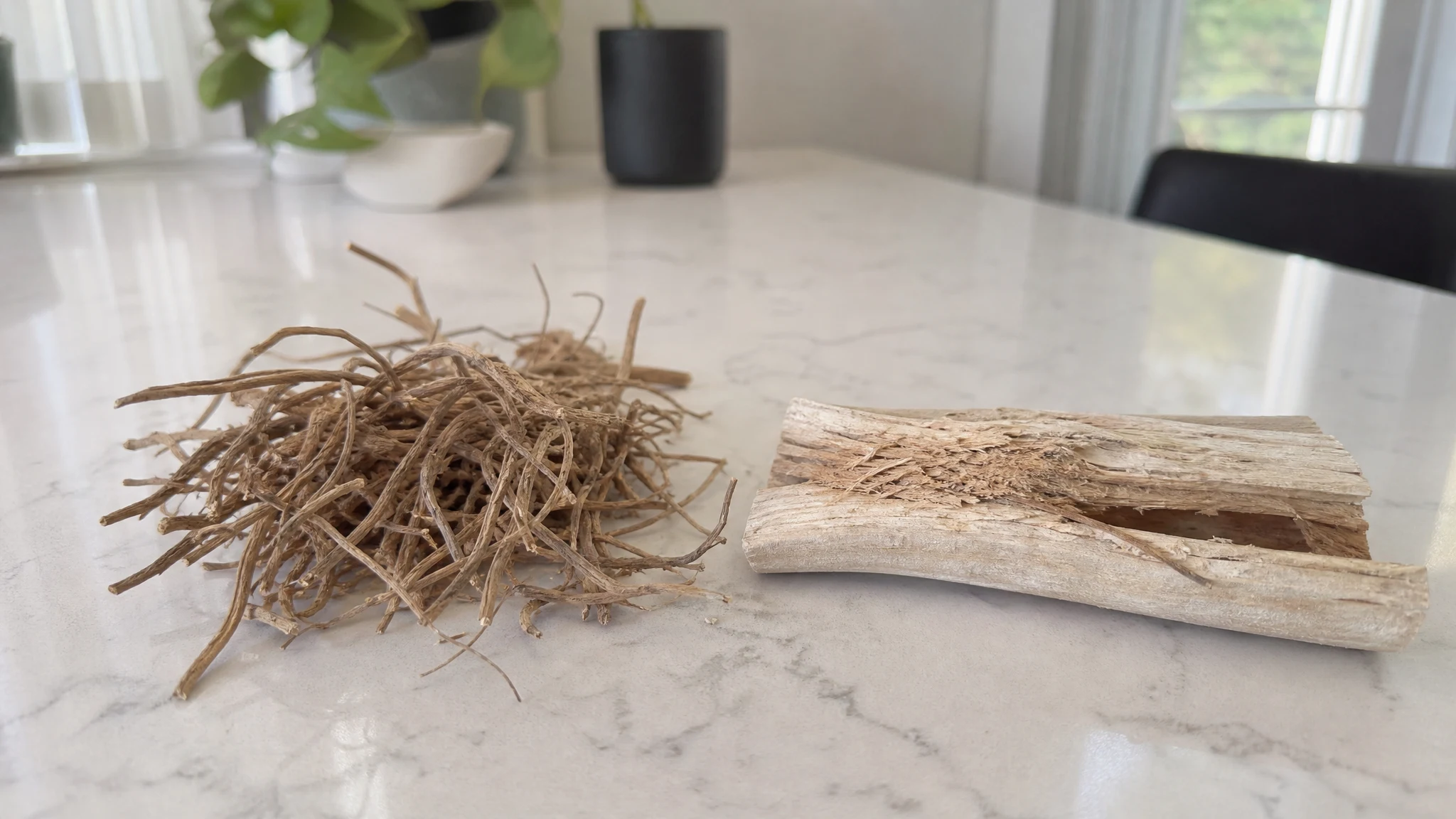
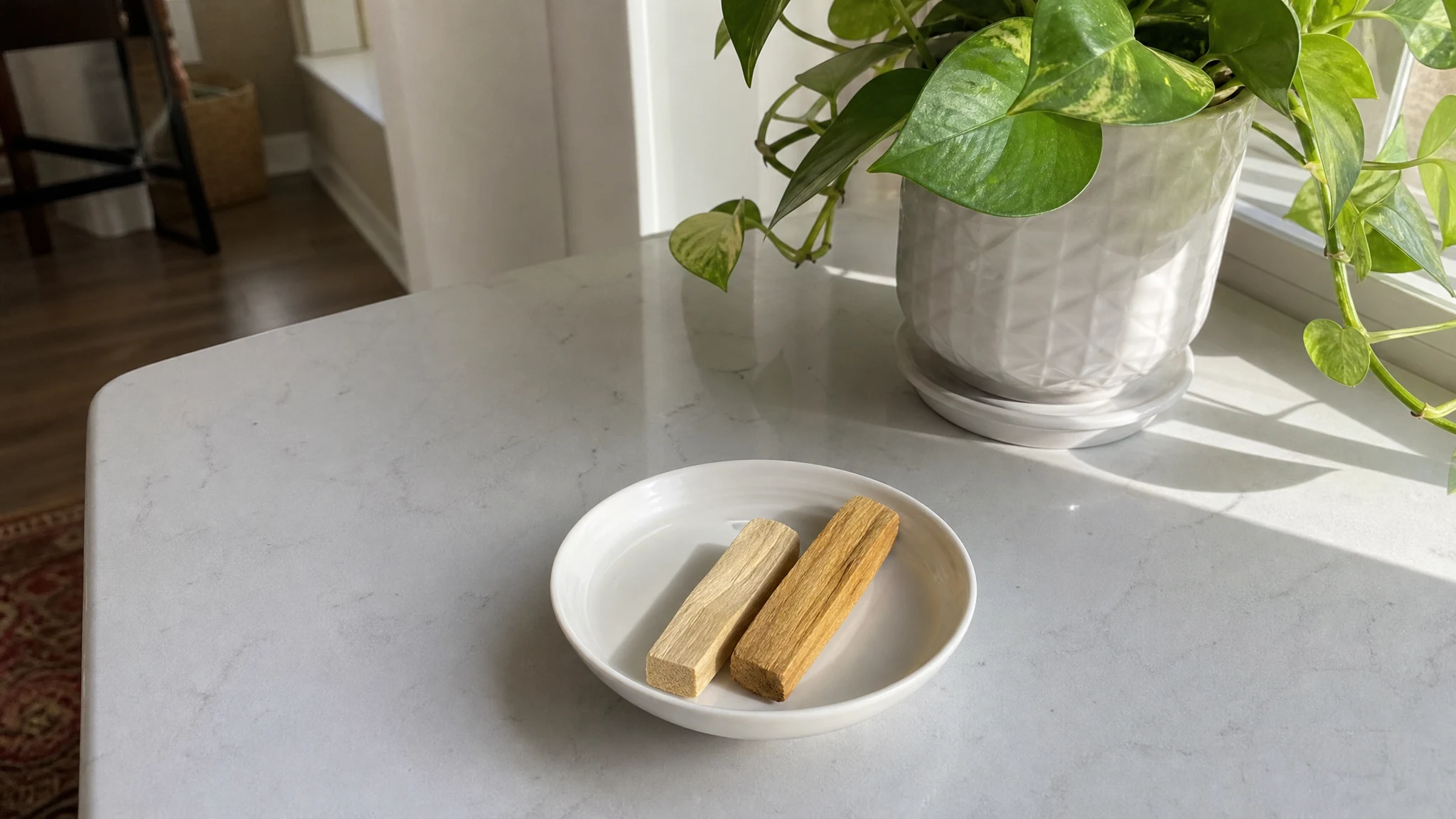
Amyris carries the nickname West Indian sandalwood, and it is an easy one to fall for. The scent family is similar, soft and woody and a little creamy. But the two oils come from unrelated trees, and knowing that makes it much easier to choose the right one for what you are making.
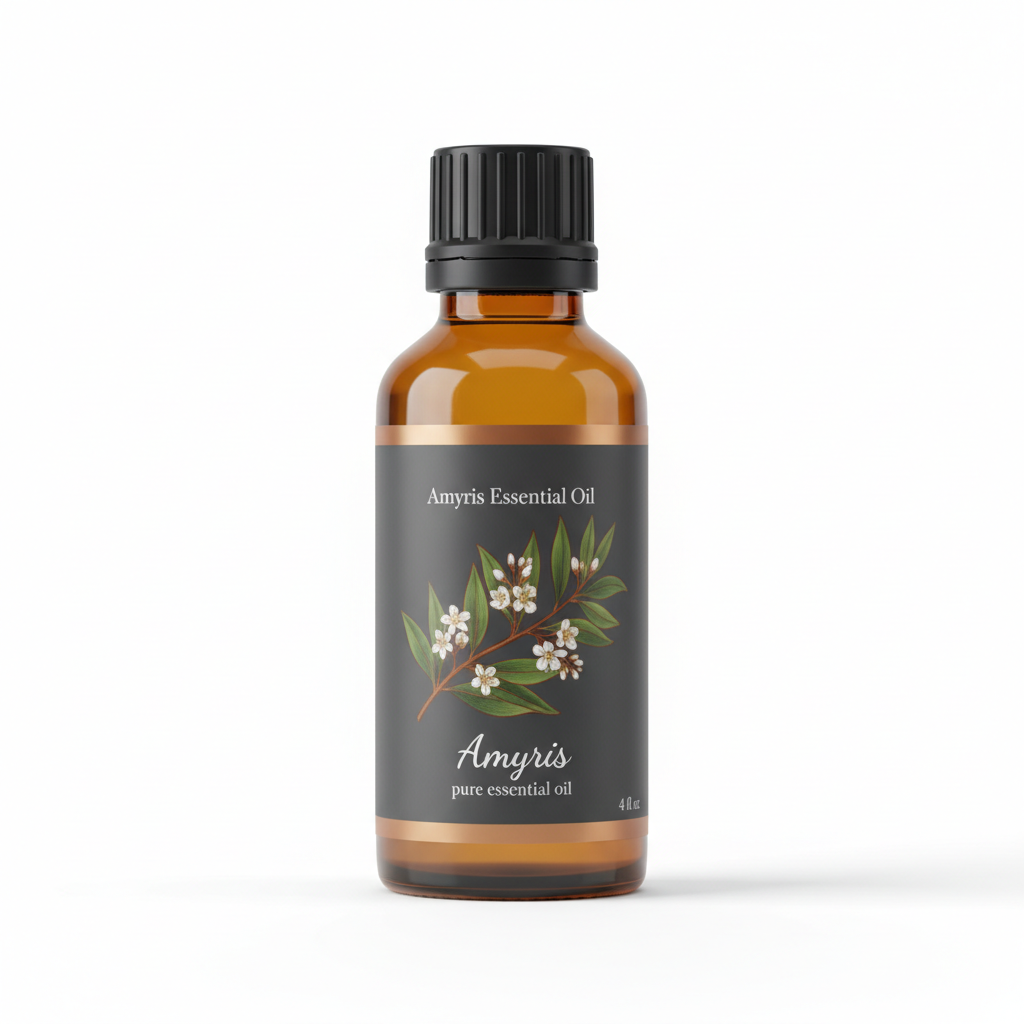
Amyris Essential Oil
Our own Amyris Essential Oil, in sizes from 0.5 oz to bulk.
From $23.99
Shop Now →Two plants, two chemistries
By the GBIF taxonomy, Amyris balsamifera belongs to the citrus family, Rutaceae, while sandalwood, Santalum album, belongs to Santalaceae, an entirely different order (Amyris record; Santalum record). "Sandalwood" is itself a family of oils from several Santalum species, and quality varies; Yan and colleagues describe S. spicatum as less valuable, partly because of a suspected allergen (Yan et al., 2024).
The lead molecules differ too. Sandalwood is built around (Z)-alpha-santalol and (Z)-beta-santalol, which the international standard sets at not less than about 41 to 54% and 16 to 24%. Amyris relies on valerianol, elemol and eudesmols; two oils labelled amyris in one study had valerianol around 14.5%, eudesmols around 26% and elemol near 9% (Kucharska et al., 2021). Sandalwood's character is finely tuned. A 2012 odour study found that the Z form of alpha-santalol smells woody while the E form does not (Hasegawa et al., 2012). That tells us how specific the sandalwood note is. It does not mean amyris is falling short of a target it was never aiming at.
Why supply matters to your bottle
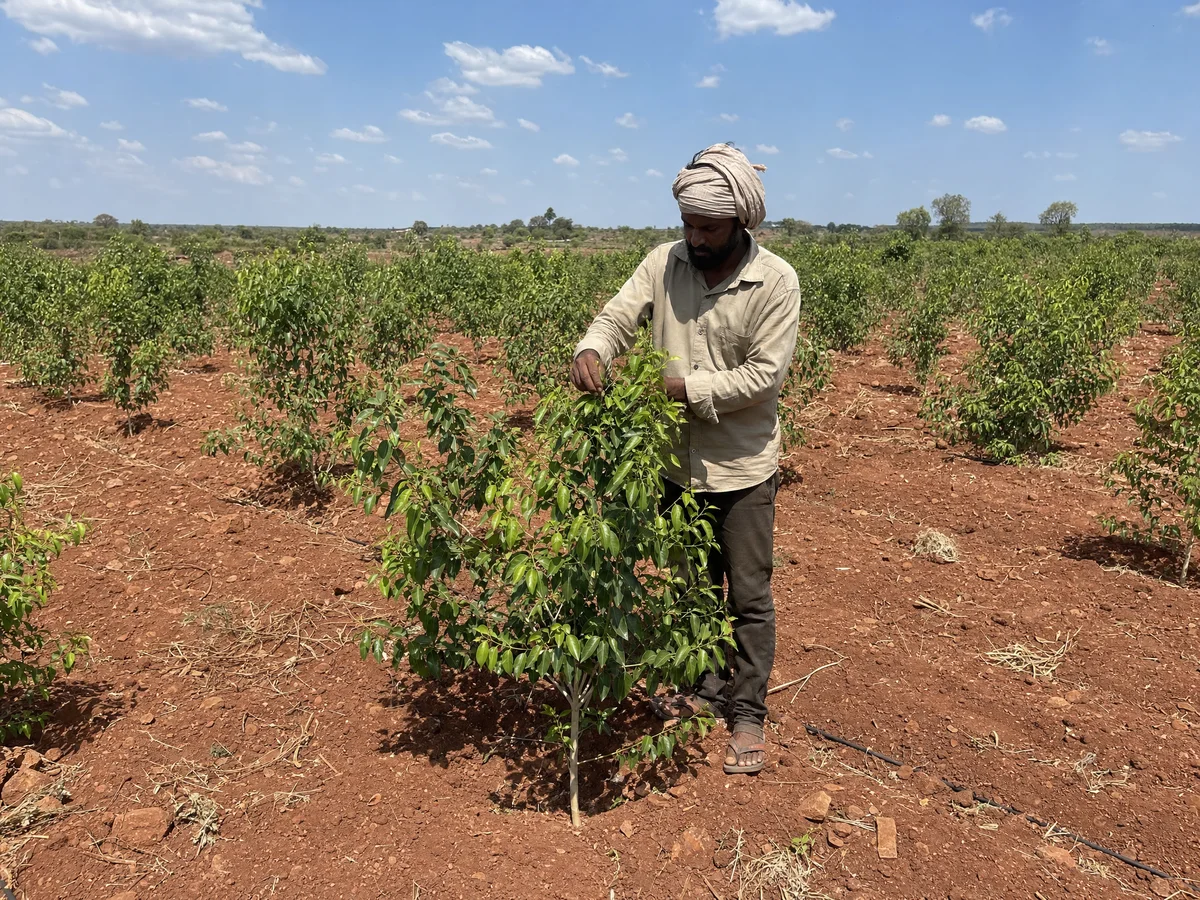
Sandalwood supply is tight. Yan and colleagues report that Indian sandalwood oil output fell to about 70 tonnes in 2004 from around 180 to 200 tonnes in earlier decades, which they link to a shortage of trees. Scarcity invites substitution: in the 2021 study, all six commercial oils sold as sandalwood failed the international standard, and amyris-type compounds turned up in some of them. That was six bottles, so it is a caution rather than a market statistic, but it shows why the label alone is not enough. Our guide to adulterated essential oils goes into the checks. The same paper calls amyris the less expensive oil, and we leave our own price to the shop page.
Which one for which job
- Fine perfume where the sandalwood note is the point. Buy sandalwood, and ask for the species and the santalol percentages. Amyris is the wrong tool.
- A woody base that supports citrus and florals. Amyris is a lovely candidate. We describe it as a base note and natural fixative, and it pairs well with lavender, bergamot, geranium, sandalwood and ylang ylang. See natural perfume fixatives for what fixing really does.
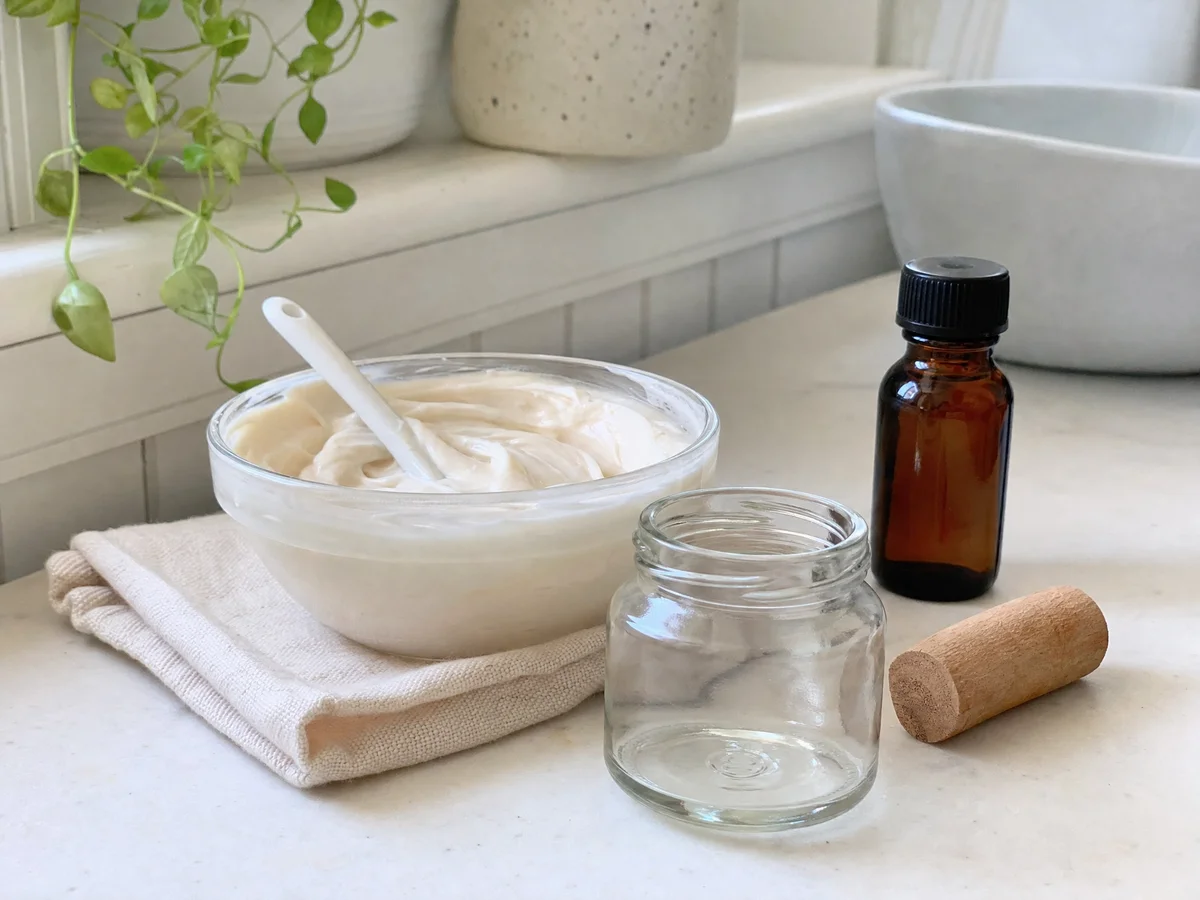
- Soap, candles, linen spray or a diffuser. Amyris suits all of these, and amyris diffuser blends gives ratio ideas.
- Exploring a woody direction. If you are not sure about sandalwood yet, amyris is an easy way to learn what a creamy wood does in your blend, as long as you do not call the result sandalwood. Woody essential oils compared shows other options.
- A product labelled sandalwood. Please do not use amyris. A cosmetic regulatory adviser can explain the labelling rules where you sell.
When a recipe says sandalwood
Plenty of recipes call for sandalwood, and it is tempting to reach for whatever woody oil is in the drawer. Before you swap, pause and ask what the recipe is really after. If it wants the particular sandalwood note, amyris will not give it to you, and the result will smell of a different wood altogether. If the recipe simply wants a soft, creamy base under brighter notes, amyris may be a lovely choice, as long as you call the finished blend by its honest name.
Whatever you decide, change one thing at a time and keep notes. A swap is a small experiment, and the notes tell you whether it worked.
Skin and questions to ask
Our guidance for amyris on skin is 0.5% to 2% in a carrier oil with a patch test first, away from eyes, children and pets. Sandalwood has its own guidance, so get it from the seller and check it against a safety source; limits do not transfer between oils. Whichever you buy, ask for the Latin name, the species and origin for sandalwood, and a GC-MS report for the lot. For our amyris, the Certificate of Analysis we publish for one batch lists density 0.952, refractive index 1.505 and optical rotation +21.32 degrees, and you can ask us in writing through the contact page for more on your lot.
A gentle way to use both
They are not rivals. If you already have a bottle of sandalwood, try putting a few drops of amyris beside it in a blend, then compare the blend to one made with sandalwood alone. The fun is in noticing what each one brings. You may find amyris adds a rounder, softer base, or you may decide you like sandalwood best on its own. Either way, you learn more about both.
The best comparison is your own nose
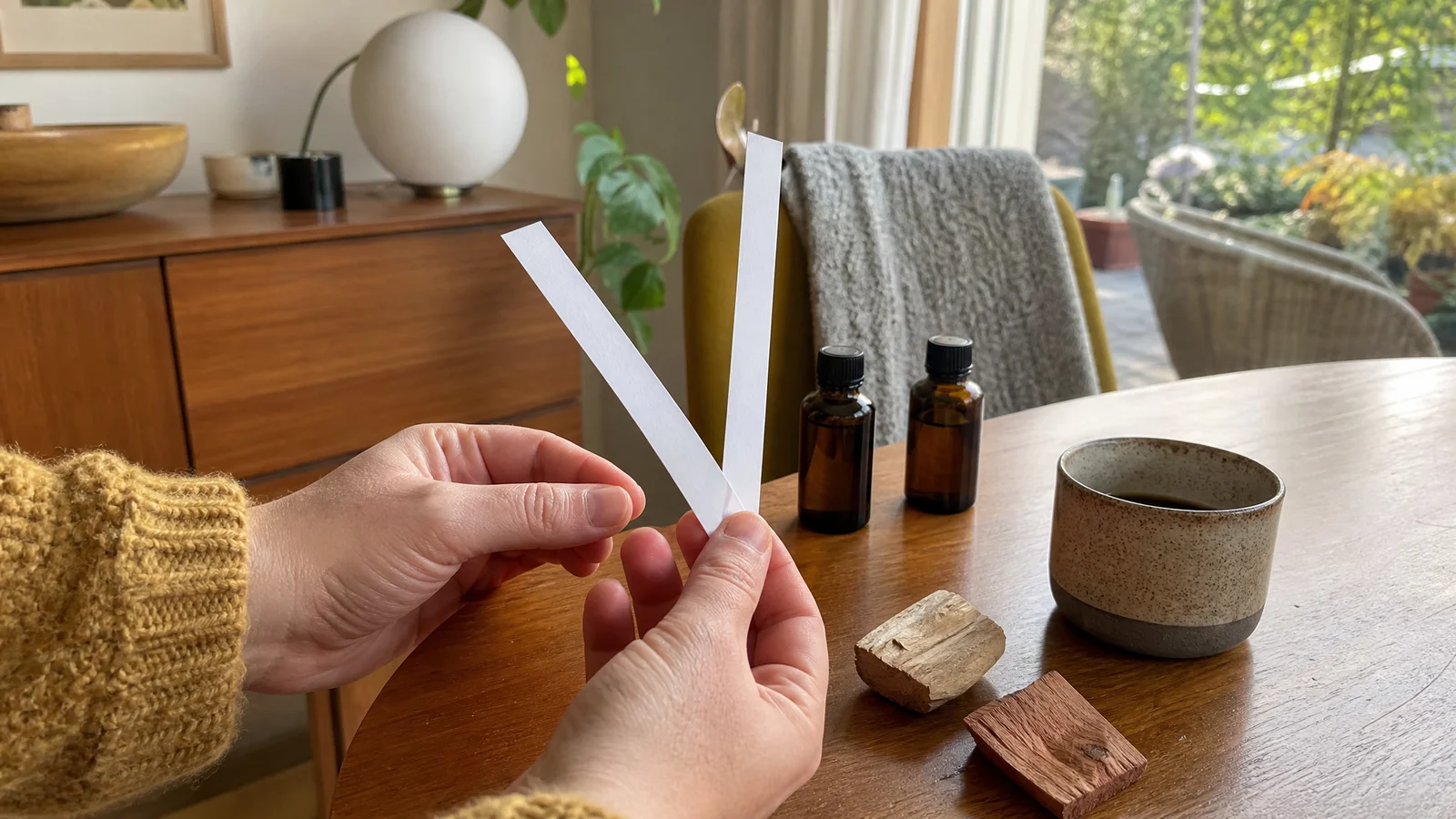
Put each oil on its own blotter, label them, and check at the start, after an hour and the next day, jotting down your own words. Then try each in a small version of your formula at the same low percentage. That replaces borrowed adjectives with your own evidence.
Amyris Essential Oil
Amyris Essential Oil from our own shop, in sizes from 0.5 oz to bulk.
From $23.99
Shop Now →Sources & Further Reading
- GBIF Backbone Taxonomy matches for Amyris balsamifera and Santalum album. api.gbif.org (Amyris); api.gbif.org (Santalum)
- Yan X. et al., 2024. Biological Properties of Sandalwood Oil and Microbial Synthesis of Its Major Sesquiterpenoids. Biomolecules 14(8):971. pmc.ncbi.nlm.nih.gov
- Kucharska M. et al., 2021. A Comparison of the Composition of Selected Commercial Sandalwood Oils with the International Standard. Molecules 26(8):2249. pmc.ncbi.nlm.nih.gov
- Hasegawa T. et al., 2012. Structure-Odor Relationships of alpha-Santalol Derivatives with Modified Side Chains. Molecules 17(2):2259. pmc.ncbi.nlm.nih.gov