Amyris vs Copaiba: Wood Oil or Resin?
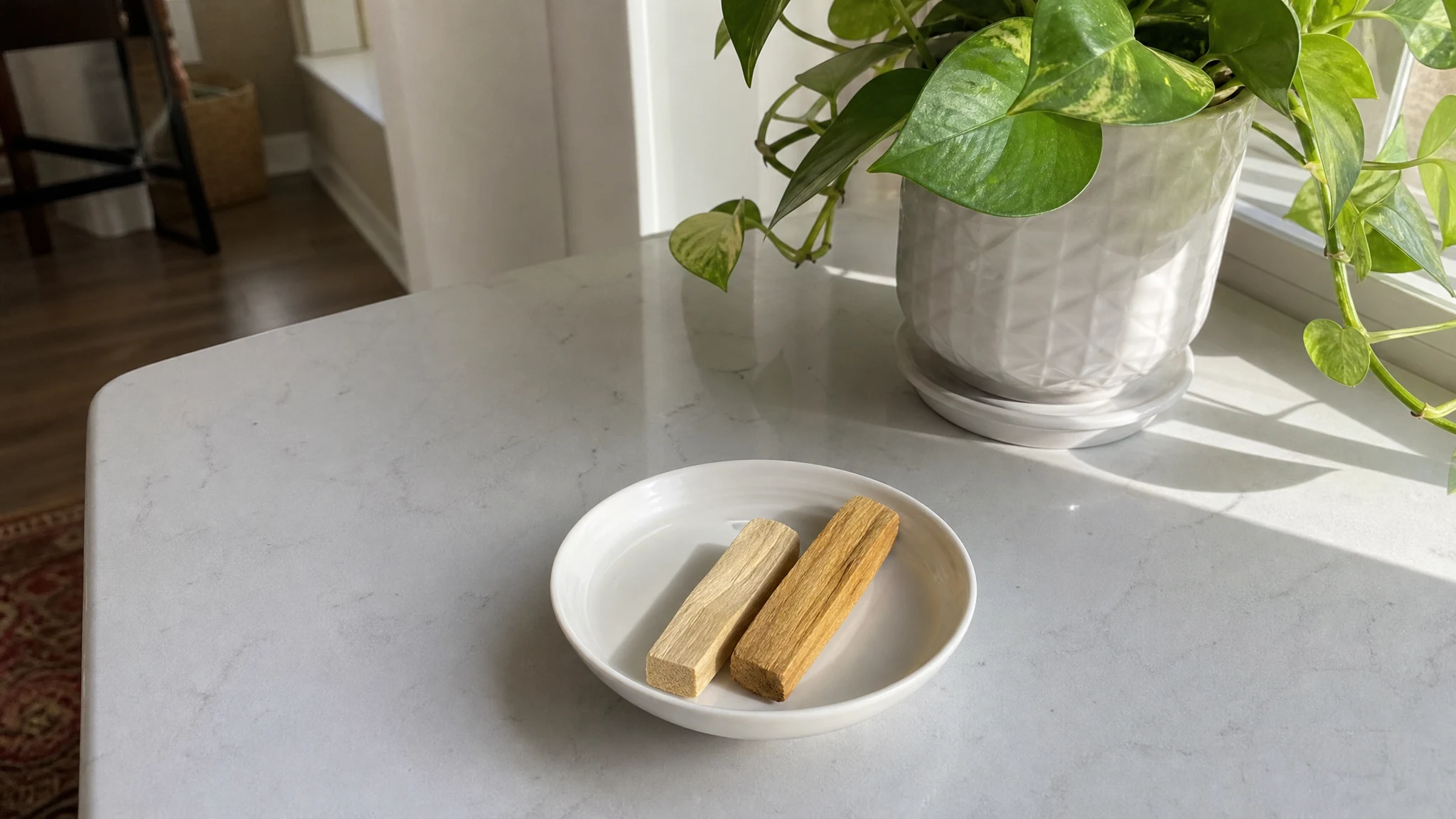
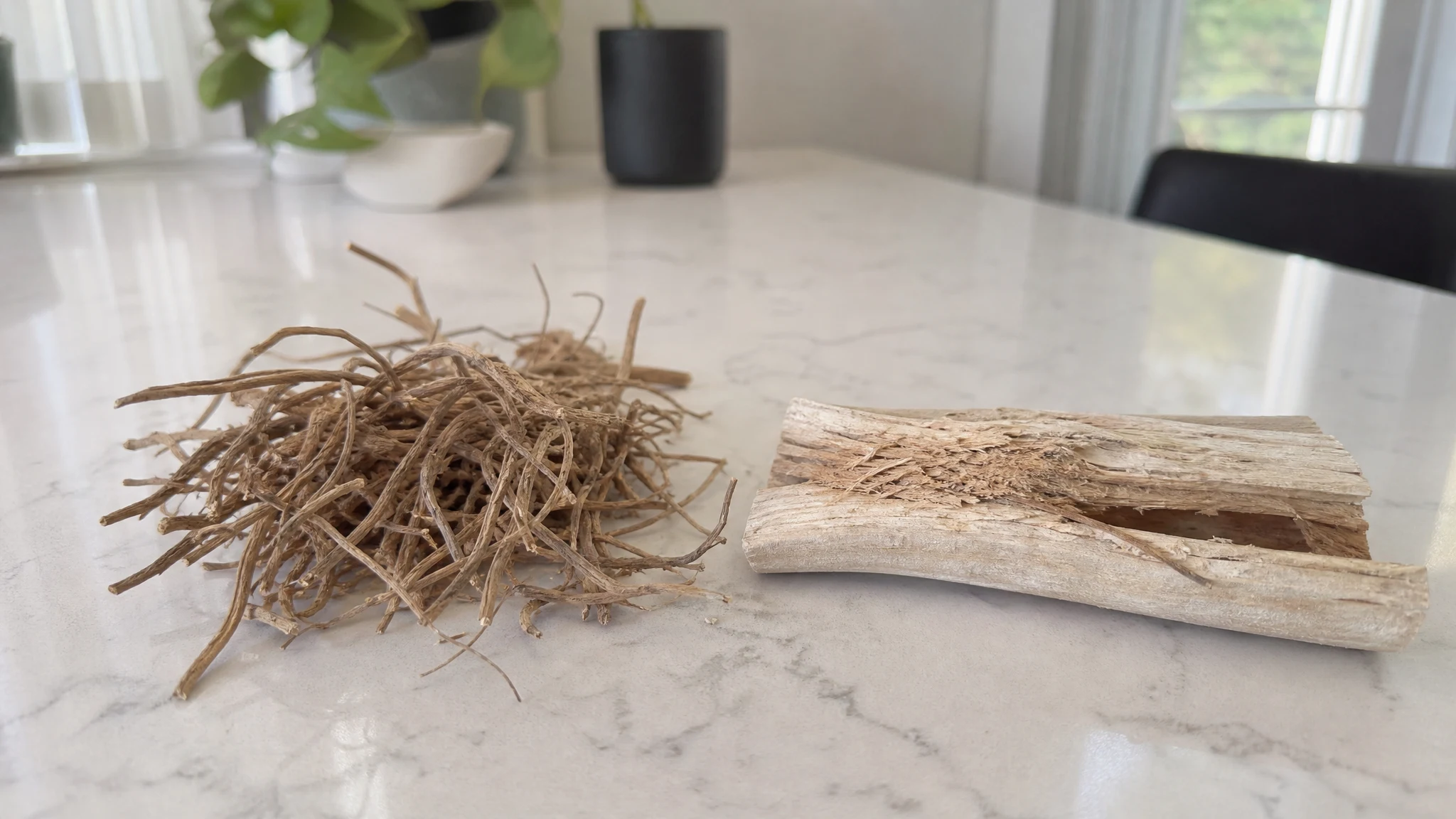
Amyris and copaiba get filed together as woody base notes, but only one of them is actually wood. Amyris oil is steam-distilled from the wood of Amyris balsamifera. Copaiba oil comes from an oleoresin that Copaifera trees hold in their trunks and release when a hole is drilled. That one difference shapes what is in the bottle, how it smells and what it does in a blend.
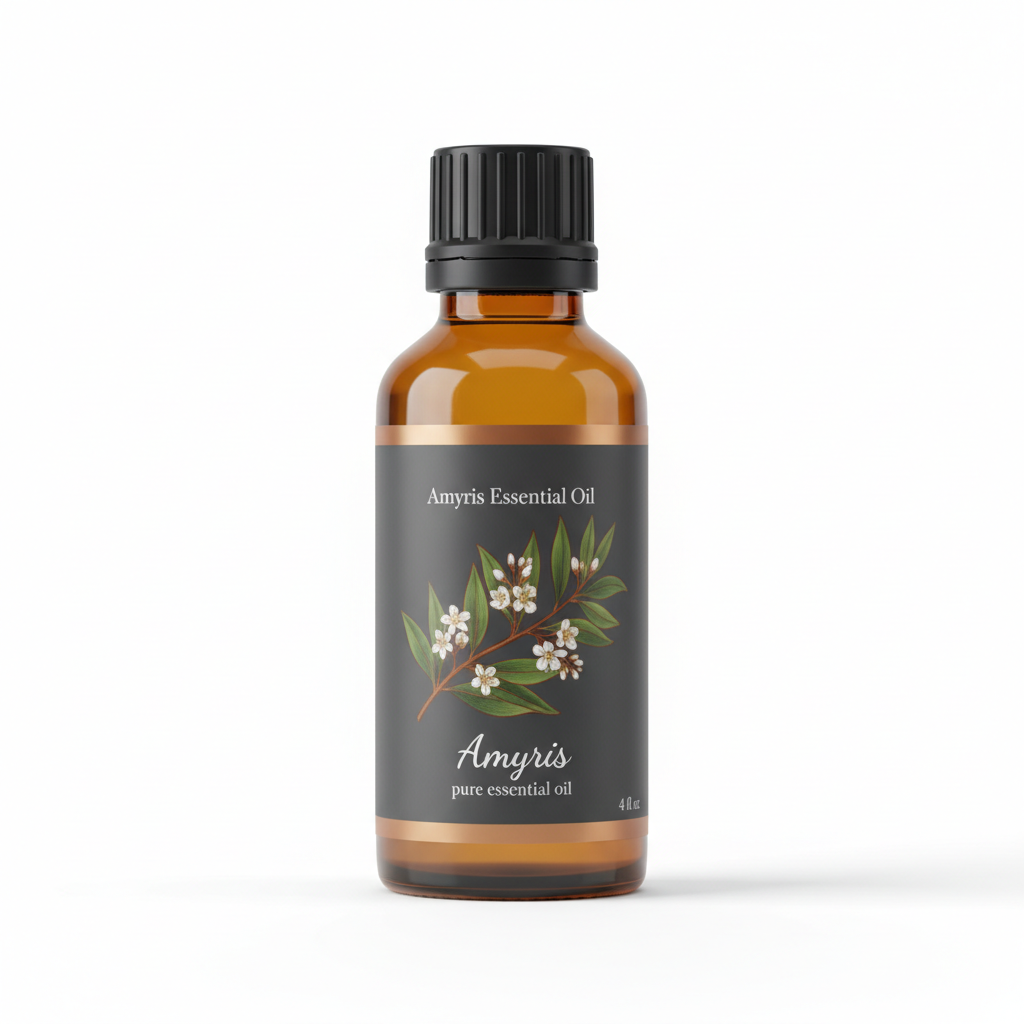
Amyris Essential Oil
Our own Amyris Essential Oil, in sizes from 0.5 oz to bulk.
From $23.99
Shop Now →Two very different starting points
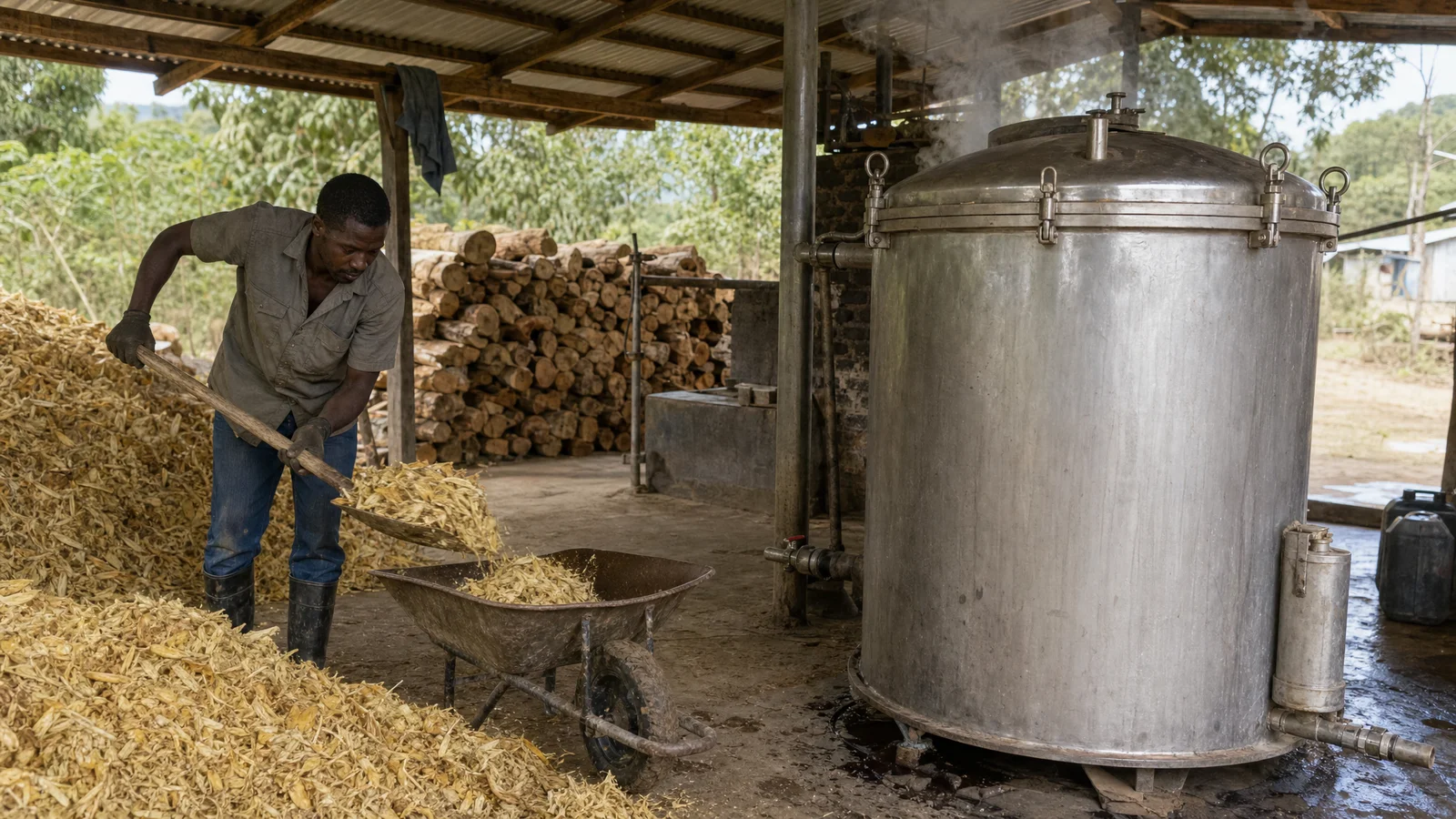
ScenTree, a perfumery reference, describes amyris as a wood oil made by steam distillation of crushed chips, with a "Base" volatility rating (ScenTree on amyris). Ours is steam-distilled from wood and comes from Haiti.
Copaiba starts as a liquid resin. A 2018 review says the oleoresin is collected by perforating the trunk, that there are more than 70 Copaifera species, and that product from several trees is often mixed, so the botanical identity of a bottle can be hard to pin down (da Trindade et al., 2018). Steffen Arctander's 1960 perfumery reference adds a useful wrinkle: he calls the raw resin "copaiba balsam" and treats it separately from the distilled copaiba oil (Arctander, 1960). Names matter, so when you shop for copaiba, check whether the listing means the resin or the oil.
What the chemistry says, in plain terms
Amyris is rich in sesquiterpene alcohols. Two correctly labelled commercial samples in one study came to about 54 to 55 percent, with valerianol around 14.5 percent and eudesmols and elemol making up much of the rest (Kucharska et al., 2021). Copaiba leans on a different family, sesquiterpene hydrocarbons, with beta-caryophyllene the headline compound. How much varies enormously: four commercial Brazilian copaiba oils held anywhere from about 5 to 44 percent (Soares et al., 2013), and the species review quotes up to 87 percent in one species. Different compound families fit different characters, though we would not claim a direct line from molecule to scent.
The practical point is consistency. A copaiba oil sold without a species or a GC-MS report can be very different from the one you used last time, and amyris profiles also move between lots. For our own oil, the Certificate of Analysis we publish for one batch lists density, refractive index and optical rotation, and if you want compound percentages for your lot, ask us in writing through the contact page.
How perfumers have rated them
Arctander's monographs are one man's opinion from more than sixty years ago, but they are the nearest thing to a side-by-side. He describes amyris as faintly woody, not dry, with a slightly oily-sweet balsamic note, a tenacious body odour that settles into a soft woody-balsamic whisper. The balsam he rates as a fixative in low-cost violet and wood perfumes, while he calls the distilled oil much milder and sweeter, with negligible fixative value. If that still holds, "two fixatives, pick one" is the wrong frame. The copaiba that anchors a blend is the resin, and the oil is a quiet blender.
We describe our amyris as creamy, woody and balsamic, a base note that lets citrus and floral top notes linger. For how fixation really works, see our guide to natural perfume fixatives.
Reading a copaiba listing
When you shop for copaiba, read the listing like a label. Does it say oil or resin? Does it name a species, or just "copaiba"? Is there a report for the lot you are buying? Those three questions will separate a well-described bottle from a vague one, and they are the same questions worth asking about any aromatic wood or resin.
It is also worth checking how a seller describes the smell. A good listing tells you whether the scent is sweet, balsamic or sharp, and ideally what it was like in a blend rather than just on a strip. Vague words like "rich" or "earthy" are a cue to ask for more detail.
Smelling them side by side
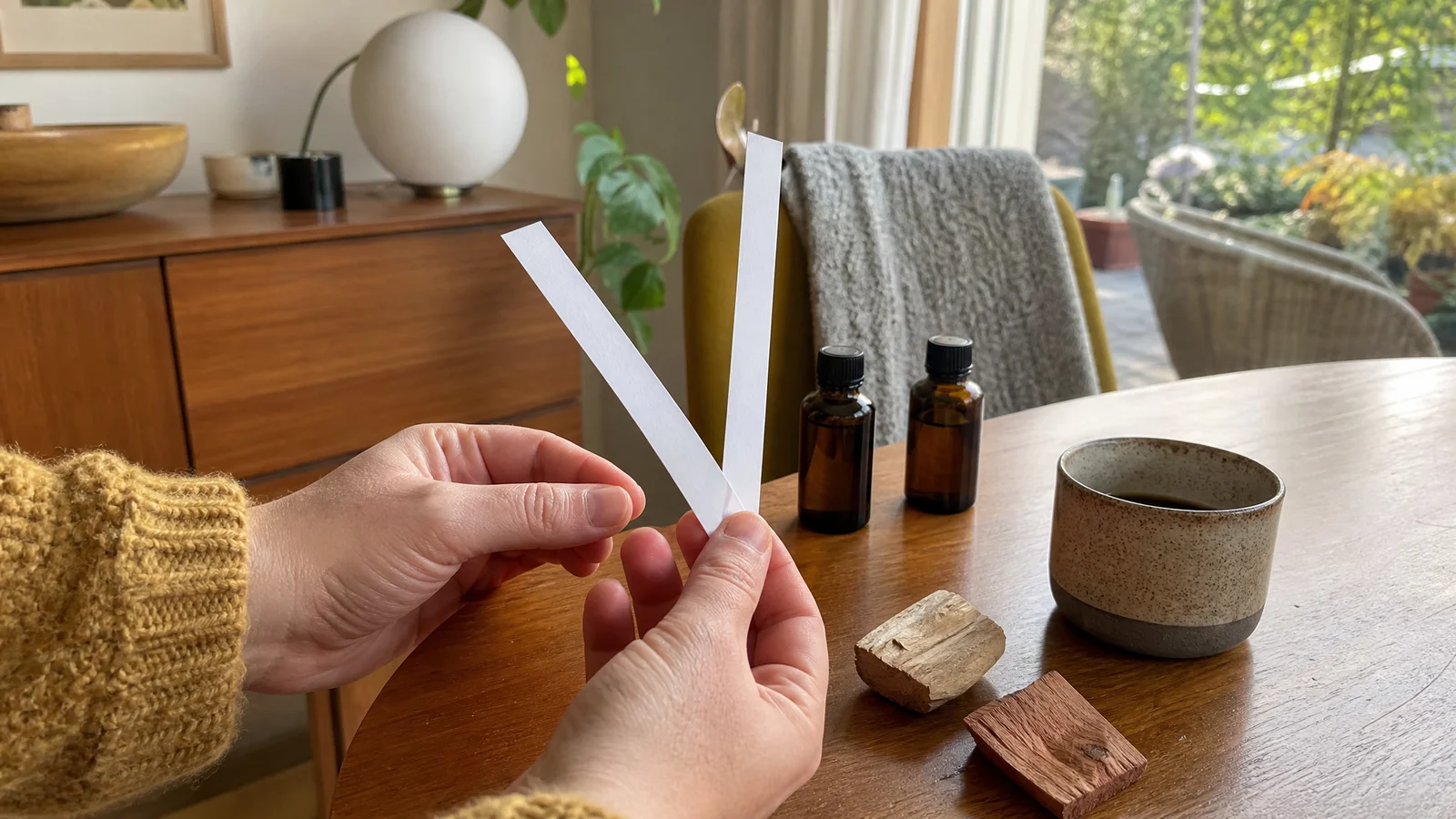
If you have a bottle of each, put a drop of amyris and a drop of copaiba on separate labelled strips and compare them over the afternoon. Notice what happens to each at the start, after an hour and at the end of the day. A wood and a resin come from very different places, and you may find that you prefer one on its own and the other as a supporting note. That is a perfectly good outcome. Choosing a base note is a personal call.
Which one for your blend?
- A soft wood floor under brighter notes. Amyris is the one we make, and you can find it in our shop; larger sizes are on our bulk page, and our guide to buying amyris essential oil in bulk covers what to check first. See woody essential oils compared and base note essential oils for where it sits among the others.
- A resin type of fixative. By Arctander's account, look at copaiba balsam rather than the oil. We do not sell either copaiba product, so a perfumery supplier can tell you the species and oil content.
- A sandalwood stand-in. Neither oil is sandalwood. Our naming guide covers that.
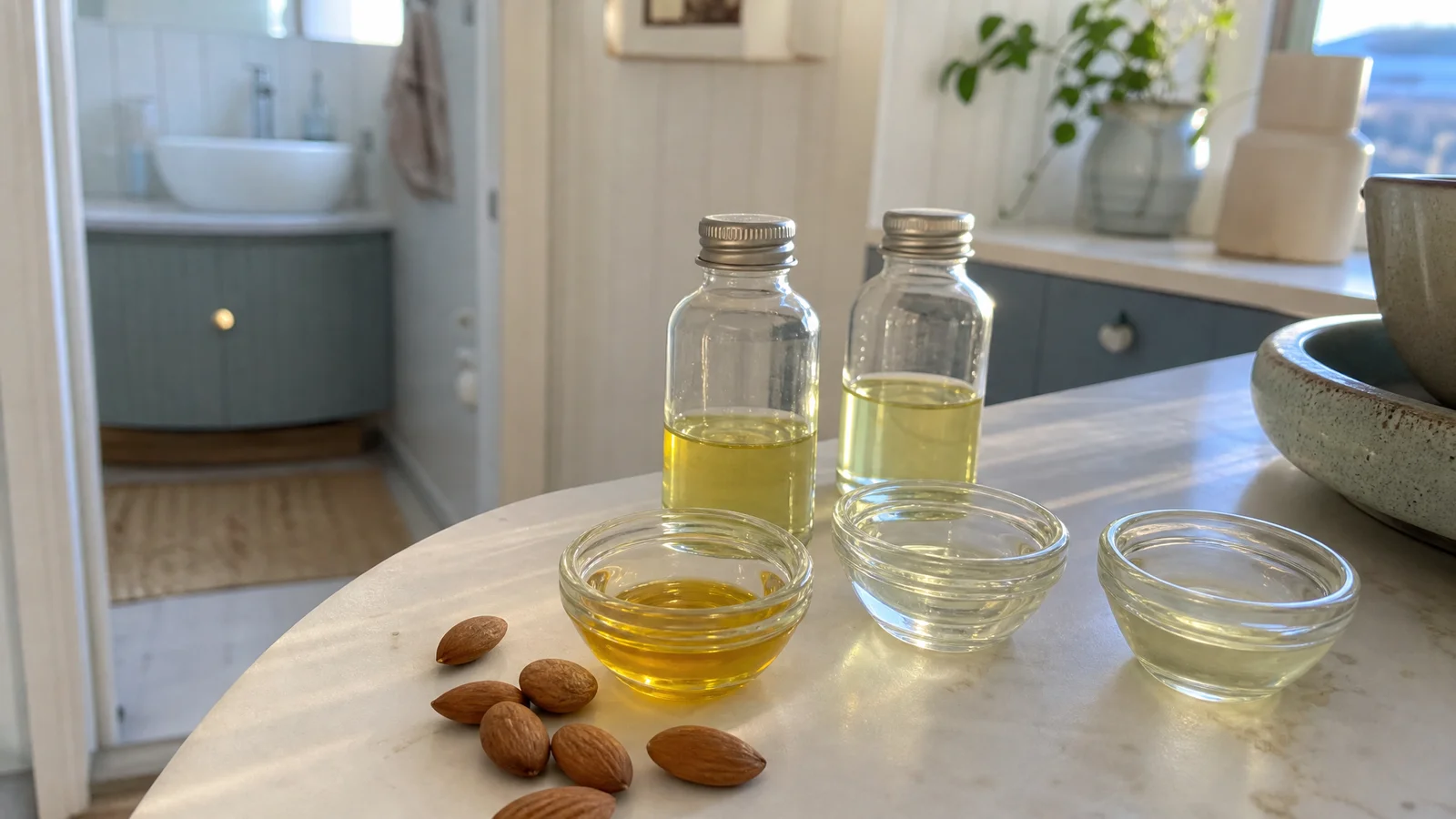
For skin, our guidance for amyris is 0.5% to 2% in a carrier oil with a patch test first, and you will find the method in our patch test guide. Any health question about either oil belongs with a pharmacist or physician; we sell an external cosmetic oil.
In short, amyris is a quiet wood and copaiba is a resin with its own personality.
Amyris Essential Oil
Amyris Essential Oil from our own shop, in sizes from 0.5 oz to bulk.
From $23.99
Shop Now →Sources & Further Reading
- ScenTree. Amyris oil. scentree.co
- da Trindade R. et al., 2018. Copaiba oleoresin review. International Journal of Molecular Sciences. pmc.ncbi.nlm.nih.gov
- Soares et al., 2013. Copaiba oils composition. Evidence-Based Complementary and Alternative Medicine. pmc.ncbi.nlm.nih.gov
- Kucharska M. et al., 2021. A comparison of the composition of selected commercial sandalwood oils with the international standard. Molecules. pmc.ncbi.nlm.nih.gov
- Arctander S., 1960. Perfume and Flavor Materials of Natural Origin. archive.org