Bulk Amyris Oil: What to Check Before You Order
Moving from retail bottles to 5, 25 or 400 lb of amyris is a different kind of purchase. You are settling on one scent, one lot and one set of documents for months, so the preparation matters more than the order form. This is the sequence we would follow, and it starts with your formula, not your budget.
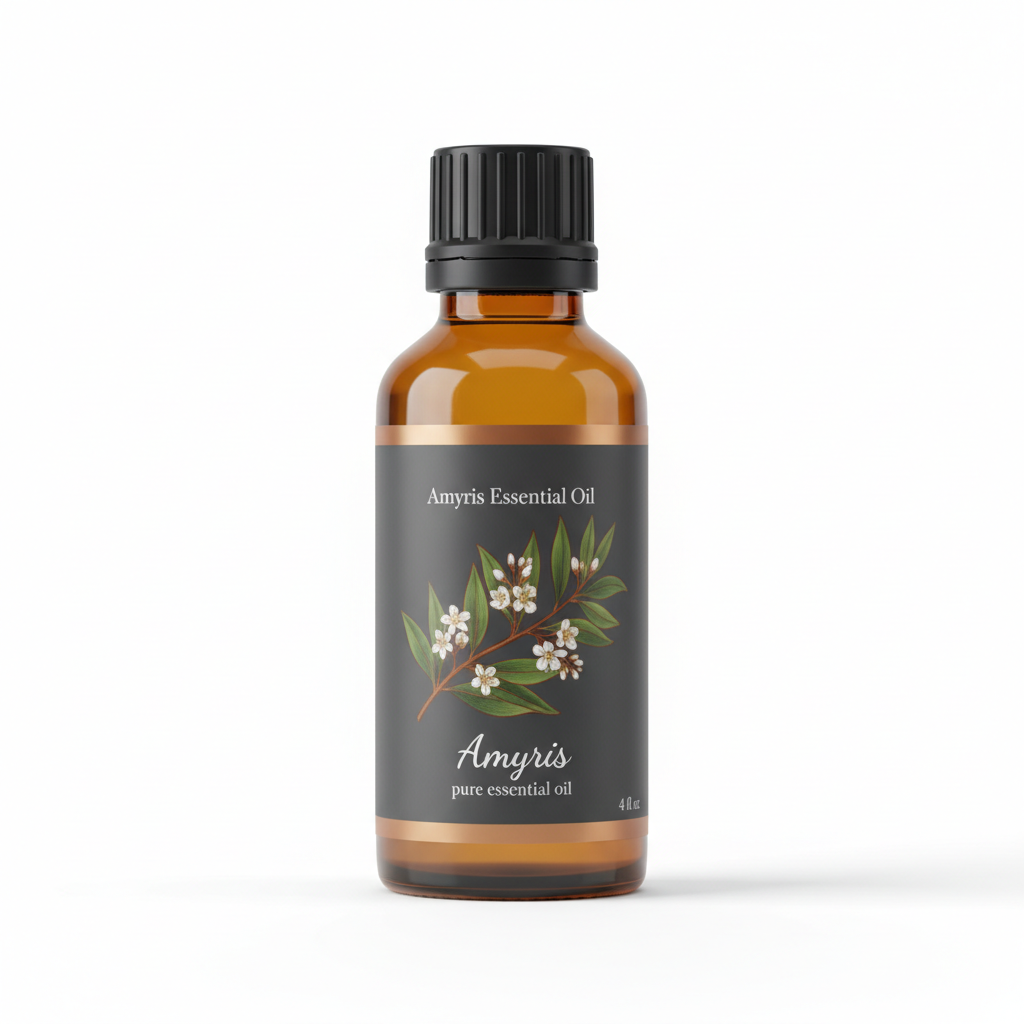
Amyris Essential Oil
Our own Amyris Essential Oil, in sizes from 0.5 oz to bulk.
From $23.99
Shop Now →Start with the maths
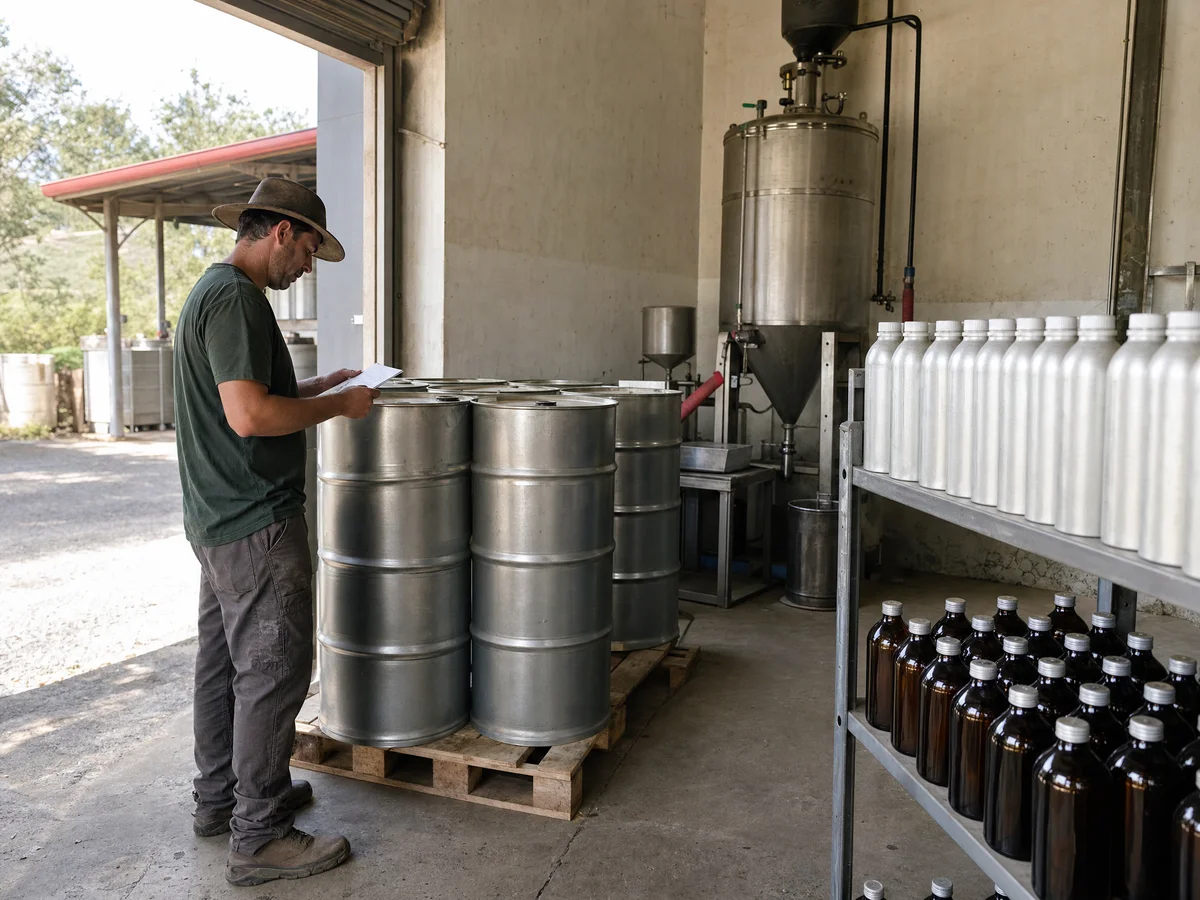
One pound is 453.6 g. If amyris makes up 2% of your product by weight, a pound of oil scents about 22.7 kg of finished product; at 1% it stretches to about 45 kg. That means 5 lb covers roughly 113 kg of a 2% product or 227 kg of a 1% one, and our 25 lb size is five times that. The 400 lb size is for a manufacturer whose formula is long settled. We also take quantities above 400 lb by enquiry.
For volume, the batch on the Certificate of Analysis we publish measured a relative density of 0.952 at 20 C, which puts 5 lb at about 2.4 litres and 25 lb at about 11.9. A different lot will move a little, so if you are picking a container, ask us about the packaging before you assume.
Sample first
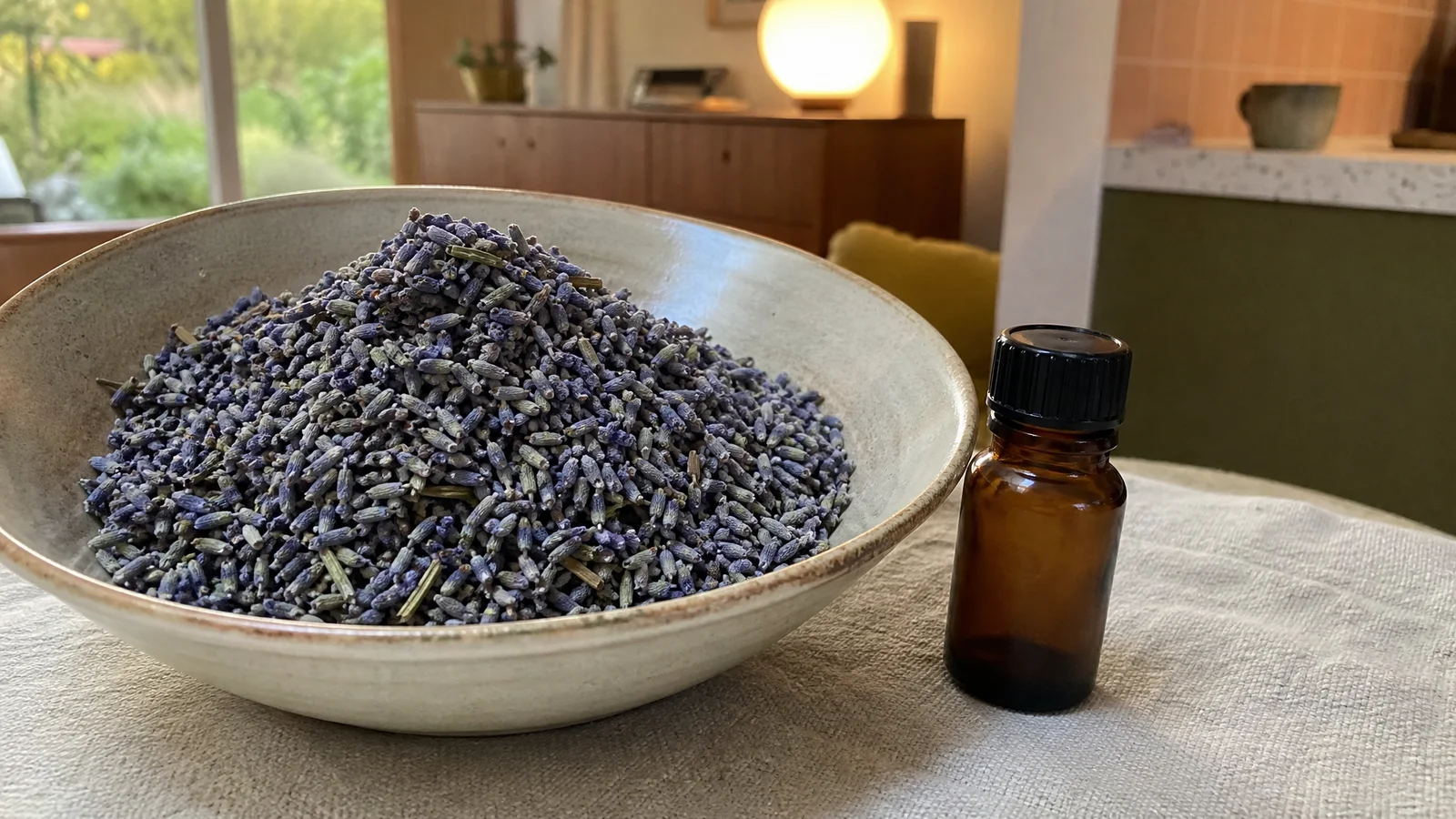
We send sample bottles and offer a free consultation through our wholesale page and contact page. A sample answers one question: do you love this scent in your own base, at your own use level? We describe amyris as creamy, woody and balsamic with a soft vanilla undertone, a base note that works as a natural fixative alongside citrus and floral top notes. Make a small batch, let it settle the way your product normally does (a cured soap, a set candle, a body oil rested for a week), and judge it then, not on the day you mix it.
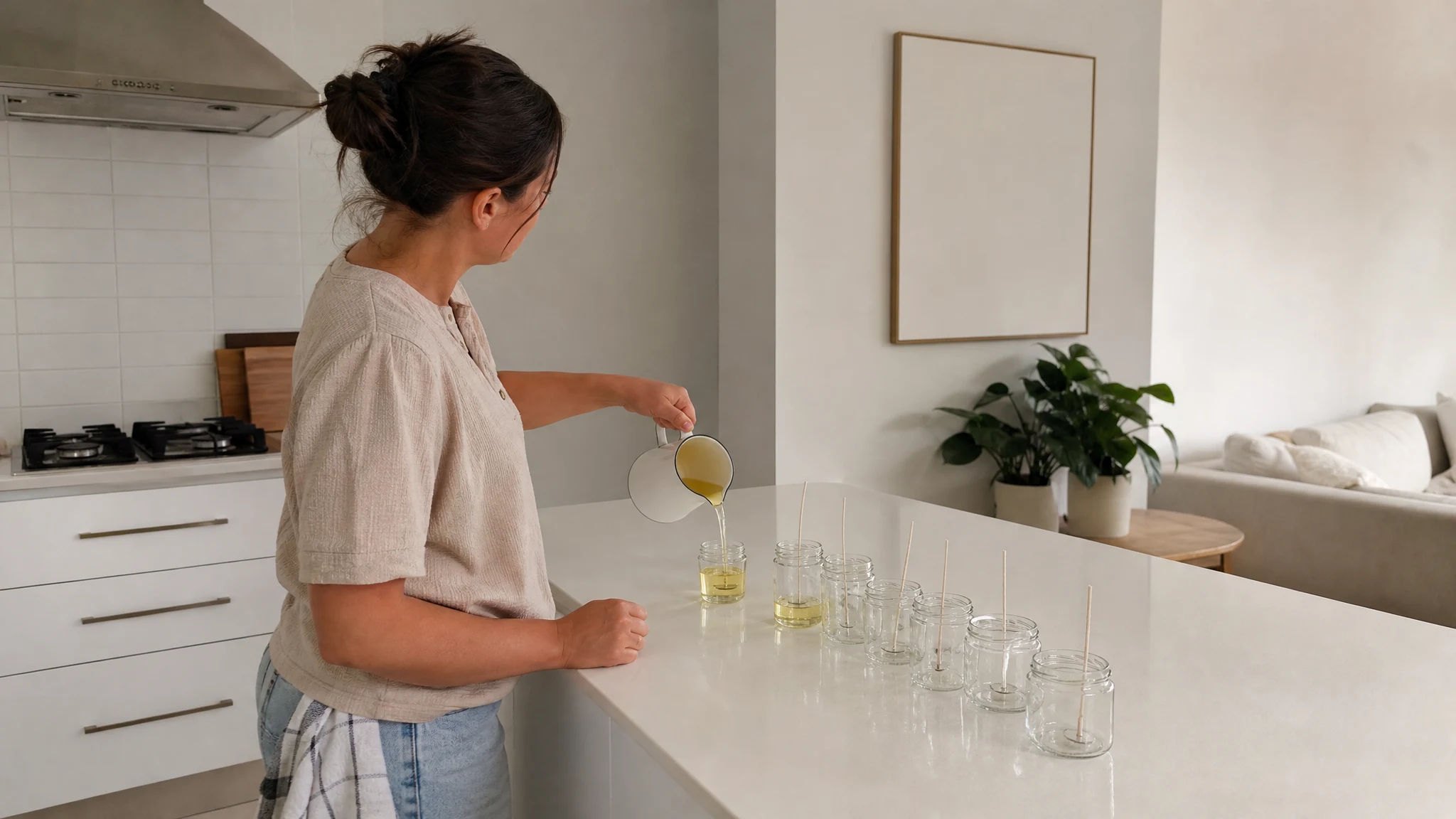
We sell the oil only. Carrier oils, wax, soap base and bottles come from a craft or supply shop.
Ask for the paperwork you need
The Certificate of Analysis we publish is for one batch and lists relative density 0.952, refractive index 1.505 and optical rotation +21.32 degrees, each inside the standard printed beside it. For a bulk order, ask in writing for the report that goes with your lot, and say what your product file needs. If you need GC-MS, a safety data sheet, an IFRA certificate or allergen information, raise it before you order so we can tell you what is available. Our guide to reading the lot documents explains what a typical profile looks like.
It also helps to remember that every analysis has limits. GC-MS is a strong tool but, as Alex St-Gelais of the Tisserand Institute explains, it can miss some additions on its own (St-Gelais on GC-MS). A report is good evidence, and tying it to your lot number makes it better. If you want to see what simple checks can and cannot tell you, our home-checks guide covers that.
Know your own regulatory duties
If you sell cosmetics in the United States, the FDA's page on the Modernization of Cosmetics Regulation Act of 2022 says the responsible person must keep records supporting safety substantiation, and covers registration, product listing and fragrance allergen labelling, with exemptions for some small businesses (FDA on MoCRA). We are an oil supplier rather than a regulatory adviser, so check what applies to you with a cosmetic regulatory specialist. For individual skin use, our guidance is 0.5% to 2% in a carrier oil with a patch test first; a finished product needs its own safety assessment. Our guides to dilution and patch testing explain the method.
Picture the day it arrives
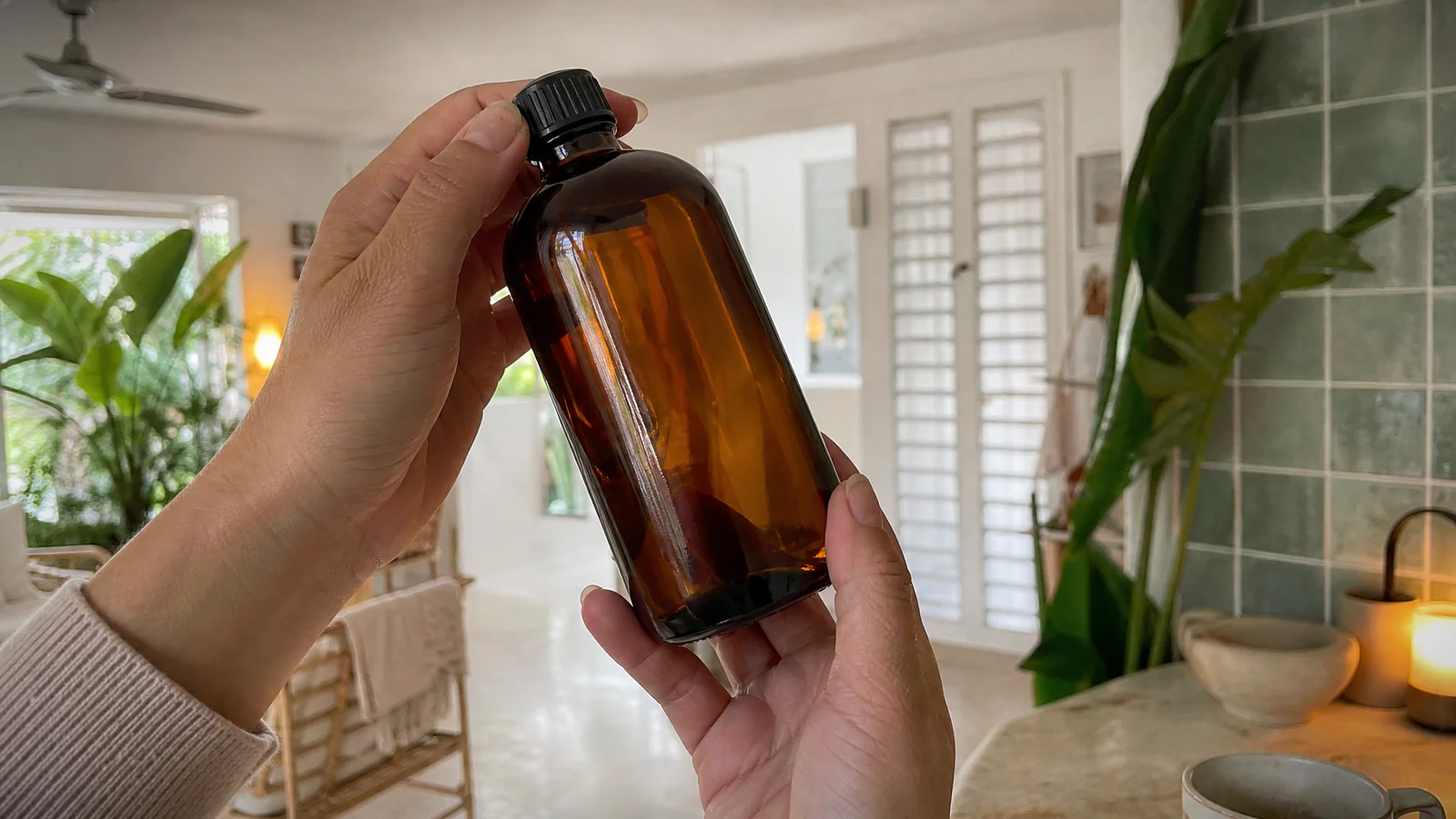
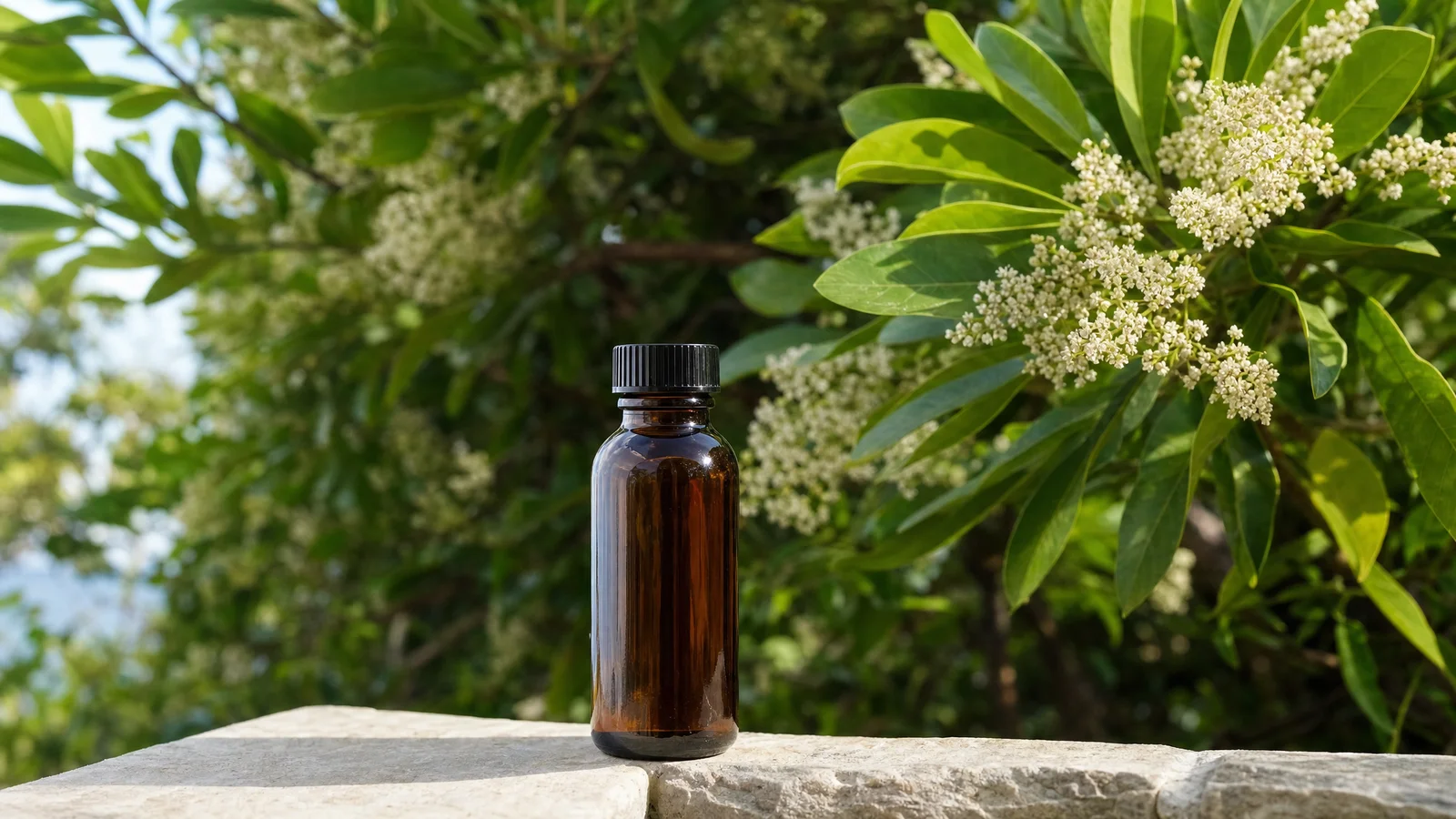
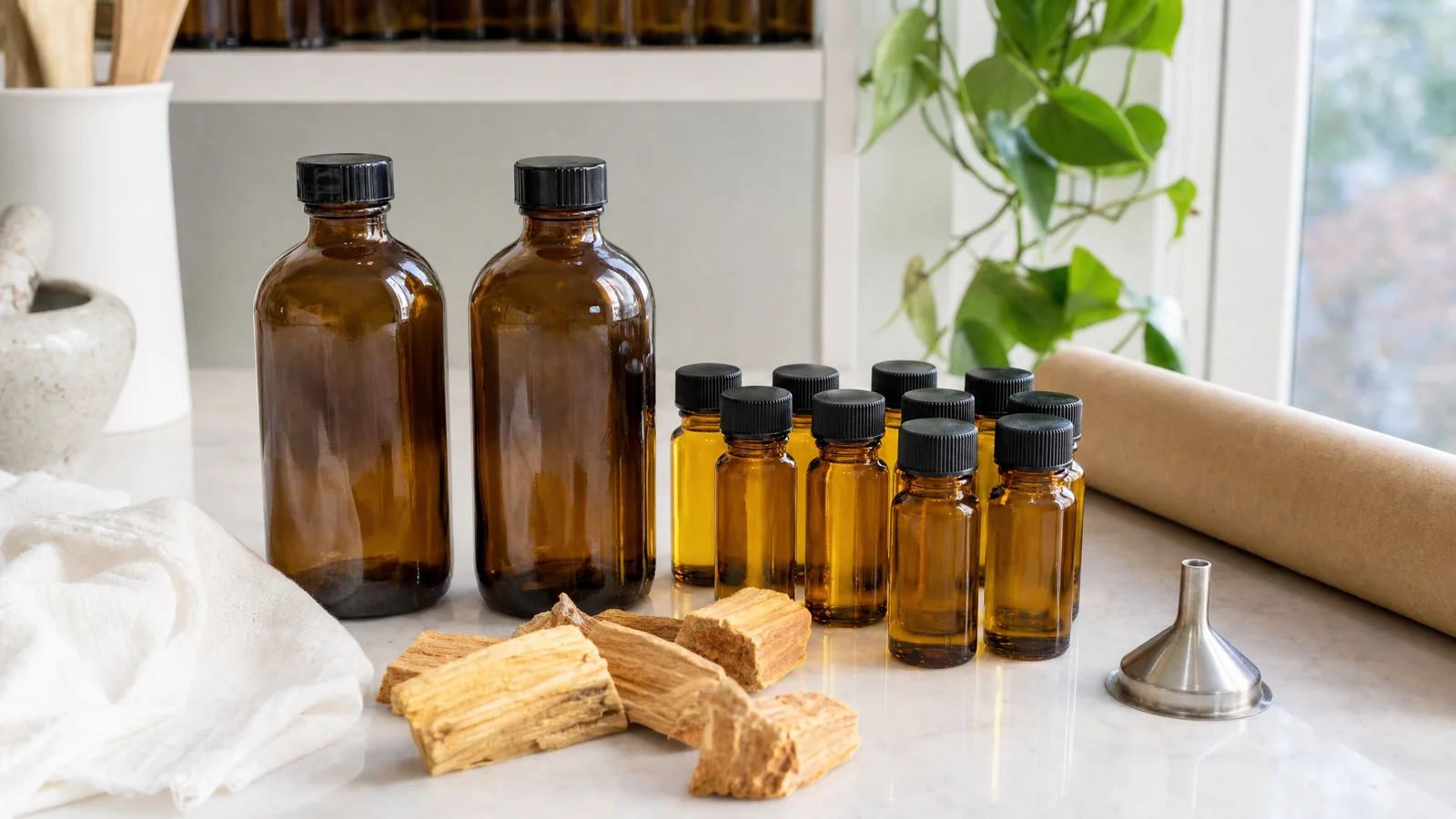
A 25 lb order is not something you want to be wondering about in the hallway. Pick the spot first: a cool, dark shelf away from the stove and the sunny window, out of reach of children and pets, with room to label things. Have clean, dry amber bottles and a funnel ready so decanting is calm instead of a scramble.
When the sample or the first bottle arrives, open it beside a clean blotter and take your time. Smell it at arm's length, then closer, then again an hour later. Write the date and the lot reference on whatever you pour it into, so a small bottle never loses its paperwork.
Plan for the big container
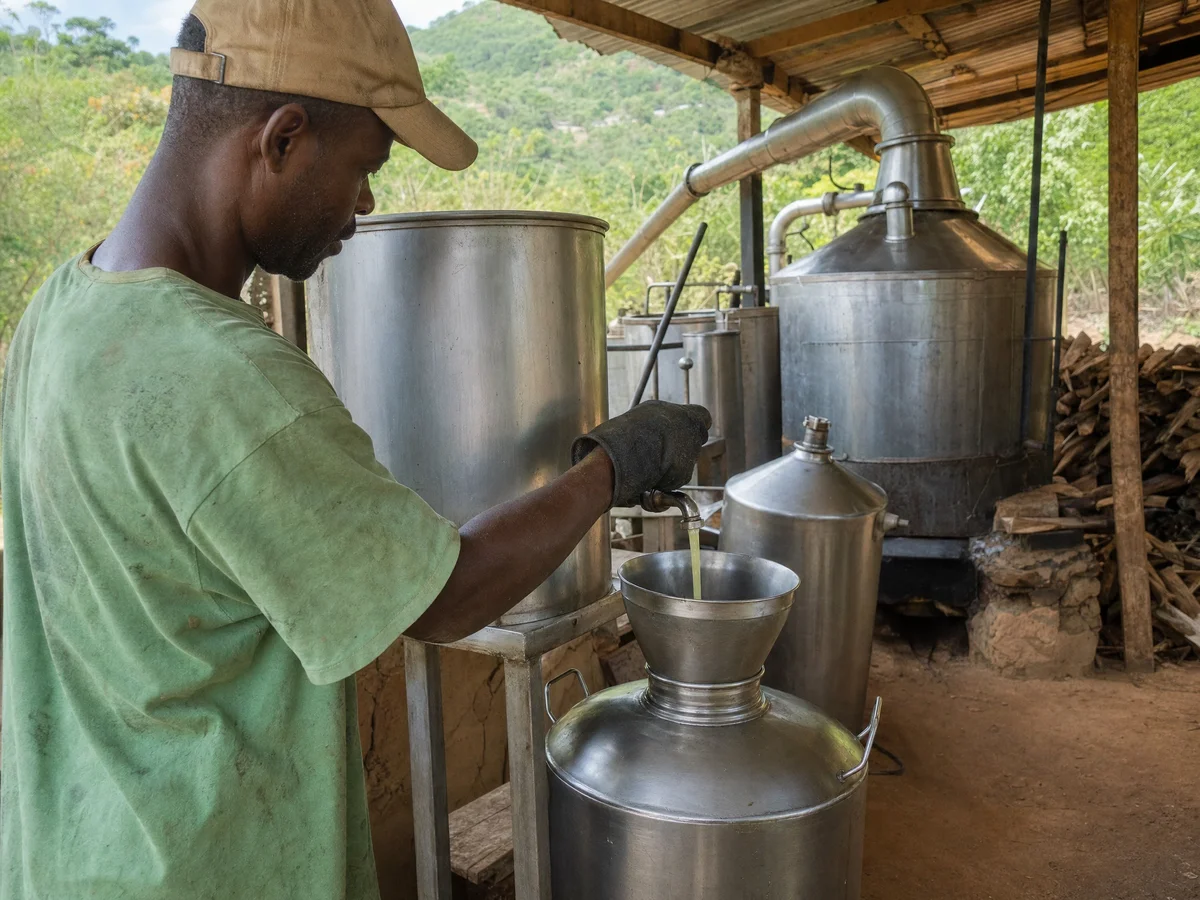
Every time a large container is opened, more air gets in. The Tisserand Institute lists heat, light, moisture and air as what drives oxidation and says oils used within 6 to 12 months of purchase mostly avoid the issue (Tisserand Institute on oxidation). The practical answer is the one we give on our bulk page: decant into a smaller airtight bottle, reseal the main container promptly, and date everything. We say typically 4 to 6 years unopened in a cool, dark place, and that figure is for the sealed container. Our article on bottle sizes applies the same logic at retail scale.
When to wait
A bulk order works best when the formula is settled. Start with a sample if you have not yet made a finished batch, and choose a smaller size if you would take more than a year to use the oil up. If your label or marketing would call the oil sandalwood, please do not: amyris is a different tree, and we do not describe it as sandalwood. Amyris versus sandalwood sets out the difference.
Orders ship in 1 to 2 business days, bottled and shipped from a US-based facility, and we take private label and custom formulation enquiries.
Amyris Essential Oil
Amyris Essential Oil from our own shop, in sizes from 0.5 oz to bulk.
From $23.99
Shop Now →Sources & Further Reading
- St-Gelais A., Tisserand Institute. The Highs and Lows of GC-MS in Essential Oil Analysis. tisserandinstitute.org
- Tisserand Institute. Is my bottle of essential oil oxidized or no longer good to use? tisserandinstitute.org/learn-more/oxidized
- US Food and Drug Administration. Modernization of Cosmetics Regulation Act of 2022 (MoCRA). fda.gov