How to Choose Essential Oils: 5 Questions to Ask
Pick up any essential oil and turn the bottle around. The front is marketing; the back is where you learn whether the seller expects questions. A good bottle answers five of them without being asked, and a good seller answers the rest by email. Here is how we would read a label if we were the one buying.

Amyris Essential Oil
Our own Amyris Essential Oil, in sizes from 0.5 oz to bulk.
From $23.99
Shop Now →What is it, exactly?
A common name is not enough. "Cedarwood" can mean several different trees, and "sandalwood" on a very cheap bottle deserves a second look. Look for the Latin name. The Tisserand Institute's supplier checklist treats a botanical name as a first green flag and a missing or wrong one as a first red flag (Tisserand Institute supplier guide). The plant part matters too, because the wood, leaf and flower of one species can give quite different oils. Ours is Amyris balsamifera, a Caribbean tree sometimes called West Indian sandalwood, though it is not related to true sandalwood. You can read about the tree in our overview of the oil.
Where is it from?
Origin does not guarantee quality, but it gives you something to compare against. A seller who tells you where the plant grew is making it possible to check their story. We source our amyris wood from Haiti, and our sourcing page tells the longer story.
How was it made?
Most true essential oils are steam-distilled or, for citrus, cold-pressed. A bottle that says nothing about the method, or sells a "fragrance oil" under an essential oil name, is telling you something. If you are unsure of the difference, our comparison of essential oil and fragrance oil explains it. Our amyris is steam-distilled from wood; the process itself is described in how amyris oil is distilled.
Which batch is it?
This is the question that makes all the others checkable. A lot number is the thread that ties a bottle to a document, and dates tell you how old the oil is. Oils change with air and light, which is why we put a still date, a fill date and a lot reference on every bottle and use amber glass. When the bottle arrives, our guide to shelf life and storage covers what to do next.
What does the paperwork actually show?
Here is the part most buying guides skip. A report is evidence of a particular kind, and it helps to know what that kind is. GC-MS, the standard analysis for essential oils, describes what a sample contains. It is excellent for spotting an oil whose main compounds are off, but some adulterations are quiet. A 2021 review of lavender, lemon and tea tree oils found that diluting with vegetable oil leaves the percentage profile unchanged, and catching it took extra quantitation work (Capetti et al., 2021). Alex St-Gelais of the Tisserand Institute makes a similar point: GC-MS is a powerful tool with limits, and complementary methods fill the gaps (St-Gelais on GC-MS). The sensible takeaway is not that reports are useless. It is to ask what was measured, on which lot, and whether that method would catch the problem you care about. Our guide to reading a GC-MS report goes line by line.
For our own oil, the Certificate of Analysis we publish covers one batch and lists appearance, relative density (0.952 at 20 C), refractive index (1.505) and optical rotation (+21.32 degrees), each next to the standard it is compared with. If you want GC-MS for your own lot, ask us in writing through the contact page before you order, and quote the lot number on your bottle.
Look at the bottle itself
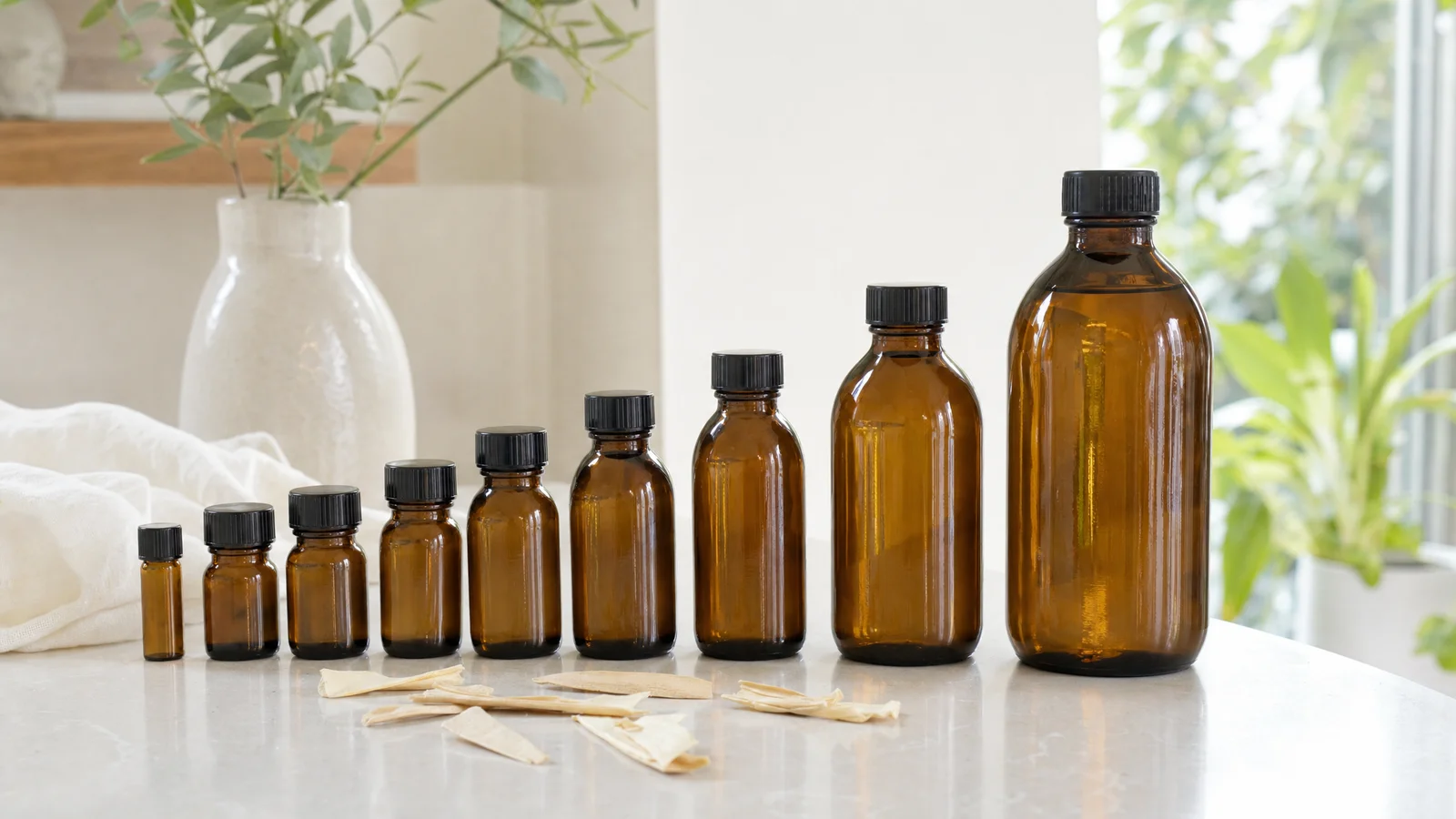
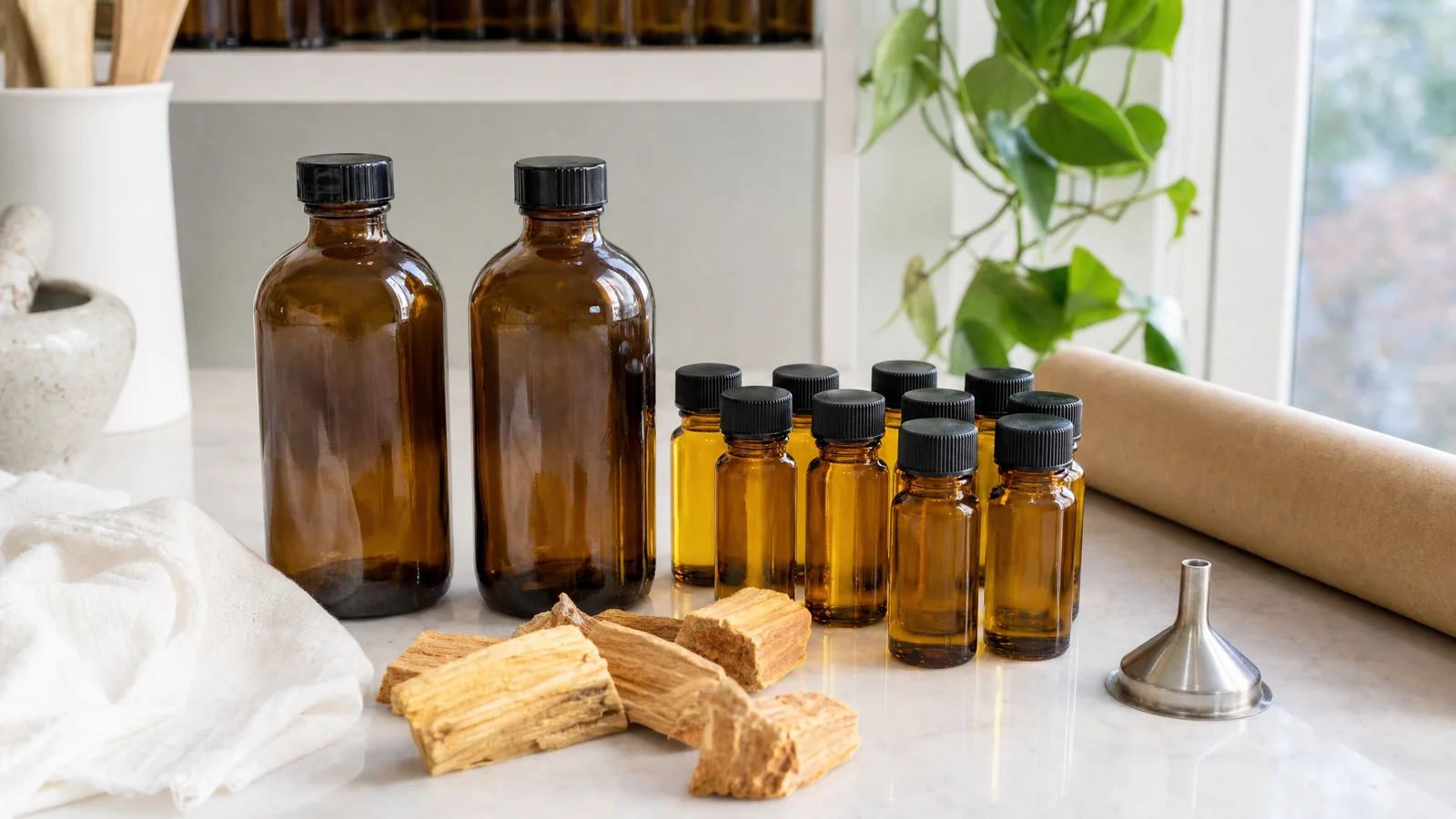
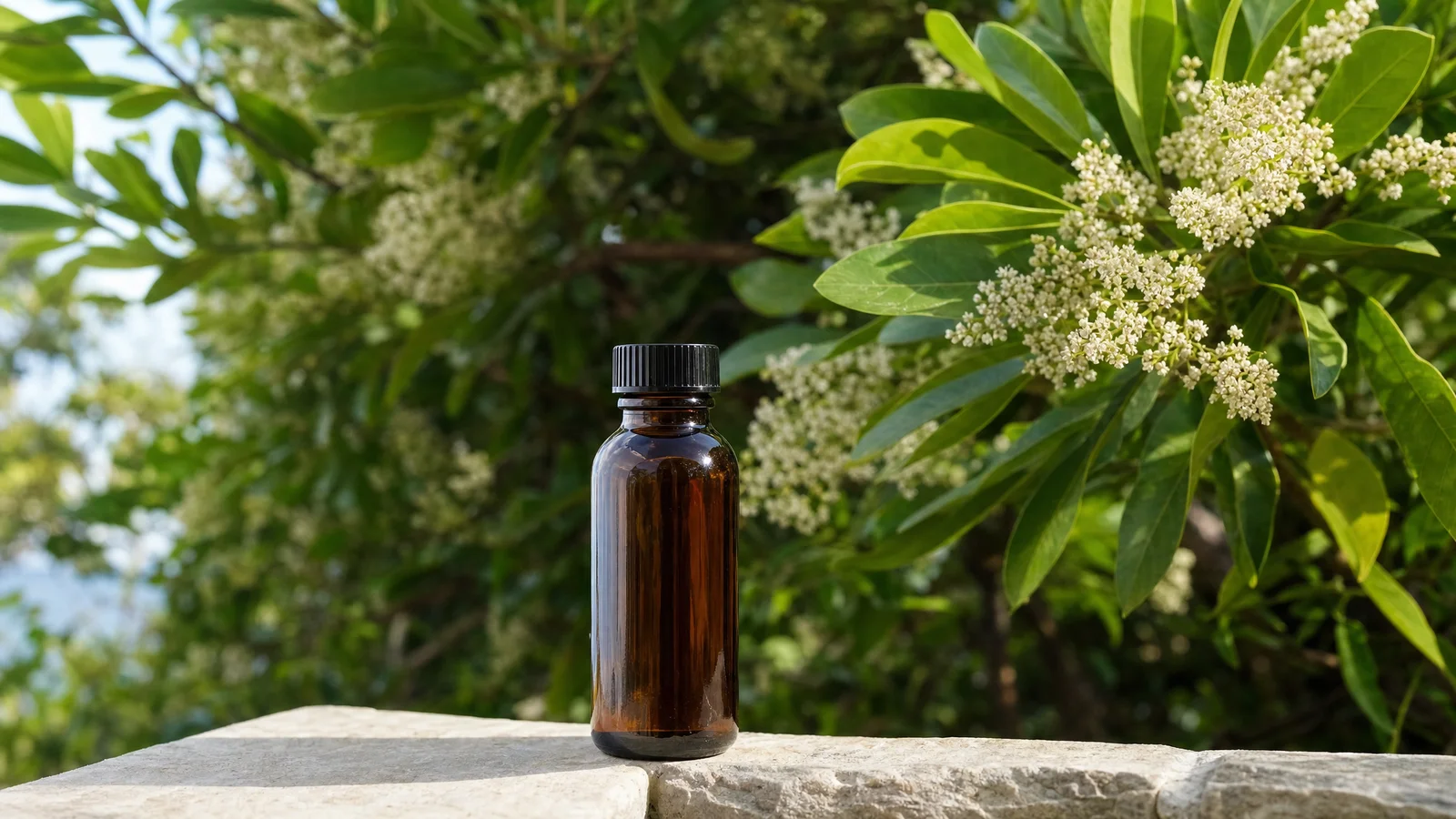
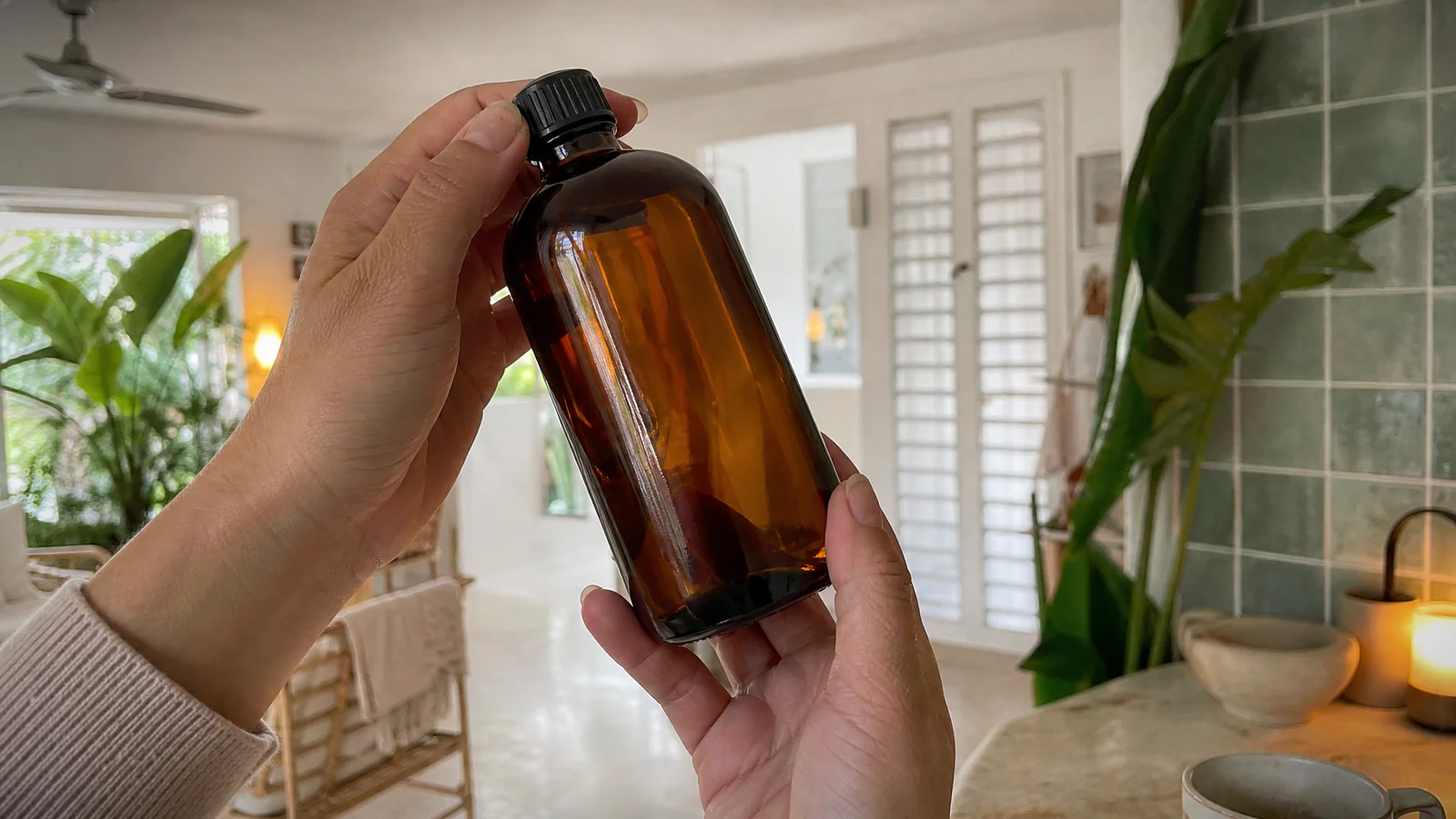
Turn it in the light. Dark glass, a firm cap and a label you can read without squinting say something about how carefully it was filled. A label that has started to peel or a cap that does not sit snug is worth a second look. You'll notice these small details tell you a lot before you open anything.
Small questions are welcome
Do not feel awkward about emailing a seller. Where did the plant grow, which lot is this, which documents exist for it? A seller who is glad to answer is worth keeping. We would much rather get the question before an order than a problem afterward.
Do not let a pretty label do the talking
Gold foil, leaves and big adjectives cost very little to print. What costs something is a clear Latin name, a lot reference and a seller who will pick up the question. When two bottles look equally lovely, let the second set of details decide.
Putting it together
When you are comparing oils, run the questions in order. If the botanical name, origin or method is missing, ask. If there is no lot number, think twice. If the seller will send a report for your lot, check that the name and lot match your bottle. Then smell it. A good sniff is the cheapest tool you own, and the least reliable on its own, since the people who cut oils work hard to match the smell.
Price is the other thing people lean on, and it is a weak signal in both directions; why prices vary explains why.
Amyris Essential Oil
Amyris Essential Oil from our own shop, in sizes from 0.5 oz to bulk.
From $23.99
Shop Now →Sources & Further Reading
- Capetti F. et al., 2021. Adulteration of Essential Oils: A Multitask Issue for Quality Control. Three Case Studies. pmc.ncbi.nlm.nih.gov
- Tisserand Institute. Eight green and red flags when looking for your ideal essential oil supplier. tisserandinstitute.org
- St-Gelais A., Tisserand Institute. The Highs and Lows of GC-MS in Essential Oil Analysis. tisserandinstitute.org