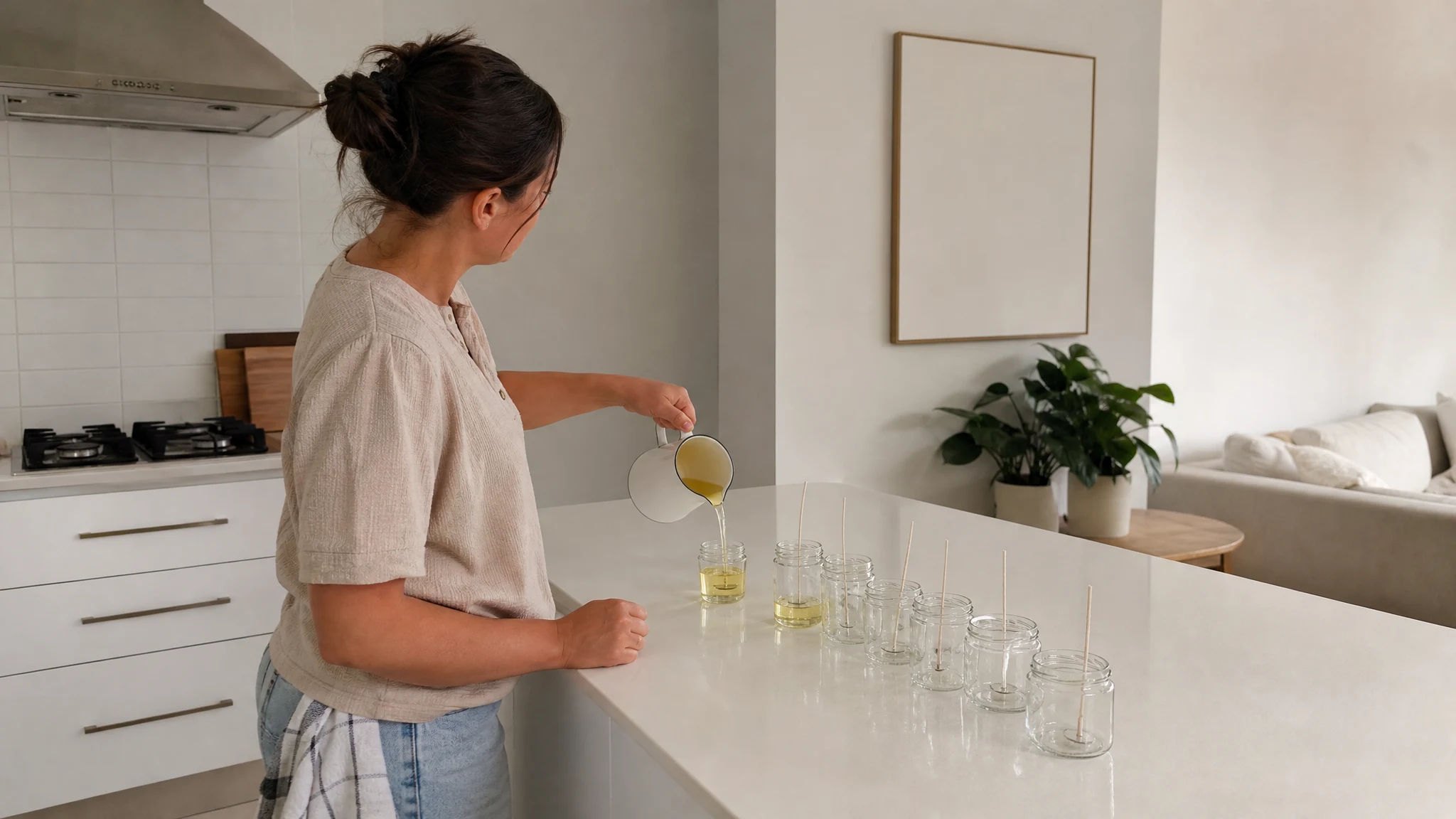
Can You Use Amyris Oil in Soy Candles?
Ask candle makers about essential oils and you will hear the same line: they throw weaker than fragrance oil. Mostly true, and amyris does not change that. What amyris offers is a creamy, woody base note that can anchor a candle blend, as long as you plan for a supporting role and test in your own wax.
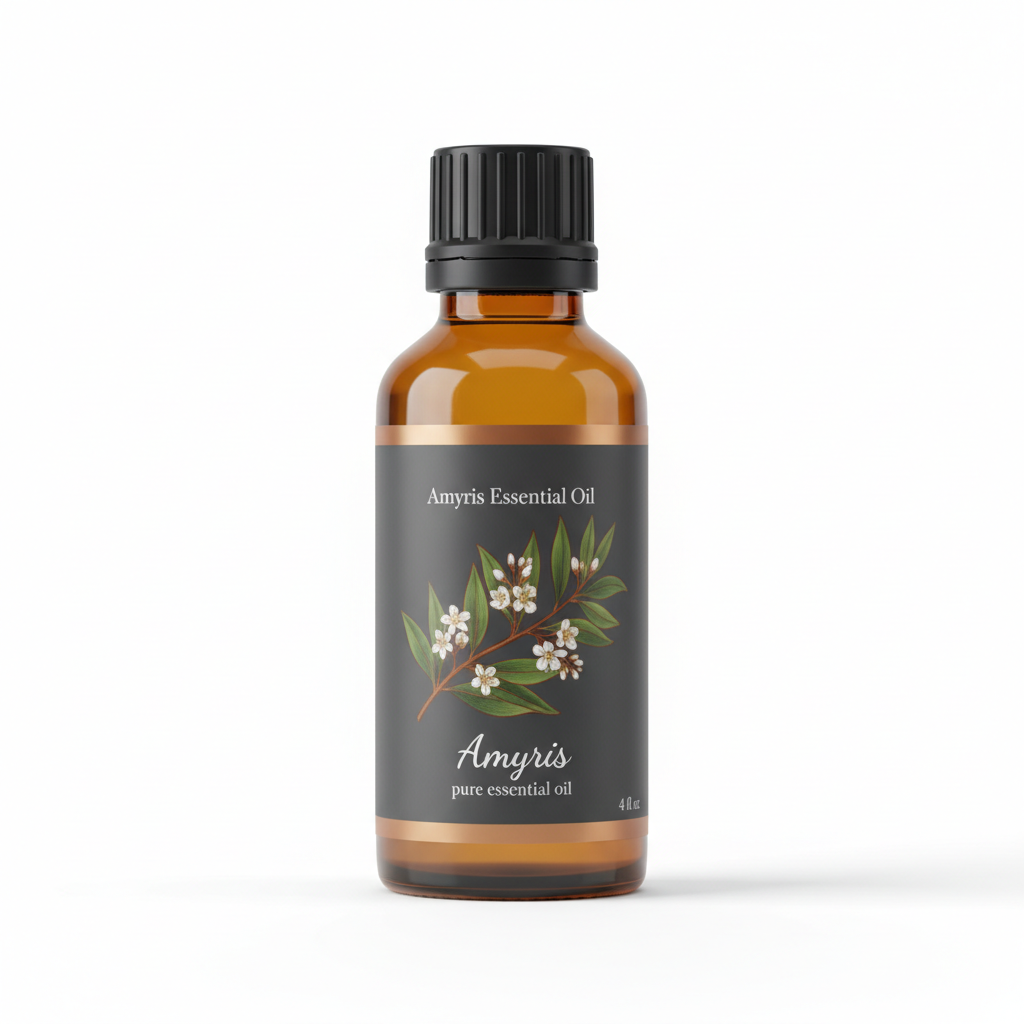
Amyris Essential Oil
Our own Amyris Essential Oil, in sizes from 0.5 oz to bulk.
From $23.99
Shop Now →What the candle sources agree on
Cold throw is how a candle smells unlit; hot throw is how it fills a room while burning. Lone Star Candle Supply advises judging a scent by hot throw after a proper cure. Its guides are written for fragrance oils, which is worth knowing, because a lot of amyris candle advice online quietly borrows fragrance-oil numbers.
The essential-oil source we could read in full, a retailer called Organic Aromas, says essential oils are more fragile in heat than fragrance oils and gives loads by weight rather than drops: 6 to 10 percent of the finished candle, with a warning not to chase throw past about 10%. Its examples are lavender, litsea cubeba and ylang ylang at roughly 3 to 6 percent each. It adds that woody and resinous oils tend to throw better than delicate florals and raw citrus, and that soy needs one to two weeks of cure so the oil binds into the wax. Amyris is not on its list, so there is a general range and a general direction but no amyris-specific figure. Treat anyone who offers a precise one with caution.
Why a base note makes sense
We describe amyris as a base note. Since heat strips the lightest molecules first, a heavier oil should keep more of its character in a hot melt pool than a bright citrus top note does. That is reasoning about volatility, not a measurement. It also cuts the other way: a heavy oil can be slow to leave the pool, which may mean a quieter hot throw than you expect.
So we would build around it rather than rely on it alone: a modest share of amyris under an oil that throws well, using the pairings in our blending guide. Citrus deserves a warning. Organic Aromas calls lemon and sweet orange weak candle oils and suggests litsea cubeba or petitgrain instead. We sell only amyris, so those will come from a candle or aromatherapy supplier.
Temperature and flash point
Flash point is the lowest temperature at which an oil gives off enough vapor to ignite when it meets a flame or spark. Lone Star reports candle fragrance flash points from about 115 F to over 200 F, notes that liquids at or below 140 F count as flammable, and says to add fragrance around 180 F and stir for two minutes. Organic Aromas puts the soy addition at about 185 F (84 C) and says never to add oil hotter than its flash point. The pages weigh the constraint a little differently, so read both as supplier guidance.
Without a lot-specific flash point for our amyris in hand, a cautious maker pours at the cooler end of the wax's range and accepts a slightly quieter scent. If a lot-specific flash point matters to your process, ask us through the contact page what documentation we can offer.
The load arithmetic
Fragrance load is oil weight as a share of wax weight. For 300 g of wax:
| Load | Oil weight | Approx. volume at 0.952 g/ml |
|---|---|---|
| 3% | 9 g | 9.5 ml |
| 6% | 18 g | 18.9 ml |
| 10% | 30 g | 31.5 ml |
The volume column uses the density on the Certificate of Analysis we publish for one batch (0.952 g/ml), and another batch can differ slightly, so weigh the oil rather than counting drops. At 10 percent you would be adding over 30 ml of concentrated oil to one candle. That is a lot to buy, to burn and to breathe, and a good reason to find your lowest satisfying load.
A simple test plan
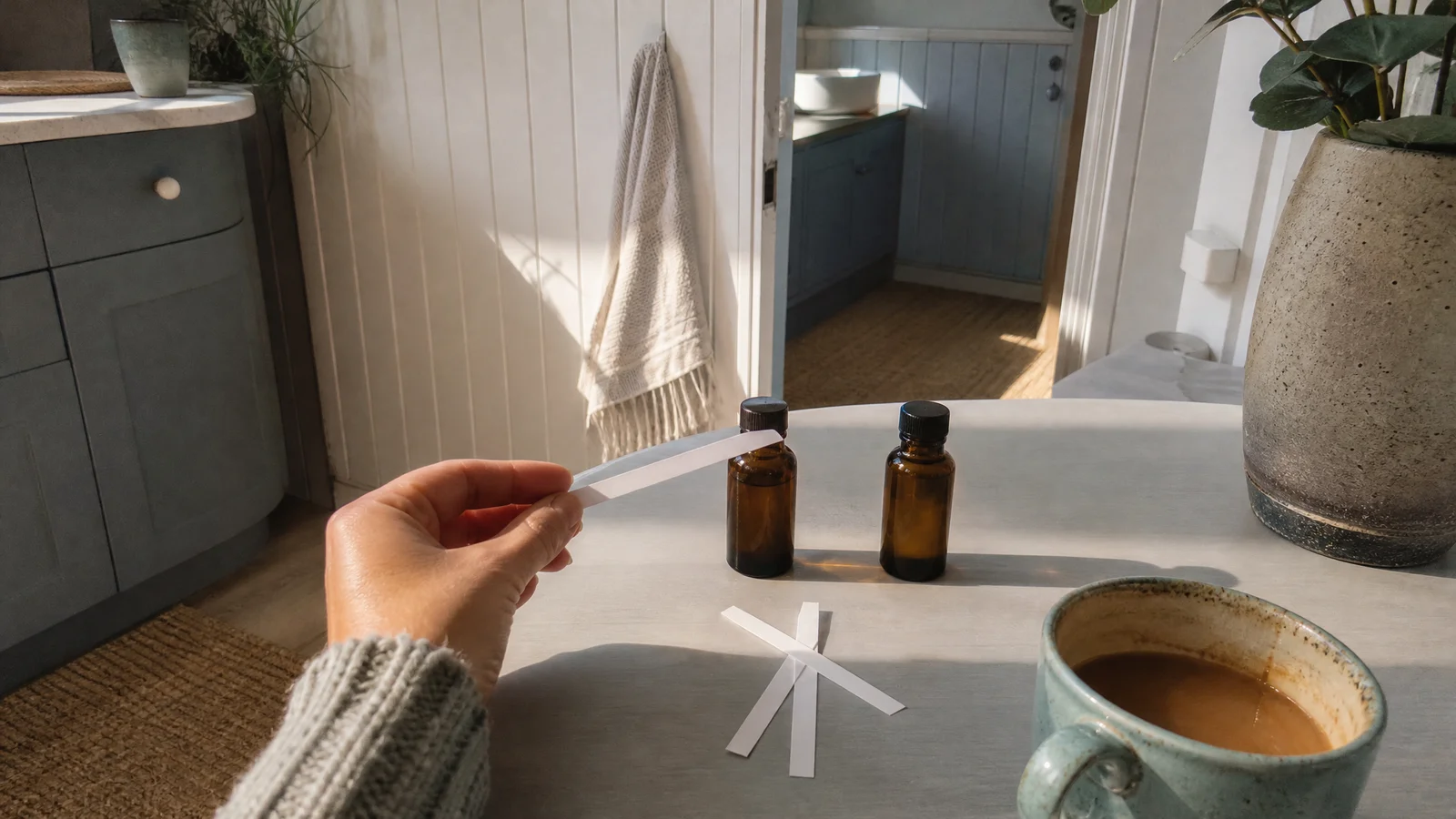
- Screen cheaply. Lone Star describes dipping a cotton swab in each oil and sealing them in a small jar to see how two scents sit together. It judges compatibility, not throw.
- Pour small test candles, for example 3 and 6 percent in the same wax, container and wick. Change one thing at a time.
- Cure them. Lone Star says about a week, Organic Aromas one to two weeks for soy.
- Burn and note. Record how the room smells at 30 minutes and at two hours, with the wax lot and the load.
- Raise the load only if the wax allows. Your wax supplier's data sheet sets the ceiling.
Label every test candle with its load, the date poured and the wax lot before it goes on the shelf. By the time they have cured, you will not remember which was which, and a good label turns a pile of candles into a useful comparison.
If an amyris-only candle reads as a gentle wood note, that is a useful answer: it is a supporting oil. A half-ounce bottle is a modest way to run these tests, and we sell nine sizes in the shop if you later scale up.
Burning safely
The National Candle Association's basics apply whatever the oil: trim the wick to a quarter inch, never leave a flame unattended, keep candles 12 inches from curtains, bedding and books, keep multiple candles 3 inches apart, and stop when half an inch of wax remains (NCA). Both supplier guides we read put candles in the non-skin-contact category 12 of the fragrance industry's usage limits, but those are third-party summaries, so check the oil's IFRA documentation if you sell candles. Selling also makes you responsible for labelling and safety testing.
A burning candle still puts scent in your air. If anyone at home has asthma or scent sensitivity, or you share the house with pets, especially cats or birds, start with our pets post and ask a physician or veterinarian. If you would rather skip the wax altogether, our diffuser blends need no wick.
Amyris Essential Oil
Amyris Essential Oil from our own shop, in sizes from 0.5 oz to bulk.
From $23.99
Shop Now →Sources & Further Reading
- Lone Star Candle Supply. Scent guide for candle making. lonestarcandlesupply.com/scent-guide
- Lone Star Candle Supply. Fragrance oil flash point: what it means for candle making. lonestarcandlesupply.com/fragrance-oil-flash-point
- Organic Aromas. Essential oils for candles: what actually throws scent. organicaromas.com
- National Candle Association. Candle safety tips. candles.org/candle-safety-tips