Amyris Oil Sizes: Which Bottle Should You Start With?
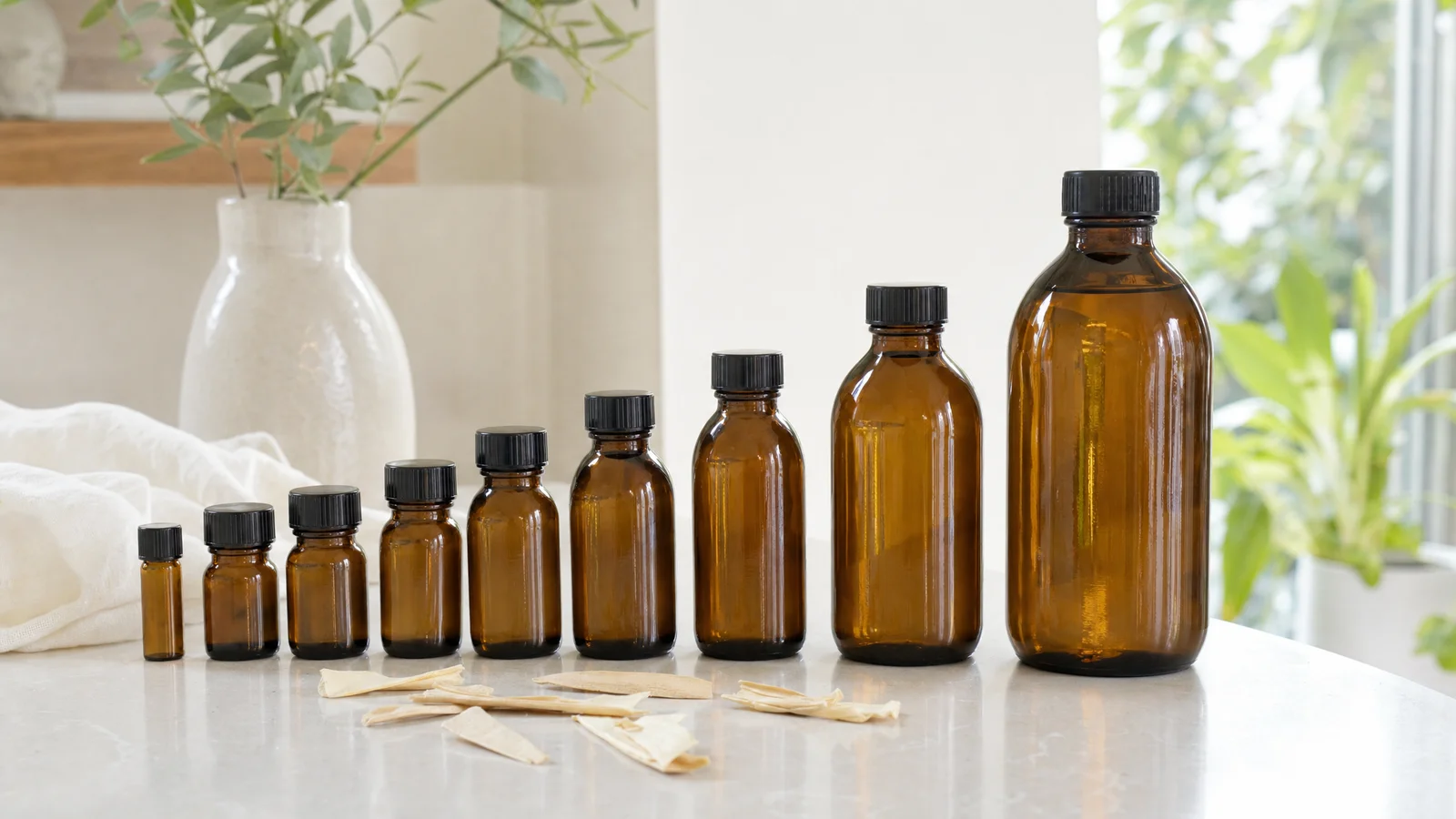
Most people look at the row of amyris sizes, from a half-ounce bottle up to 400 lb, and reach for the bigger one because it feels like better value. Then the arithmetic gets done and the surprise is how little oil a typical project needs. A first bottle of amyris is almost always the smallest one that covers your first few batches.
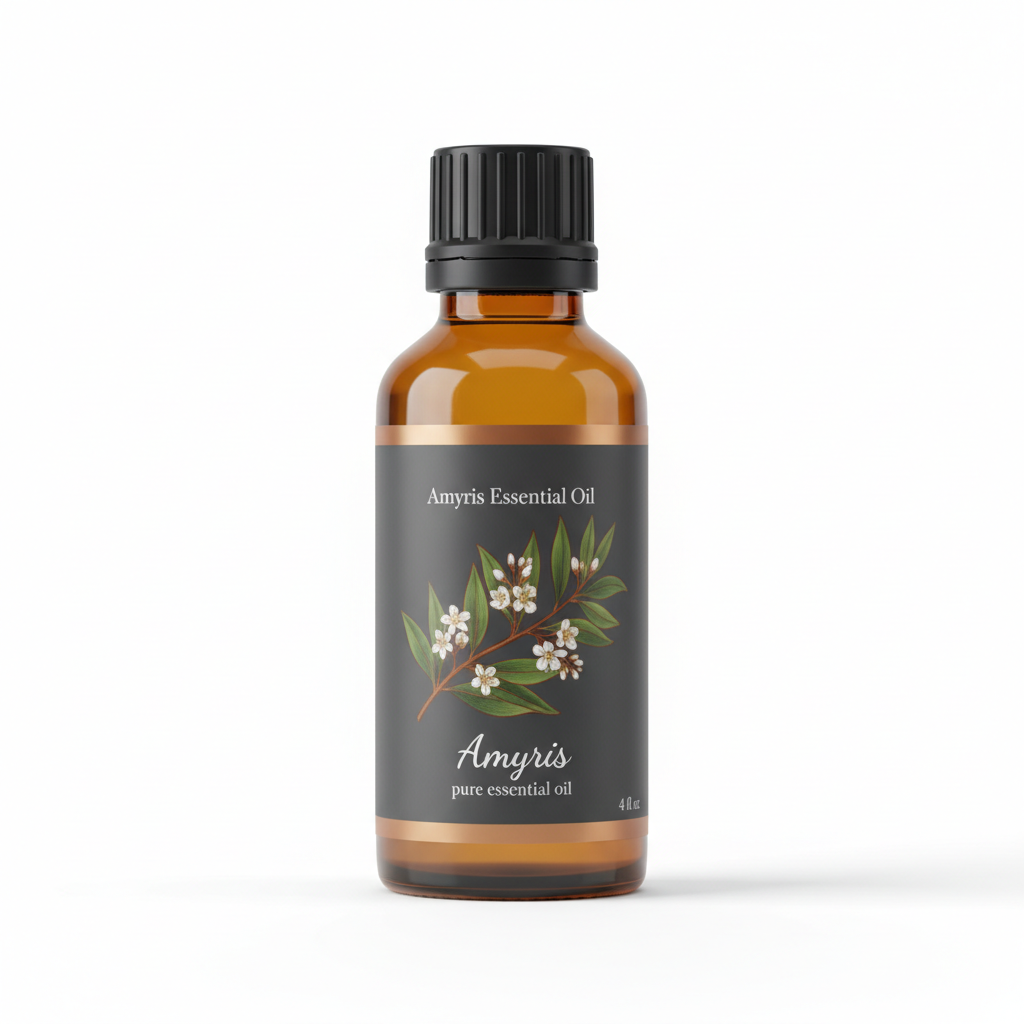
Amyris Essential Oil
Our own Amyris Essential Oil, in sizes from 0.5 oz to bulk.
From $23.99
Shop Now →What a small bottle really holds
We sell our amyris in nine sizes: 0.5, 1, 2, 4, 8 and 16 oz, then 5, 25 and 400 lb. A fluid ounce is 29.57 ml, and the batch on the Certificate of Analysis we publish measured a relative density of 0.952 at 20 C, so a millilitre weighs a little under a gram. Dropper counts are a rough convention of about 20 drops per ml (it shifts with the dropper and how thick the oil is), so treat every drop figure below as an estimate.
| Size | Volume | Weight, approx. | Drops, approx. |
|---|---|---|---|
| 0.5 oz | 14.8 ml | 14 g | about 300 |
| 1 oz | 29.6 ml | 28 g | about 590 |
| 2 oz | 59.1 ml | 56 g | about 1,180 |
| 4 oz | 118 ml | 113 g | about 2,370 |
| 8 oz | 237 ml | 225 g | about 4,730 |
| 16 oz | 473 ml | 450 g | about 9,460 |
Turn your project into a number
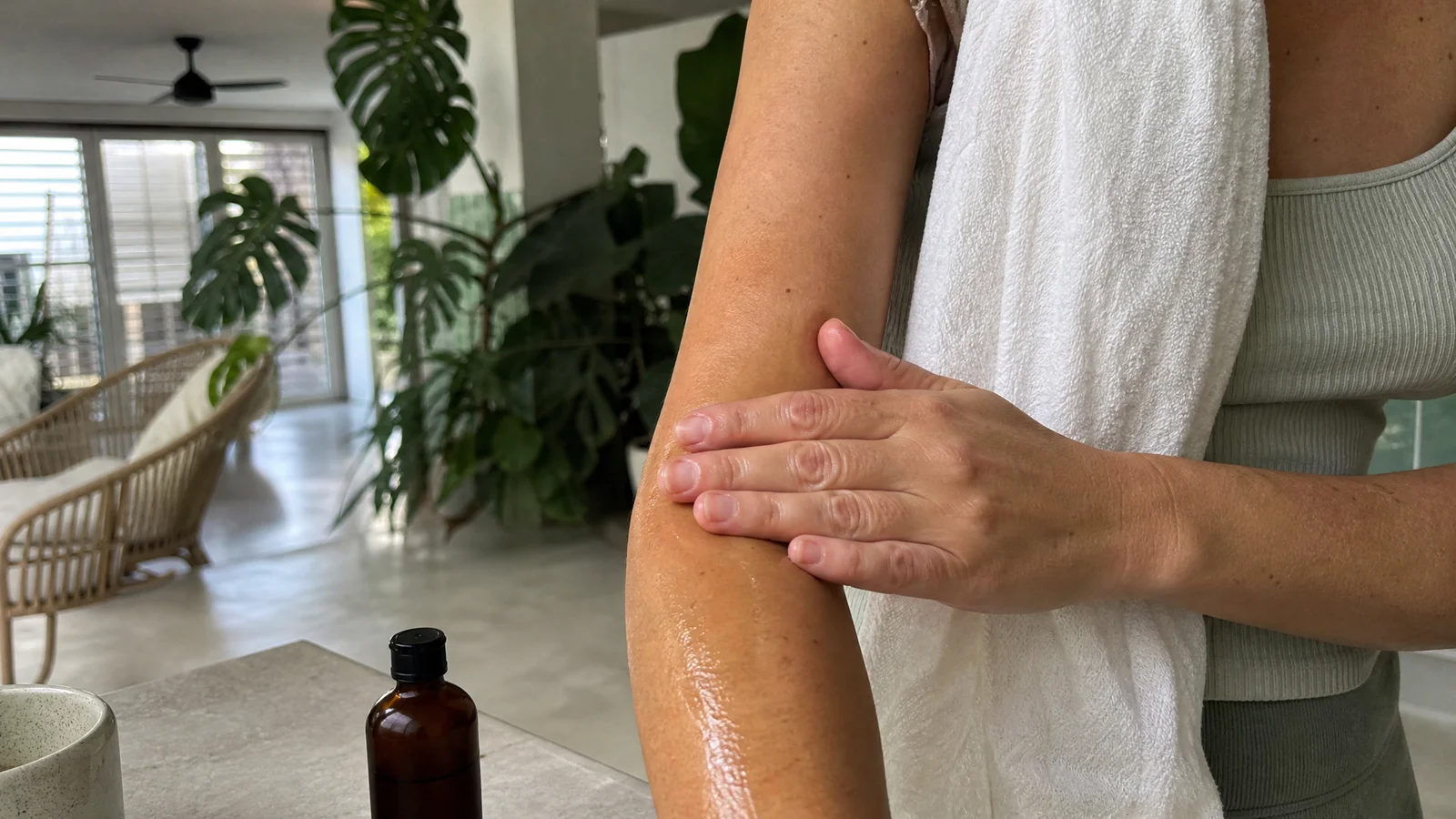
Our dilution guidance for skin is 0.5% to 2% in a carrier oil, with a patch test first. At 2%, a 10 ml roller needs 0.2 ml of amyris, around 4 drops. A 30 ml (1 oz) bottle of body oil needs about 12 drops at 2% and about 3 at 0.5%. That is where our "roughly 3 to 12 drops per ounce" line comes from, and it holds when you count about 20 drops to the millilitre.
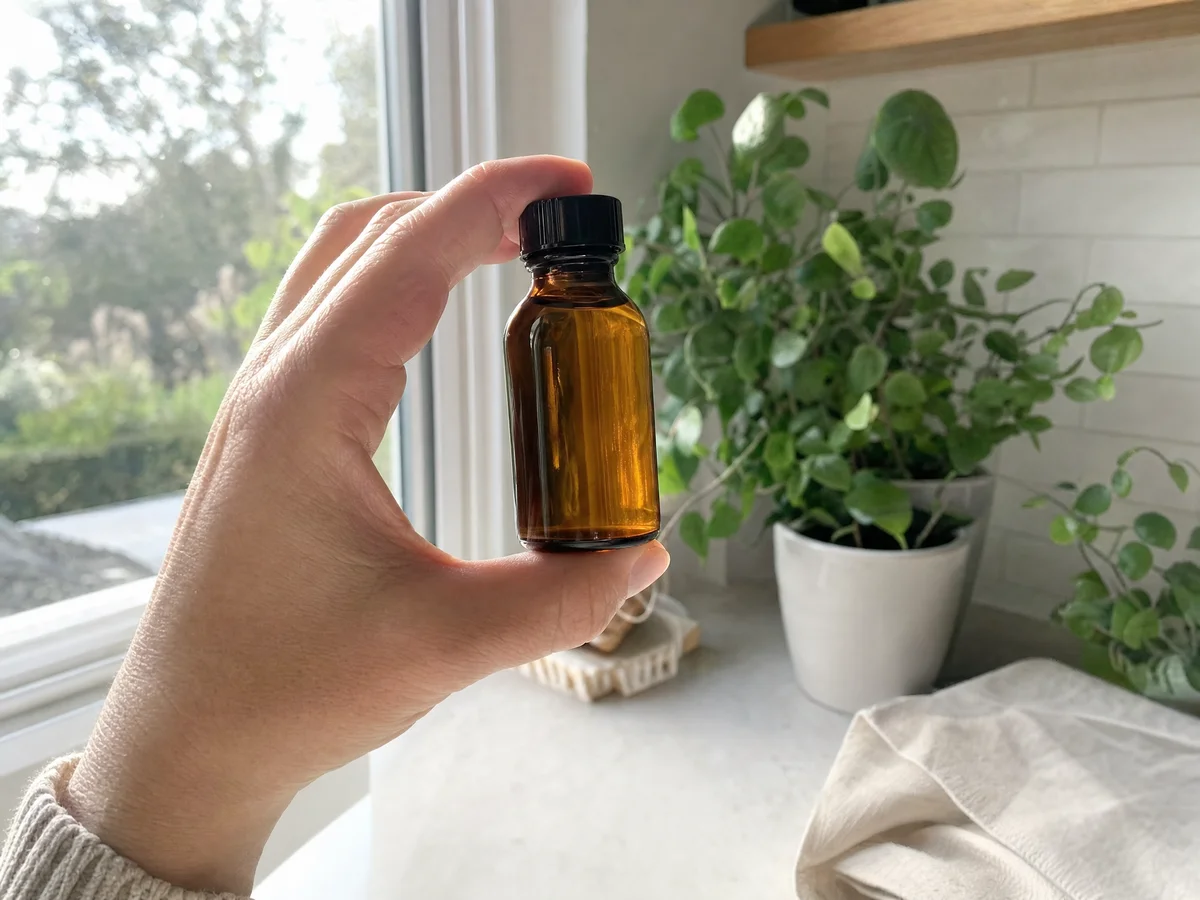
Now divide. A 0.5 oz bottle is about 300 drops, so at 12 drops per ounce of body oil it covers around 24 one-ounce bottles. Make one a month and that is two years from the smallest size. Most first projects, a few rollers, a body oil, a small candle or soap batch, use a sliver of even the half-ounce.
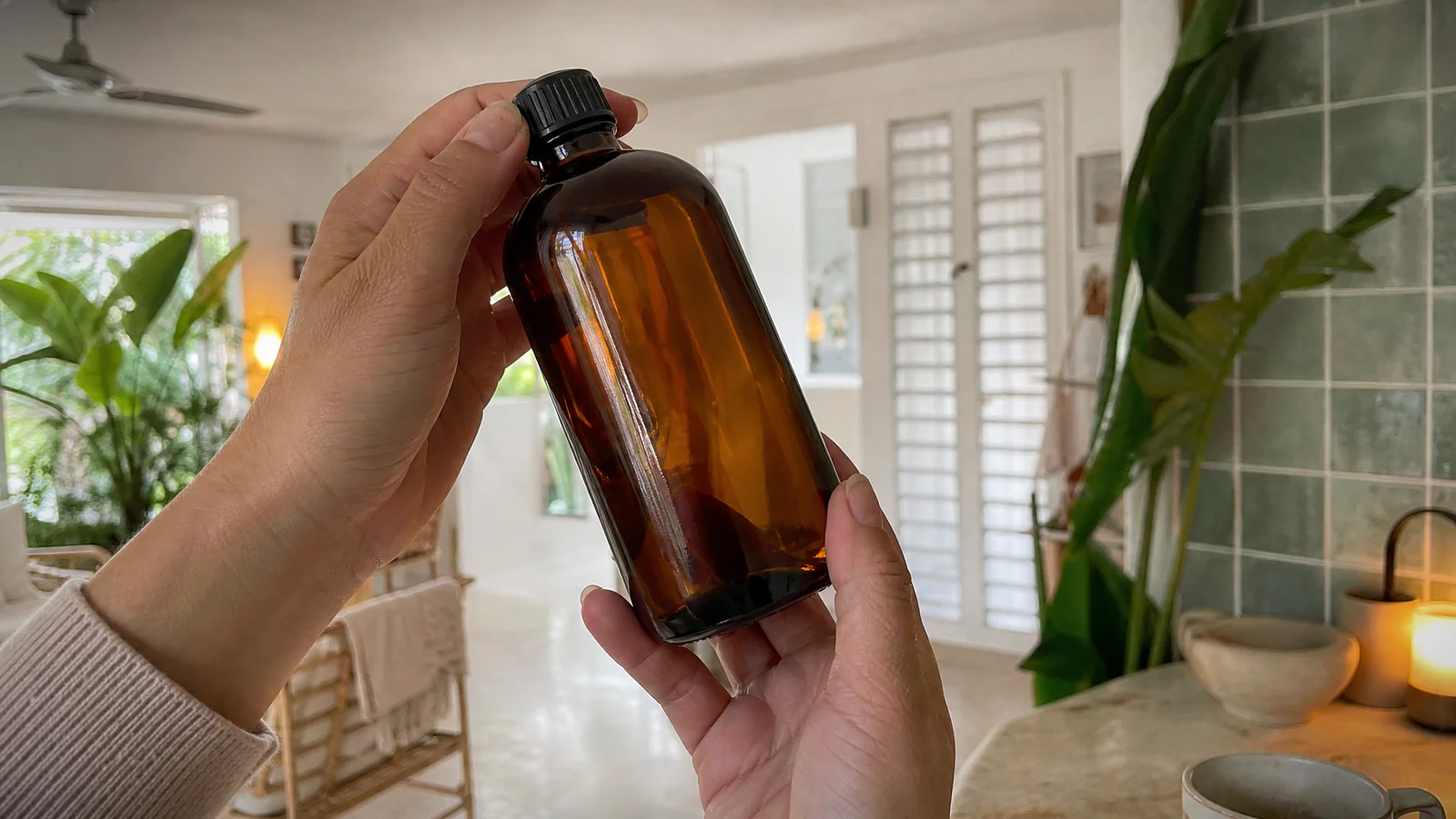
Hold a half-ounce bottle in your hand and it looks tiny, almost like a sample. It is easy to feel that you are being shortchanged. Then you look at the drop count in the table and remember that a single drop is plenty for most small jobs, and the little bottle starts to look generous.
Air is the real enemy of a big bottle
The more useful question than "which size is cheapest per ounce" is "how long will this bottle stay open?" The Tisserand Institute names heat, light, moisture and air in the bottle as what drives oxidation, and notes that most oils keep well for at least a year or two, that using an oil within 6 to 12 months makes oxidation mostly a non-issue, and that refrigeration roughly doubles useful life (Tisserand Institute on oxidation). That is general guidance for essential oils, not a measurement on amyris, but the logic is easy to apply. A 16 oz bottle that gets opened twice a month for a year has more and more air above the oil. A 1 oz bottle is finished before the air does much.
We say amyris typically keeps 4 to 6 years unopened in a cool, dark place, and that is a promise about a sealed bottle. If you do buy big, our bulk advice is to decant into a smaller airtight bottle, reseal the large one promptly, and work from the small one. Our guide to shelf life and storage covers the rest.
Which size, for which kind of maker
- You have never smelled it. Take 0.5 oz or 1 oz. We describe amyris as creamy, woody and balsamic, and whether that suits you is a question for your nose. Our guides to what amyris smells like and amyris versus sandalwood help before you order.
- You make small batches for yourself or as gifts. 1 oz or 2 oz covers dozens of batches. Do the division for your own formula.
- You sell what you make, a few batches a month. 4 oz or 8 oz can make sense, as long as you keep a small working bottle.
- You formulate by the pound. 16 oz is the largest retail size. The 5, 25 and 400 lb sizes are the bulk route, walked through in our wholesale guide.
Think of the first bottle as a learning bottle
Your first order is less about stocking up and more about finding out how you like to work with amyris. You may discover that you love it in a diffuser and rarely touch it anywhere else, or that a few drops go into every batch of body oil you make. Either way, a small bottle lets you find that out without a shelf full of oil waiting to be used up.
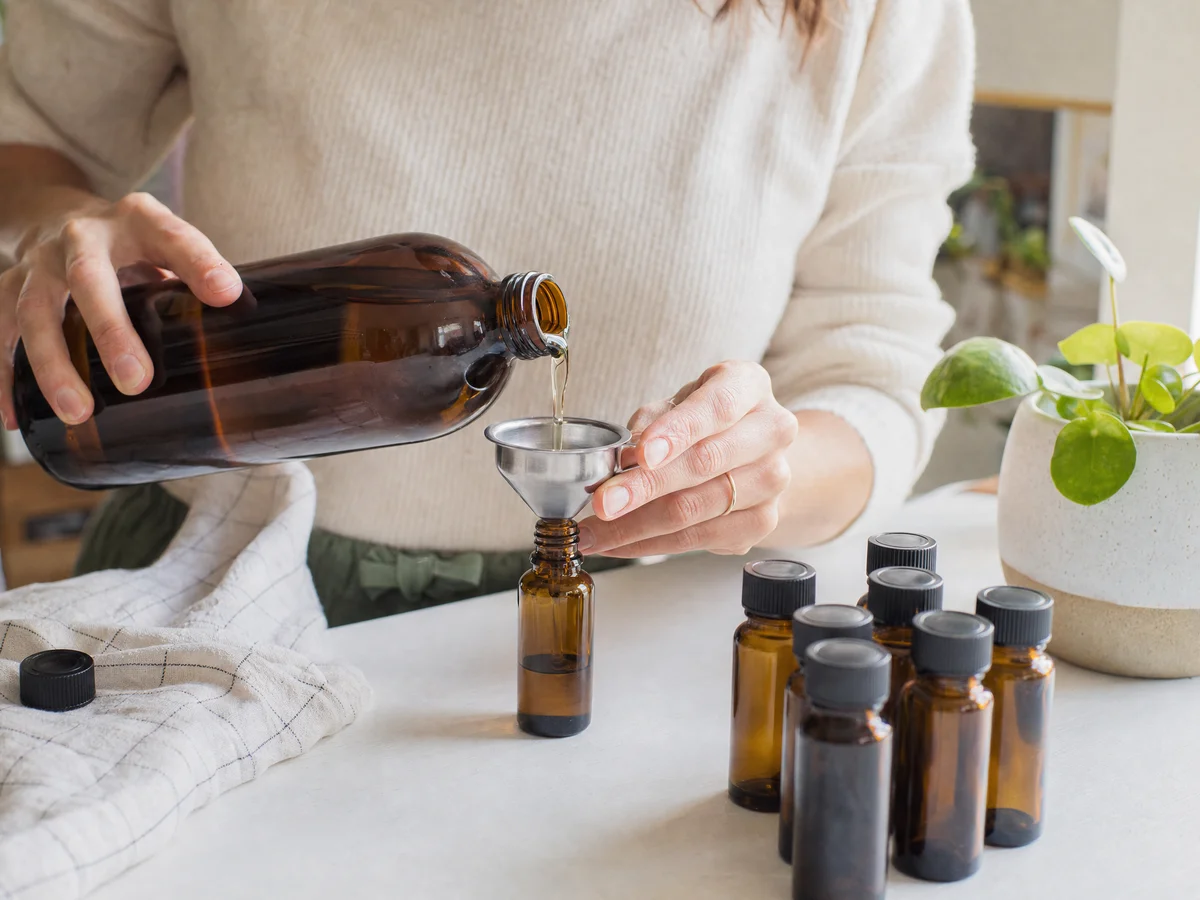
A small notebook kept next to the bottle helps. Jot down the date, the project and how many drops went in. After a few weeks you will know your real usage, and the next size decision becomes simple arithmetic instead of a guess.
Read the bottle when it arrives
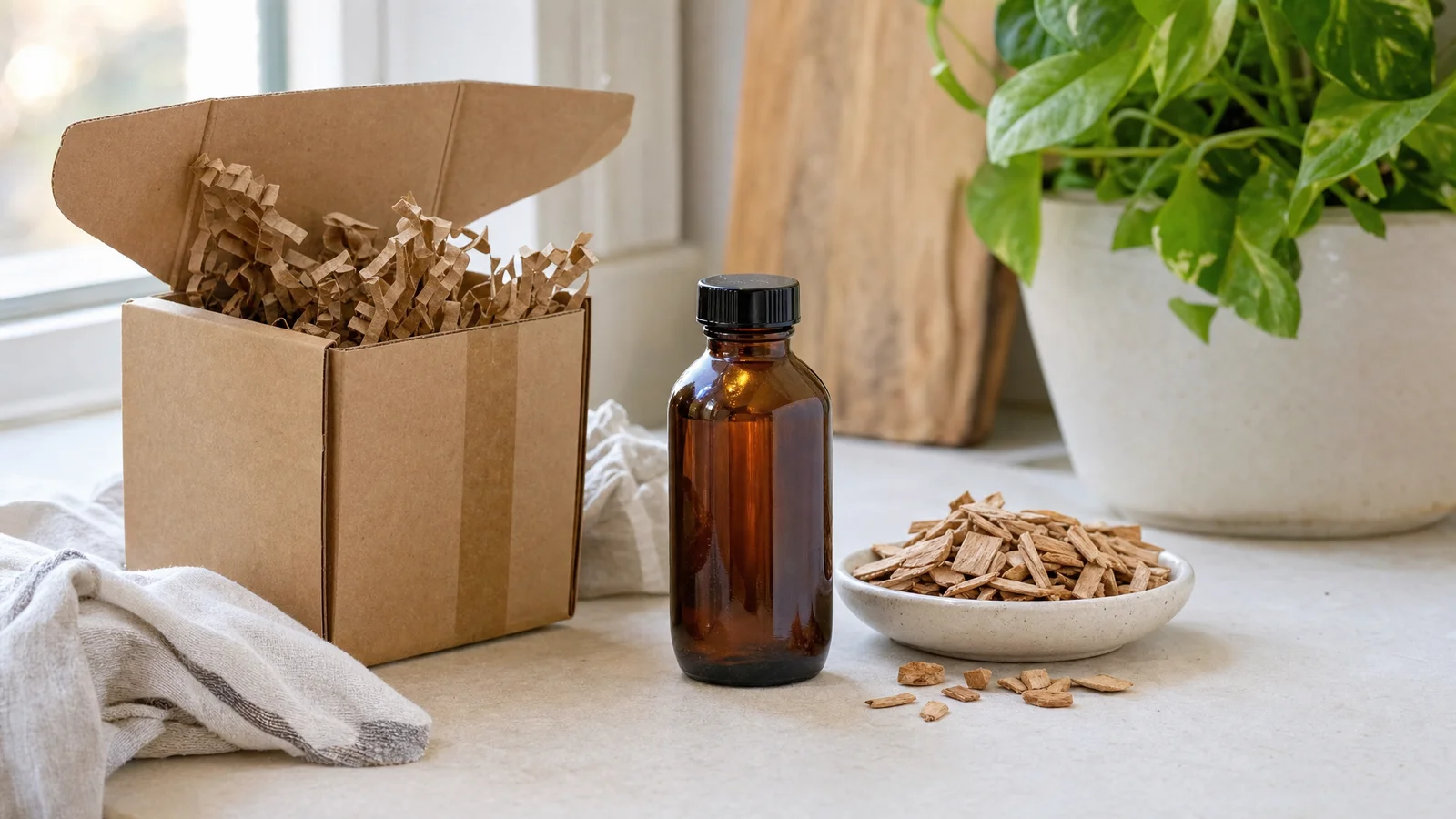
Every bottle of ours carries a still date, a fill date and a lot reference, in amber glass. Write the arrival date on the label with a pen; it starts your own clock. The lot reference is what you quote if you want more documentation. The Certificate of Analysis we publish for one batch lists density, refractive index and optical rotation, and if you need GC-MS for your lot, ask us in writing through the contact page before ordering.
One more thing to look forward to: when the bottle arrives, open it and take a slow sniff before you do anything else. That first impression of creamy wood is the best way to decide what you want to make with it.
If you plan to use amyris on skin, start with our dilution chart and patch test guide.
Amyris Essential Oil
Amyris Essential Oil from our own shop, in sizes from 0.5 oz to bulk.
From $23.99
Shop Now →Sources & Further Reading
- Tisserand Institute. Is my bottle of essential oil oxidized or no longer good to use? tisserandinstitute.org/learn-more/oxidized