Essential Oil Prices: Why Rose Costs More Than Lavender
It takes a few thousand kilograms of rose petals to make one kilogram of rose oil, and well under a hundred kilograms of lavender flowers to make the same amount of lavender. That gap does most of the work in explaining why one small bottle sits on a shelf at ten times the price of its neighbour. Price in essential oils starts with arithmetic and then picks up a few other factors along the way.

Amyris Essential Oil
Our own Amyris Essential Oil, in sizes from 0.5 oz to bulk.
From $23.99
Shop Now →It starts with how much plant you need
Two open-access studies give a feel for the numbers. Clonal selections of damask rose (Rosa damascena) held 0.030 to 0.045 percent oil by fresh flower weight (Kumar et al., 2023). Lavender (Lavandula angustifolia) varieties gave 11.6 to 22.0 kg of oil per tonne of fresh inflorescences (Butnaras et al., 2025). Dividing it out, that is roughly 2,200 to 3,300 kg of rose per kilogram of oil against about 45 to 86 kg of lavender. These are variety trials in different countries, so they show the scale of the gap rather than market averages. The scale is the point: rose needs dozens of times more plant.
Then time, scarcity and rules
Years before the first harvest. Sandalwood oil comes from mature heartwood, and the slow-growing trees are under pressure from over-exploitation in parts of southern India (Celedon et al., 2016). A raw material that needs decades of standing time cannot ramp up when demand rises, and that waiting is built into what you pay.
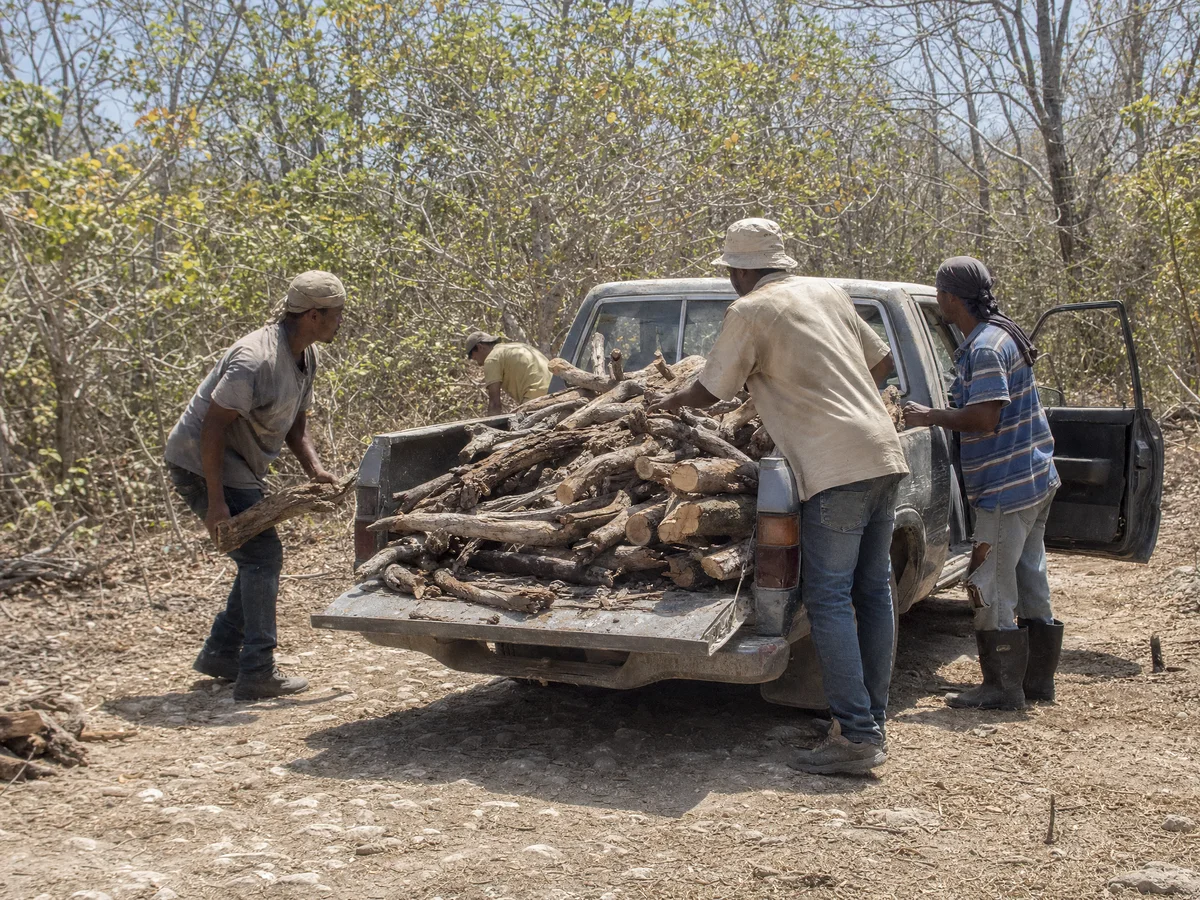
Scarcity. Robert Tisserand has written that when he began buying Indian sandalwood oil in the mid-1970s it cost the equivalent of 35 US dollars per kg and that today's price is over 100 times higher, which he attributes to growing scarcity (Tisserand on sandalwood). One buyer's account is not a price series, but it names the mechanism well. Our guide to sustainable essential oils looks at the conservation side.
Trade rules. Some of the priciest aromatic woods are regulated. The CITES-linked Species+ database lists Brazilian rosewood (Aniba rosaeodora) in Appendix II, with extracts covered by the listing (Species+ record). Permits and documentation add time and cost for listed species, and unlisted ones carry no such overhead.
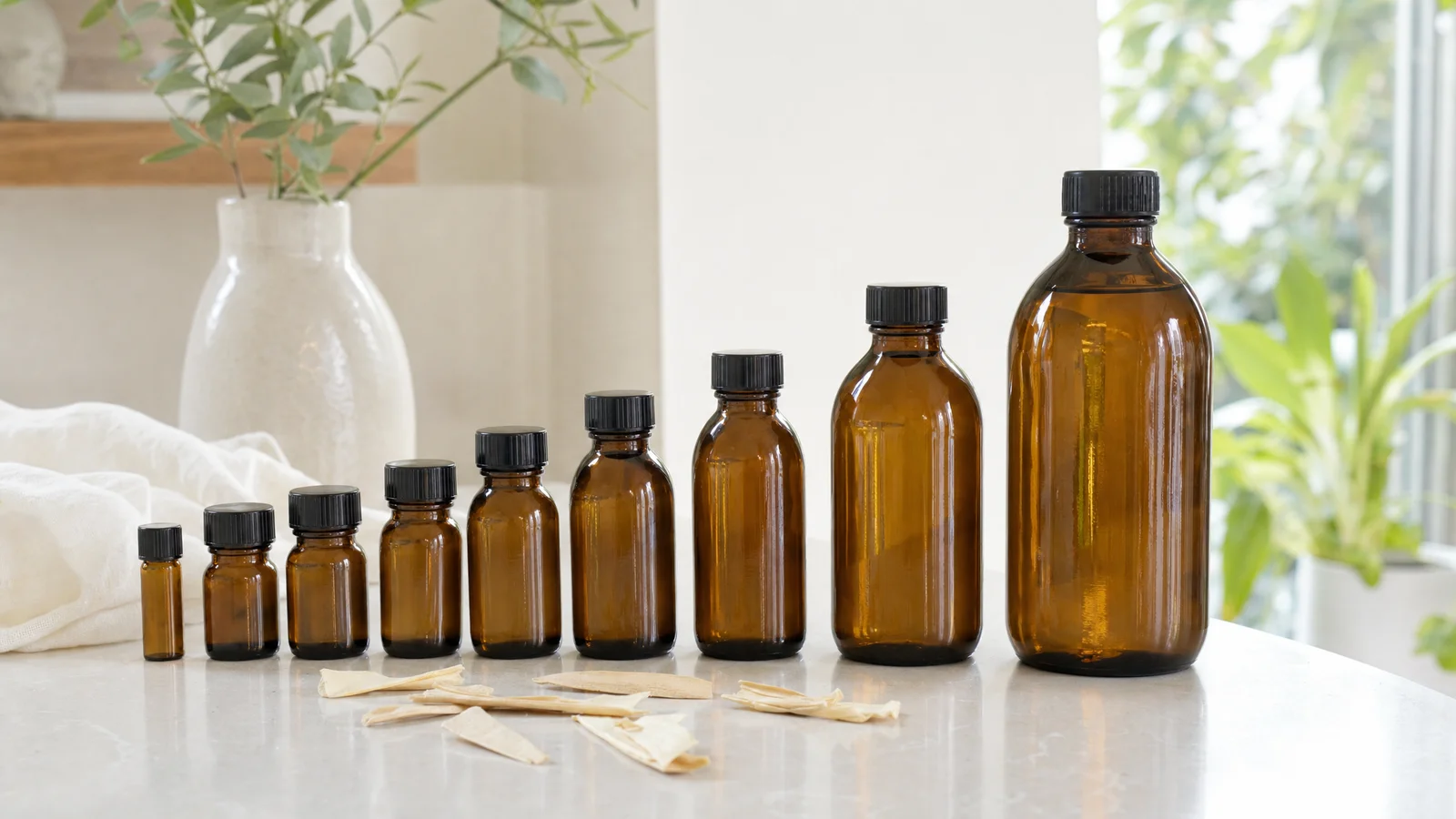
You can feel this difference without reading a single study. Visit a perfume counter and a craft store on the same afternoon. The flower oils tend to be sold in tiny bottles, sometimes already diluted so that a few drops go a long way, while the leaf and wood oils come in larger bottles. The size of the bottle is often the plant's story told in glass.
Why a high price proves nothing
Expensive oils tempt substitution. A 2021 study bought six oils sold as sandalwood and analysed them. None met the international sandalwood standard, only one contained the santalols of true sandalwood, and three had the profile of amyris oil. The authors noted the oils varied in price and origin and concluded that price is not a suitable criterion for judging them (Kucharska et al., 2021). So an expensive bottle was no guarantee, and a cheap one is not automatically a fake.
What arithmetic can do is raise a question. If a bottle labelled rose costs about the same as lavender, the plant-material gap says something has to give, whether a diluent, a different product type or a different plant. That is a reason to ask for the lot's paperwork, as our piece on adulterated oils explains.
What a small bottle is really telling you
A tiny bottle is not a warning sign. Some oils are simply made in small amounts, and a maker who sells them in half-ounce bottles is being honest about that. What deserves a second look is a large bottle of a rare oil at a bargain figure, or a label that stays vague about what is actually inside. A good label names the plant in Latin, says which part of the plant was used, and gives you a way to ask about the lot.
When you shop around, it helps to put two or three oils side by side and open them one at a time. Smell each one slowly, leave a minute between them, and notice which ones feel full and round and which feel thin or sharp. Your nose is not a laboratory, but it is quick to tell you when two bottles that look alike are not the same thing.
Where amyris sits
Amyris balsamifera is the tree behind our oil. It has a woody, balsamic aroma that people often compare to sandalwood, but it is a different tree, and the same study describes amyris as the less expensive oil. The sources line up with that: sandalwood is rated Vulnerable by the IUCN, while amyris is listed as Least Concern (sandalwood record; amyris record). Nothing in them places amyris in sandalwood's price band, which is why we never describe it as sandalwood. We keep prices out of our articles, so the shop is the place to see ours. Our comparison amyris vs sandalwood goes into scent and use.
How to read a price tag
When you compare bottles, check the species and plant part first, since a wood oil and a flower oil sit on very different yield curves. Treat a price far below what the plant arithmetic suggests as a prompt for questions, and a high price as no assurance at all. Then ask for the lot's report, using the cautions in our guide to choosing essential oils. Price tells you something about the plant. The paper that travels with the lot tells you about the bottle.
Amyris Essential Oil
Amyris Essential Oil from our own shop, in sizes from 0.5 oz to bulk.
From $23.99
Shop Now →Sources & Further Reading
- Kumar et al., 2023. Phenotyping floral traits and essential oil profiling in clonal selections of damask rose. Scientific Reports. europepmc.org
- Butnaras, Balmus and Cotelea, 2025. Productivity indices in Lavandula angustifolia Mill. varieties. msuir.usm.md
- Celedon et al., 2016. Heartwood-specific transcriptome and metabolite signatures of tropical sandalwood. The Plant Journal. europepmc.org
- Robert Tisserand. Santalum album oil rejuvenated. Tisserand Institute. tisserandinstitute.org
- Species+ (UNEP-WCMC and CITES Secretariat). Aniba rosaeodora. speciesplus.net
- Kucharska et al., 2021. A comparison of the composition of selected commercial sandalwood oils with the international standard. Molecules. pmc.ncbi.nlm.nih.gov
- IUCN Red List records via GBIF for Santalum album and Amyris balsamifera. api.gbif.org