Amyris in Cold Process Soap: Will It Brown?
Most soapmakers have poured a beautiful white bar and unwrapped it a month later to find it the colour of weak tea. Vanilla-scented soaps are the usual culprits, and it is fair to wonder whether an oil with a "creamy, woody" aroma like amyris might do the same. The short answer is that amyris is a good candidate for a quiet, woody bar, and it is worth knowing why before you commit a whole batch.
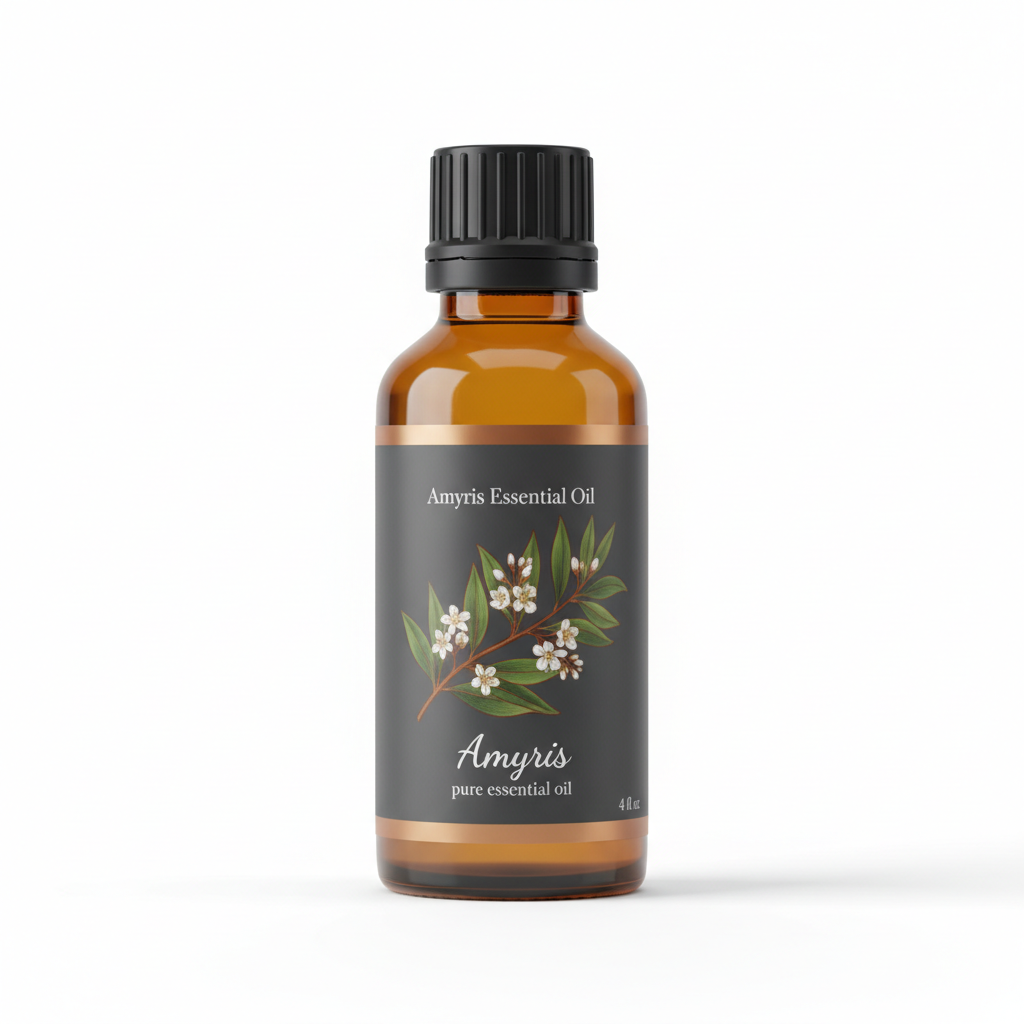
Amyris Essential Oil
Our own Amyris Essential Oil, in sizes from 0.5 oz to bulk.
From $23.99
Shop Now →Colour: look at the oil, then at vanillin
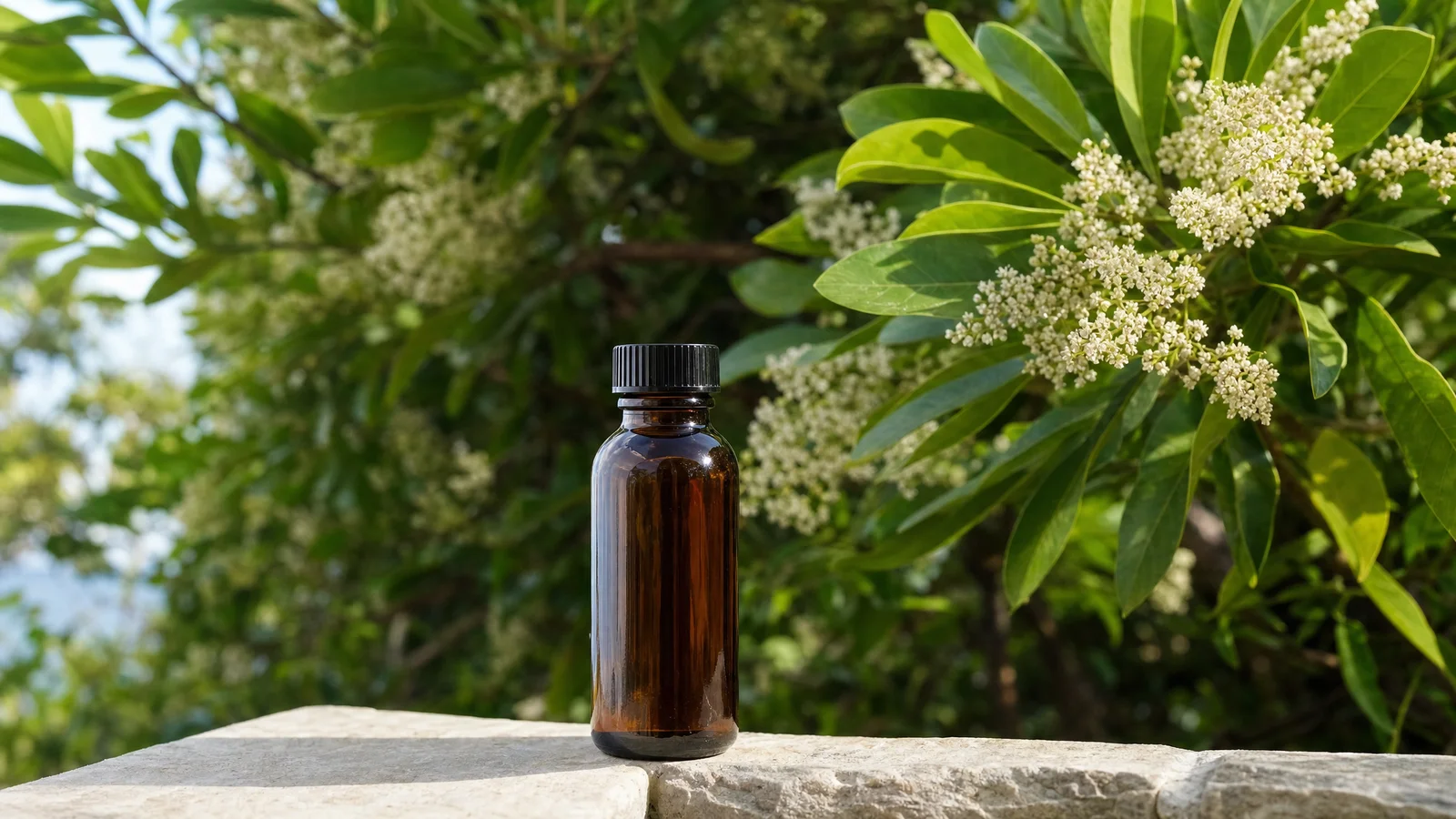
Soapmaking suppliers give a simple rule of thumb: an essential oil that is already darker than pale to medium yellow tends to add only a small amount of tint of its own (Modern Soapmaking). Our amyris is a pale yellow to light amber liquid, so a soft warm tint is the most you would reasonably expect, not a dramatic brown.
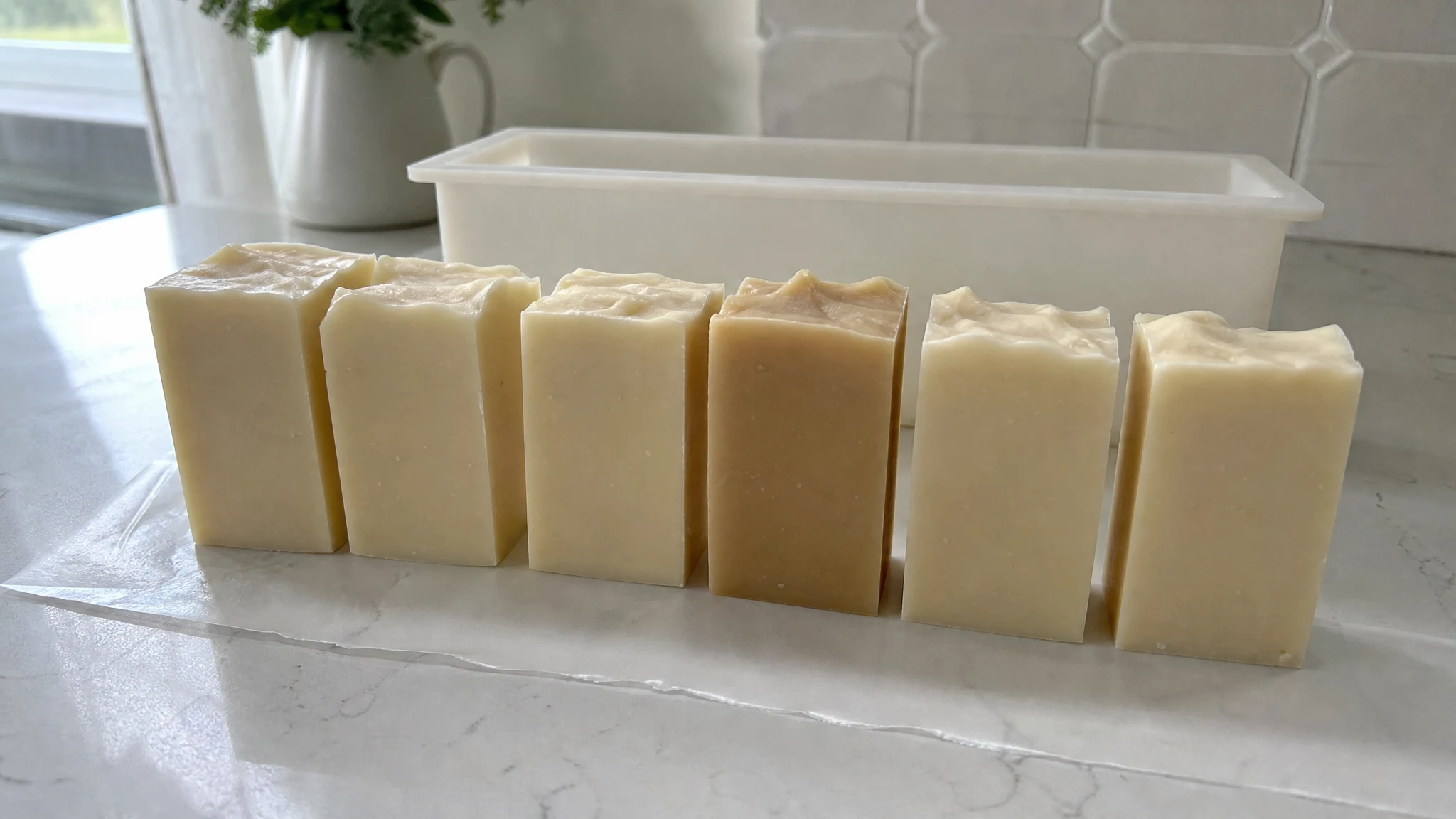
The browning soapmakers dread is usually blamed on vanillin, which is common in vanilla and gourmand fragrance oils and keeps darkening soap for days or weeks after unmolding (Wholesale Supplies Plus). A vanilla-like impression in a scent is not proof of vanillin in the bottle, so the sensible habit is to cut a test bar and photograph it against white paper on day one and again at week four. Hot, fast-gelling batches darken more than cool ones, so keep your soaping temperature steady and the oil will not take the blame for the recipe.
What you will notice at the pot
Take a moment with the oil before you add it. Ours is a pale yellow to amber liquid with a light to medium viscosity, so it pours easily and mixes in without a fight. The scent is creamy, woody and balsamic, quiet enough that it will not take over a batch the way a strong spice or mint can. That makes it comfortable to work with, though quiet also means you will want your nose engaged at each stage rather than expecting a big hit at the pot.
Scent: let amyris do the staying
Essential oils keep evaporating while soap cures, and bright top notes go first. That is exactly where a base note earns its place. We sell amyris as a base-note wood that helps citrus and floral top notes hold on longer in a blend, so in soap we would treat it as the backbone: a little sweet orange or lavender for lift, with amyris underneath for what is left after the cure. If you want a bar that smells strongly of lemon, amyris will support it, but the lemon will still be the first to fade.
A bar that has gone quiet on the shelf often smells fuller again once the outer layer has washed away in use. For more on what a fixative can and cannot do, see our post on natural perfume fixatives, and for scent partners, blending amyris with citrus, spice and floral oils.
How much to add
There is no universal percentage. Soapmakers work from the maximum set for each fragrance material and product category, and soap is a rinse-off product in the IFRA scheme (Stock Fragrance lists it as Category 9; supplier lists differ in numbering, so check yours). The method is to take each restricted constituent in an oil, divide its limit by its share of the oil, and stay under the lowest answer. The Soap Guild works through geranium as an example: 17.7% geraniol against a 1.2% limit gives about 6.78% geranium oil (Soap Guild).
For amyris, ScenTree lists no IFRA Standard (51st Amendment) for the oil (ScenTree), which is a perfumery reference rather than IFRA itself. Whatever you blend with it, check the other oils too, because a citrus or geranium partner may be the one with the ceiling. The Certificate of Analysis we publish for one batch lists density, refractive index and optical rotation; if you want composition data for your lot, ask us through the contact page before you rely on it.
Because soap recipes are written by weight, here is a conversion using the 0.952 g/ml density on that batch certificate, for a recipe with 500 g of oils:
| Rate (of oils weight) | Oil by weight | Approx. volume |
|---|---|---|
| 1% | 5 g | 5.3 ml |
| 2% | 10 g | 10.5 ml |
| 3% | 15 g | 15.8 ml |
These are conversions, not recommendations. Weigh the oil rather than counting drops.
Patience through the cure
The hardest part of any soap is waiting. A bar that smells soft at unmolding often smells different after a few weeks on the rack, and your first sniff is not the verdict. Check the bars at a regular rhythm, write down what you notice, and resist the urge to judge on day two. A notebook with dates and a photo beside each entry becomes the most useful tool in your soap room.
A sensible first batch
- Pour a small test batch at the temperature you will use for the real one.
- Add the oil at light trace and watch for thickening; if it speeds up, stir by hand.
- Photograph the bar on day one, week four and week eight, and sniff it at the same times.
That small bar will tell you more than any chart, and amyris is generous enough to be worth the experiment.
Amyris Essential Oil
Amyris Essential Oil from our own shop, in sizes from 0.5 oz to bulk.
From $23.99
Shop Now →