Buying Amyris Essential Oil: What the Paperwork Tells You
Anyone can print "Haitian" or "100%" on a label. A lot reference and a report that matches it are much harder to fake, which is why we suggest buying amyris oil the way a careful perfumer would: by the paperwork for the bottle in your hand, not by the adjectives on the listing.
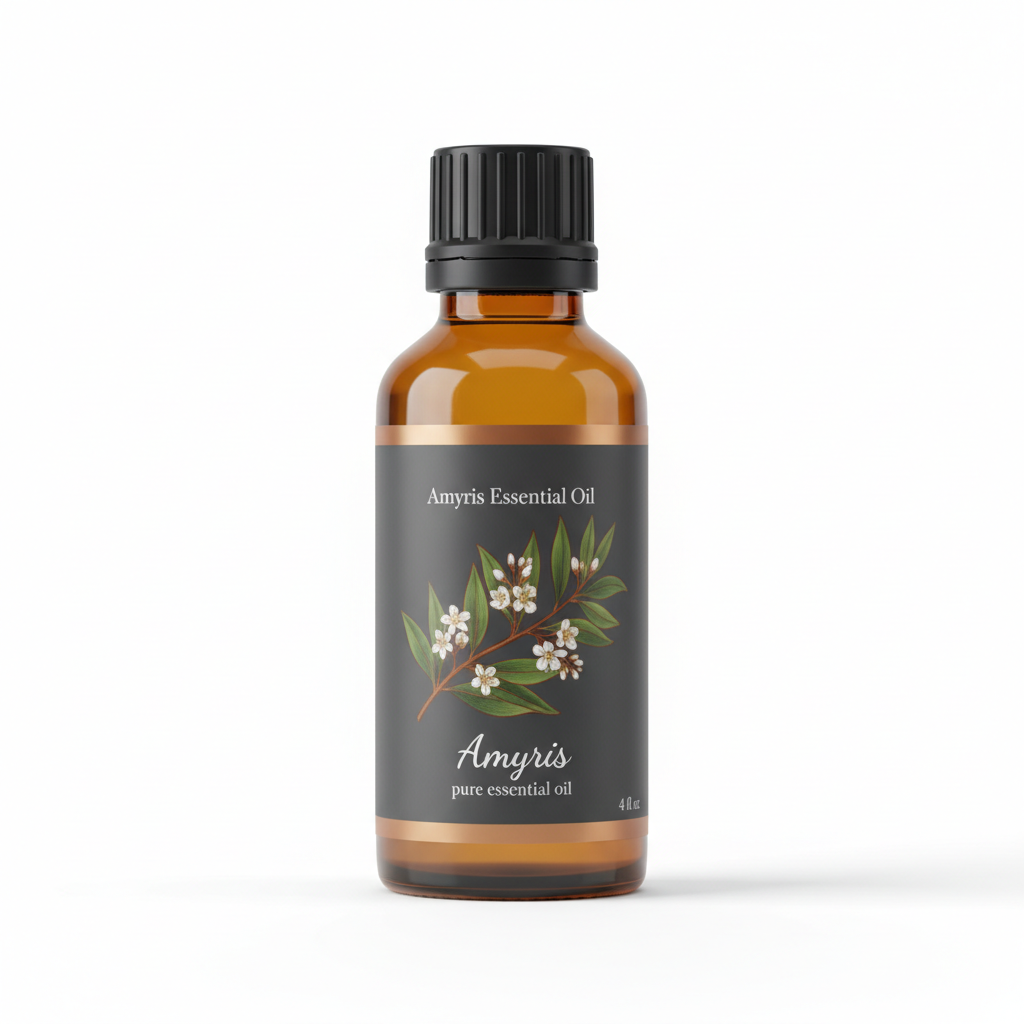
Amyris Essential Oil
Our own Amyris Essential Oil, in sizes from 0.5 oz to bulk.
From $23.99
Shop Now →Why the name on the bottle is not enough
In 2021, Kucharska and colleagues ran GC-MS on six commercial oils sold as sandalwood. By their chemistry, three turned out to be amyris, none met the ISO 3518 sandalwood standard, and one was mostly benzyl benzoate (Molecules, 2021). Six bottles from one study do not tell you how common mislabelling is. They do show that a name on a label can be wrong, and that amyris is often what sits behind a "sandalwood" label. If you are buying amyris openly as amyris, you are already on the easier side of the market. Our post on the sandalwood naming question explains why the two are unrelated.
Start with the listing and the bottle
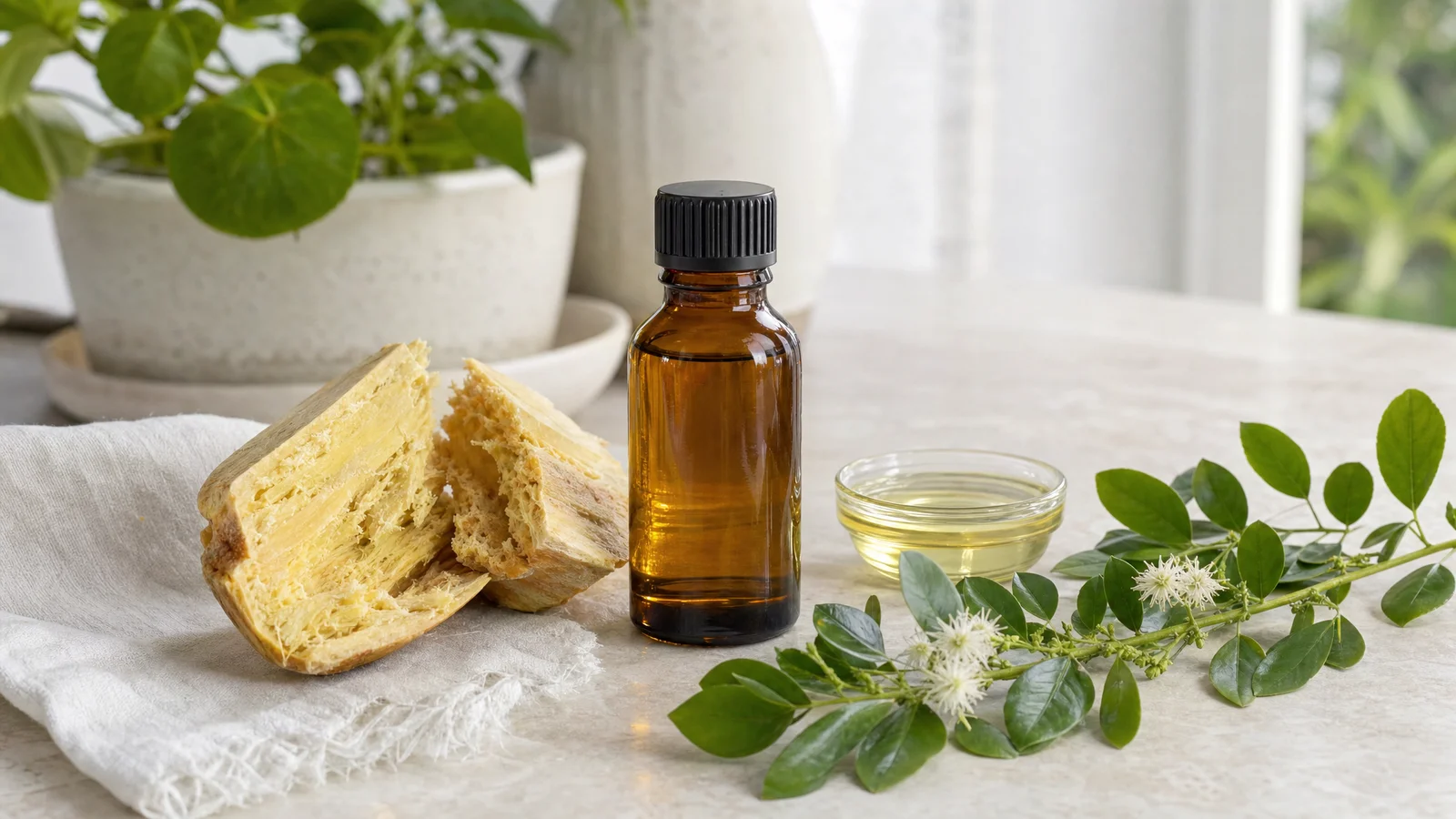
A good listing gives the botanical name (Amyris balsamifera), the plant part, the extraction method and a way to identify the lot. Ours is steam distilled from wood and sold undiluted, and our bottles carry a still date, a fill date and a lot reference, in amber glass. The lot reference matters most. Without it, any report you are sent is about "a batch", not yours.
Reading a certificate of analysis
The certificate we publish is for one batch, AMYQGAABHTC003A, with a best by date of 03/31/2030. It lists appearance and smell as complying with their standards, a relative density of 0.952 at 20 C (standard 0.946 to 0.978), a refractive index of 1.505 (standard 1.504 to 1.512) and an optical rotation of +21.32 degrees (standard +20.00 to +45.00). It concludes that all tested parameters comply with pharmacopoeia standards for genuine amyris oil.
Those three numbers are physical constants of the whole liquid. They are a useful first screen, and they are the kind of thing any competent lab can report quickly. They do not break the oil into its compounds, so they will not tell you how much valerianol or elemol it holds. That is the job of the next document.
GC-MS: the report worth asking for
Gas chromatography with mass spectrometry separates an oil into its components. In the Kucharska study, the two correctly labelled amyris oils were marked by valerianol at about 14.5%, eudesmols at about 26% and elemol at about 9%. Treat those as two snapshots, not a specification, because composition shifts with origin and batch.
If your formulation needs that level of detail, ask us in writing through our contact page before you order and quote the lot number. That is better than assuming. And even a full GC-MS report has limits: Alex St-Gelais of the Tisserand Institute notes it can be insufficient on its own to spot clever adulteration (Tisserand Institute). Our guide to reading a GC-MS report walks through the columns.
Simple checks that need no lab
- Does the lot number on the bottle match any report you are sent?
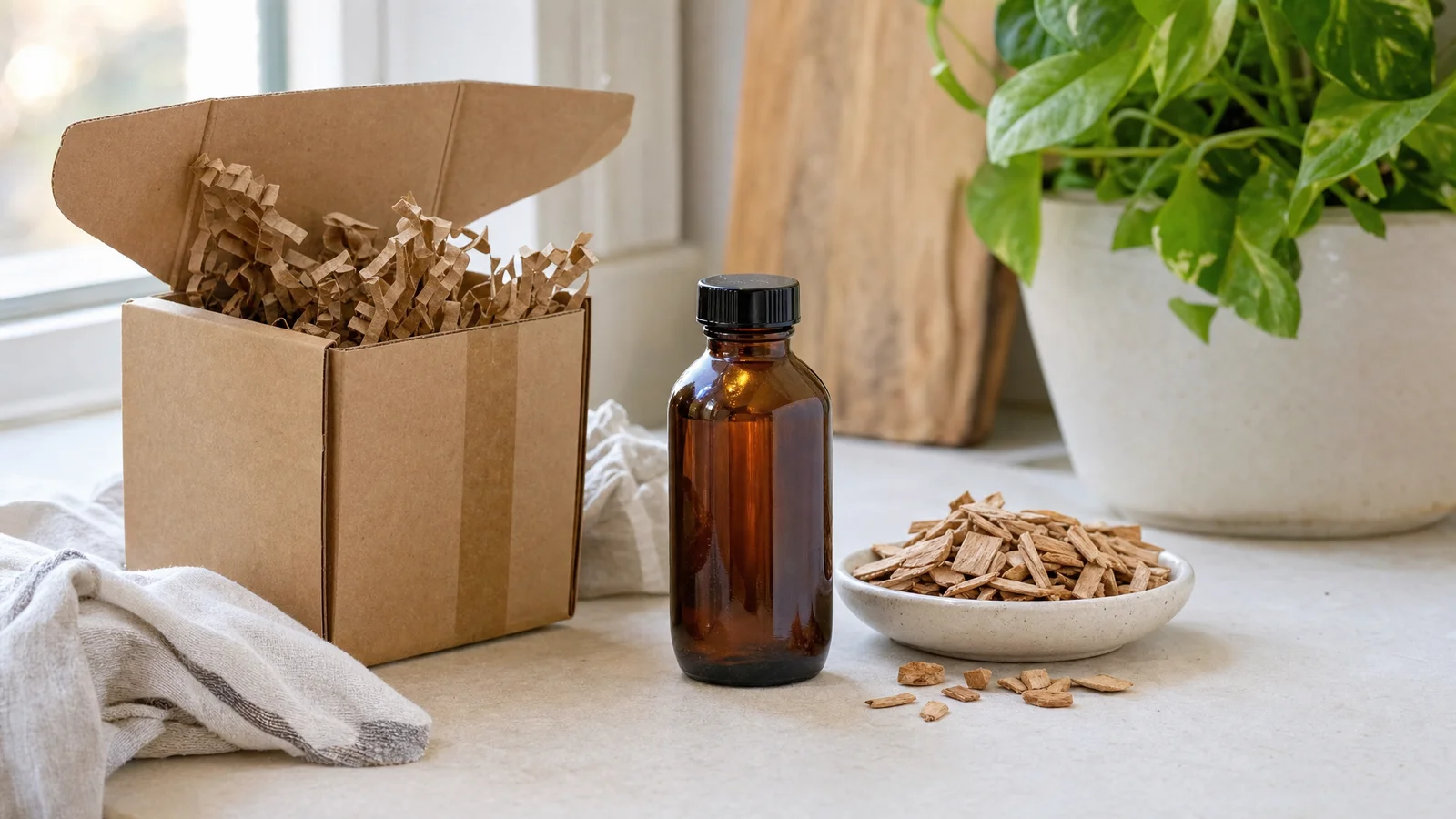
- Is the glass dark? Light, heat, moisture and air drive oxidation, so amber glass is what you want (Tisserand Institute).
- Is the colour in the range the seller states? Ours runs from pale yellow to light amber.
- Does a sample smell like the description? Ours is creamy, woody and balsamic. A sharp or solvent edge is a reason to ask questions.
None of these is a quality test, which is why spotting low quality oil at home comes with realistic expectations.
When the bottle arrives
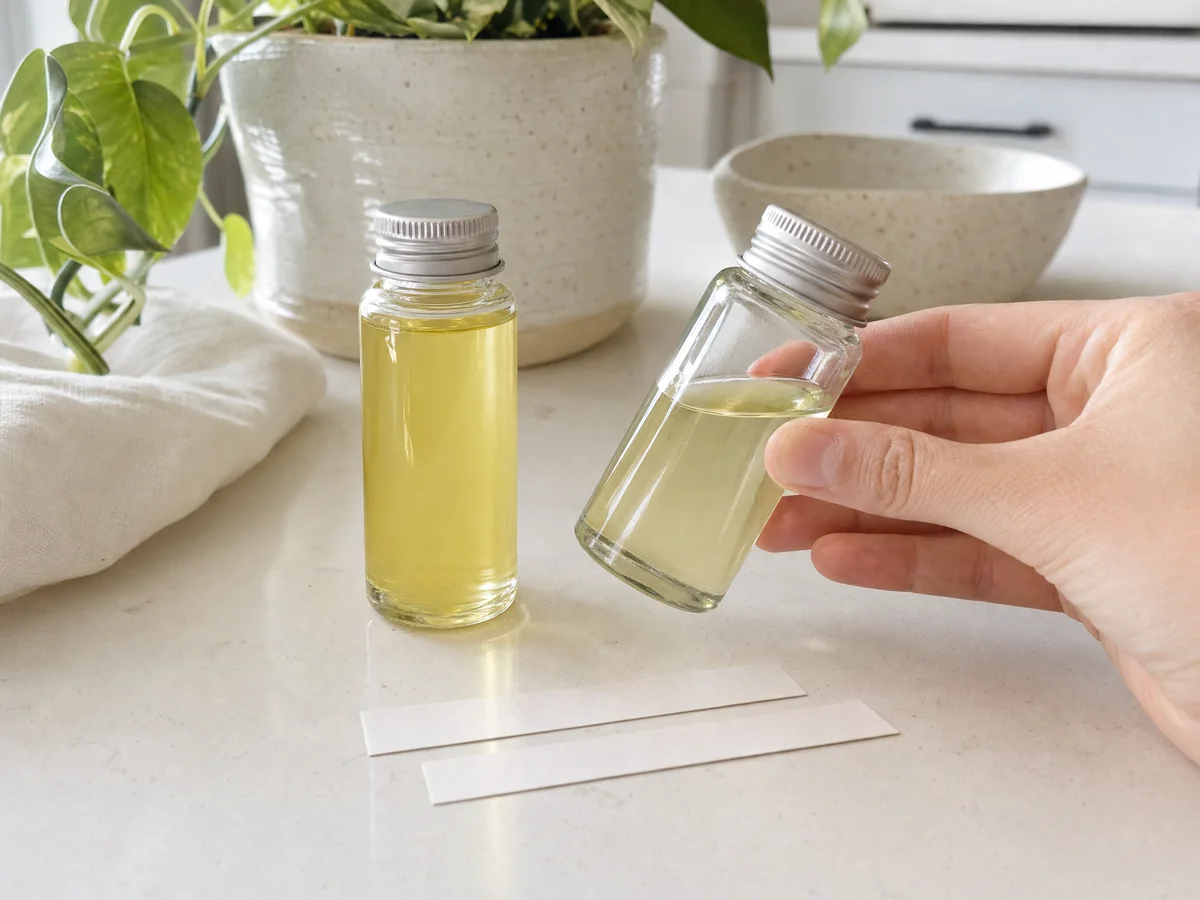
Take a minute with it. Check the lot reference against whatever you were sent, read the dates, and hold the amber glass up to the light to see the colour. Then open it and smell it slowly, once at arm's length and once closer. Write the arrival date on the label so you know how long it has been open.
A few questions worth sending ahead
- Which lot will my bottle come from, and can I see the report for that lot?
- Which documents do you publish, and which do you not have?
- Can I smell a small sample before I commit to a larger size?
Any seller who is happy to answer plain questions like these is easier to trust than one who dodges them. We would rather hear them before an order than after.
Then think about size
Order a sample or a small bottle from our shop first, smell it against the description, and ask for the lot report if your decision depends on it. Only then pick a size. Our bottle size guide turns a recipe into millilitres, and the wholesale page covers pound scale orders. Larger sizes are listed on our bulk page, and our guide to buying amyris essential oil in bulk explains how bulk buying works. If you need an IFRA certificate, a safety data sheet or an organic or fair trade statement, please ask us in writing before ordering, because those are not documents we publish.
The short version: ask for the report on the lot in your hand, and compare what it shows with what the seller said.
Amyris Essential Oil
Amyris Essential Oil from our own shop, in sizes from 0.5 oz to bulk.
From $23.99
Shop Now →Sources & Further Reading
- Kucharska M et al., 2021. A comparison of the composition of selected commercial sandalwood oils with the international standard. Molecules 26(8):2249. pmc.ncbi.nlm.nih.gov
- St-Gelais A, Tisserand Institute. The highs and lows of GC-MS in essential oil analysis. tisserandinstitute.org
- Tisserand Institute. Is my bottle of essential oil oxidized? tisserandinstitute.org