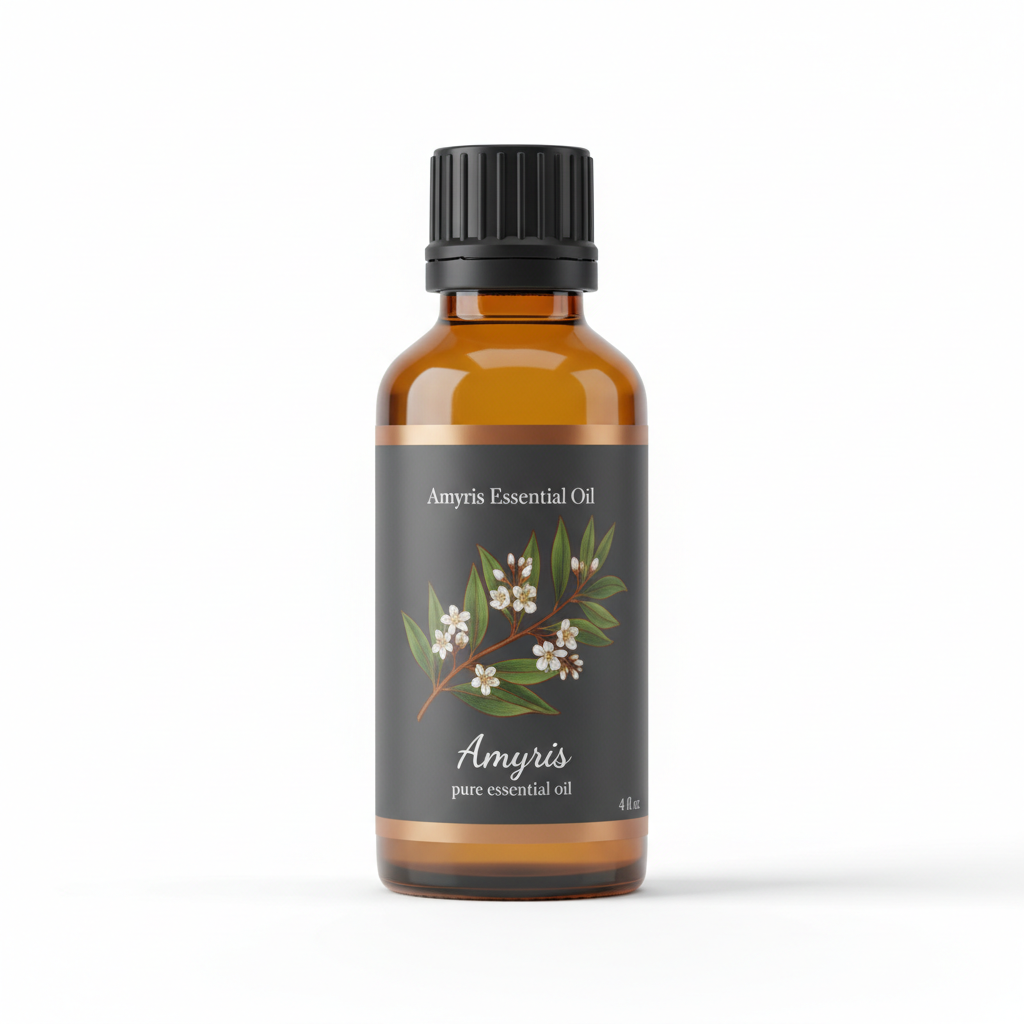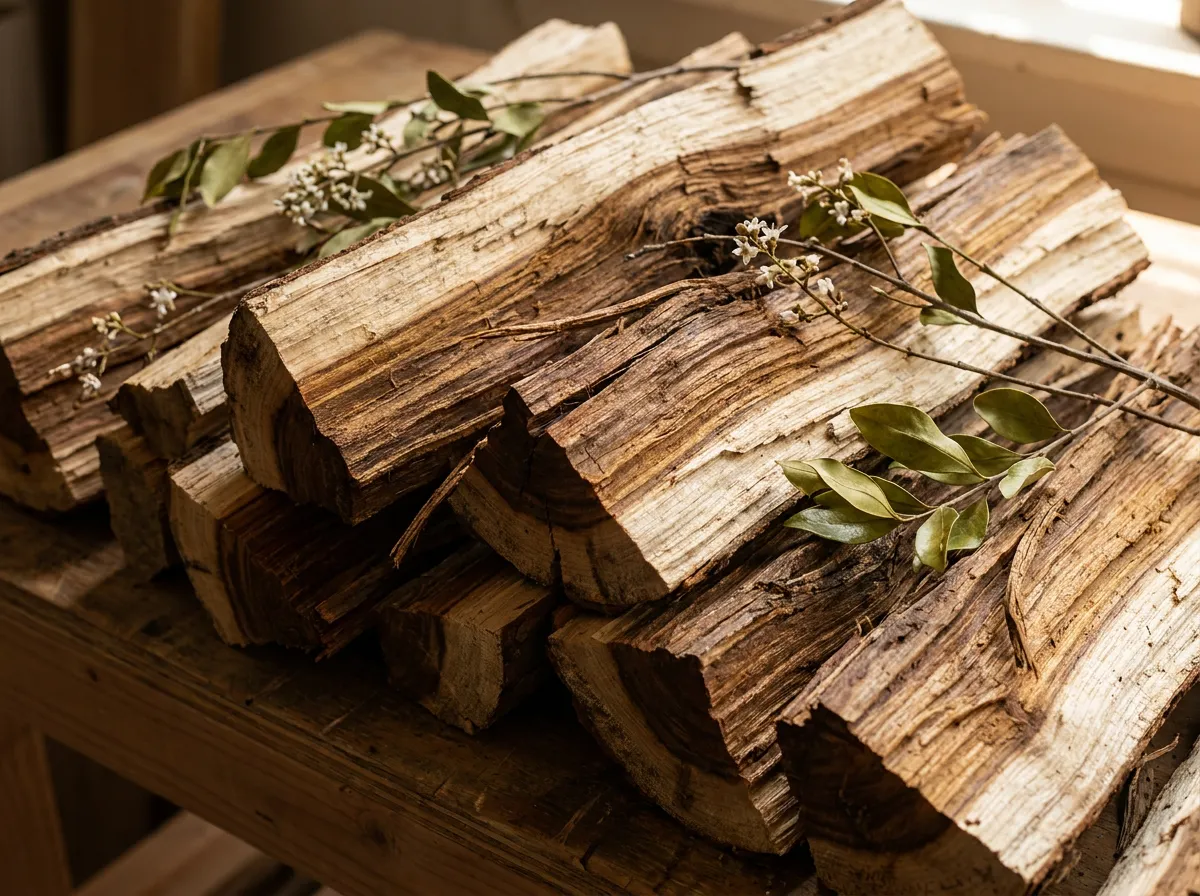
Amyris is the rare wood oil that does not require cutting a living tree. Ours comes from wood that has already fallen, aged in the sun, and gained resin doing it.
Most wood oils carry an awkward question: what came down to make it. Amyris is the exception, and that is genuinely the reason we sell it.
The tree lays down oleoresins in its heartwood over years, sometimes decades, and it is those resins that carry the scent. Which means the best material is not freshly cut at all. It is wood that has already fallen and seasoned in the sun, growing denser and more resinous while it waits.
So our practice is to work with wood that has already come down: naturally fallen branches and trunks, and pruning by-product from farms where amyris grows as a boundary or shade tree. Distillation turns that into value without putting any pressure on standing trees.
Amyris balsamifera is a small tree of Haiti and the wider Caribbean, and only part of it is worth distilling.
The resin sits in the inner heartwood, which is visibly darker and denser than the pale sapwood around it. Sapwood yields little and thins the batch, so it is separated out rather than thrown in to make up weight.
The wood arrives as chips, offcuts and roughly chipped billets, which is how gathered fallen timber comes rather than how a sawmill would prepare it.
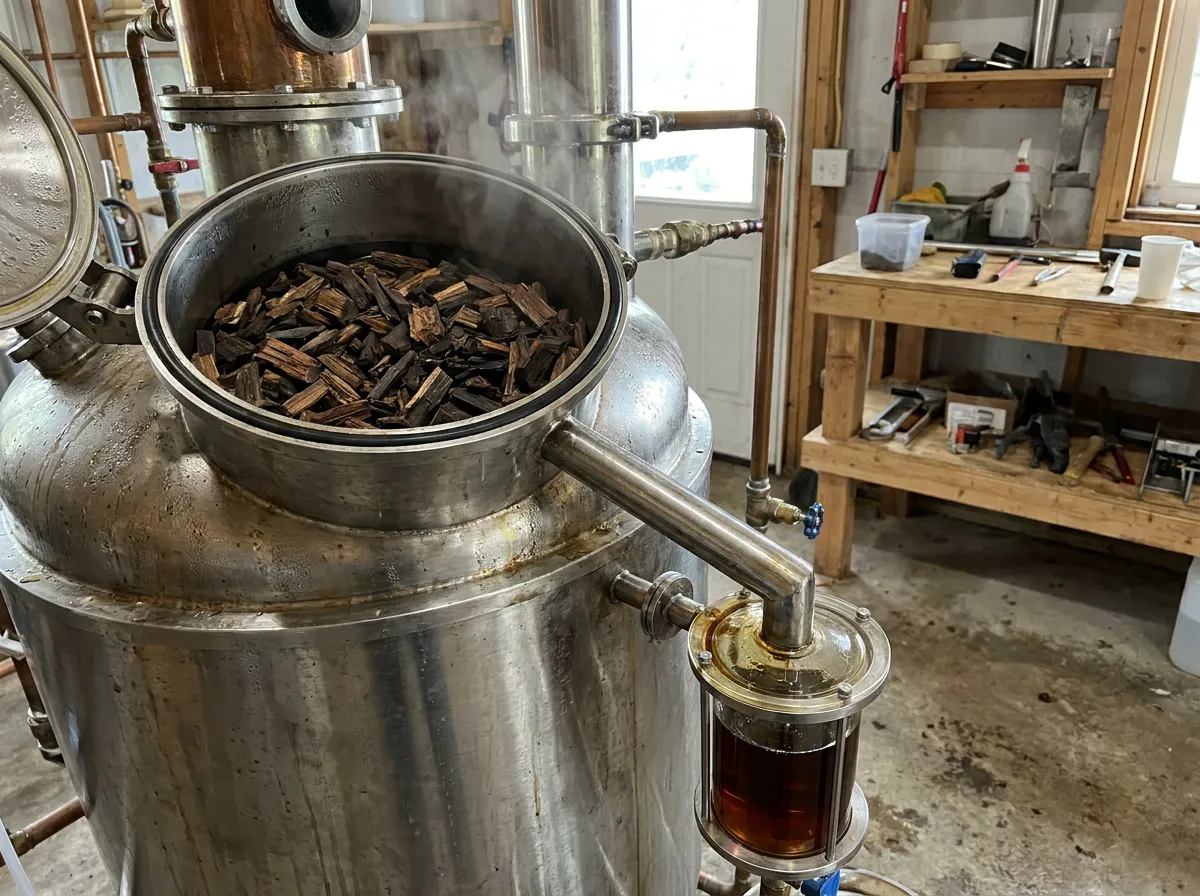
The distillation is ours. Buying finished amyris would mean accepting somebody else's word on both the fallen-wood claim and the heartwood grading, which are the two things that define this oil.
Chipped heartwood is packed and steamed. The richest fraction arrives late in the process, which is where the creamy balsamic depth people buy amyris for actually comes from.
Each charge is run right out instead of being stopped at a tidy volume, and the timber rather than a clock determines when that point arrives.
Each lot is sent out to a laboratory that has no commercial stake in the verdict.
The principal sesquiterpene alcohol in genuine amyris, and the figure that varies with the age and condition of the wood.
The supporting profile behind the creamy balsamic character, and confirmation that heartwood rather than sapwood went in.
Amyris is often called West Indian sandalwood and sometimes sold as a sandalwood stand-in. This confirms which one you actually have.
Give us the number stamped on your bottle and the report follows. The contact page works equally well.
The still date, the fill date and a lot reference, which for an oil that rests well is useful rather than a countdown.
Amber throughout the range, retail bottles and bulk containers alike.
Pure Amyris balsamifera, undiluted, with no sandalwood claim and nothing blended in.
Consistent across every amyris lot.
Gathered timber and pruning by-product, never a living tree taken for oil.
Wood left to season so the resin concentrates before it reaches the charge.
Chipped heartwood in, sealed bottle out, all of it here.
Independent analysis on every batch, not an assumption from the smell.
The pale outer wood is kept out rather than used to make up weight.
Every size drawn from the same distillation.
No medicinal claim is made for amyris. What it is good for is holding a composition together, which is a perfumery matter rather than a clinical one.
Cut it into a base oil before it meets skin, and check one small patch beforehand. It is heavy and tenacious enough that a very small quantity carries a whole blend.
It is not sandalwood, whatever the old trade name suggests, and we will not price or describe it as though it were. When gathered wood of the grade we want cannot be had, we wait for it and sell nothing in the meantime.
Fallen Haitian wood, aged for resin, heartwood separated from sapwood, distilled out fully here, with valerianol confirmed independently.
Let a drop sit and open up.
Shop Amyris Oil