How to Spot Fake Amyris Oil: What Home Tests Miss
Everyone has heard the kitchen tests: put a drop on paper, float it in water, chill it in the fridge. They catch a crude fake, like an oil cut with plenty of vegetable oil. They cannot tell you an amyris oil is genuine, and the adulterations documented in the literature are exactly the kind that slip past them.
Amyris Essential Oil
Our own Amyris Essential Oil, in sizes from 0.5 oz to bulk.
From $23.99
Shop Now →What really turns up on the market
The best open evidence is a 2021 study in Molecules by Kucharska and colleagues. They analysed six commercial oils sold as sandalwood. Three were amyris by chemistry, two labelled as such and one sold under a sandalwood name. Among the rest, one contained synthetic sandalwood-type odorants and another was 74.6% benzyl benzoate, a heavy diluent-type ester. Six bottles say nothing about how often amyris itself is adulterated, but they show the kind of material to expect: synthetics and slow-evaporating fillers, not only cheap cooking oil.
The tests, one at a time
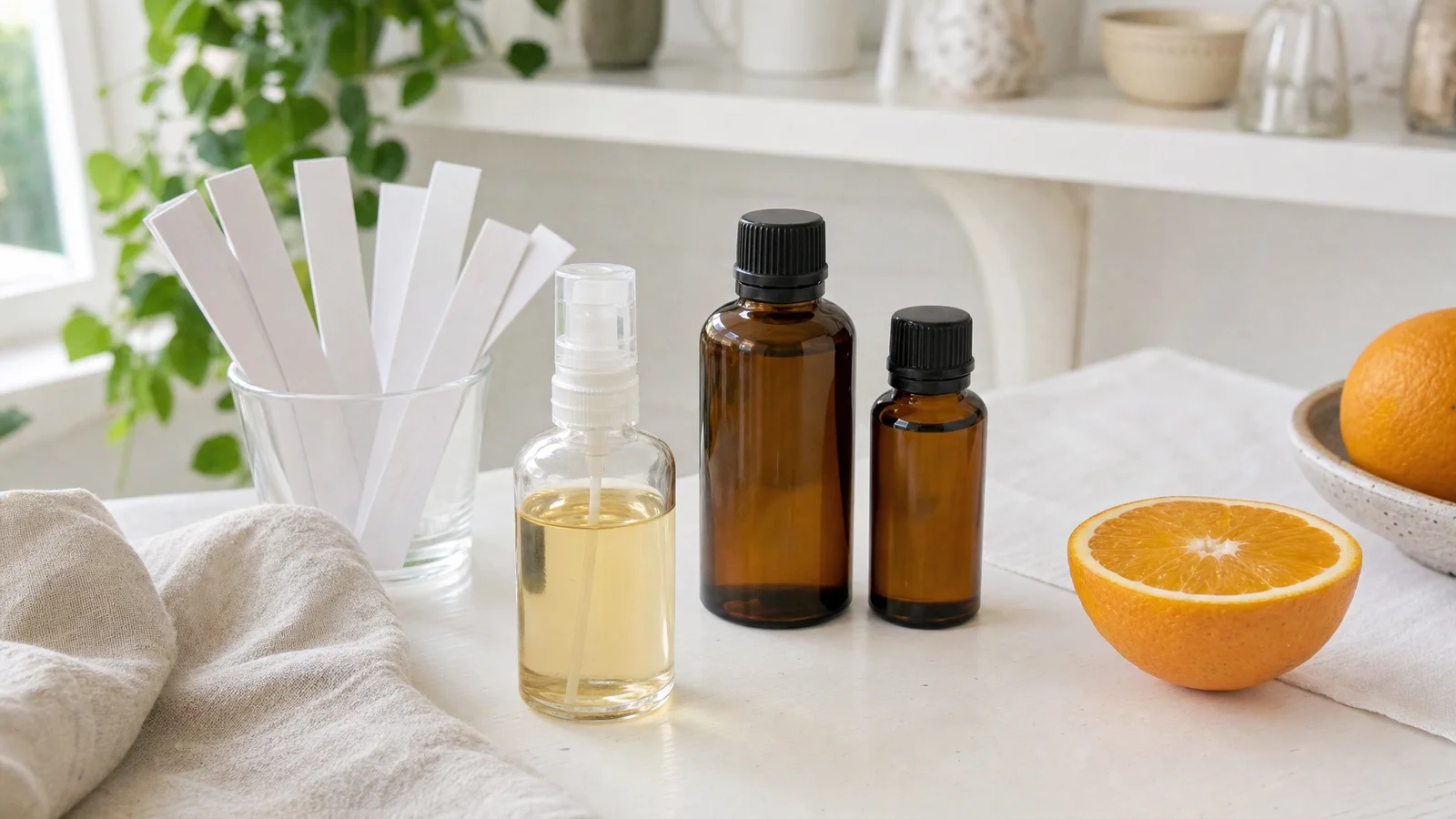
The paper test
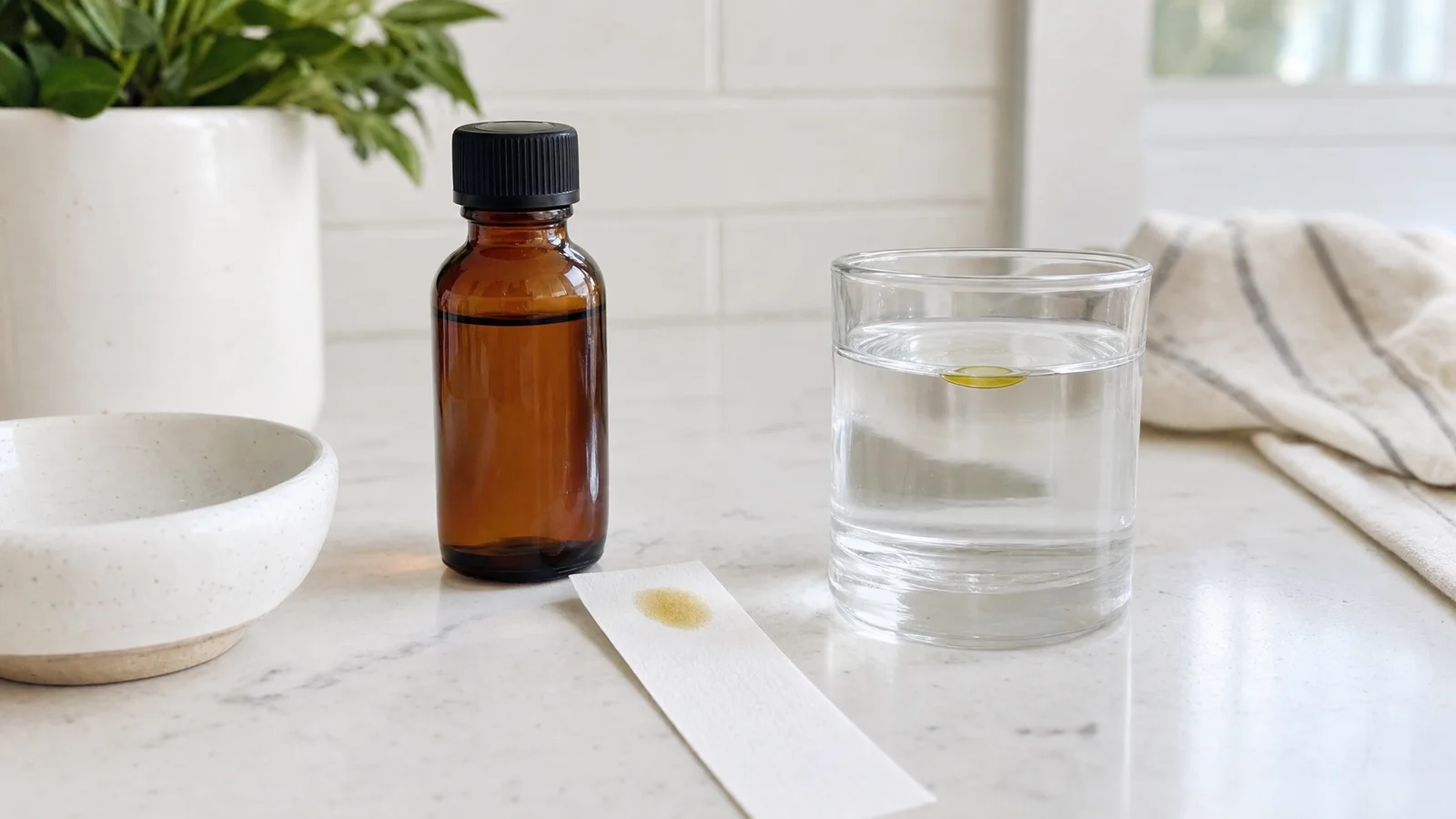
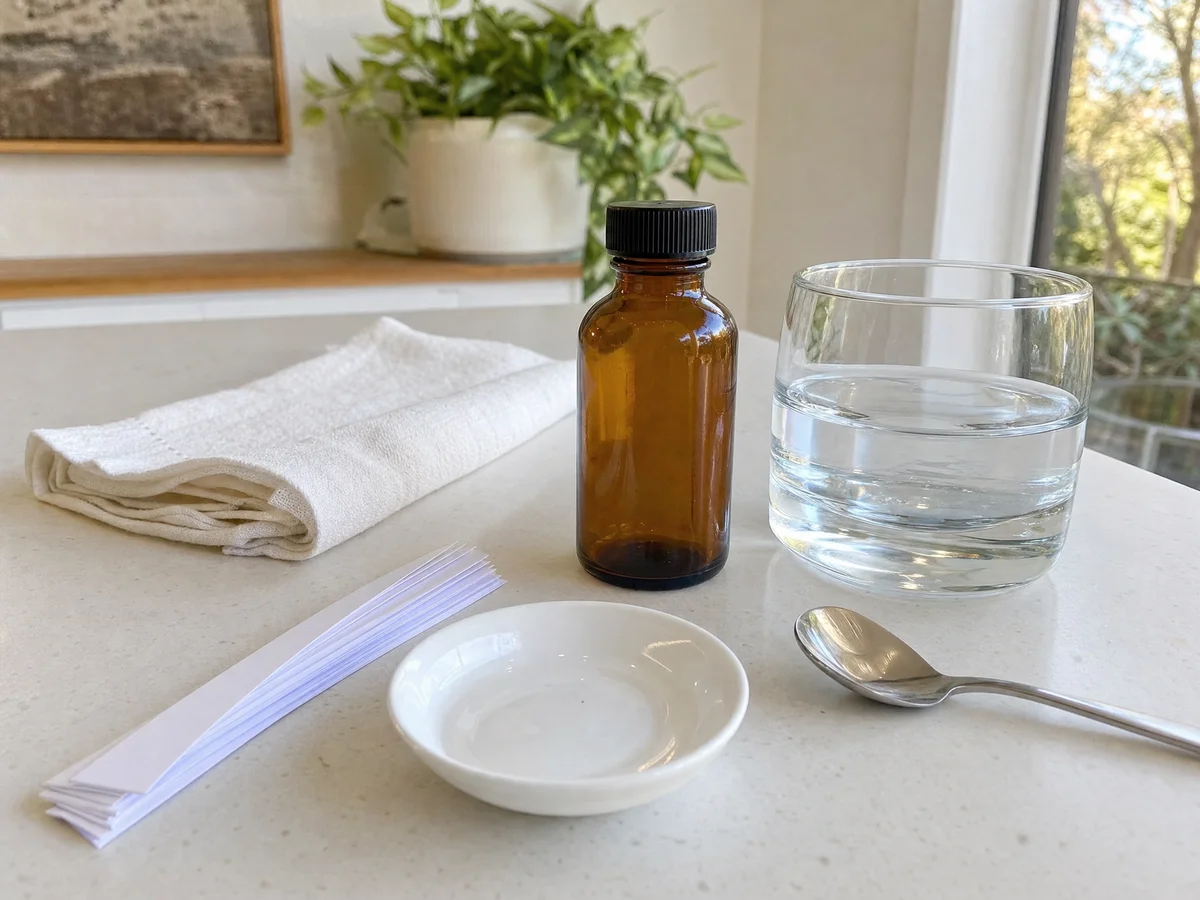
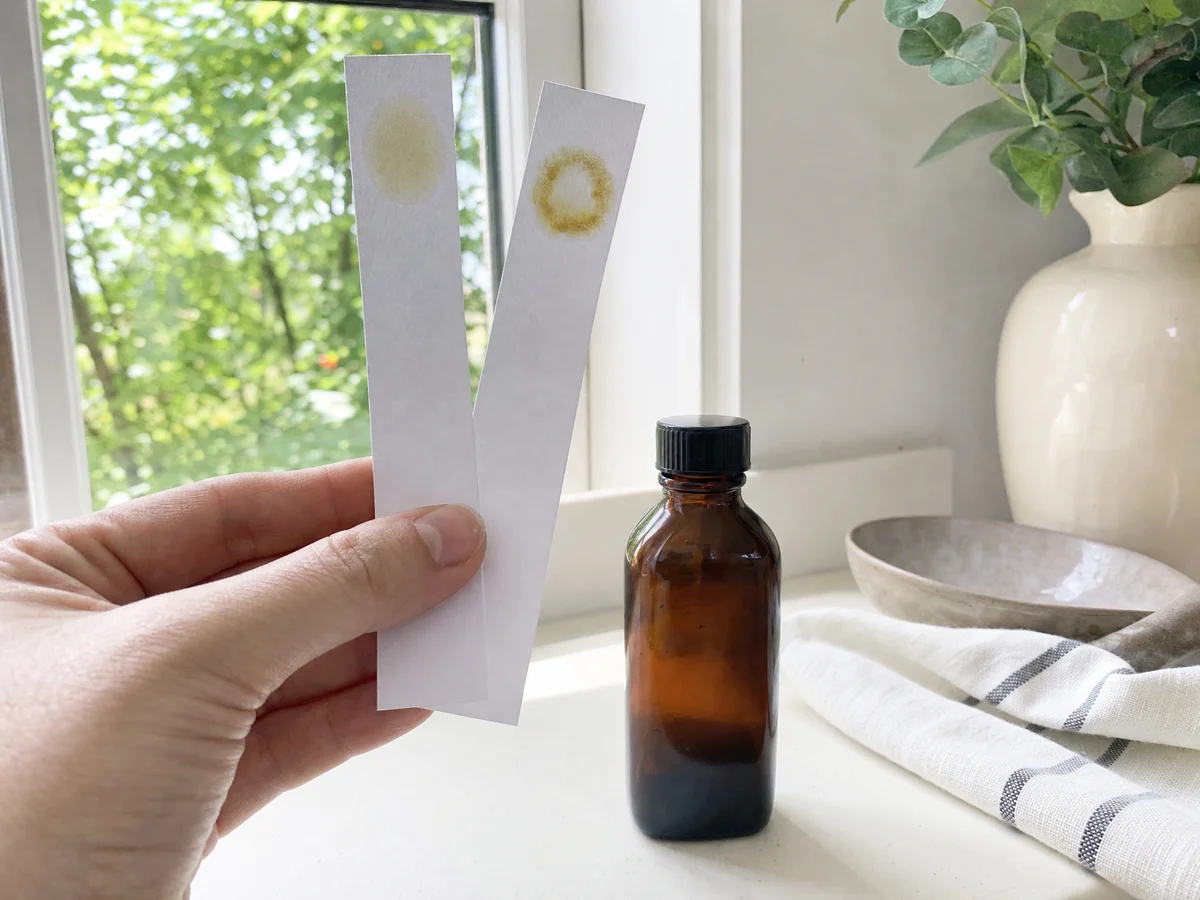
A drop on card, a wait, a look for a ring. A volatile oil evaporates and a fixed vegetable oil leaves a translucent mark, so this is a fair check for gross dilution with a carrier. Amyris, however, is made of heavy sesquiterpene alcohols and evaporates slowly even when it is exactly what it should be, so a faint mark can linger. A slow-evaporating diluent would not stand out either. A clean card tells you little, and a ring tells you something non-volatile is present.
The water test
Essential oils float on water, and so do the usual fillers. This one cannot separate anything worth worrying about.
The kitchen-scale density check
Density is a legitimate property, and it is one of the three values on the Certificate of Analysis we publish: 0.952 at 20 C against a standard of 0.946 to 0.978. That window is about 3% of the value, though, and a home scale is crude. Ten milliliters of amyris weighs around 9.5 g, and a scale reading to 0.1 g gives you roughly 1% resolution before you add the error in reading the volume and the effect of temperature. You could not reliably tell an in-range oil from a mix that happens to land in range. Refractive index (1.505 on our certificate, standard 1.504 to 1.512) is a tighter window but needs a refractometer.
The chill test
Some guides suggest refrigerating the oil to see whether it clouds or thickens. We do not know of a source on how amyris behaves when chilled, and the Tisserand Institute notes that very old oils may thicken, which makes thickness an ambiguous sign. We would read nothing into it.
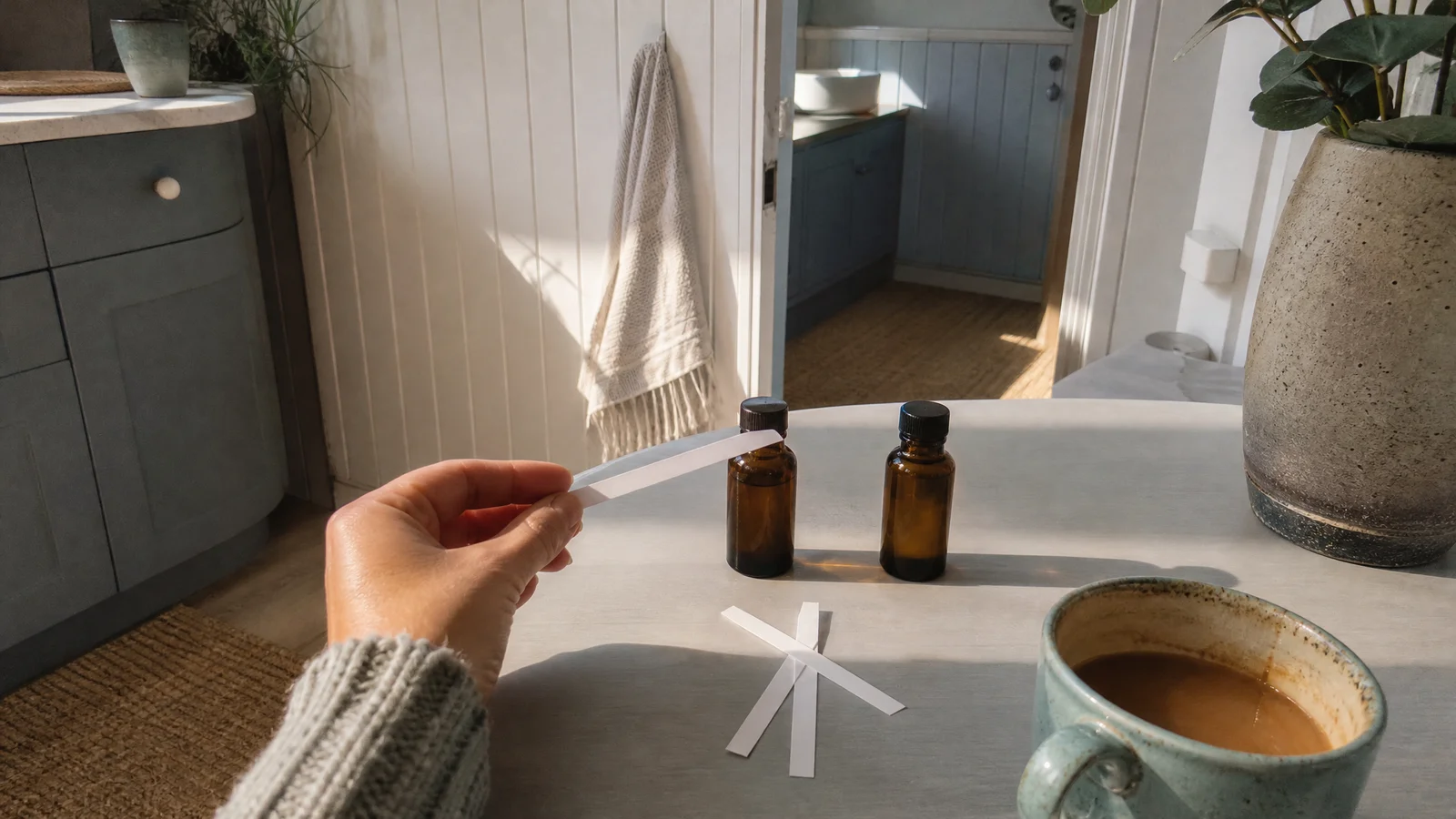
Smell
Smell is the test people trust most and the one with the most variables. When an oil oxidizes, some brightness and freshness fades, and you may only notice by comparing with a fresh bottle. A dull amyris could therefore be old or could be cut, and sniffing cannot say which. Smell can flag a harsh, solvent-like or burnt note worth asking a seller about. For reference, we describe our oil as creamy, woody and balsamic, and the standard printed on our certificate reads woody, earthy, smoky. Neither is a pass mark.
When a bad result is probably innocent
An opened bottle that has sat in a warm cupboard can smell flatter and pour more slowly than a fresh one with nothing added at all. The Tisserand Institute says oils used within 6 to 12 months of purchase rarely have an oxidation problem, and that heat, light, moisture and air in the bottle speed it along. We say typically 4 to 6 years unopened in a cool, dark place, which describes a sealed bottle, so date every bottle when it arrives and compare like with like. Comparing a new bottle with an old one from another seller changes two things at once.
Colour is a weak signal too. Our certificate's standard says yellow liquid and we describe ours as pale yellow to light amber, so a shade of difference between two sellers is not a verdict.
A habit worth starting
Keep a small notebook: the date each bottle arrived, the lot reference, and what it smelled like when you first opened it. A line or two is enough. Months later, a written first impression is worth far more than a memory, and it makes any later comparison fair. When you do smell it, hold the bottle a few centimetres away instead of pushing your nose into the neck, since the first sharp hit of any oil is not the whole picture.
What we would do instead
- Ask for the lot document. Match the lot reference on the bottle to the paperwork. We publish a Certificate of Analysis for one batch showing density, refractive index and optical rotation. If you need GC-MS, ask us in writing through our contact page before you order.
- Read the profile, not the pass or fail line. In the Kucharska study the two amyris samples had valerianol around 14.5%, eudesmol isomers around 26% and elemol around 9%, with very little caryophyllene. That is two samples, not a specification, but it shows the shape to look for. Our guide to reading a GC-MS report walks through it.
- Remember GC-MS is not the last word. Alex St-Gelais of the Tisserand Institute notes that chiral GC or isotope ratio analysis may be needed when an added compound leaves no telltale impurity. For most makers, a full report from an independent lab matched to a lot is far enough.
- Smell old and new side by side, with both bottles dated.
Our posts on adulterated essential oils and how to choose amyris cover the wider picture. If a home check ever worries you, the answer is a lot-matched document, not a cleverer kitchen test.
Amyris Essential Oil
Amyris Essential Oil from our own shop, in sizes from 0.5 oz to bulk.
From $23.99
Shop Now →Sources & Further Reading
- Kucharska M, Frydrych B, Wesolowski W, Szymanska JA, Kilanowicz A, 2021. A Comparison of the Composition of Selected Commercial Sandalwood Oils with the International Standard. Molecules 26(8):2249. pmc.ncbi.nlm.nih.gov/PMC8070282
- St-Gelais A, Tisserand Institute. The highs and lows of GC-MS in essential oil analysis. tisserandinstitute.org
- Tisserand Institute. Is my bottle of essential oil oxidized or no longer good to use? tisserandinstitute.org/learn-more/oxidized