How to Blend Amyris Oil With Citrus, Spice and Florals
Amyris is the quiet one in a blend. It does not shout, it rarely steals the scene, and that is exactly why perfumers have leaned on it for generations. Arctander, writing in 1960, called it a mild blender, used extensively in soap perfumes. Blending well with it comes down to deciding what you want the wood to do for the other oil.
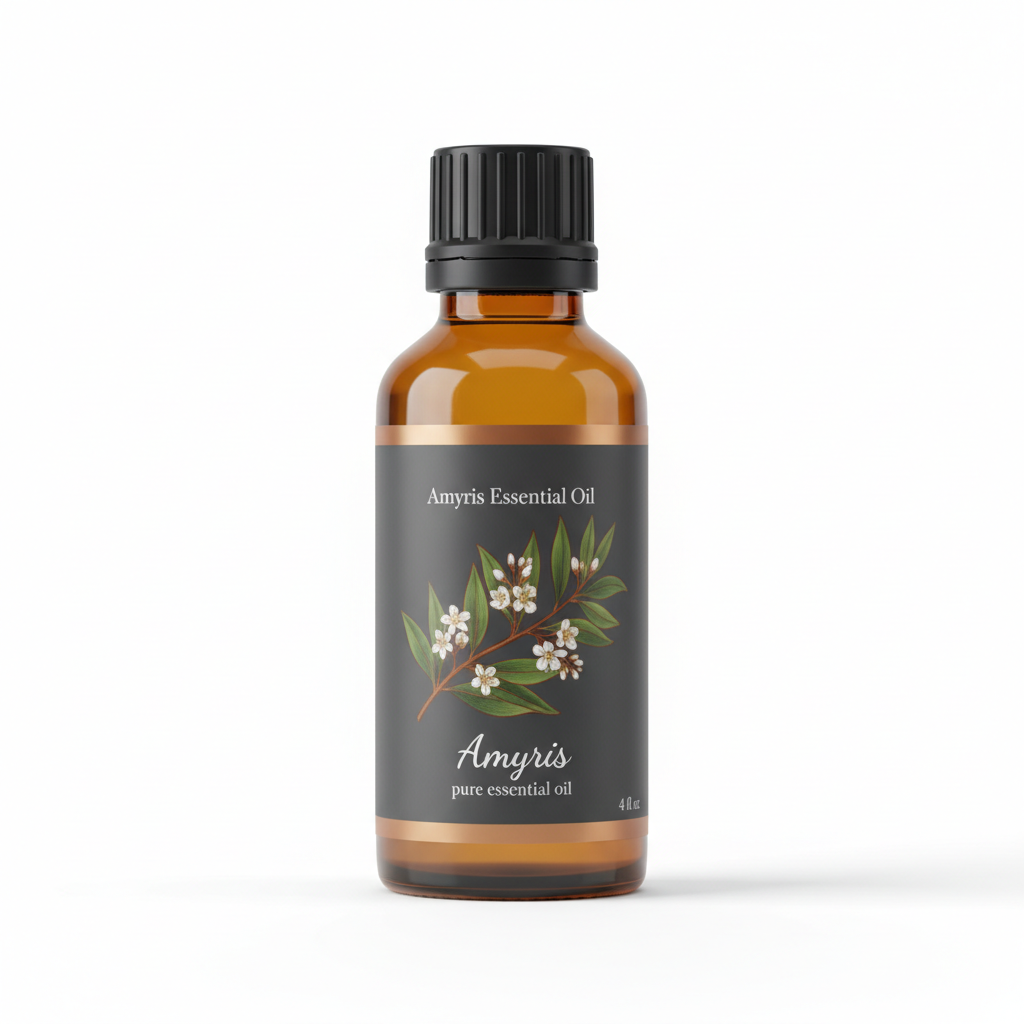
Amyris Essential Oil
Our own Amyris Essential Oil, in sizes from 0.5 oz to bulk.
From $23.99
Shop Now →Three jobs, three families
We describe amyris as a creamy, woody, balsamic base note, and the oils we list as good partners are lavender, bergamot, geranium, sandalwood and ylang ylang. Beyond the list, it helps to ask what the blend needs.
- A bright scent that lasts. Go to citrus. Amyris is the anchor and citrus is the lift.
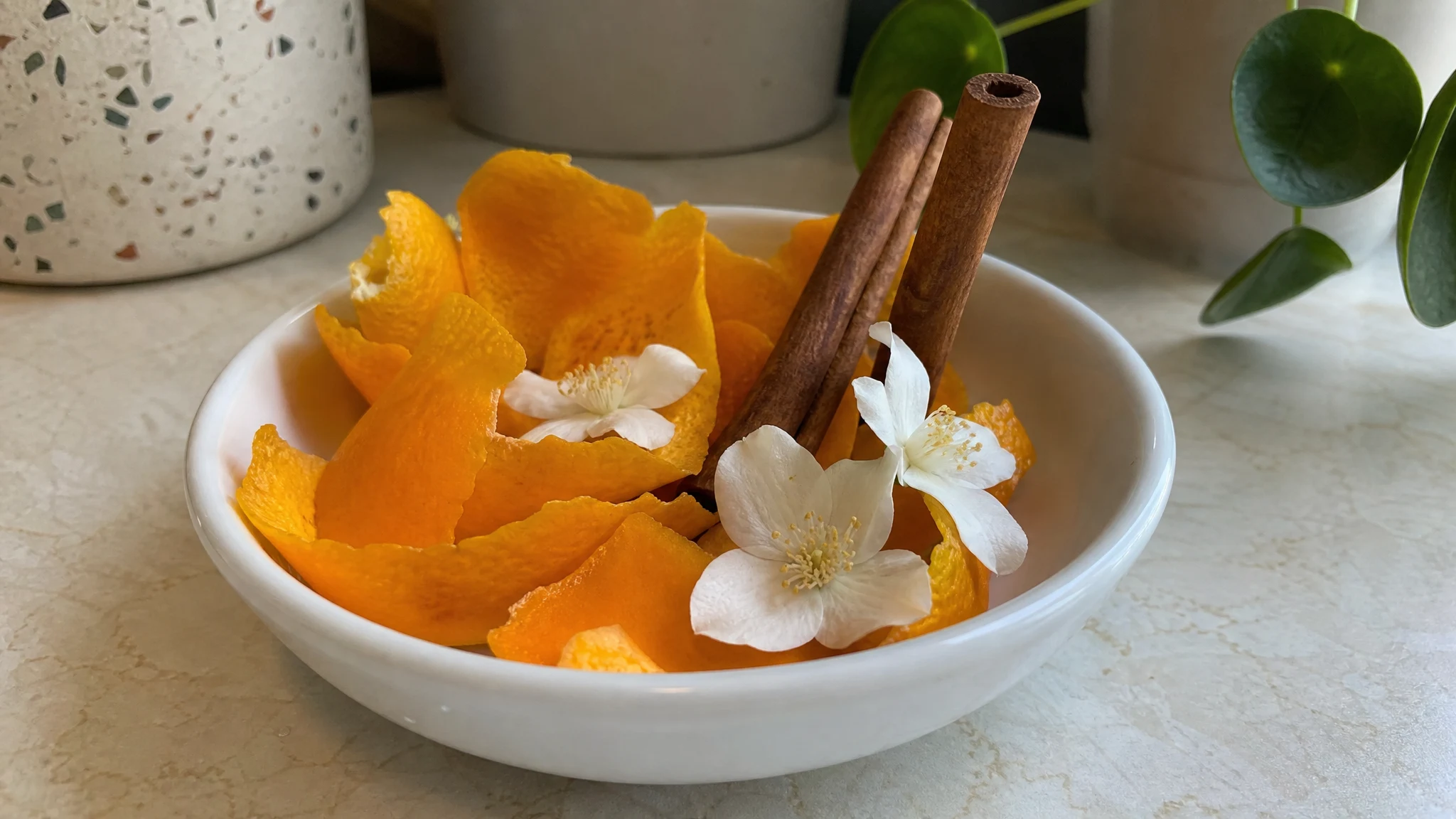
- Something rounder and warmer. Go to spice, using only a little.
- A floral that feels less sweet. Go to florals and let the wood settle them.
All three are matters of aroma, nothing more. These are starting points reasoned from the oils' behavior, so trust your own nose over any ratio.
Start by smelling two oils side by side
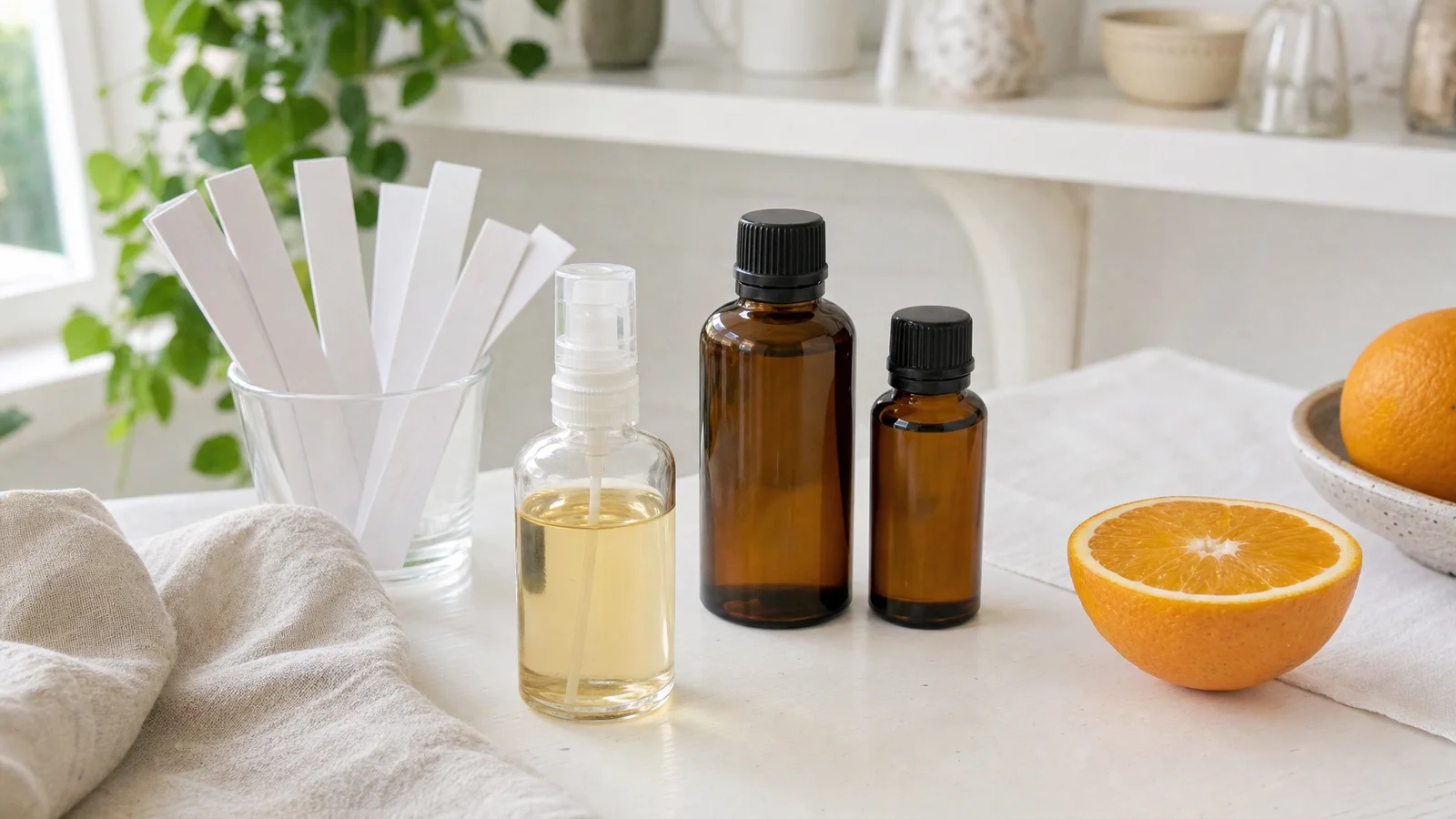
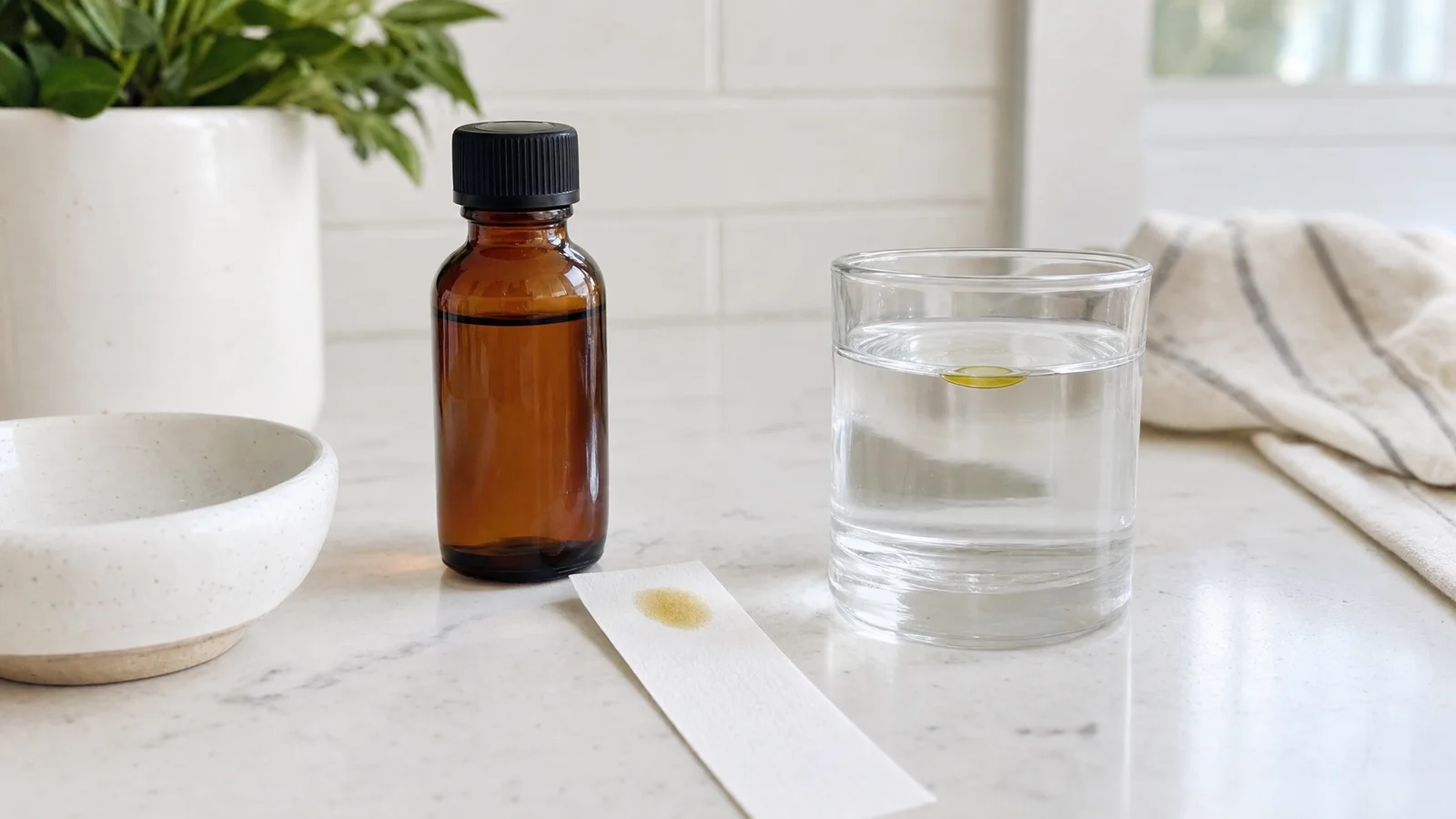
Before you build anything, put a drop of amyris on one blotter and a drop of your chosen partner on another. Hold them together under your nose, then apart. You'll often hear the pairing before you measure a thing: does the wood make the partner rounder, or does it quiet it down too much? Small bottles, small notes and a little patience will save you a lot of oil.
Citrus: the lift that fades first
Citrus peel oils are volatile and amyris is slow, which is why they pair so well on paper. The practical result is that the citrus is the first thing to fade, so the blend you smell on the first sniff is not the blend you will live with at hour four. Smell a draft on a blotter at several points through the day. A good first draft is 2 parts amyris to 1 part citrus by weight, adjusted in half-part steps.
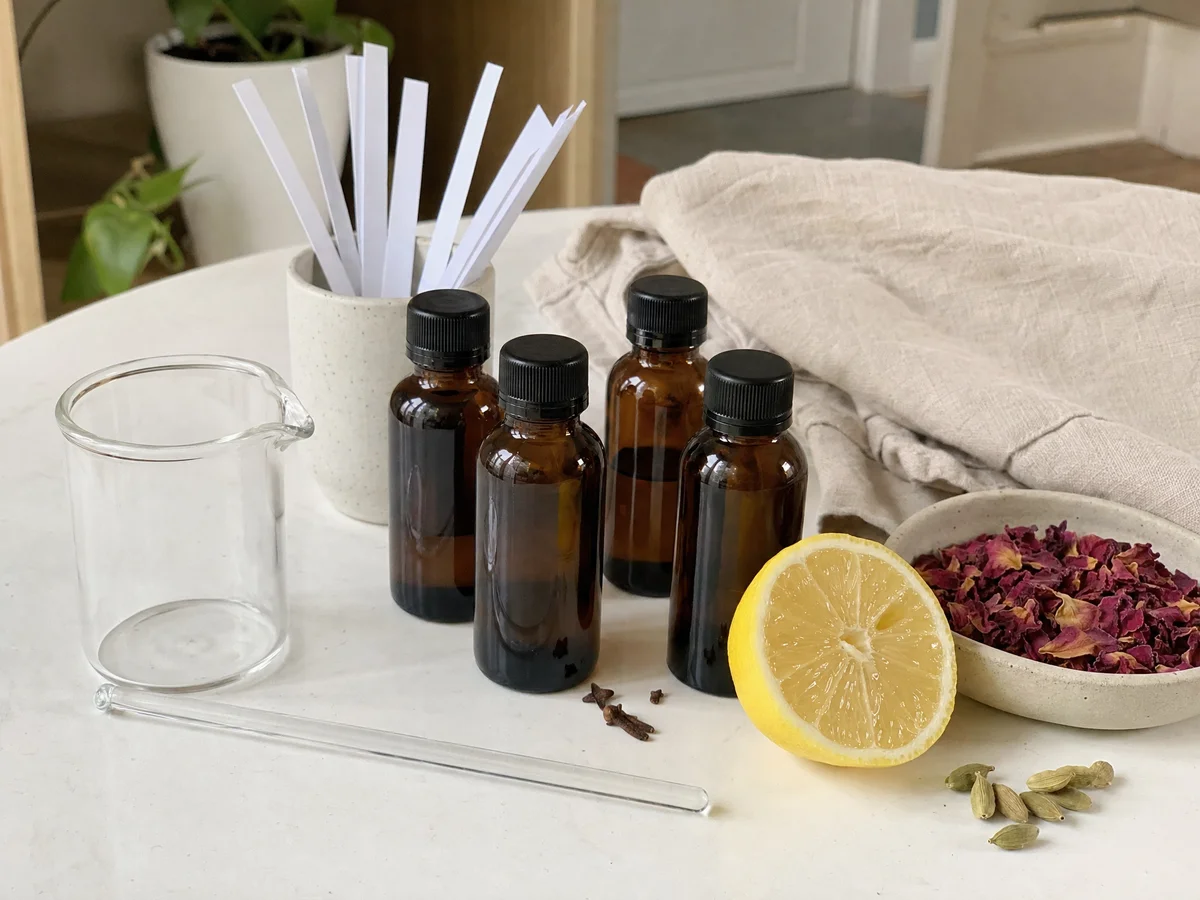
If the blend is for skin, remember that some citrus peel oils, bergamot among them, carry limits for leave-on use because of sun sensitivity, and the numbers differ by oil. Our phototoxic oils guide explains this. For a room or diffuser the question does not come up, and our diffuser blends have ratios for that.
Think of citrus as the sparkle and amyris as the table it sits on. If the blend feels thin, add a touch more wood; if it feels heavy, a touch more citrus. Little moves are easier to judge than big ones.
Spice: use less than you think
Spice oils such as cinnamon, clove or black pepper are strong, and several have individual use limits. Look up the specific oil in the IFRA Standards library before you decide a ratio, since a published limit sets the ceiling, not a recipe you saw somewhere. For a first draft, try 8 to 10 parts amyris to 1 part spice. At that level the spice is a note you notice rather than the whole story, and you can nudge it up from there.
Florals: warm and a little drier
Lavender, geranium and ylang ylang are our listed floral partners, and rose is another favorite pairing. Amyris warms a floral and takes the edge off its sweetness. Try 1 part floral to 2 or 3 parts amyris. Rose deserves one extra word: a 2013 study of 19 commercial rose oils found, by isotope analysis, that palmarosa oil had probably been added to most of them. It was a survey of those samples, not a verdict on any one bottle, but it is a good reason to ask a rose supplier for a GC-MS report. Our rose and amyris body oil takes this pairing further.
Spice also changes fastest on a blotter, so come back to a spiced draft after an hour before you decide it is too much. You'll notice the sharp first impression softens, and the wood starts to show again underneath.
A word on sandalwood
We list sandalwood as a good partner, but amyris is not sandalwood and we do not sell sandalwood. If you want both in a blend, buy sandalwood from a seller who documents species and origin. Our amyris vs sandalwood post sets out the differences.
Keeping blends repeatable
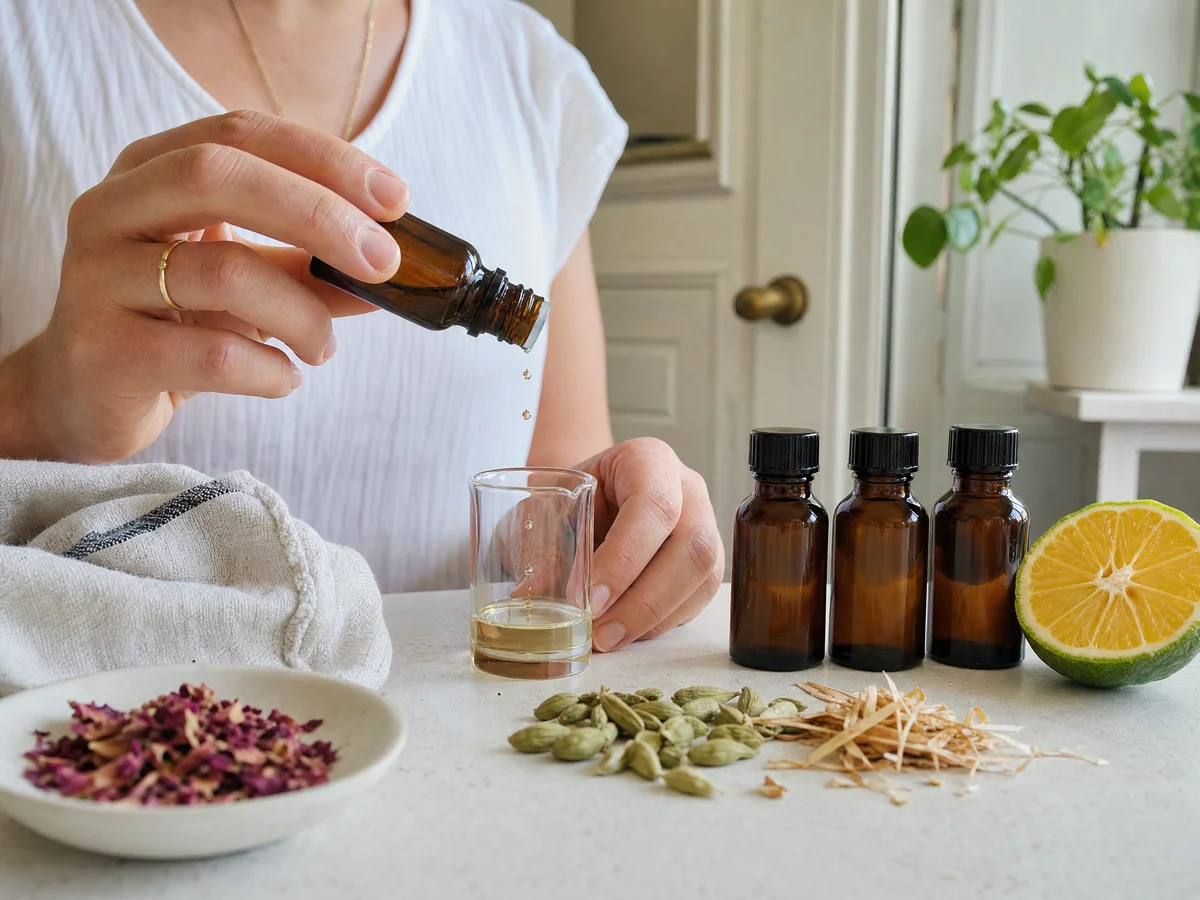
Weigh, do not count drops, because drop sizes vary. On the batch whose Certificate of Analysis we publish, relative density was 0.952, so 1 mL weighs about 0.95 g, and a scale that reads 0.01 g is a real upgrade. Write down the weights, the date and a one-line scent note for each draft; how to blend essential oils has a log format. Let the concentrate rest a day before you judge it, and dilute last.
The arithmetic, start to finish
Say you want 10 g of a woody-floral concentrate with a light citrus lift. One possible split: 6 g amyris, 2.5 g floral, 1.5 g citrus. For a 2% finished body oil, 1 g of that concentrate goes into 49 g of carrier, which puts amyris at 0.6 g in 50 g, or 1.2%. For a face blend, Tisserand's range of 0.5% to 1.2% is the better guide, so use 0.5 g of concentrate in 49.5 g of carrier, which is a 1% blend overall. The numbers are plain arithmetic; the scent balance is yours to judge. The carrier is something you will find at a craft shop, pharmacy or grocery, and our dilution chart has drop counts.
Patch test first, keep everything away from eyes, children and pets, and ask a dermatologist or allergist before using a new blend on skin if you have ever reacted to a perfume. If you just want to find out whether you like amyris, smell it alone first, since a blend can hide its character. It is a modest, steady partner and a gentle lead.
Amyris Essential Oil
Amyris Essential Oil from our own shop, in sizes from 0.5 oz to bulk.
From $23.99
Shop Now →Sources & Further Reading
- Arctander S. Perfume and Flavor Materials of Natural Origin, 1960 (Amyris Oil). archive.org/details/ArctanderPerfumeryBook
- Tisserand Institute. Essential oil dilution. tisserandinstitute.org/safety/dilution
- Pellati F, et al. Rapid Communications in Mass Spectrometry 2013;27(5):591-602. iris.unitn.it/handle/11572/266111
- IFRA Standards library. ifrafragrance.org/safe-use/library