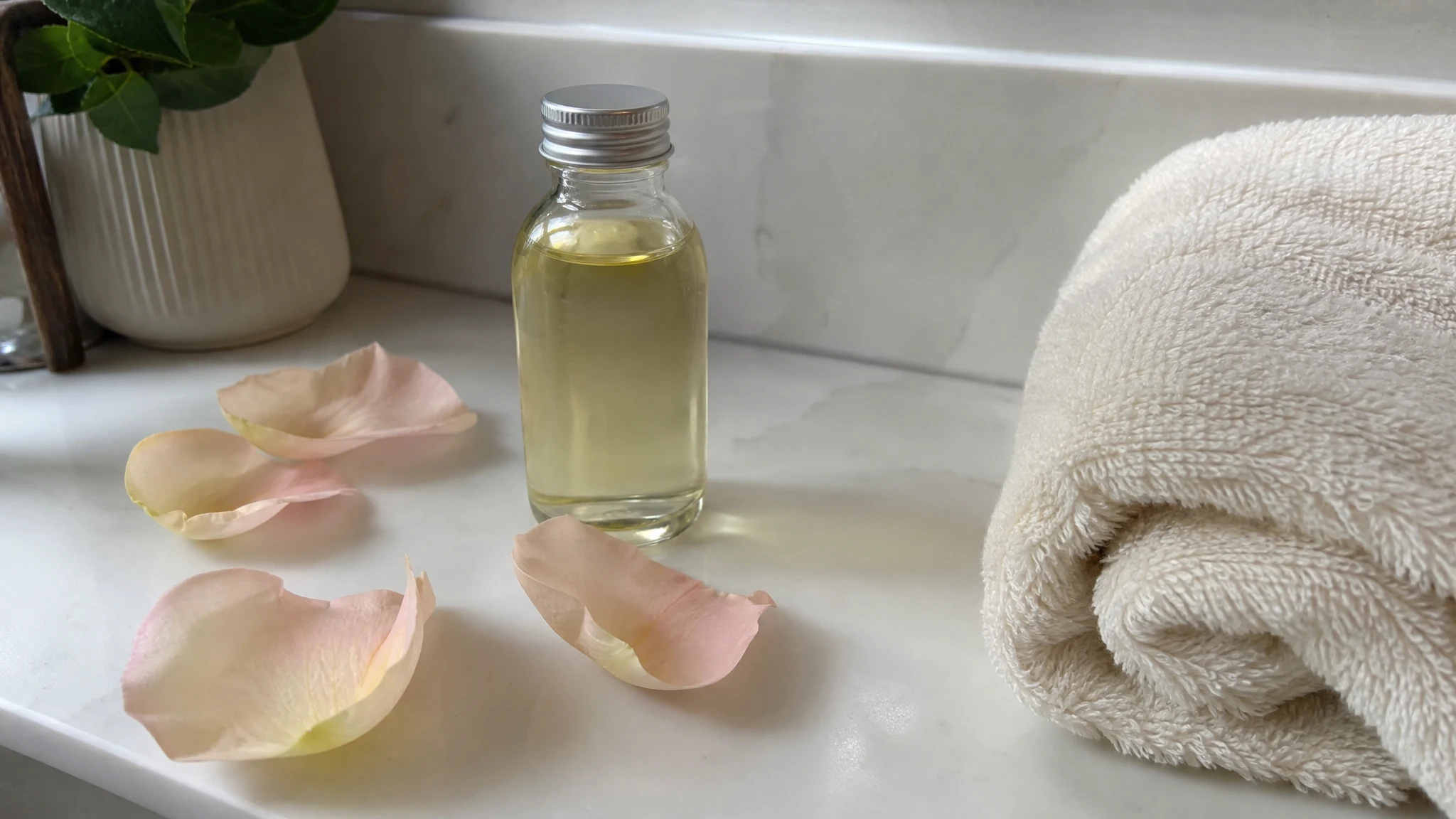
Rose and Amyris Body Oil: A Simple Woody Floral Recipe
Rose and amyris are almost opposites, and that is the charm. Rose is high, sweet and floral. Amyris is low, creamy and woody, with a soft vanilla undertone in the way we describe it. Together the wood tames the sweetness and the rose lifts the wood, so you get a floral that smells more like a warm room than a garden. The recipe is easy. The one thing worth your attention is the rose.
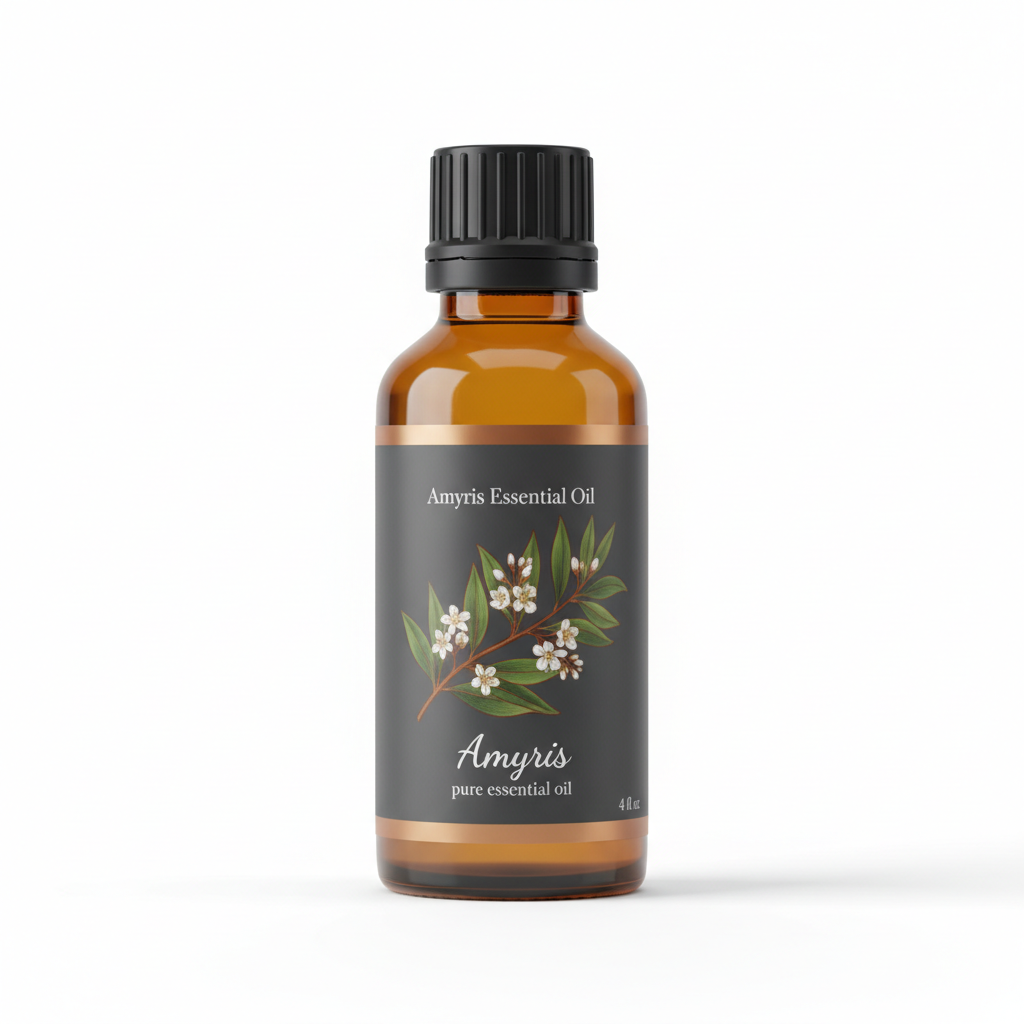
Amyris Essential Oil
Our own Amyris Essential Oil, in sizes from 0.5 oz to bulk.
From $23.99
Shop Now →Is your rose actually rose?
Rose is one of the most frequently diluted or topped up oils in the trade, which is why it is worth a pause. In a 2013 study, researchers analysed 19 commercial Rosa damascena oils alongside an authentic reference, and concluded from isotope analysis that palmarosa oil had probably been added to most of the commercial samples (Pellati et al., Rapid Communications in Mass Spectrometry, 2013). That was one survey, not a verdict on any bottle you can buy today. Still, it is a good reason to buy rose from a supplier that shows its species, its extraction method and a GC-MS report. Rose otto, rose absolute and a "rose scented" blend are very different products. We do not sell rose, so we would point you to a seller who documents it.
Our own oil comes with the Certificate of Analysis we publish for one batch, listing density, refractive index and optical rotation. If you need a GC-MS report for your lot, ask us in writing through the contact page before you order.
How strong to make it
The Tisserand Institute gives 1 to 3% for body oils and lotions and 0.5 to 1.2% for the face (Tisserand Institute). Our guidance for amyris is 0.5% to 2% in a carrier oil with a patch test first. This is a body oil, so 1.5% total sits comfortably inside both. It is not a face formula at this strength.
100 mL body oil at 1.5% total essential oil
| Ingredient | Amount | Drops at about 20 per mL |
|---|---|---|
| Carrier oil (jojoba, sweet almond or fractionated coconut) | 98.5 mL | pour |
| Amyris essential oil | 1.2 mL | 24 |
| Rose essential oil (documented) | 0.3 mL | 6 |
Drops vary from bottle to bottle, so a graduated pipette gives a better result. By weight, 1.2 mL of the amyris batch on our published certificate (relative density 0.952) is about 1.14 g. Rose is used lightly because a little goes a long way and it is the ingredient you least want to waste. Carriers come from a supply shop, and our carrier oils guide compares them; anyone with a nut allergy should skip sweet almond.
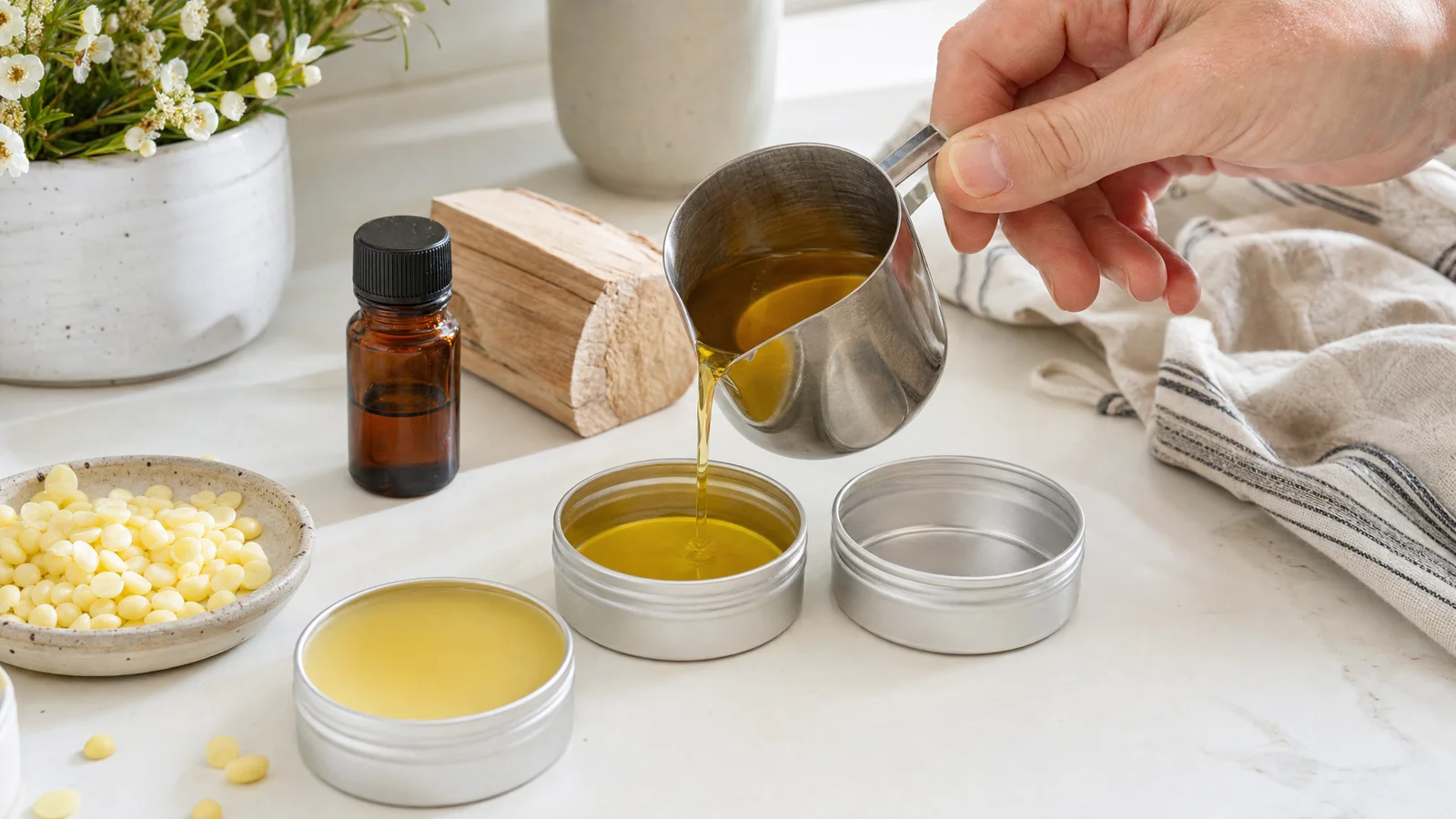
Making it
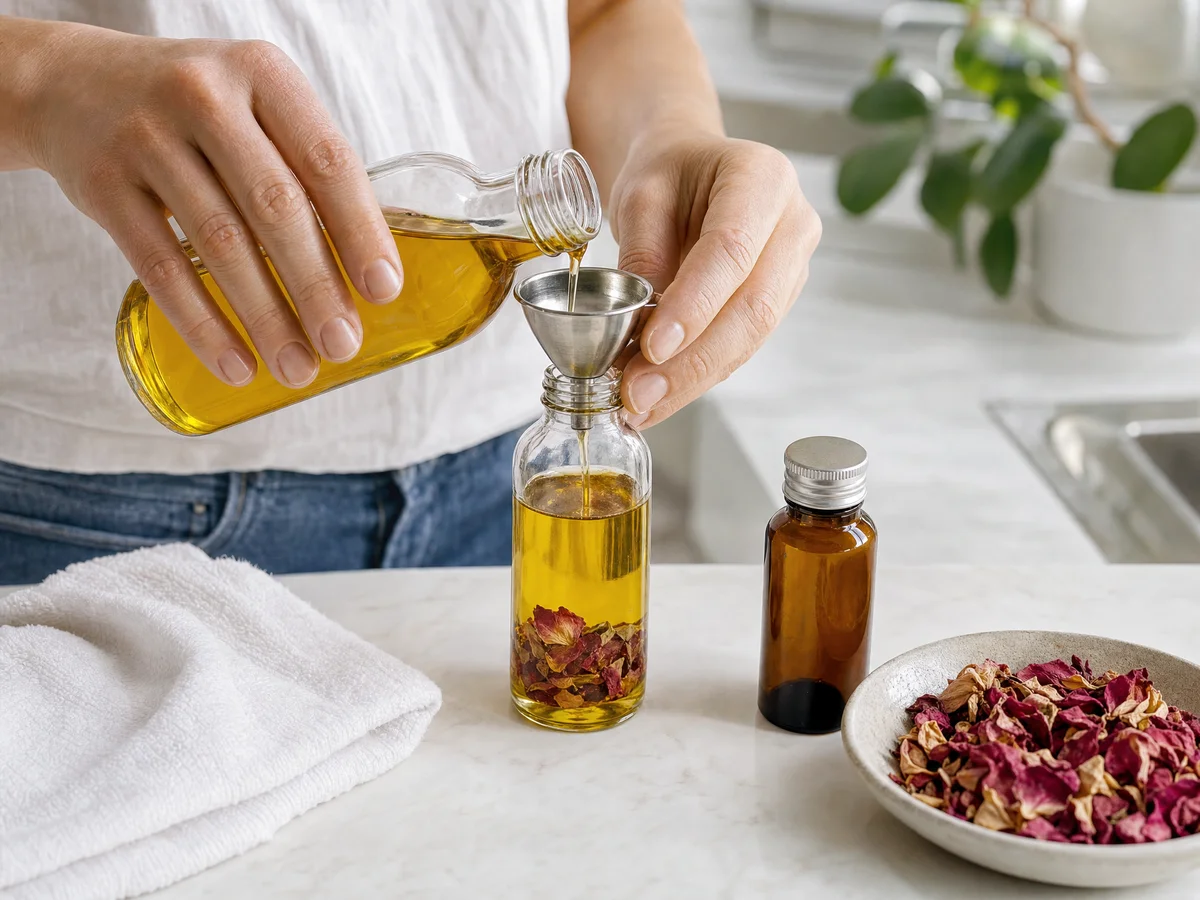
- Start with a clean, dry amber glass bottle, since water spoils an oil blend.
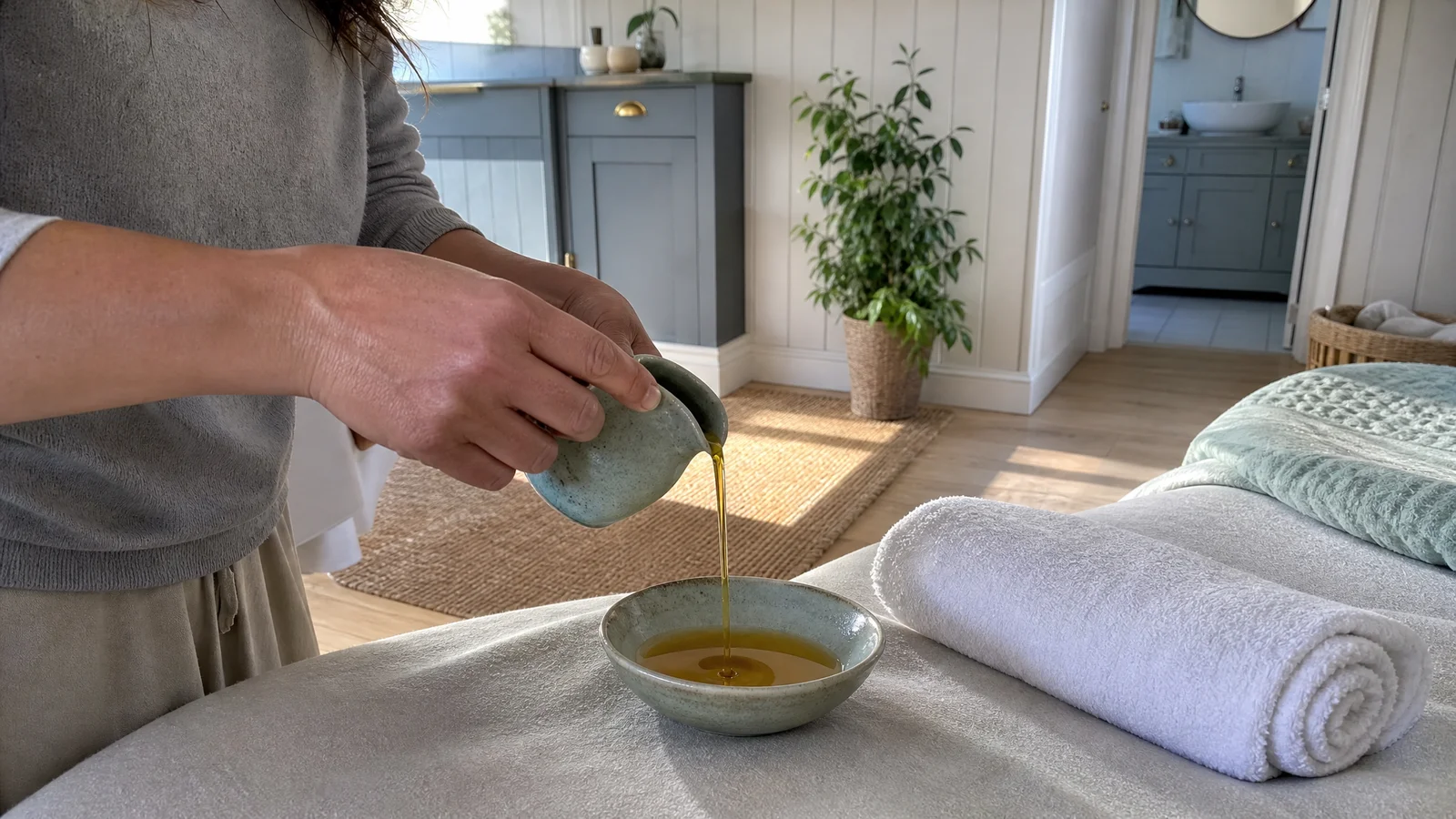
- Pour in the carrier, leaving a little room at the top.
- Add the amyris, then the rose.
- Cap and roll between your palms for 30 seconds.
- Label with the ingredients, the date and "body only".
- Give it a day, then smell it again before you decide the balance needs changing.
With no water in it, the oil needs no preservative, though carrier oils still go rancid at different speeds. Make this size if you will use it within a few months, and store it away from heat and light. If you want to tweak the balance, make a 30 mL test batch (0.36 mL amyris, 0.09 mL rose, the rest carrier) and change one oil at a time, keeping the total at or under 2%.
Smelling it as it settles
Open the bottle after a day and you will notice the two oils have started to introduce themselves to each other. Early on, the rose usually leads, with the wood underneath. Give it a few days and the picture tends to settle into something rounder. If it smells too sweet for you, a little more amyris next time will quiet it. If it smells flat, a touch more rose.
Ways to enjoy it
Smooth a little over your shoulders and arms, or keep a small bottle by the sink for your hands. We would skip the face at this strength. Because it is a plain oil, a little goes a long way, and it will leave a faint sheen for a few minutes, so give it a moment before you dress.
Why we left some things out
There are no citrus peel oils here. FDA notes that certain citrus oils used safely in food can be harmful in cosmetics, particularly on skin exposed to sun (FDA, Aromatherapy), and leaving them out removes that question from a body-wide product. We also skipped water-based extras like hydrosols or aloe, because they would turn this into a different product with a preservation job of its own. Our phototoxic oils guide explains the citrus point.
Patch test and who should check first
Rose contains citronellol and geraniol as main components, and fragrance constituents can sensitise some people. The EU has widened the list of fragrance substances that must be named on cosmetic labels, adding 56 in 2023 (ALS Global summary), so if you plan to give or sell this oil, check the current list. Patch test on the inner forearm first (our patch test guide has the details). If you have a fragrance allergy, eczema or other skin disease, or are pregnant, nursing or making it for a child, ask a dermatologist, allergist or midwife. Keep it away from eyes, children and pets. It will mark fabric, so wear something you do not mind.
For other floral partners, see how to blend amyris with citrus, spice and floral oils, and for a broader body oil recipe try the DIY body oil post.
Amyris Essential Oil
Amyris Essential Oil from our own shop, in sizes from 0.5 oz to bulk.
From $23.99
Shop Now →Sources & Further Reading
- Pellati F, Orlandini G, van Leeuwen KA, et al., 2013. Rapid Commun Mass Spectrom 27(5):591-602. iris.unitn.it
- Tisserand Institute. Essential oil dilution
- ALS Global, 2024. EU Regulation 2023/1545: fragrance allergen labeling
- FDA. Aromatherapy