How Many Drops in a Diffuser? Start With Less
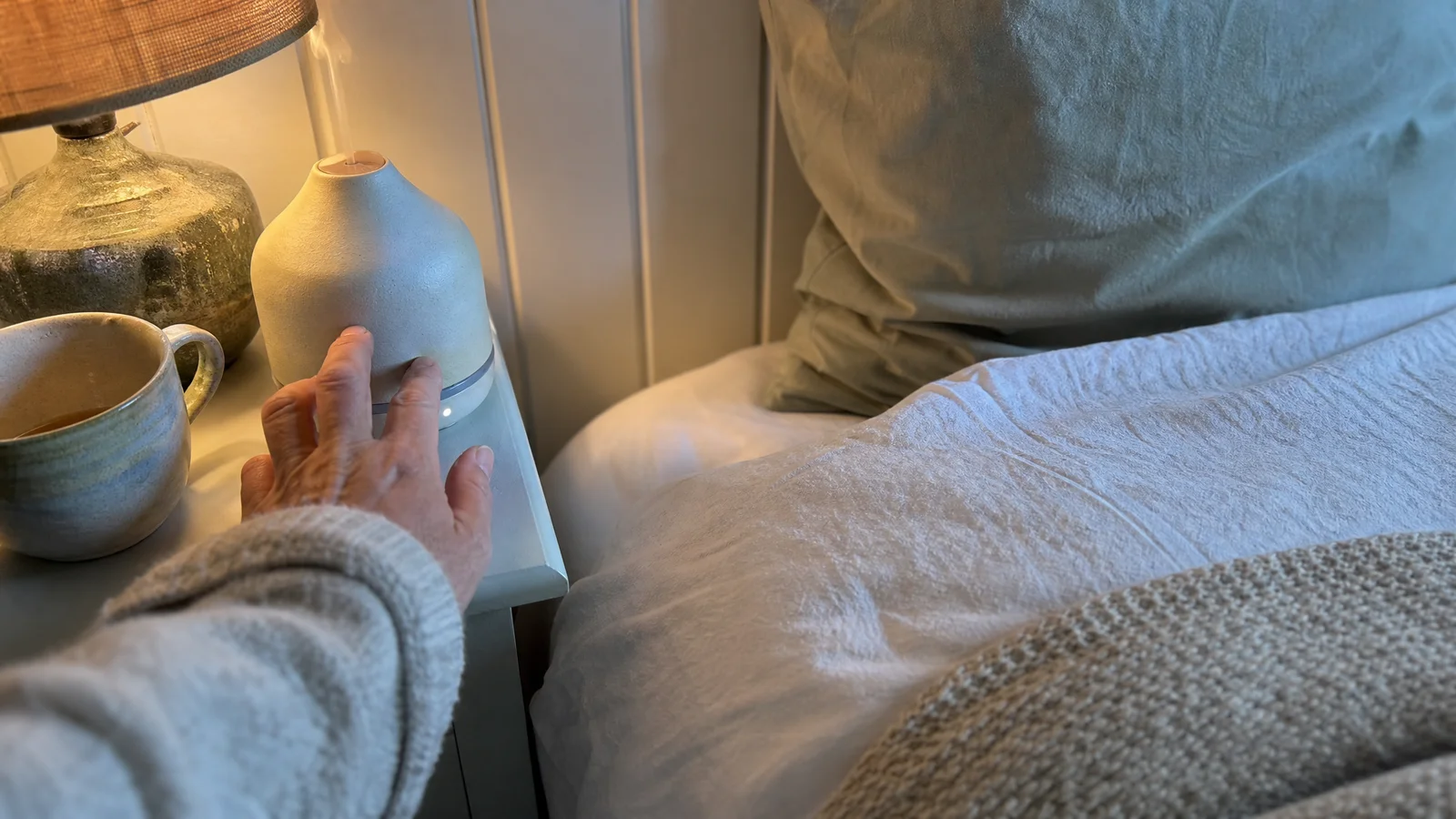
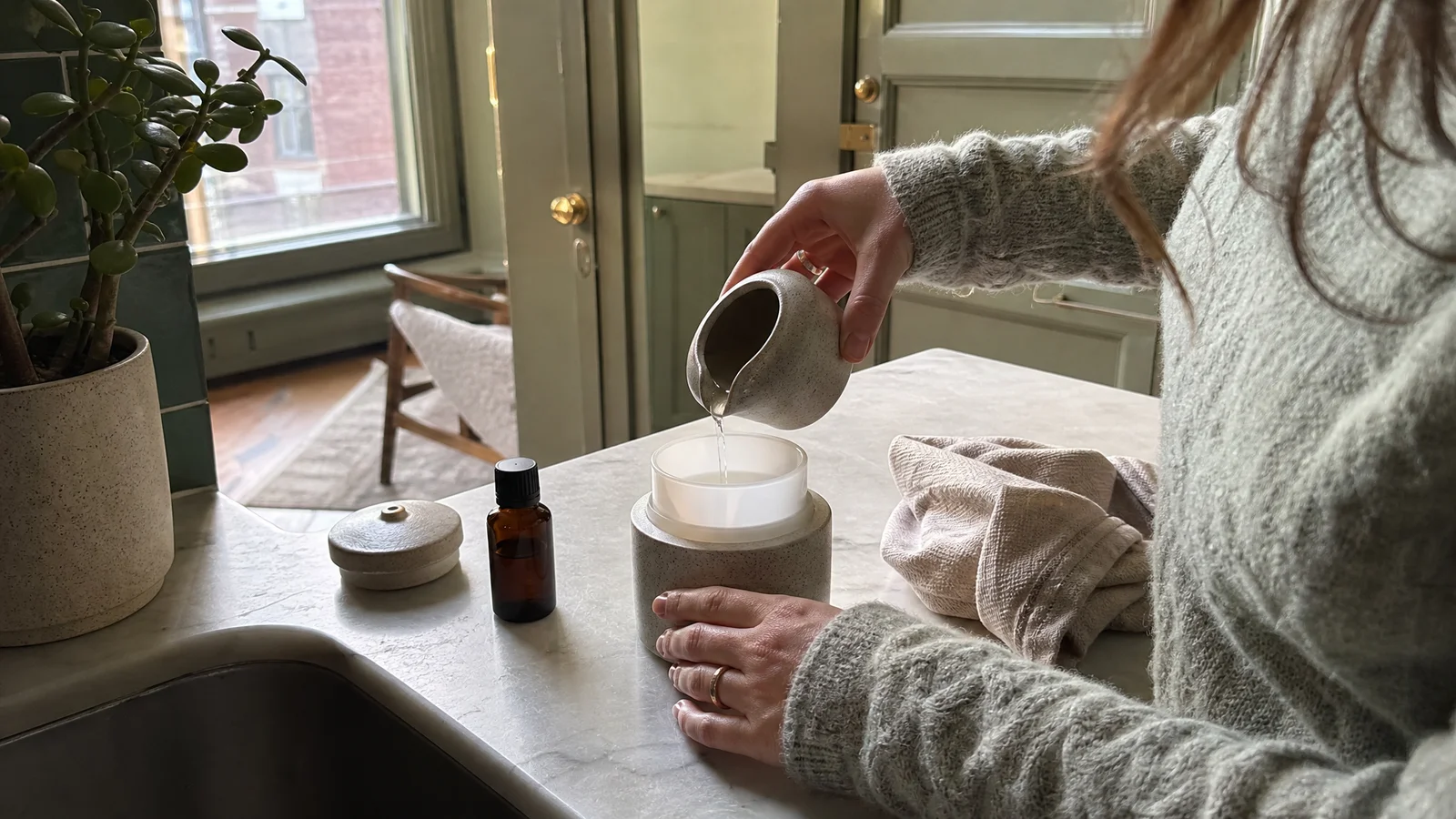
The drop count printed in your diffuser's own manual beats any chart on the internet. When a manual gives none, a sensible starting point is 3 to 5 drops per 100 mL of water, run 30 to 60 minutes on and 30 to 60 minutes off. The published numbers vary by a factor of two or more, so it helps to know where each one comes from.
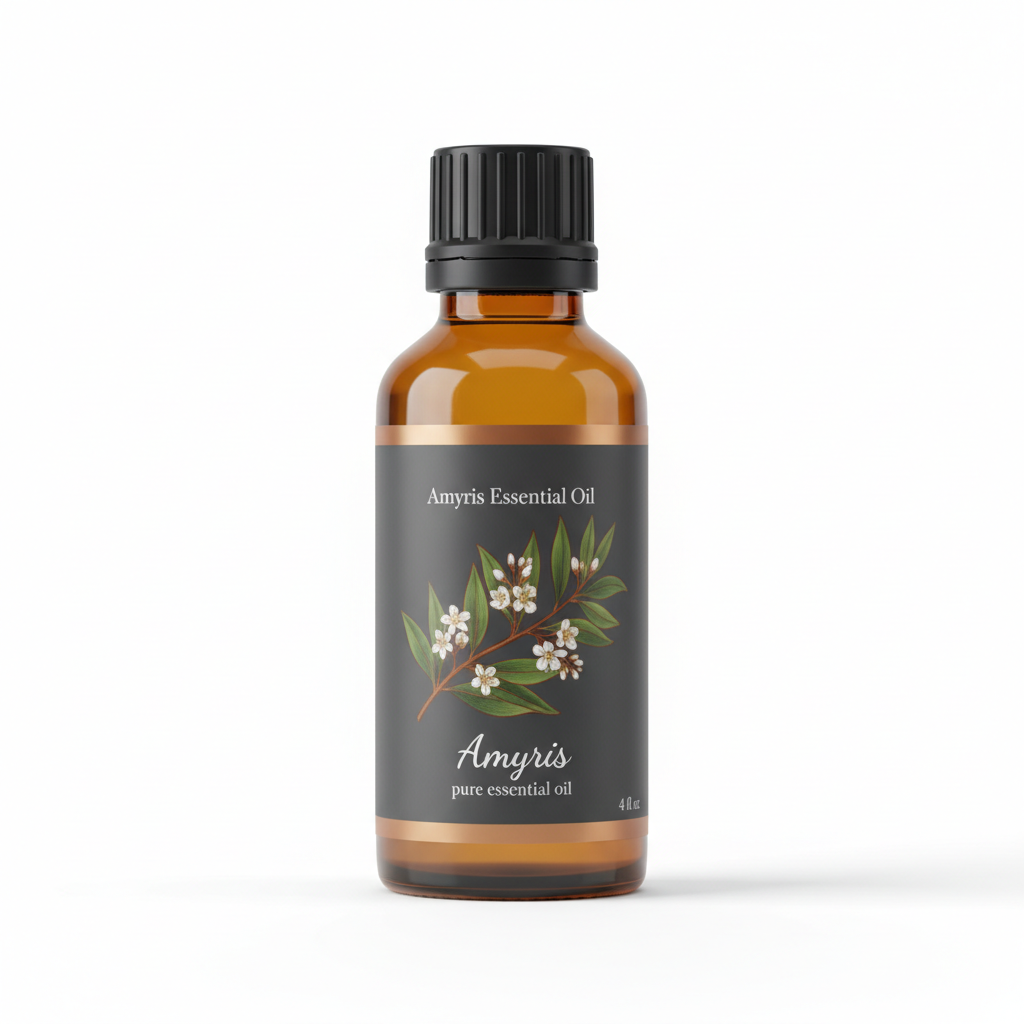
Amyris Essential Oil
Our own Amyris Essential Oil, in sizes from 0.5 oz to bulk.
From $23.99
Shop Now →Drop counts: three sources, three answers
The Tisserand Institute's rule of thumb is 3 to 5 drops per 100 mL of water, adjusted for oil, diffuser output, room size and airflow. A ceramic ultrasonic diffuser manual sold by Kmart Australia says 2 to 3 drops for a full 100 mL tank and not more than 4, though its own line about 2 drops in 20 mL would scale to 10. A small personal unit from Primavera Life allows 1 to 2 drops in no more than 8 mL, which is far stronger per milliliter but runs a short on-and-off mist cycle.
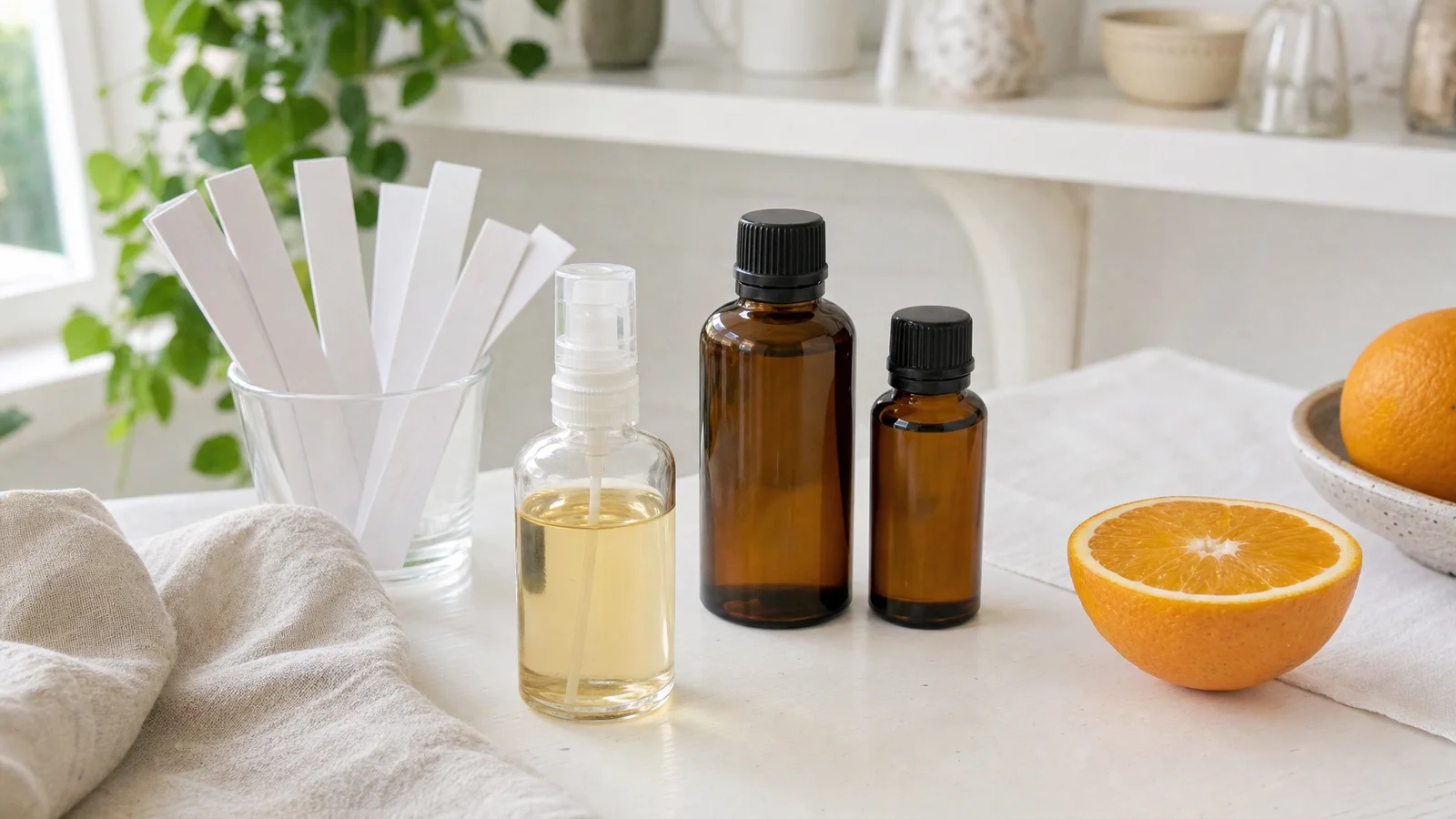
A drop is not a fixed unit either. A Tisserand Institute review of drop-size studies found anything from about 20 to 40 drops per milliliter, so four drops could be 0.1 mL or 0.2 mL depending on the bottle and the oil (How big is a drop?). Our advice follows from that: start at the low end of your manual, add one drop on later runs, and stop when you can just notice the scent from a few steps away. You can always add oil to the next run, but you cannot take it out of a full tank.
Water makes a difference
Both manuals say to use room-temperature water, and the Kmart one sets 45 degrees C as a ceiling. The type of water matters too. In a chamber study at the University of Toronto, an ultrasonic diffuser run with tap water instead of deionized water gave fivefold higher fine-particle emissions with eucalyptus oil (Schwartz-Narbonne, Du and Siegel, 2021). That was one device and four oils, so it is not a rule for every unit, but it is a good reason to reach for distilled water in an ultrasonic diffuser.
Run it in short cycles
Robert Tisserand's guidance is to diffuse intermittently, 30 to 60 minutes on and 30 to 60 minutes off, with some fresh air exchange in the room. His institute also notes that very faint levels, barely noticeable, are fine for any length of time (diffusion guidelines). The hardware agrees: the Kmart unit offers timers from 30 minutes to 3 hours and warns against leaving it on overnight unattended, and the Primavera manual says continuous use may shorten the unit's life. If you feel dizzy, nauseous or lightheaded, switch it off and get fresh air. Our post on whether diffusing is safe goes deeper.
Notice the scent, not the count
Numbers are only a starting point. Walk out of the room, shut the door for a minute, and come back in as if you were a guest. If the scent greets you at the door, you have used too much; if you can just find it near the diffuser, you are close. Your nose adapts quickly, so that first walk-in is the honest test.
Cleaning: check your own manual
Cleaning advice is where manuals disagree most. The Kmart manual says to empty the reservoir, wipe it, clear scale from the ultrasonic disc with clean water, never scrape it with metal, and not to use vinegar or other corrosive cleaners. The Primavera manual runs 6 mL of water with 2 mL of 70% rubbing alcohol through its tank and cleans the nozzle with an alcohol-soaked swab. A blog recipe that calls for vinegar would break the first manual's instruction. What works for both: unplug before cleaning, use the method your manual names, dry the unit fully, and do not leave oil sitting in the tank between uses.
Protecting the diffuser itself
Manufacturers name three oil-related hazards. Kmart says acidic oil can damage the unit and you should check the oil's instructions. Primavera says not to use viscous or strongly colouring oils, which can discolor plastic and wood irreversibly, so wipe spills straight away. And too much oil of any kind can cause damage. Amyris is a pale yellow to amber oil (our Certificate of Analysis lists a yellow liquid with a relative density of 0.952 at 20 C), so it may fall under a coloured-oil restriction. If your manual restricts viscous or coloured oils, check with the maker before filling the tank. We sell one oil and no diffusers, so none of the models here is a recommendation.
Who should ask first
ANSES, the French health safety agency, reported in 2020 that essential-oil sprays and diffusers were linked to eye, nose and throat irritation and respiratory effects even with normal use, said the evidence was not yet firm, and advised people with respiratory conditions such as asthma, and pregnant or breastfeeding women, against using them (ANSES). Both manuals also say diffusers are not for unsupervised children, and Kmart advises care around animals. Ask a physician, midwife, pediatrician or veterinarian before diffusing around any of these groups, and read our posts on pets and children first.
Putting amyris in the tank
Amyris has a creamy, woody, balsamic scent with a soft vanilla undertone, and it is a base note, so a drop or two goes a long way. It works well alongside a citrus or floral oil from another supplier rather than as the whole tank. Our amyris diffuser blends show how to split a small total. If you are still choosing hardware, how the main diffuser types work compares them.
Read the manual, start low, run in short cycles, use clean water and let the room air out between sessions. That is most of what the published guidance adds up to.
Amyris Essential Oil
Amyris Essential Oil from our own shop, in sizes from 0.5 oz to bulk.
From $23.99
Shop Now →Sources & Further Reading
- Tisserand Institute. Essential oil applications. tisserandinstitute.org
- Tisserand Institute. How big is a drop? tisserandinstitute.org
- Tisserand Institute. Diffusion guidelines. tisserandinstitute.org
- Kmart Australia. White Ceramic Aroma Diffuser instruction manual, model B-0353-1. kmart.com.au
- Primavera Life, June 2025. Aroma Diffuser Petit instructions. primaveralife.com
- Schwartz-Narbonne H, Du B, Siegel JA, 2021. Volatile organic compound and particulate matter emissions from an ultrasonic essential oil diffuser. Indoor Air 31(6):1982-1992. doi.org
- ANSES, 28 April 2020. ANSES calls for vigilance concerning essential-oil based sprays and diffusers. anses.fr