Amyris Linen Spray Recipe That Won't Separate
Open a bottle of amyris and you get a creamy, woody, balsamic scent that seems made for a pillowcase. Getting it onto one is where most homemade linen sprays go sideways: the oil floats, the nozzle spits droplets, and a faint amber spot appears on white cotton. A few decisions at the start take care of all of that.
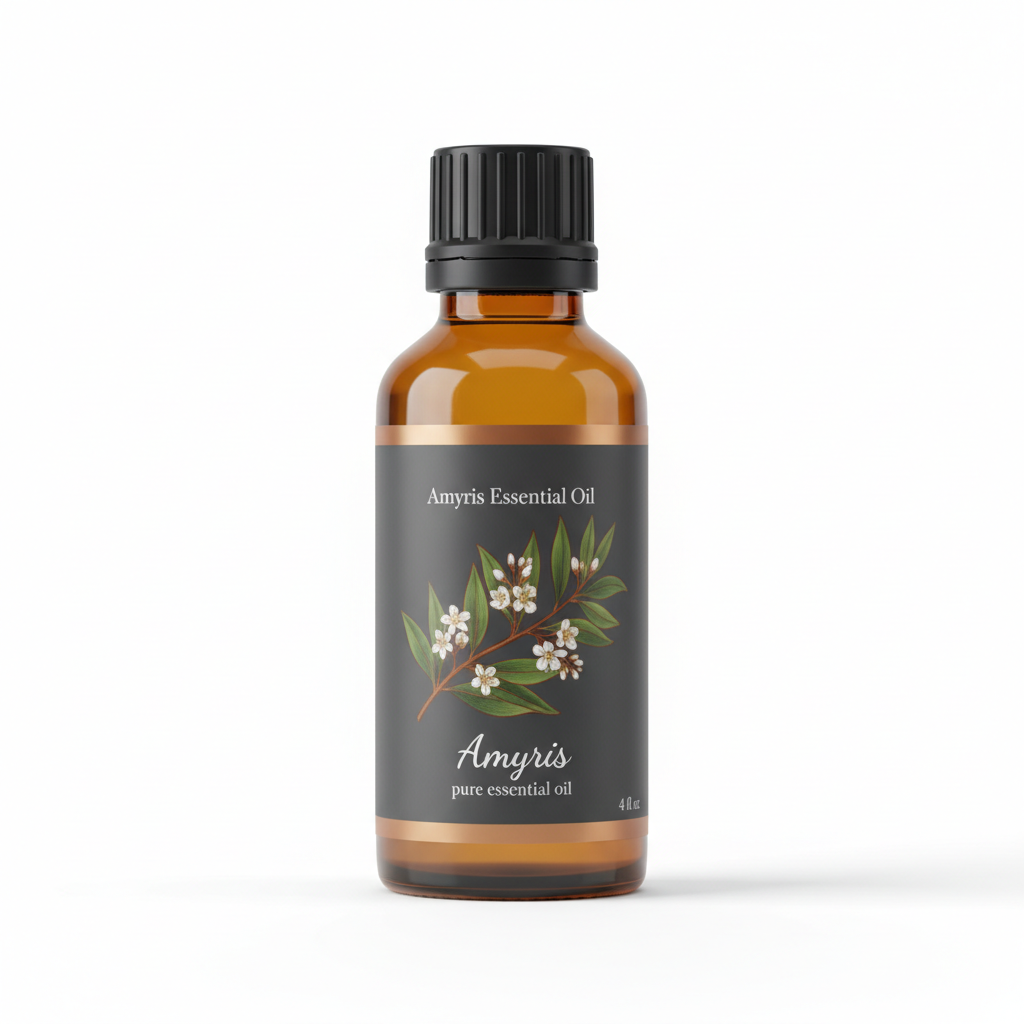
Amyris Essential Oil
Our own Amyris Essential Oil, in sizes from 0.5 oz to bulk.
From $23.99
Shop Now →Oil and water need a go-between
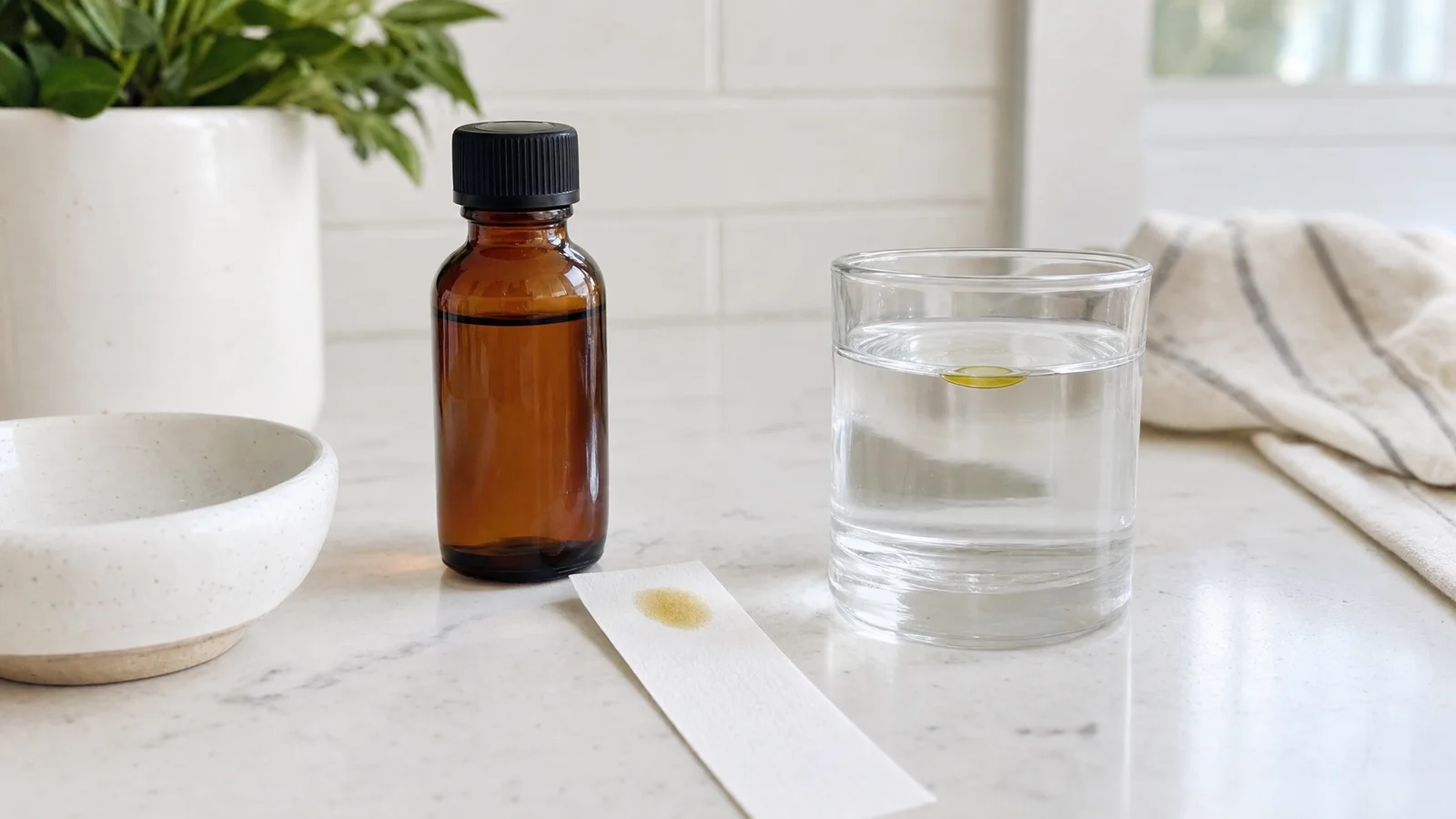
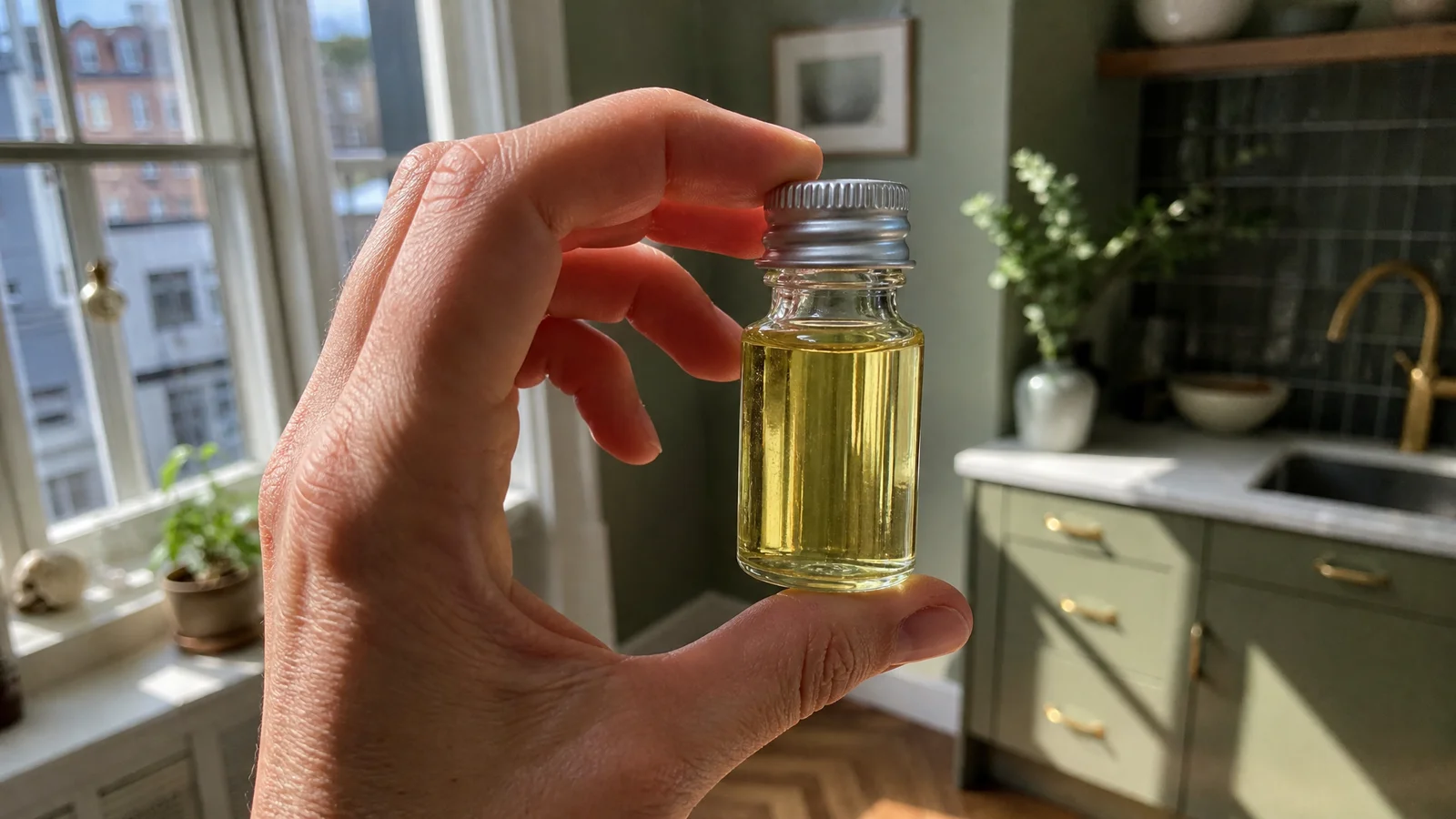
Essential oil does not dissolve in water, and shaking the bottle only scatters it for a moment. A retailer guide to room sprays from Organic Aromas makes the practical point that undissolved oil lands as neat droplets that can mark pale linen, silk and lacquered furniture. Amyris is a pale yellow to amber oil, so on white fabric a stray droplet is easy to see. You need either alcohol or a solubilizer to hold the oil in the mix.
The alcohol route
The guide's base is 70 ml of 95% alcohol, 25 ml of distilled water and 1 to 2 ml of oil for every 100 ml. The finished spray needs to stay at roughly 70% alcohol or higher to keep the oil dissolved. That is why witch hazel (about 14% alcohol) and vodka (40%) make cloudy sprays: they fall well short. It is also the easiest route for a first batch, because there are fewer ingredients to source and to get wrong.
The solubilizer route
Here you stir 1 ml of oil into 1 to 4 ml of polysorbate 20, then add a preservative and water up to 100 ml. Suppliers start at one part solubilizer to one part oil, and the guide notes that heavy oils such as cedarwood can need four parts or more. Amyris is a heavy, base-note oil, so reasoning from that example, plan on the higher end and judge the result by eye. If the mix is cloudy or shows oil on the surface after a day, add a little more solubilizer or use less oil.
How much oil is enough
About 1% is the usual target. With the common rough convention of 20 drops to the milliliter (drop size really does vary by bottle), a 100 ml bottle at 1% takes about 20 drops, and a 250 ml bottle about 50. If you would rather weigh, 1 ml of the batch on our published Certificate of Analysis weighs about 0.95 g, so 1% of a 250 g spray is roughly 2.5 g of oil.
Doubling to 2% does not double how long the scent hangs around. In a water-heavy spray it mostly raises the solubilizer you need and the chance of marking fabric. We would start at 1% and change one thing at a time.
Making the scent last, honestly
We describe amyris as a base note that helps citrus and floral top notes hold their scent longer in a blend, and that is the right way to think about it in a spray too. It rounds and anchors the lighter oils; it will not turn a fabric spray into an all-day fragrance, because the carrier evaporates and the light molecules go first whatever you add. Our guide to natural perfume fixatives goes into what really lengthens a scent.
The simplest improvement is in the blend itself. A spray that is mostly lemon will fade quickly whatever sits under it, so let the amyris lead for a woody linen spray and add a smaller share of something brighter. Our blending guide covers the partners we like with it: lavender, bergamot, geranium, sandalwood and ylang ylang. We do not sell those oils, so you will find them at a craft or aromatherapy supplier. If you reach for expressed citrus, read our phototoxic oils post first, since linen touches skin.
Spraying it well
A fine-mist nozzle makes all the difference. Hold the bottle at arm's length from the fabric and spray a light mist, not a soak. Wet patches are where marks happen, and a thin even mist dries without a trace. Give the fabric a few minutes to dry before you put it to use, then smell it up close. The scent you want is a soft woody whisper, not a wall.
Keeping a water-based spray fresh
A spray with water in it needs a broad-spectrum cosmetic preservative at the supplier's rate if you want to keep it more than a few days. Essential oil is not a substitute for one. The alternative in the guide is a small batch kept in the refrigerator and finished within about a week. Alcohol-heavy sprays keep for months, which is one more reason to start with that route.
A first batch, step by step
- For each 100 ml bottle, measure 70 ml of high-proof alcohol, 25 ml of distilled water and about 1 ml of amyris.
- Stir the oil into the alcohol first, then add the water slowly.
- Leave it for 24 hours. Haze or oil on the surface means start again with a little less oil.
- Spray a white scrap of the fabric you plan to use and let it dry fully before you decide.
- Smell it five minutes after spraying and again the next day, and write both down.
- Label the bottle with the date, the oil percentage and the base. Keep it away from heat, sunlight, children and pets.
Alcohol is flammable, so spray well away from open flames, candles included. If you spray often in a closed room, our post on whether diffusing is safe looks at what air measurements show for scented products indoors.
If you plan to give or sell sprays
Fragrance usage limits depend on the product category, and supplier lists do not agree on where room sprays and pillow sprays belong. One guide to the 51st IFRA Amendment puts room sprays in Category 10B and pillow sprays in 11B, because of limited transfer to facial skin before drying. Treat that as a pointer, and check the IFRA standards for the oils in your own formulation. For personal use at home you can skip this step.
When you want a scent that holds steady from the first minute to the third hour, a reed diffuser suits better than a spray, and our reed diffuser post explains why. For a mist-free option, try our diffuser blends.
Amyris Essential Oil
Amyris Essential Oil from our own shop, in sizes from 0.5 oz to bulk.
From $23.99
Shop Now →Sources & Further Reading
- Organic Aromas, 2026. Essential oil room spray recipes that actually mix. organicaromas.com
- Stock Fragrance. IFRA 51st Amendment guide: which category is your product? stockfragrance.com