Aromatherapy Basics: How to Start With One Scent
You do not need a shelf of bottles or a degree in botany to enjoy aromatherapy. At heart it is simply choosing a scent you love and giving it a few quiet minutes. What is worth knowing before you start is what the evidence actually supports, which is a smaller and more interesting story than the usual list of promises.

Amyris Essential Oil
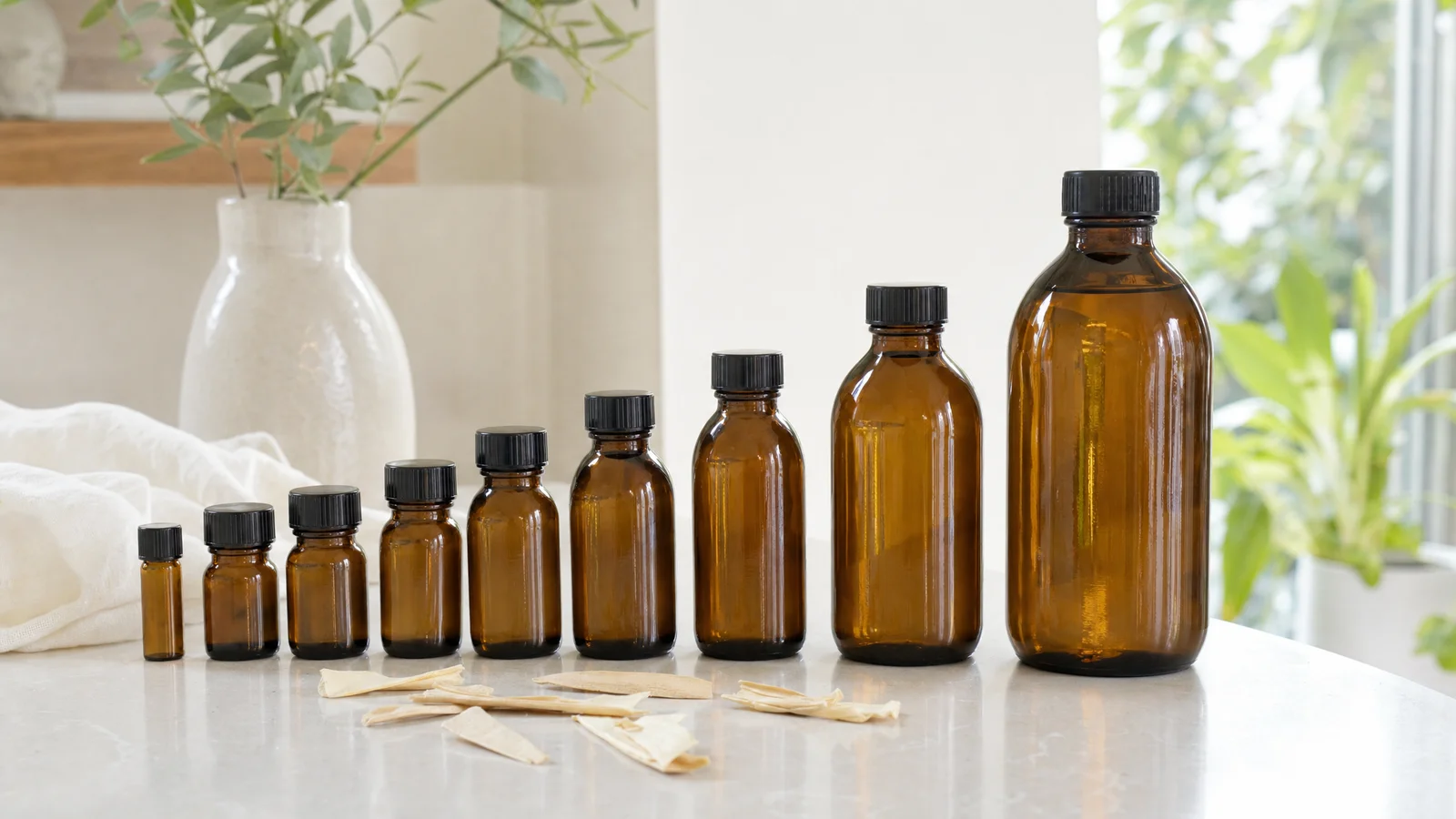
Our own Amyris Essential Oil, in sizes from 0.5 oz to bulk.
From $23.99
Shop Now →Why a smell can reach you so fast
Scent has a shortcut. Odour signals travel from the nose to parts of the brain linked with emotion and memory without passing through the relay station most other senses use. That is why a whiff of something can bring back a summer afternoon in half a second. Researchers describe this pathway in a review of how odours relate to emotion (Kadohisa, Frontiers in Systems Neuroscience, 2013), and the same review is careful to say that the effects vary by odour and by person. A pathway tells us a smell can touch how we feel. It does not tell us that any particular oil will do a particular thing for you.
What the evidence says, in a sentence
The US National Center for Complementary and Integrative Health describes aromatherapy as using plant essential oils, mostly inhaled or applied diluted to skin, and says little rigorous research exists on topics like sleep. It also describes one study that compared lemon and lavender in people under stress: lemon had a positive effect on mood, while neither scent changed the stress markers measured (NCCIH, Aromatherapy). That is a fair summary of the field: pleasant smells can lift a mood, and bigger claims are still waiting for better evidence.
We sell an external cosmetic oil and we make no medical claim for it. If you are looking for help with sleep, anxiety or any health concern, a physician is the right person to ask. The FDA is clear that claims such as helping you sleep or treating anxiety are drug claims, however natural the product (FDA, Aromatherapy). It is also why you will find scent language, not health promises, on our pages.
So choose by what you enjoy
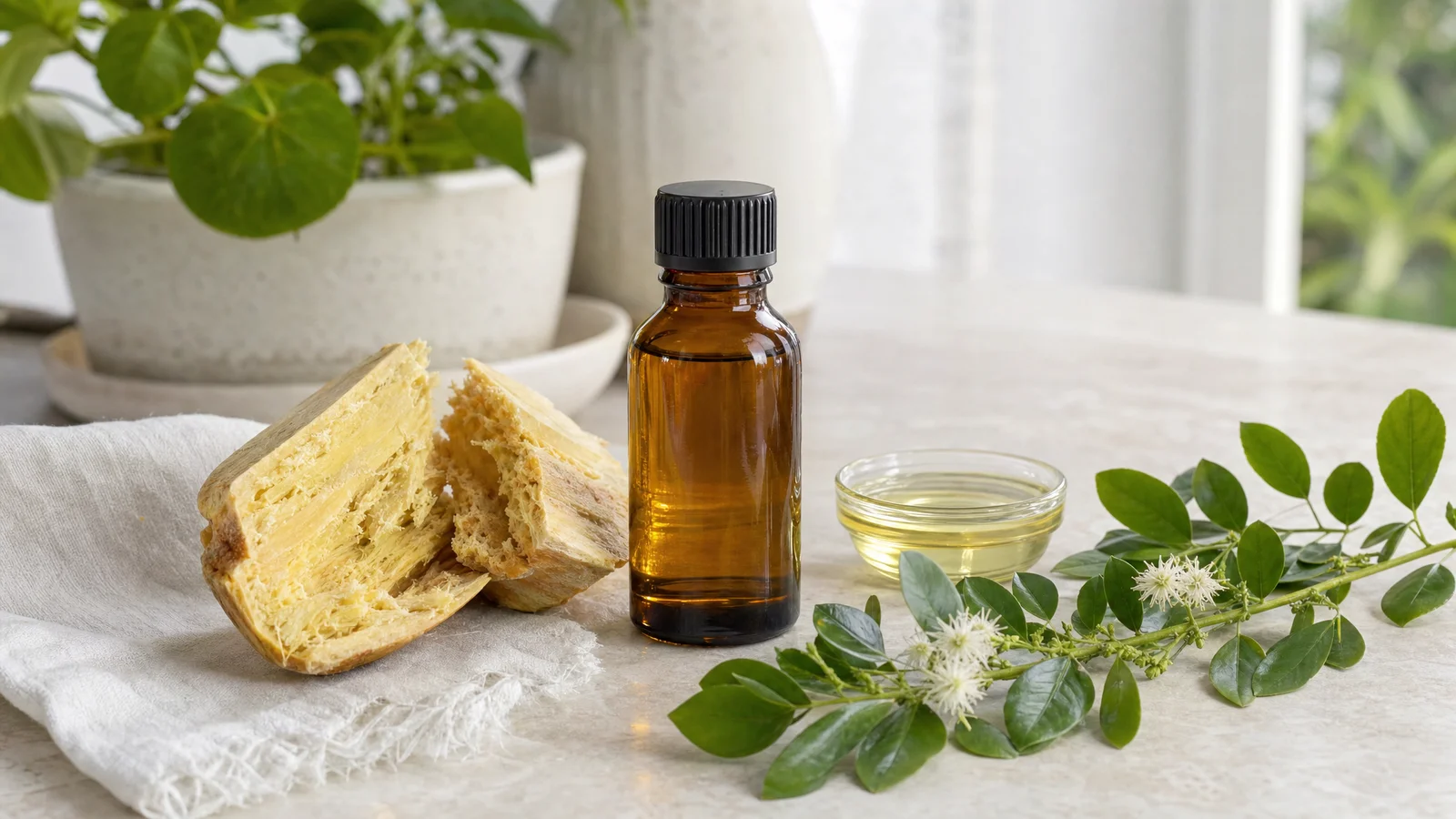
That points to the most useful beginner's rule there is: pick the scent you actually like. A routine you look forward to is the point, and a celebrated oil you find unpleasant is a poor first purchase. If you like deep, warm, woody scents, a bottle of amyris is a lovely place to start. We describe ours as creamy, woody and balsamic, and as a base note it is slow to fade, which suits a quiet evening corner of a room.
How to give a scent a fair hearing
Open the bottle and hold it a hand's width from your nose instead of pressing it against a nostril. Take one slow, easy breath, then set it down and look away for a moment. The first sniff of almost any oil is mostly volume. The second, a minute later, is where you start to notice the character underneath.
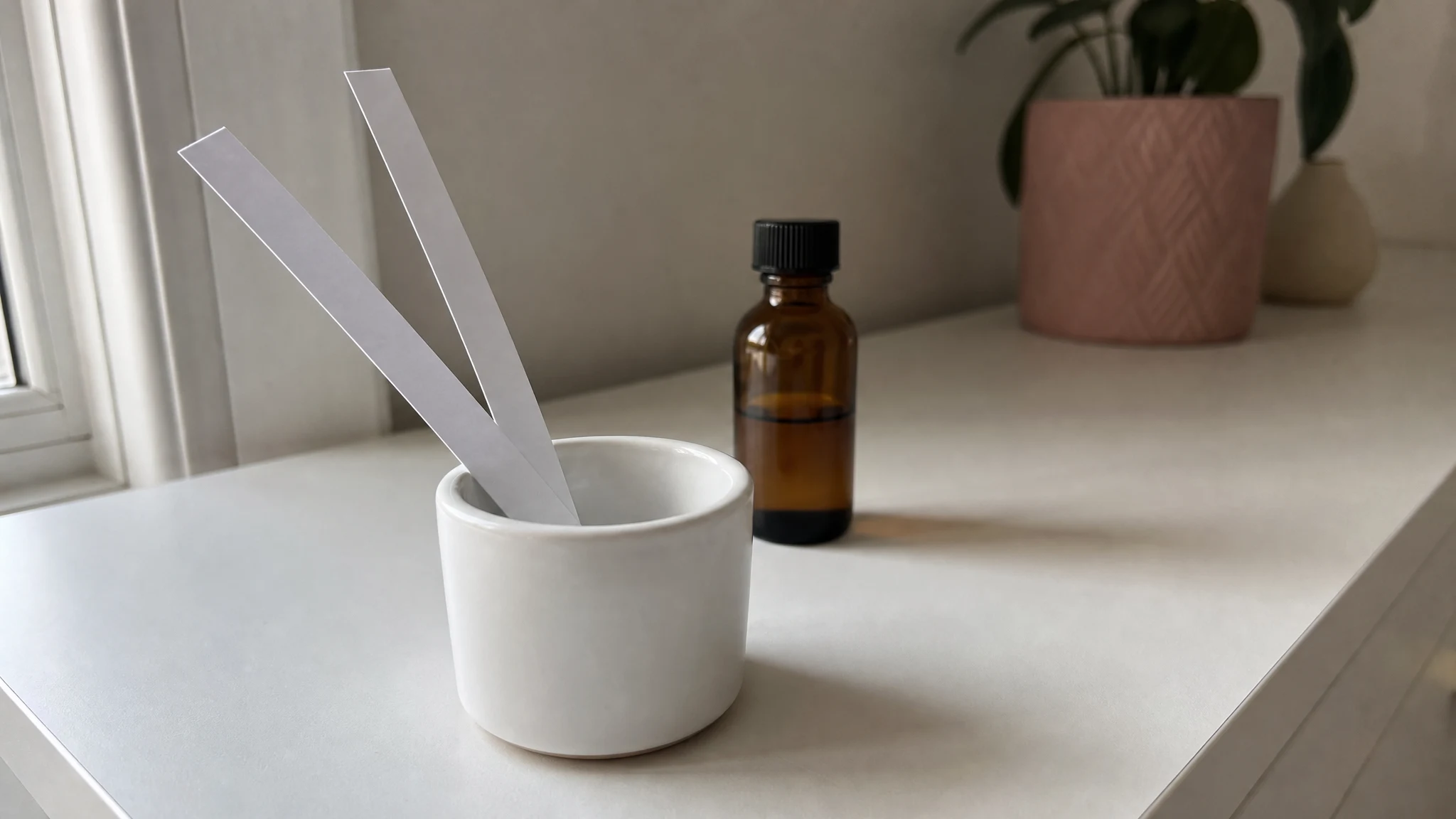
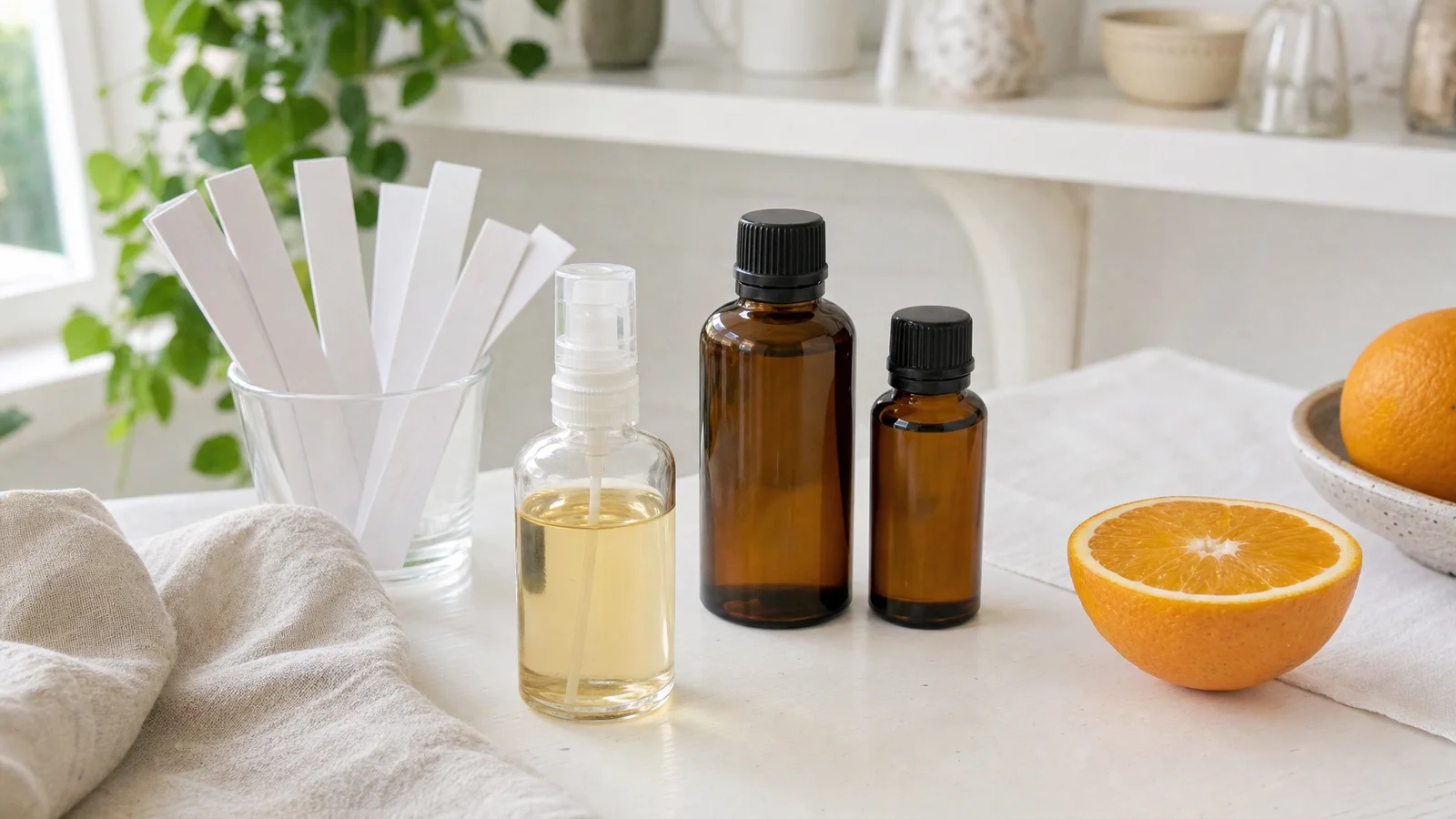
A tissue or a strip of blotting paper helps, because you can wave it gently and let the scent come to you. With a wood like amyris you'll notice the warmth arrives slowly and lingers instead of announcing itself, which is why a patient sniff tells you more than a quick one.
Noses also tire. After a few minutes you stop noticing a scent, and that is normal. Step into another room, come back, and you'll often find it is still there, softer than you remembered. It is a good reason not to add more.
A first-purchase checklist
- Smell before you buy, where you can, and favour a scent you already enjoy.
- Look for the Latin name. "Lavender" covers several species, and a botanical name tells you which one is in the bottle.
- Add one oil at a time. If you try three at once and one gives you a headache, you will not know which.
- Think about your household. Babies, pets, asthma and pregnancy each deserve a read of our posts on pets, pregnancy and kids before you diffuse.
- Buy from someone who can tell you the lot. Our guide on choosing essential oils explains what to look for.
Three ways to use an oil
You can smell it from the bottle or a tissue, diffuse it in a room, or dilute it into a carrier for skin. Skin is where most reactions happen, which is why we recommend diluting our amyris to 0.5% to 2% in a carrier oil, patch testing first, and keeping it away from eyes, children and pets. Our dilution chart does the drops for you, and the patch test guide shows the method. For diffusing, the Tisserand Institute suggests 30 to 60 minutes on and 30 to 60 minutes off, with some fresh air, and our diffuser types post will help you choose a device. We do not recommend taking any essential oil internally.
Where to go next
If a particular interest brought you here, follow it: stress, focus, meditation or a personal inhaler. The habits that apply to all of them live in our safety guide.
Think of aromatherapy as a small, optional pleasure. Choose a scent you love, use it gently, change one thing at a time, and take any health concern to a professional.
Amyris Essential Oil
Amyris Essential Oil from our own shop, in sizes from 0.5 oz to bulk.
From $23.99
Shop Now →Sources & Further Reading
- Kadohisa M., 2013. Effects of odor on emotion, with implications. Frontiers in Systems Neuroscience 7:66. pmc.ncbi.nlm.nih.gov
- NCCIH. Aromatherapy. nccih.nih.gov
- FDA. Aromatherapy. fda.gov
- Tisserand Institute. Safety guidelines. tisserandinstitute.org