Essential Oils for Stress: What the Trials Show
Smelling an oil you like can be a pleasant, short pause in a stressful day, and some trials report lower stress or anxiety scores afterward, but the strongest-looking results come from comparisons against no scent, and the comparisons that control for the smell itself are much less convincing. This article separates three things that headlines blur together: inhaled oils in people under situational stress, lavender oil capsules in people diagnosed with an anxiety disorder, and the everyday routine you might build around a scent.
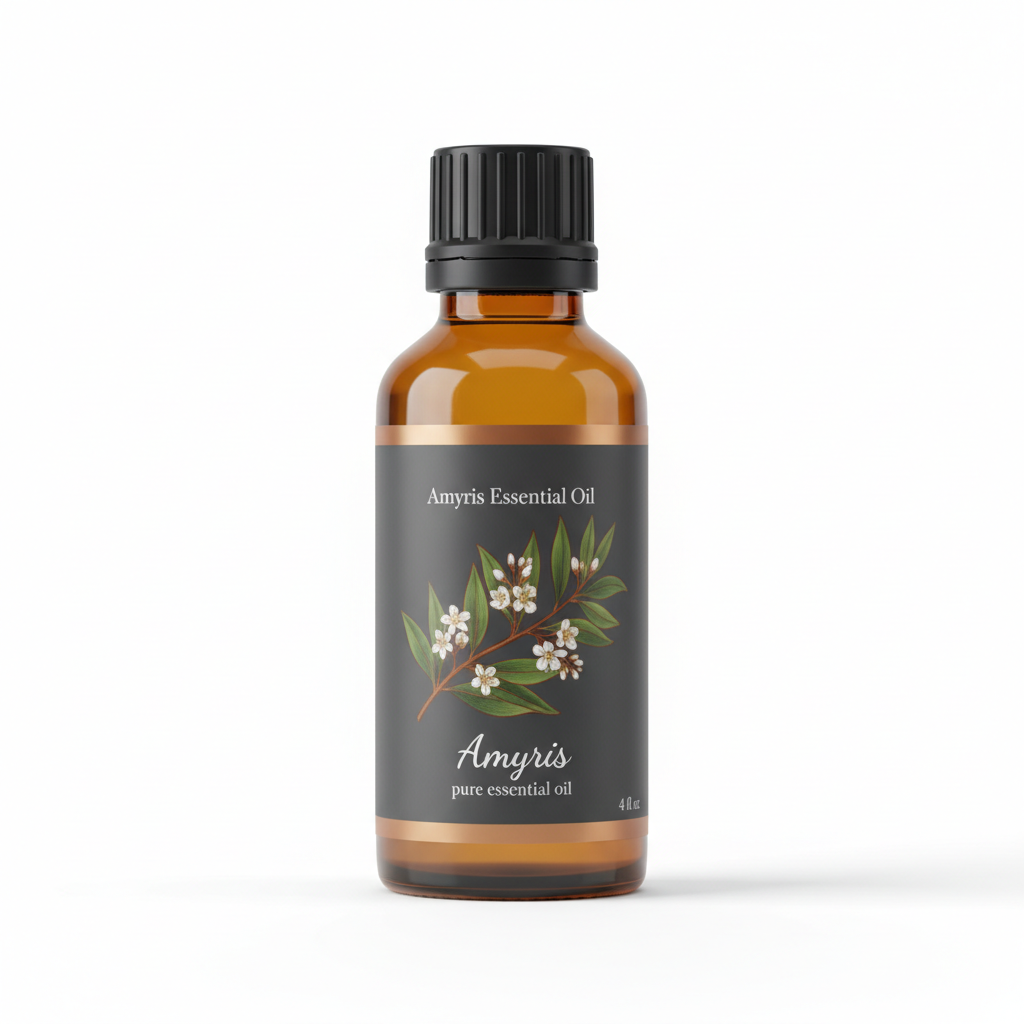
Amyris Essential Oil
Our own Amyris Essential Oil, in sizes from 0.5 oz to bulk.
From $20.99
Shop Now →Start with who the trials studied
The question "do essential oils reduce stress" has no single answer, because the trials answer different questions. Reading the three most useful ones side by side shows the gaps.
| Source | Who and how many | What they found | Quality caveat from the authors or from what they report |
|---|---|---|---|
| Yoo and Park, 2023 (systematic review, lavender inhalation) | 11 randomized trials, 972 participants, trial sizes 34 to 183: surgical and dialysis patients, fertility-procedure patients, postmenopausal women, older adults, children awaiting tooth extraction | 10 of 11 reported significantly lower anxiety after inhaling lavender oil | No participants had a clinical anxiety disorder; no formal quality-appraisal tool reported; adverse events mostly "none" or "not assessed"; 12 studies excluded for not naming the species; conclusions called provisional |
| Luan et al., 2023 (meta-analysis, inhaled aromatherapy for test anxiety) | 7 randomized trials, 425 college students | Pooled SMD -0.67 (95% CI -1.05 to -0.28) | Overall risk of bias moderate; blinding unclear or high-risk in many trials; heterogeneity 72%; the placebo-controlled subgroup was not significant (SMD -0.65, p = 0.25) |
| Kiecolt-Glaser et al., 2008 (randomized trial) | 56 healthy adults, mean age about 24, each smelling lavender, lemon and water across three visits | Lemon raised positive mood more than lavender or water; lavender was no better than water | Small, young sample; short exposures; blinding imperfect (the unprimed group named lemon correctly 77% of the time) |
The sources behind the table are Yoo and Park, Luan and colleagues and Kiecolt-Glaser and colleagues. SMD is a standardized mean difference, a unit-free gap measured in standard deviations; a negative figure here means lower anxiety in the aroma group.
Read together, the reviews say that when a lavender scent is compared with nothing in people who are about to face something stressful, scores tend to come out lower. The lavender-versus-water trial found no advantage from the lavender, and the one placebo-controlled subgroup in the test anxiety review did not reach significance. The honest summary is that the good result is real in the data and its cause is open.
Expectation is part of the effect, and that is not an insult
In a randomized study of 81 adults aged 50 to 85, Chamine and Oken (2015) gave people lavender, coconut oil or water, and separately told half of them on a card that the scent had a strong stress-reducing effect. The aroma type had no specific effect on stress or cognition; the group given the claim card had a larger post-stress drop in reaction time (P = .037). The study was small and several brain-response findings did not survive correction for multiple comparisons.
In another small study, Hoenen and colleagues (2016) found that among 78 participants exposed to limonene, vanillin or a control odor during a helplessness task, the people who rated their odor as more pleasant showed a smaller drop in happiness (p = 0.019), whatever the odor was. That link is correlational.
Reasoning from both: if the relaxing power of a scent depends partly on belief and enjoyment, then a routine built around a scent you like and a few quiet minutes is a sensible use of it, and "which oil is scientifically the most calming" is a less useful question than "which smell do I look forward to".
The lavender capsule trials are a different thing
Search results for "lavender oil anxiety" often surface a German oral lavender-oil product, Silexan. Kasper and colleagues (2014), in the International Journal of Neuropsychopharmacology, ran a 10-week randomized, double-blind trial at 57 psychiatric and general practices in Germany in patients with a diagnosed generalized anxiety disorder. They randomized 539 people to 160 mg or 80 mg of Silexan capsules once daily, paroxetine 20 mg, or placebo. On the Hamilton Anxiety Scale, scores fell by 14.1 points on Silexan 160 mg, 12.8 on Silexan 80 mg, 11.3 on paroxetine and 9.5 on placebo, and both Silexan doses were superior to placebo (p below 0.01) while paroxetine showed a trend (p = 0.10).
That trial tells you nothing about a diffuser or a bottle on your desk. It tested a standardized oral capsule, in people diagnosed by clinicians and followed by physicians. NCCIH (lavender page, updated February 2025) notes of the oral lavender literature that sample sizes are small, independent funding and testing are limited, and participants are not diverse. Our shop guidance for our own oil is not to take it internally, and that applies here too. If persistent anxiety is the problem, the person to ask about options, including whether an oral product has any place, is a physician or other licensed clinician.
When this is not a job for oils
Anxiety that lasts for weeks, interferes with work or sleep, or comes with panic, low mood or thoughts of self-harm deserves a licensed mental health professional or a physician, not a better diffuser. In the United States, the 988 Suicide & Crisis Lifeline can be reached by call or text at 988, or by chat on its website, at any hour; its counselors can help with emotional distress, alcohol or drug use concerns, or "just need someone to talk to". If you are in immediate danger, call your local emergency number.
The reviews above are about situational stress: surgery, exams, procedures. Applying them to a general sense of being stressed is an extrapolation, and an aroma has not been shown in these sources to replace anything a clinician would offer.
A short relaxation routine, labelled as ordinary reasoning
This is not from a trial. It assembles three ordinary pieces: a scent you like, a fixed cue, and a few minutes of slow breathing. We have not trialled it.
- Pick one scent that you enjoy and keep it the same for two weeks, so the smell becomes a cue for the pause rather than a novelty.
- Use it for 5 to 10 minutes at the same point in the day, for example before a work call or after you shut your laptop. A tissue or a diffuser on a timer both work. The Tisserand Institute advises diffusing 30 to 60 minutes on and then 30 to 60 minutes off, with some air exchange, so five to ten minutes sits well inside that limit.
- Breathe slowly while you do nothing else. Use a rate you find comfortable; the point is the pause, and the scent marks it.
- Rate yourself 0 to 10 before and after on a few days with the scent and a few without it. If the difference is the same in both, the scent is a pleasant extra and the pause is doing the work.
The ratings are for you only; they are a way to avoid fooling yourself, which is exactly what the expectancy trials above show is easy to do. For a longer guided version, see our meditation article, and for setting up the device see the diffuser how-to and the diffusing safety article.
Where our amyris oil fits, and where it does not
A search of the literature in October 2026 found no human trial of Amyris balsamifera oil for stress, anxiety or relaxation, and we make no medicinal claim for it. What we can say is about scent: our shop copy describes it as creamy, woody and balsamic with a soft vanilla undertone, and it is a base note. If you already like deep woody scents, it can serve as the "scent you enjoy" in the routine above. If you do not, choose a different oil; the pleasantness findings say that preference matters more than the label. Our oil is pure and undiluted, so for skin use it needs dilution to 0.5% to 2% in a carrier oil, a patch test first, and distance from eyes, children and pets. For the wider picture of aroma evidence see our beginner's guide, and for sleep specifically see the sleep article.
Safety notes that apply to stress routines too
NCCIH says inhaled lavender is considered possibly safe but may cause headache or coughing, and that it may theoretically interact with sedatives, which matters especially before surgery. Check with a physician or pharmacist if you take medicines. Keep oils away from infants and small children; NCCIH (peppermint oil page, updated May 2025) says menthol can affect breathing and should not be inhaled by or applied to the face of infants or small children. For pets see our pets article.
Used as a short, enjoyable pause with a scent you like, an essential oil is a low-stakes habit; used as a substitute for care when stress or anxiety is persistent, it is the wrong tool.
Amyris Essential Oil
Amyris Essential Oil from our own shop, in sizes from 0.5 oz to bulk.
From $20.99
Shop Now →Sources & Further Reading
- Yoo O., Park S.-A., 2023. Anxiety-reducing effects of lavender essential oil inhalation: a systematic review. Healthcare 11(22):2978. pmc.ncbi.nlm.nih.gov
- Luan J. et al., 2023. Aromatherapy with inhalation effectively alleviates the test anxiety of college students: a meta-analysis. Frontiers in Psychology 13. frontiersin.org
- Kiecolt-Glaser J.K. et al., 2008. Olfactory influences on mood and autonomic, endocrine, and immune function. Psychoneuroendocrinology 33(3):328-339. pmc.ncbi.nlm.nih.gov
- Chamine I., Oken B.S., 2015. Expectancy of stress-reducing aromatherapy effect and performance on a stress-sensitive cognitive task. Evidence-Based Complementary and Alternative Medicine. pmc.ncbi.nlm.nih.gov
- Hoenen M. et al., 2016. Fancy citrus, feel good: positive judgment of citrus odor, but not the odor itself, is associated with elevated mood during experienced helplessness. Frontiers in Psychology 7:74. pmc.ncbi.nlm.nih.gov
- Kasper S. et al., 2014. Lavender oil preparation Silexan is effective in generalized anxiety disorder: a randomized, double-blind comparison to placebo and paroxetine. International Journal of Neuropsychopharmacology 17(6):859-869. academic.oup.com
- NCCIH, updated February 2025. Lavender: usefulness and safety. nccih.nih.gov
- NCCIH, updated May 2025. Peppermint oil: usefulness and safety. nccih.nih.gov
- Tisserand Institute, undated page, read October 2026. Safety guidelines. tisserandinstitute.org
- 988 Suicide & Crisis Lifeline, undated page, read October 2026. 988lifeline.org