Natural Home Fragrance: What the Label Doesn't Say
Natural tells you where a scent came from. It does not tell you what ends up floating around your living room. That is good news in a way, because the habits that make a home smell lovely are simple and cost nothing: find the source of the smell, open a window, use one scent at a time, and keep it modest.
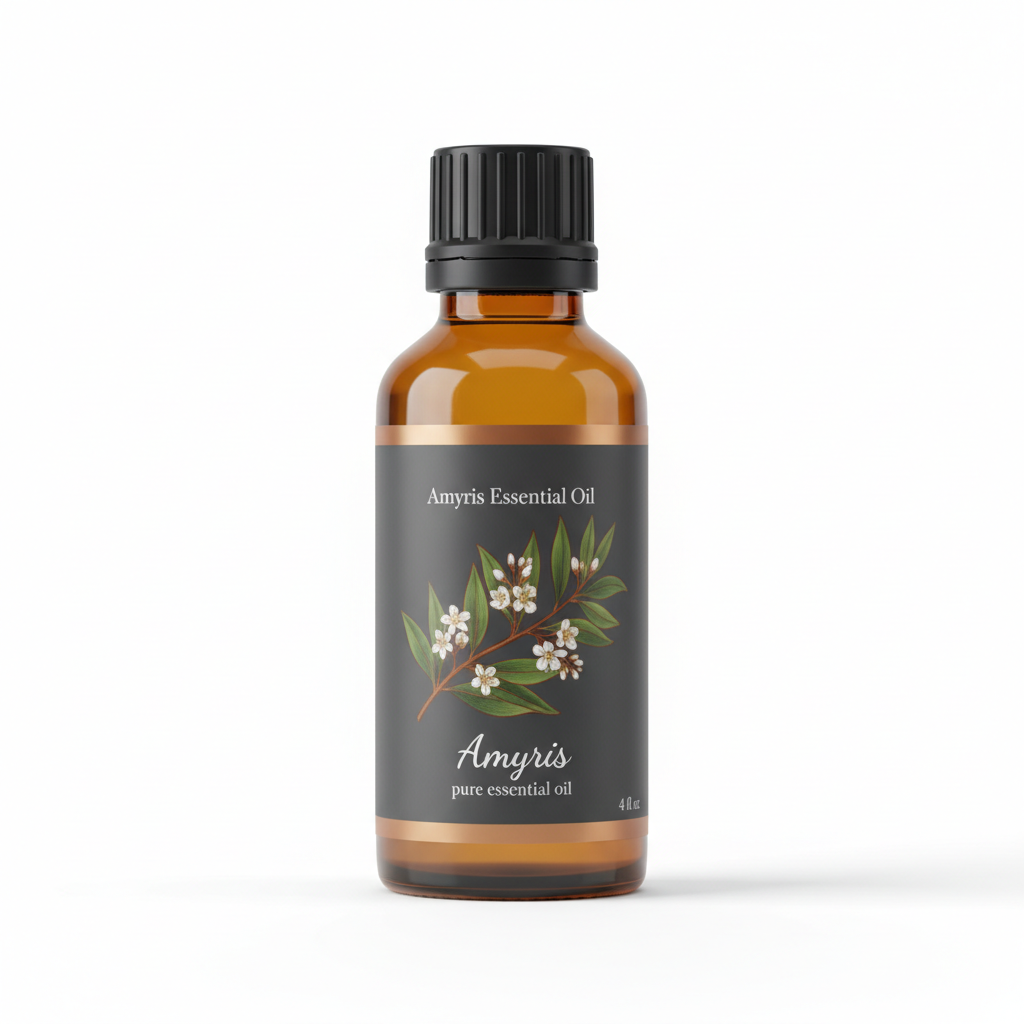
Amyris Essential Oil
Our own Amyris Essential Oil, in sizes from 0.5 oz to bulk.
From $23.99
Shop Now →What the studies actually found
In 2011, Anne Steinemann and colleagues measured 25 fragranced products, from air fresheners to laundry and personal care items, and found 133 different volatile compounds, about 17 per product. Products sold as green or natural did not emit significantly less than the rest, and almost none of the compounds appeared on any label (Steinemann et al., 2011). The authors measured emissions, not health effects, and they did not look at essential oils on their own. Still, the lesson is useful: "natural" on a front label is not a measure of what you breathe.
The US EPA says much the same in plainer words. Air fresheners are among household sources of volatile organic compounds, and its first suggestions are to identify and remove the source and to ventilate when you use anything that emits them (EPA).
Fix the smell before you perfume it
If a room smells off, the culprit is usually a bin, a drain, a damp towel or a pet bed. Scent laid over those just adds a second smell to the first. An amyris oil, with its creamy, woody, balsamic aroma, will not cancel anything. It layers on top. Clean first, then decide whether you still want fragrance.
Diffusers: the best studied format
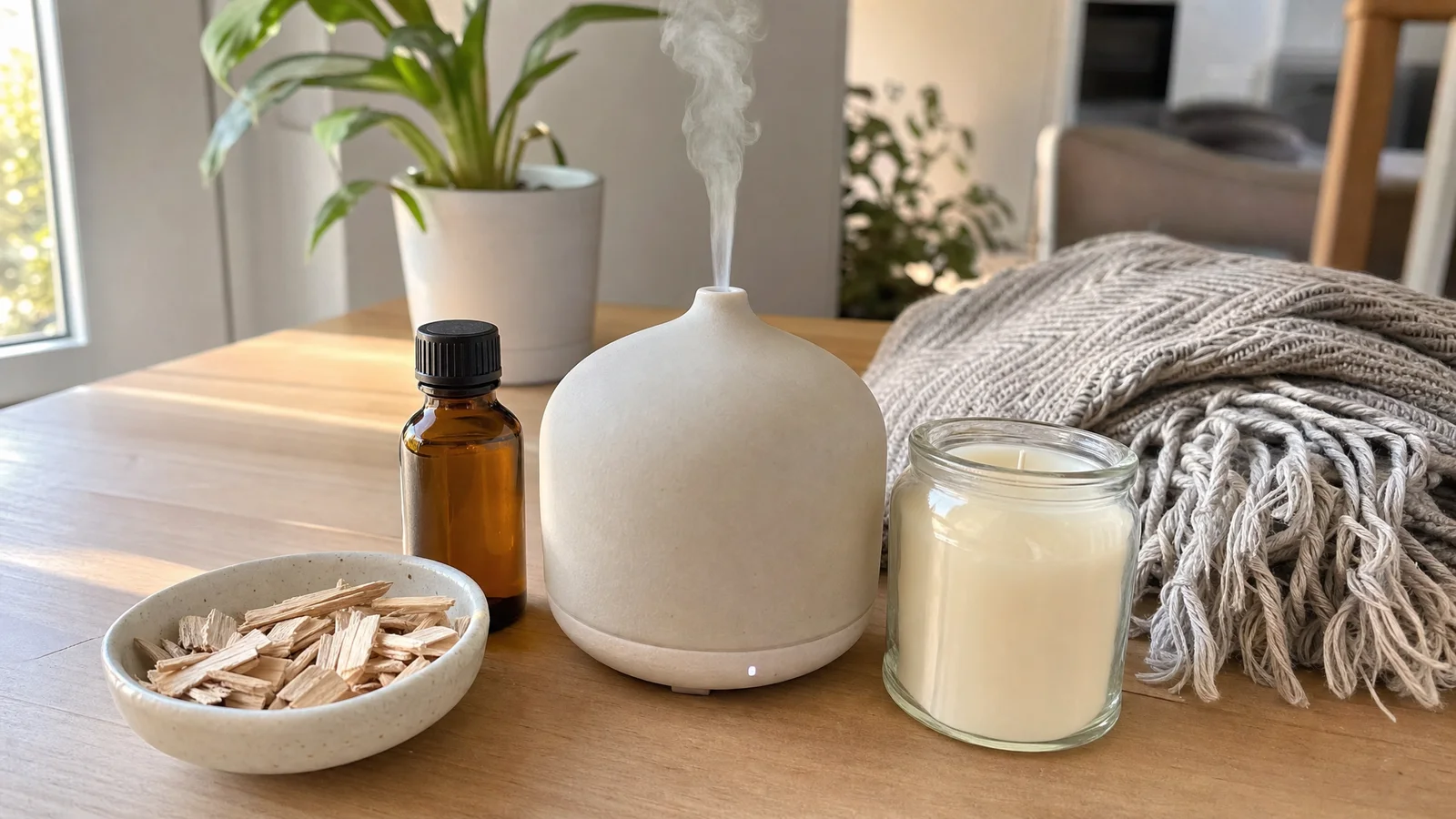
Ultrasonic diffusers have the most published work, and it points in one direction: they put real material into the air. In a chamber study, Schwartz-Narbonne and colleagues found that lemon oil in an ultrasonic diffuser released fine particles at about 2 mg per hour, and that tap water produced far more than deionized for eucalyptus. They concluded that normal use can add meaningfully to indoor particles (Indoor Air, 2021). In a wearable sampler study of 50 volunteers, Kim and colleagues saw limonene in cars climb to about 30 times its pre-use level, and urged care in small spaces (Science of the Total Environment, 2023).
So the sensible way to diffuse is the way we would suggest anyway: short sessions, a cracked window, a larger room rather than a tiny one. Our guides to using a diffuser and whether diffusing is safe go into the details.
Small habits that make a house smell good
Fresh air is the cheapest fragrance there is. Open windows on opposite sides of the house for a few minutes in the morning and let the air move through. Wash the things that hold on to smells: bath mats, pet bedding, the cloth that wipes the counter. Empty the bin before it announces itself. Laundry dried outdoors has a smell of its own that no bottle quite copies.
Once the house smells of nothing in particular, a little scent feels like a choice rather than a cover-up.
A room by room plan
- Kitchen and bathroom: extractor fan and source control first. A cloth with a drop or two kept away from cooking is easier to take away than a diffuser running all day.
- Living room: one scent source, set time, a window you can open.
- Bedroom: we would not run any scent source continuously overnight.
- Car: small space, big effect. Lower the dose or skip it.
- Homes with babies, pets or asthma: check with a pediatrician, veterinarian or physician before adding scent. Our posts on children and pets cover what the experts say.
One more rule follows from all this: count your scent sources. Candles, sprays, scented laundry and cleaners each add their own, so a calm home usually has fewer of them, not better ones. If you are unsure whether a product is an essential oil or a synthetic, essential oil versus fragrance oil explains the labels.
Think of scent as an accent
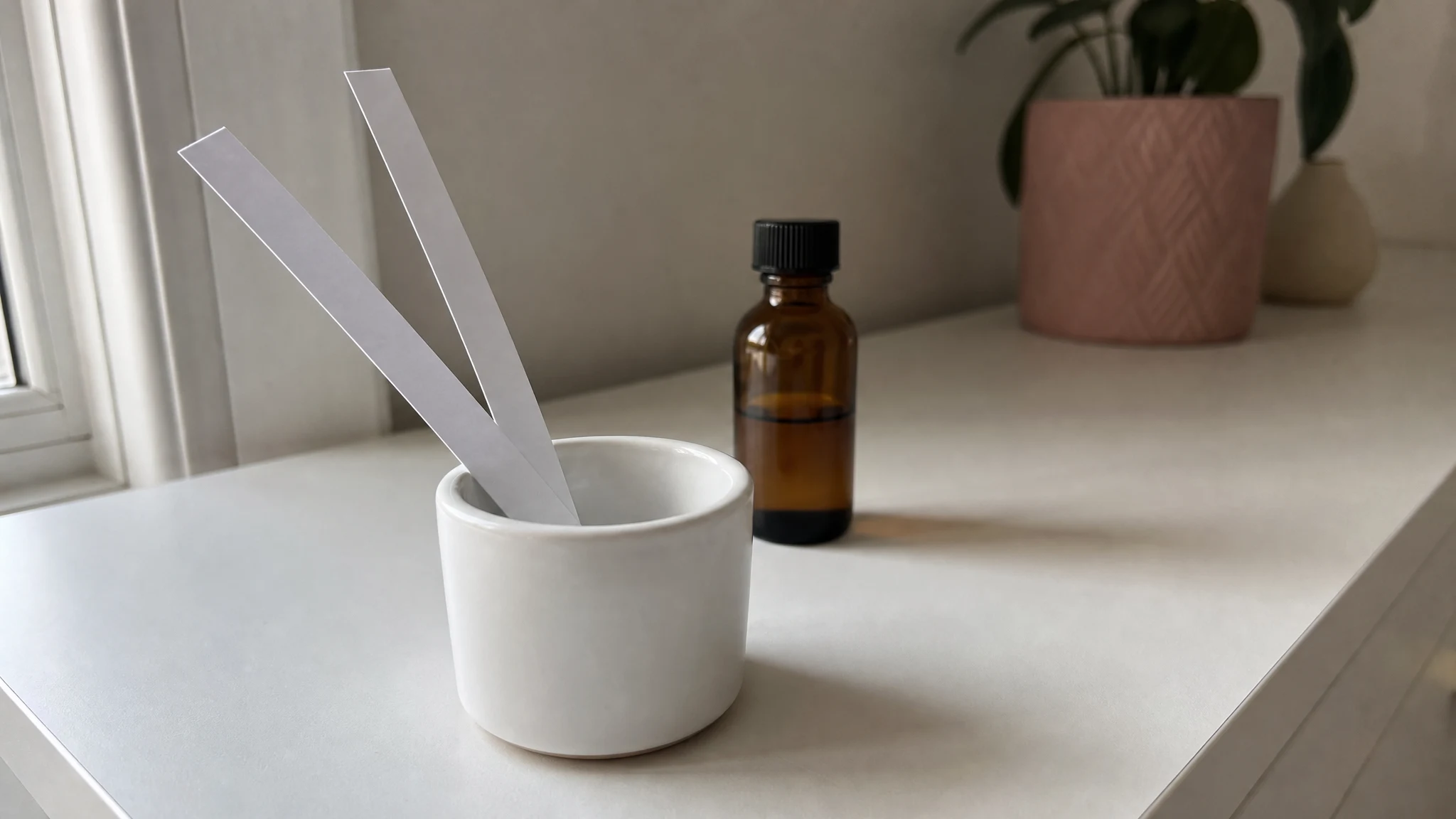
A useful way to look at it is the way a cook thinks of salt: a pinch lifts the room, a handful ruins it. Put a drop on a tissue, hold it at arm's length and see how far it carries. If you can only just catch it, that is usually plenty for a small room. You can always add more tomorrow, and you cannot take it back out of the air.
Let the house tell you
Walk back into your home after an hour out and notice what you smell in the first few seconds. That first impression is the honest one, since after a few minutes your nose adjusts. If it is pleasant, you are done. If you want to add something, do it in small steps over several days, and you will soon find the level where the scent is a pleasant extra rather than the first thing a visitor mentions.
Where amyris fits
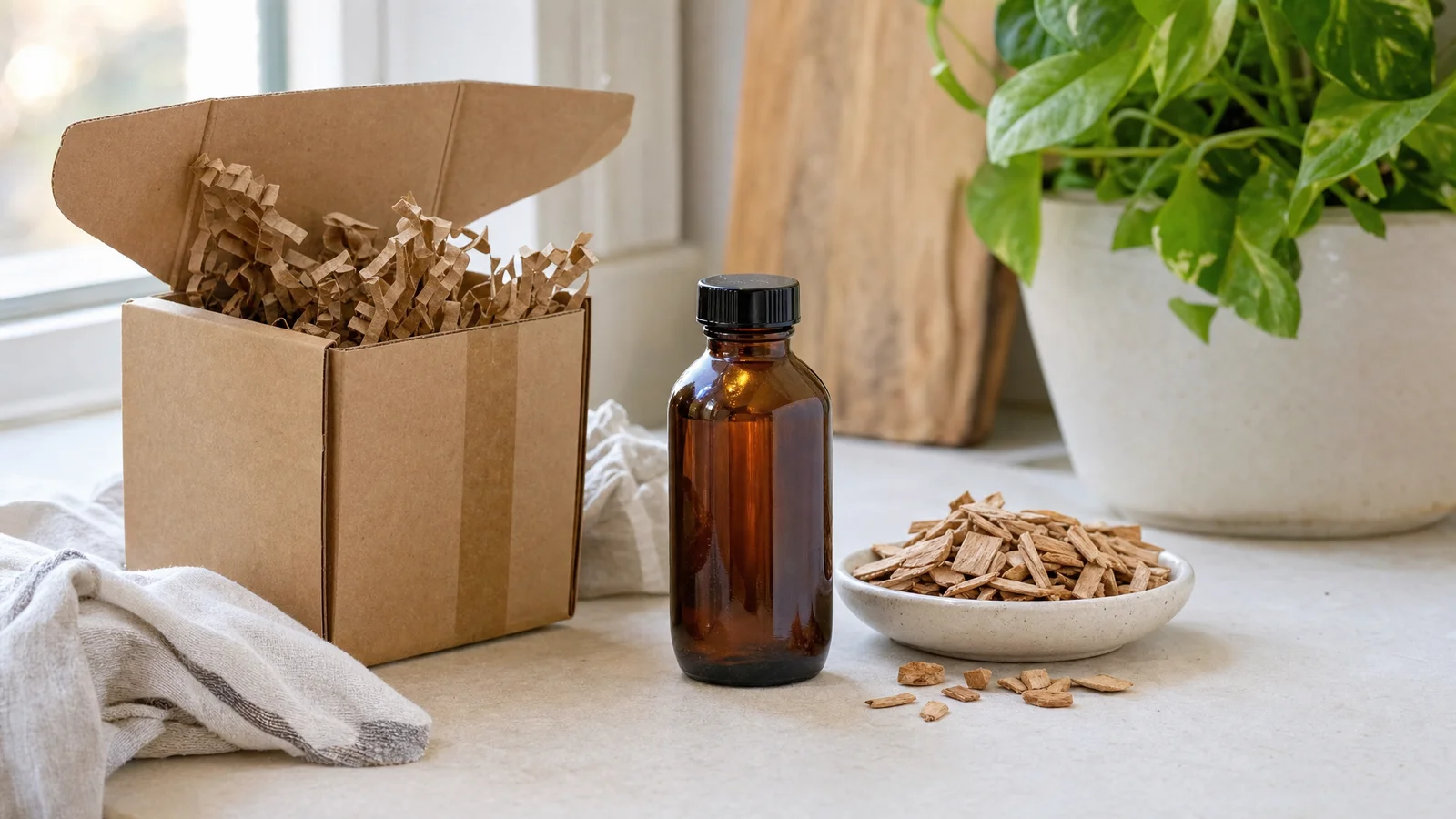
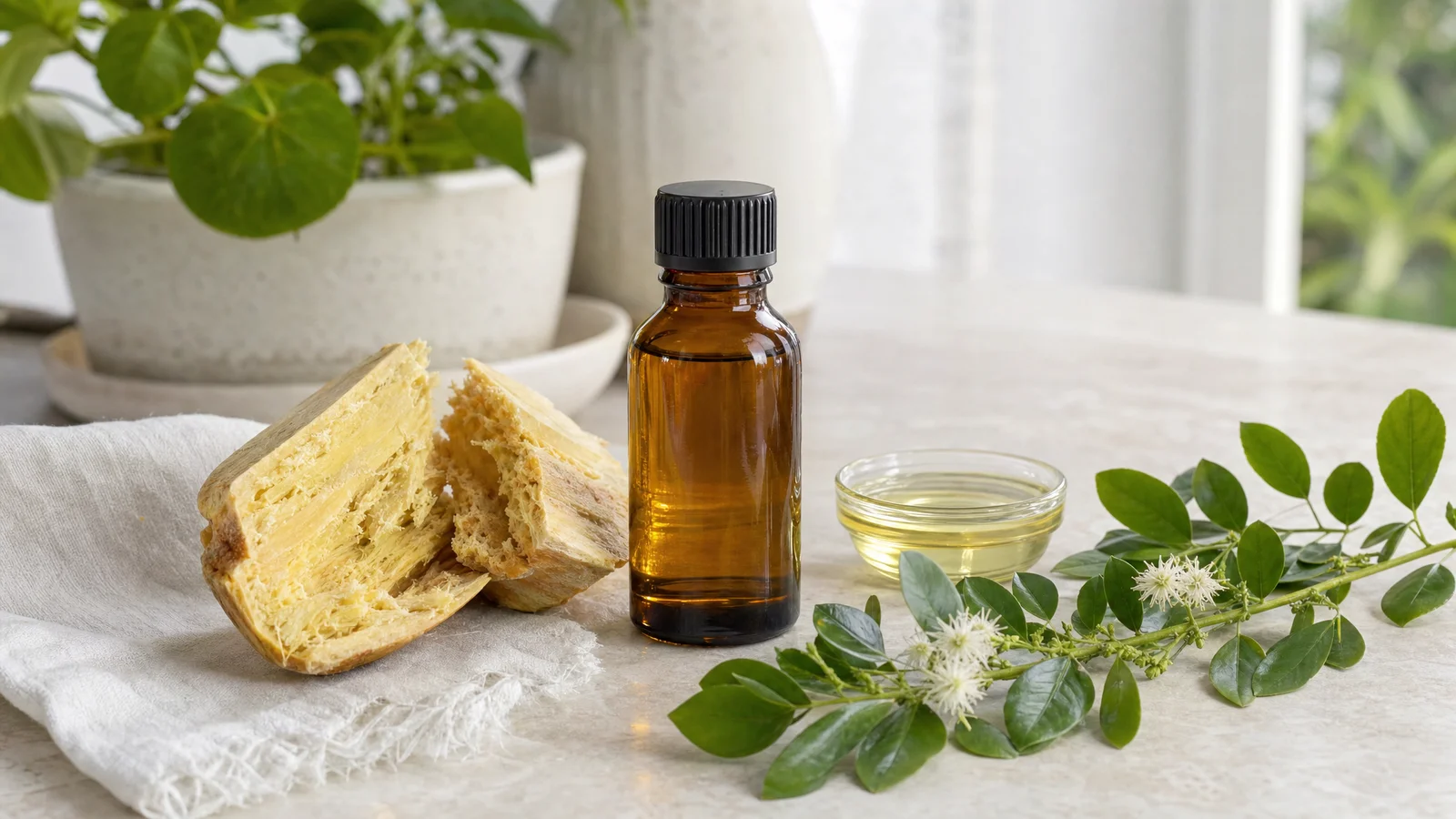
We sell one oil, amyris, and being plant derived does not make it cleaner than anything in the studies above. What it offers is a soft woody base note that helps citrus and floral top notes hold in a blend, which suits the "fewer, better" idea: a single small scent made to last, instead of three products competing. Sprays, reed bases, diffusers and candle wax are things you will find at a craft or home supply shop. For skin, our guidance is to dilute to 0.5% to 2% in a carrier oil, and to keep the oil away from eyes, children and pets. Do not take it internally.
Remove the source, open a window, one scent at a time, keep it short. A pleasant home does not need more than that.
Amyris Essential Oil
Amyris Essential Oil from our own shop, in sizes from 0.5 oz to bulk.
From $23.99
Shop Now →Sources & Further Reading
- US EPA. Volatile organic compounds' impact on indoor air quality. epa.gov
- Steinemann A et al., 2011. Fragranced consumer products: chemicals emitted, ingredients unlisted. Environmental Impact Assessment Review. researchonline.jcu.edu.au
- Schwartz-Narbonne H, Du B, Siegel JA, 2021. Indoor Air (abstract via Europe PMC). europepmc.org
- Kim et al., 2023. Terpene levels after essential oil diffuser use in vehicles and studio apartments. Science of the Total Environment (abstract via Europe PMC). europepmc.org