Using a Scent Cue for Meditation: How to Start
Light a candle, put on the same piece of music, or open the same bottle of oil, and before long that small ritual does some of the work for you. Your body learns what comes next. That is the real case for using a scent in meditation: not that any oil deepens the practice, but that a smell can become a signal that it is time to sit.

Amyris Essential Oil
Our own Amyris Essential Oil, in sizes from 0.5 oz to bulk.
From $23.99
Shop Now →Why a smell makes a good cue
Smell is tied closely to memory, and there is a nice piece of laboratory evidence for the idea. In a 2007 study in Science, Rasch and colleagues had volunteers learn a task while an odor was present, then re-exposed some of them to the same odor during deep sleep. Those people remembered the material better afterward. The odor did nothing when it had not been present during learning, so what mattered was the pairing, not the smell on its own.
That study is about memory and sleep, not meditation, so we borrow only the principle: a scent works as a cue because it has been paired with something. If the pairing is meditation, the scent comes to mean meditation. That is reasoning, not a promised result, and it is why the best advice is simple. Use one scent and use it only for sitting.
Picking a scent you can live with
Skip the lists that sort every oil into a mood, and use three plain questions instead.
- Do you still like it after ten breaths? The first sniff flatters almost everything. Sit with it for a minute or two.
- Is it a clean slate for you? If a smell is tied to a hard week or an old perfume, it will bring that along. The pairing works both ways.
- Will you really keep it for this? A scent you also diffuse while cooking is a weak signal.
Our amyris is described in our shop as creamy, woody and balsamic with a soft vanilla undertone, a base-note oil with a gentle, steady presence. Steffen Arctander, writing on perfume materials in 1960, called amyris faintly woody and not dry, with a balsamic note. Whether that suits quiet sitting is a matter of taste, and we make no claim beyond the aroma. It is not sandalwood, though the nickname West Indian sandalwood sticks to it, as our sandalwood explainer covers. If you want to meet it before committing, what amyris smells like describes it in detail.
Setting up the corner
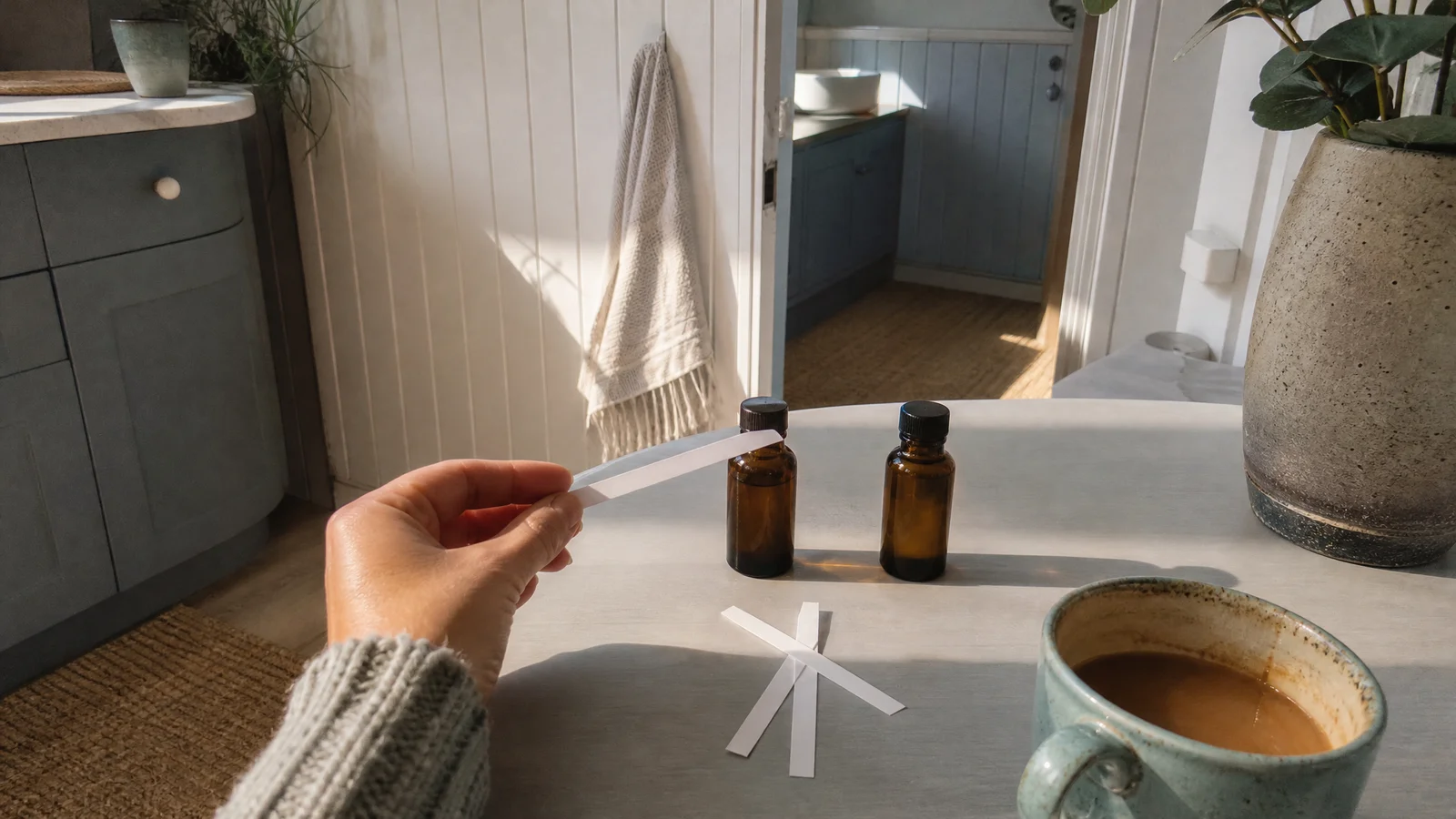
A cue works better when the place is part of it. Pick one spot, a cushion, a chair by a window, the edge of the bed, and keep the scent there. Keep the setup small: you should be able to get everything ready in under a minute, or the preparation becomes the reason you skip the sit. A folded tissue on a saucer and a timer are plenty.
Give a new scent a week of trial before you decide about it, using the same few minutes at the same time of day. One session tells you very little.
A simple way to use it
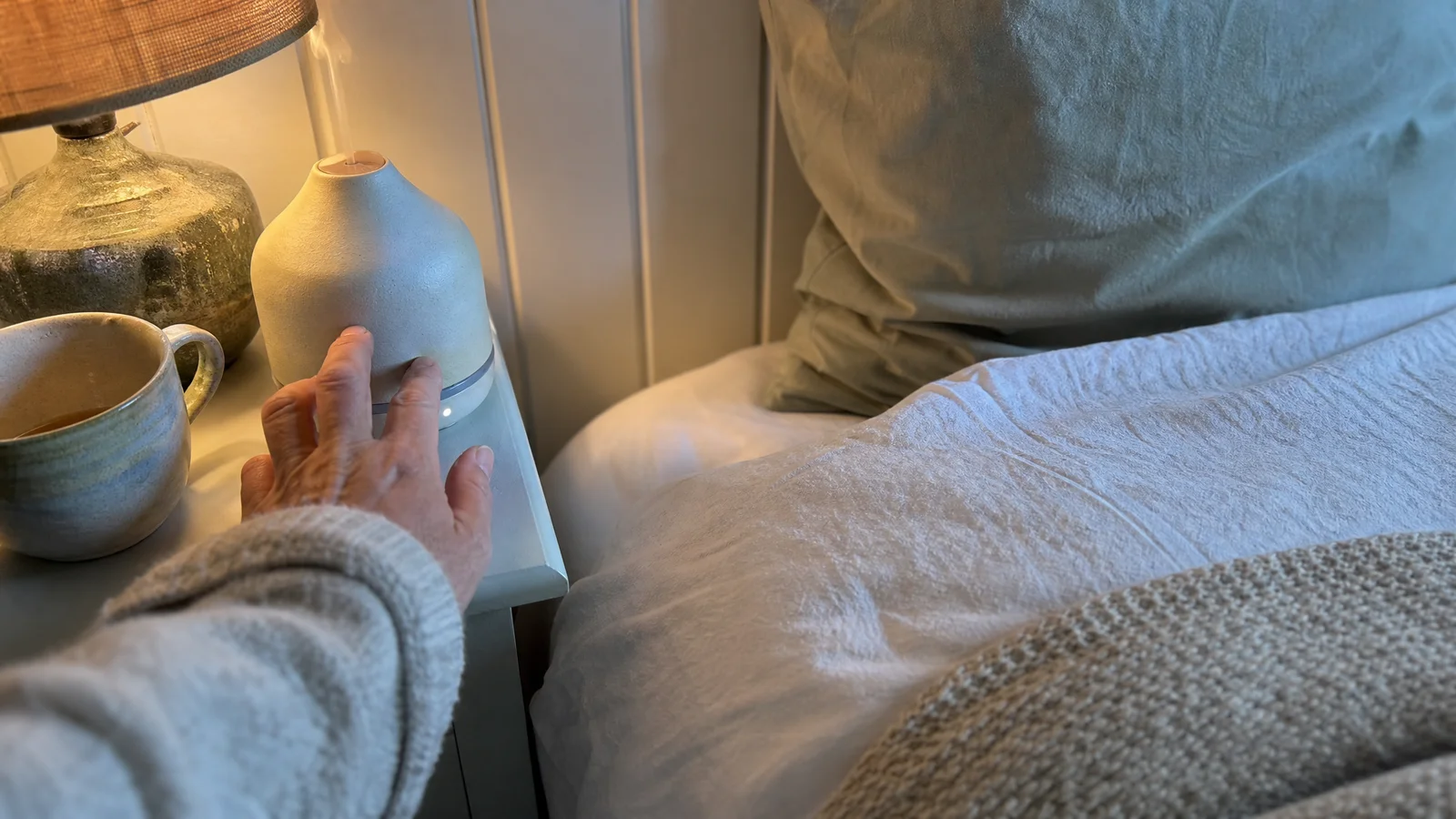
- Pick one way to deliver it. A diffuser in the next room, a personal inhaler, or a drop on a tissue held near, but not touching, your face. Our diffuser guide has run times, and the inhaler post shows how to make one.
- Start before you sit and keep it faint. A strong smell competes with your attention. If you are wondering whether you can smell it, the level is about right.
- Do your practice as you normally would. The scent is a doorway, not the room.
- End the scent when you end the session. Open a window or let the tissue go, so the start and finish are clean.
- Judge it by one question. Does it make it easier to get to the cushion? If it does not, drop it, since the point is the habit.
A tiny ritual helps. Open the bottle, take one slow breath of it, cap it, and put it back in the same place every time. The sequence is short, and the repetition is the point.
If you would rather wear it, dilute first. Our guidance is 0.5% to 2% in a carrier oil with a patch test, and the dilution chart turns that into drops. Keep it clear of your face and eyes. Fragrance suits some people and bothers others, so if you share a room or a class, ask before you bring a scent in.
When the cue starts to fade
If you stop noticing the smell after a few weeks, that is common, since noses tune out a scent that never changes. Some people rest it for a few days and bring it back. Others keep two bottles and swap them. Either way, keep it faint and keep it consistent, and let the habit, not the strength, do the work.
What we are and are not saying
We sell a cosmetic oil for its aroma. We are not offering it as a treatment for anything, and if what draws you to meditation is persistent anxiety, low mood or trouble sleeping, a physician or licensed mental health professional is the right place to start. People who are pregnant or have asthma or other breathing conditions should check with their doctor before diffusing anything, and oils belong out of reach of children and pets.
The nicest thing about the cue idea is how little it needs: one scent you enjoy, a quiet corner and a little consistency.
Amyris Essential Oil
Amyris Essential Oil from our own shop, in sizes from 0.5 oz to bulk.
From $23.99
Shop Now →Sources & Further Reading
- Rasch B, Buchel C, Gais S, Born J. Odor cues during slow-wave sleep prompt declarative memory consolidation. Science 2007;315(5817):1426-1429. doi.org/10.1126/science.1138581
- Arctander S. Perfume and Flavor Materials of Natural Origin, 1960 (Amyris Oil monograph). archive.org/details/ArctanderPerfumeryBook