Is Amyris Sandalwood? Why the Nickname Misleads
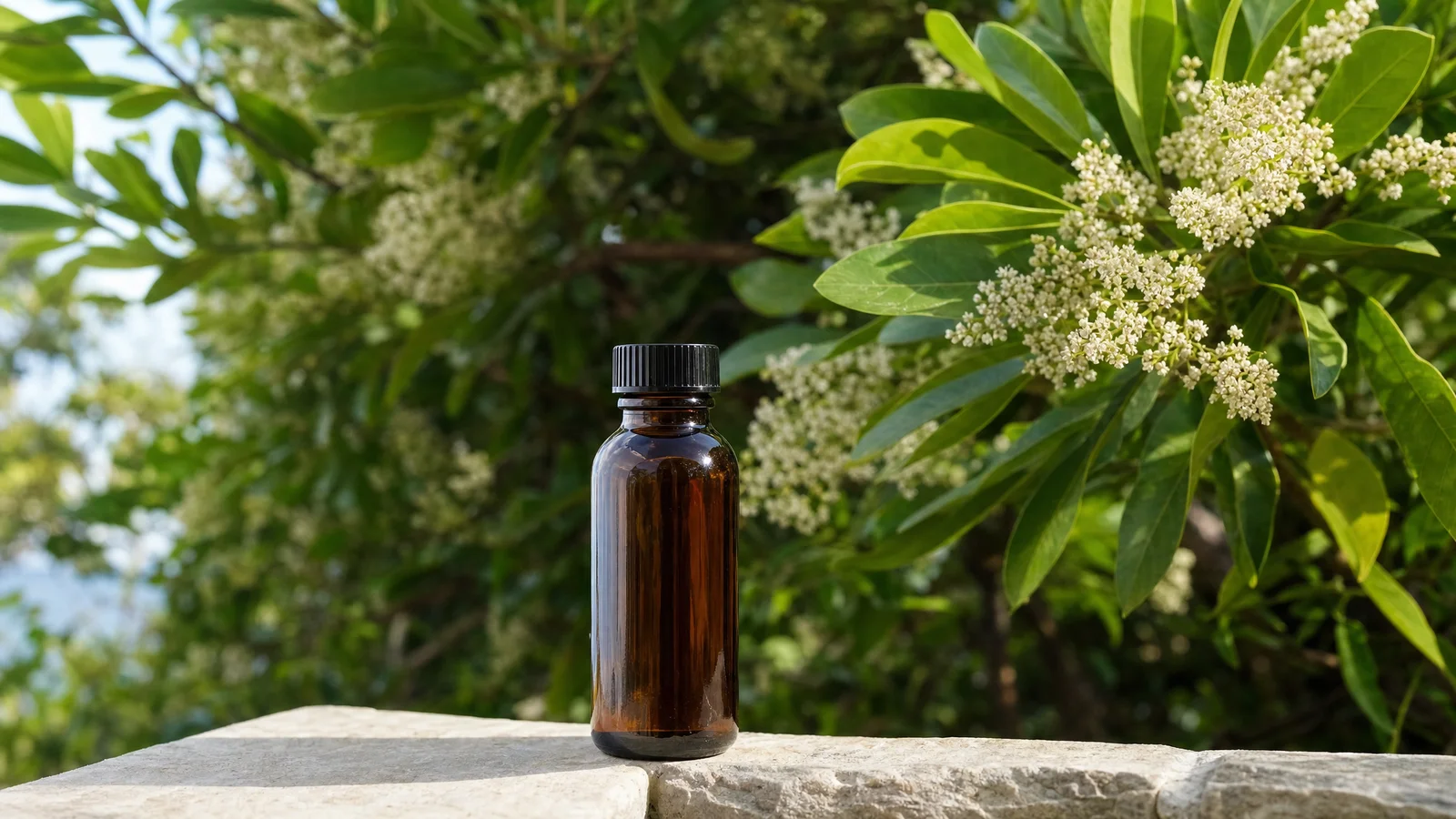
Amyris has been called West Indian sandalwood for a long time, and the nickname does it a disservice. It sets up a comparison it cannot win, and it leads people to expect something it is not. Amyris is not sandalwood. What it is, is a lovely, soft, creamy wood oil with its own character, and we would rather you buy it knowing that.
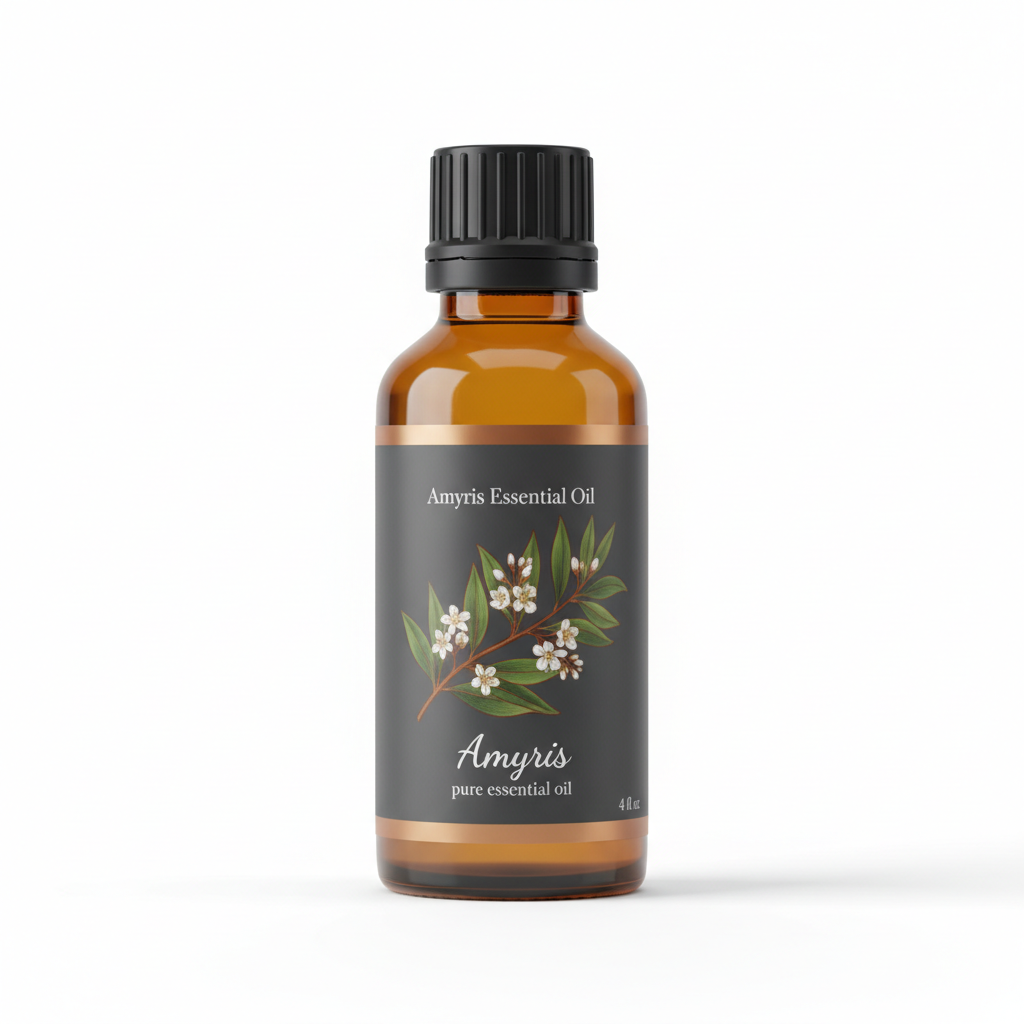
Amyris Essential Oil
Our own Amyris Essential Oil, in sizes from 0.5 oz to bulk.
From $23.99
Shop Now →Different family, different order
The botany settles it quickly. According to the GBIF taxonomic backbone, Amyris balsamifera belongs to Rutaceae, the citrus family, in the order Sapindales (GBIF, Amyris balsamifera). Santalum album, the sandalwood of commerce, sits in Santalaceae, order Santalales (GBIF, Santalum album). It is a closer relative of an orange than of any sandalwood. The tree carries other names too: balsam torchwood, candlewood, West Indian rosewood and West Indian sandalwood among them (Citrus ID). A single plant with several borrowed names is a sign of trade naming, not kinship.
Why they smell different
The woody note of sandalwood rests on two molecules, (Z)-alpha-santalol and (Z)-beta-santalol, which a 2024 review gives as roughly 41 to 55% and 16 to 24% of a standard sandalwood oil (Yan et al., Biomolecules, 2024). The odor is also picky about shape: when researchers made both geometric forms of alpha-santalol, the Z form smelled woody and the E form was odorless, fresh or fatty (Hasegawa et al., Molecules, 2012). Amyris is built on other molecules, mainly valerianol, elemol and eudesmols (Kucharska et al., Molecules, 2021). So while both oils sit under "soft, creamy wood" for a hurried nose, they are not delivering the same chemistry. Our scent profile describes amyris on its own terms: creamy, woody and balsamic, with a soft vanilla undertone.
What you will notice when you smell it
If you come to amyris expecting sandalwood, give your nose a minute to reset. It does not have the milky, santalol-rich depth people picture when they think of true sandalwood. What you get instead is a soft, creamy wood with a gentle balsamic edge and a faint sweetness that we describe as a soft vanilla undertone. Put a drop on a paper strip and let it sit. It stays close and quiet, and you will find it is still there long after brighter oils have gone.
Why a label can mislead
Sandalwood is scarce. The same review notes Indian sandalwood oil output fell to about 70 tonnes in 2004, from roughly 180 to 200 tonnes in earlier decades, and where a prized oil is scarce, look-alikes and mislabelling follow. When Kucharska and colleagues bought six oils sold as sandalwood and analysed them, none met the ISO 3518:2002 standard. One labelled Santalum album carried amyris markers, and another contained amyris-type compounds in smaller amounts; only one sample was judged genuine sandalwood. That is six oils from one study, so it says nothing about the whole market. It does show that a name on a bottle is not evidence. Our amyris vs sandalwood comparison goes further into the supply side.
A kind word for the nickname
In fairness, the nickname is not a swindle in itself. It grew up as a trade habit, because the two woods share a soft, warm, slow-fading place in a blend, and it helped people find the oil. The trouble starts only when the nickname stands alone on a label with no Latin name beside it. Then you are left to guess which tree is in the bottle, and a guess is a poor way to choose a perfume ingredient.
Letting amyris be amyris
Treat it as a wood in its own right and it makes more sense. It is the quiet floor under a citrus top note, the soft edge on a floral, the background that makes the other oils sound a little more finished. We like it best as a supporting player, and we like it even more when someone picks it knowing exactly that.
How to read a listing
- Find the Latin name. Amyris balsamifera is amyris. Santalum album is Indian sandalwood. If neither appears, the label has not told you what is inside.
- Check that nickname and species agree. "West Indian sandalwood" beside Amyris balsamifera is a naming habit. "Sandalwood" with no species is a question.
- Ask for composition. A sandalwood report should show santalols. An amyris report should show valerianol, elemol and eudesmols.
- Know what a certificate covers. The Certificate of Analysis we publish for one batch lists density, refractive index and optical rotation, each within its stated range. If you want GC-MS for your lot, ask us in writing through the contact page.
Our guide to choosing essential oils applies the same habits to any bottle.
A good seller will not mind any of these questions. Honest labelling is easy when you are happy with what is in the bottle, and we would rather answer a careful question than a hurried one.
If you already own both
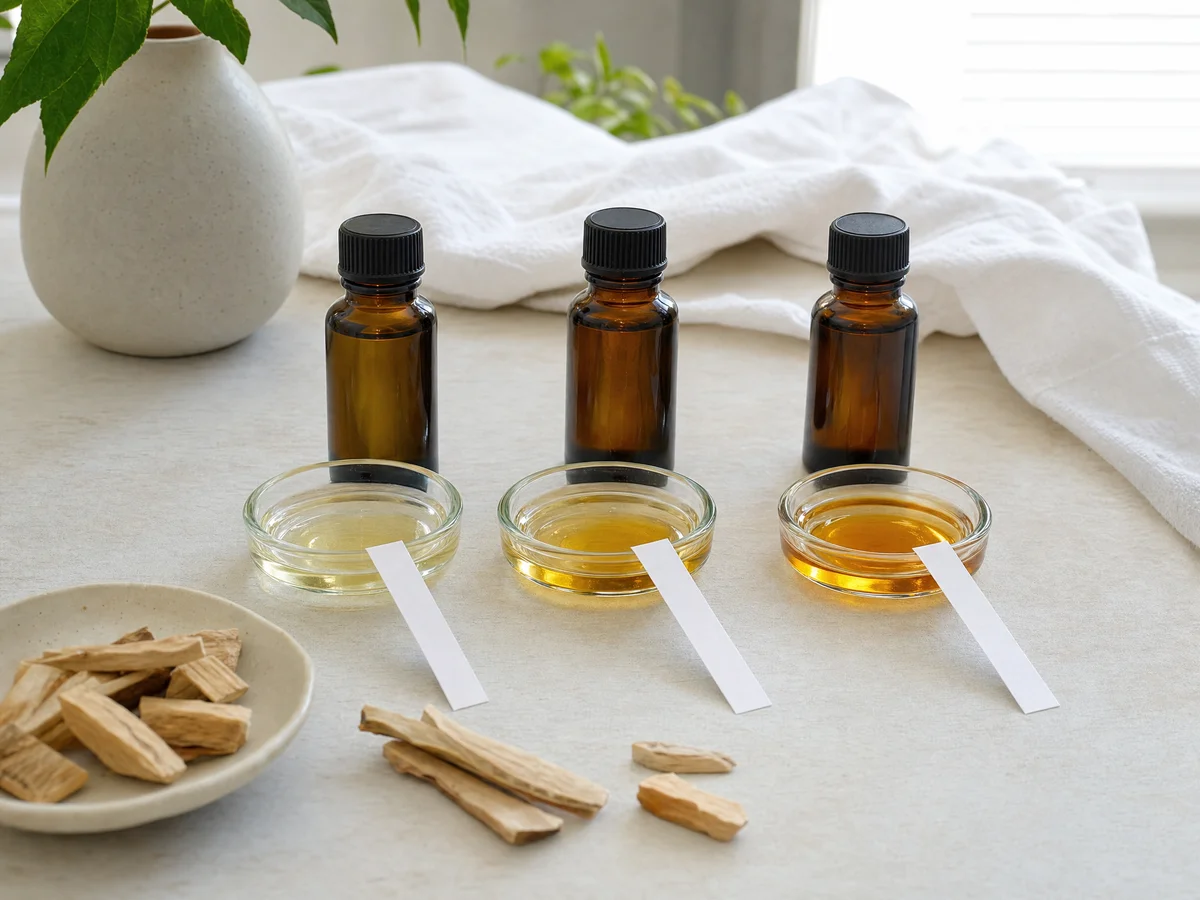
If you have amyris and a sandalwood oil on the same shelf, try them on separate paper strips and leave them side by side for an hour. Most people find the differences are easier to see on the second and third sniff than on the first. Label the strips in pencil so you do not mix them up, and keep the note somewhere you will find it. It is a pleasant ten-minute exercise, and it is the quickest way to stop confusing the two.
Which one to buy
We do not sell it. If you want a soft, creamy wood for the base of a blend, we sell amyris in our shop, a base note and natural fixative that helps citrus and floral top notes hold their scent longer. Larger sizes are on our bulk page, and our guide to buying amyris essential oil in bulk explains how bulk buying works. Just call it amyris in your recipes.
Amyris Essential Oil
Amyris Essential Oil from our own shop, in sizes from 0.5 oz to bulk.
From $23.99
Shop Now →Sources & Further Reading
- GBIF backbone: Amyris balsamifera and Santalum album
- Citrus ID. Amyris balsamifera common names
- Yan et al., 2024. Biomolecules 14(8):971. pmc.ncbi.nlm.nih.gov
- Hasegawa et al., 2012. Molecules 17(2):2259. pmc.ncbi.nlm.nih.gov
- Kucharska et al., 2021. Molecules 26(8):2249. pmc.ncbi.nlm.nih.gov