Amyris and Skin Scents: A Quiet Wood for Close Fragrance
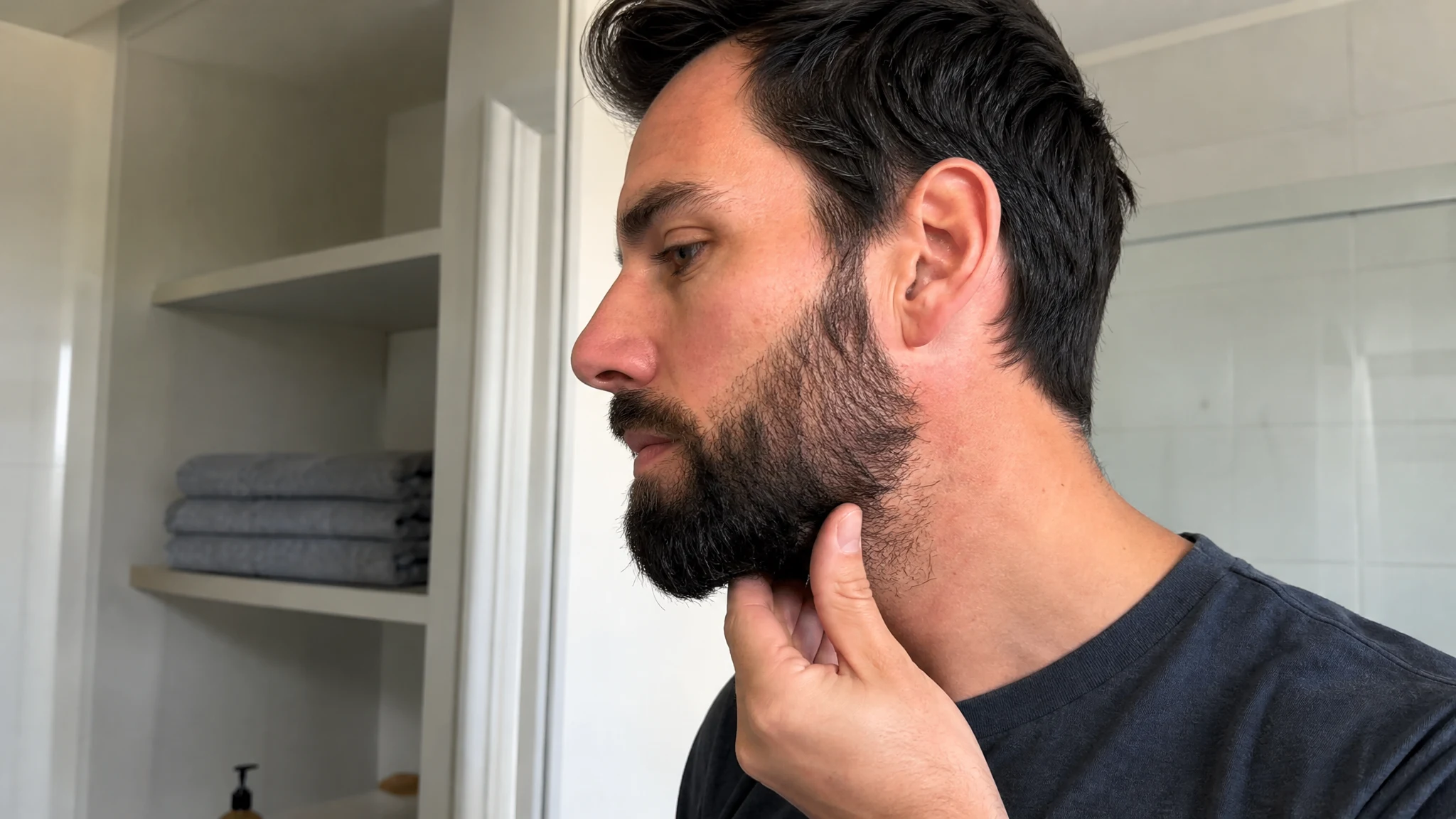
The quietest trend in perfume is the "skin scent": a fragrance that stays close to the body and smells like you, only somehow better. Amyris fits that mood better than most woods, and it is easy to see why, but it is not the ingredient that makes a skin scent a skin scent. Here is a clear-eyed look at where a soft, creamy wood like amyris belongs in that world.
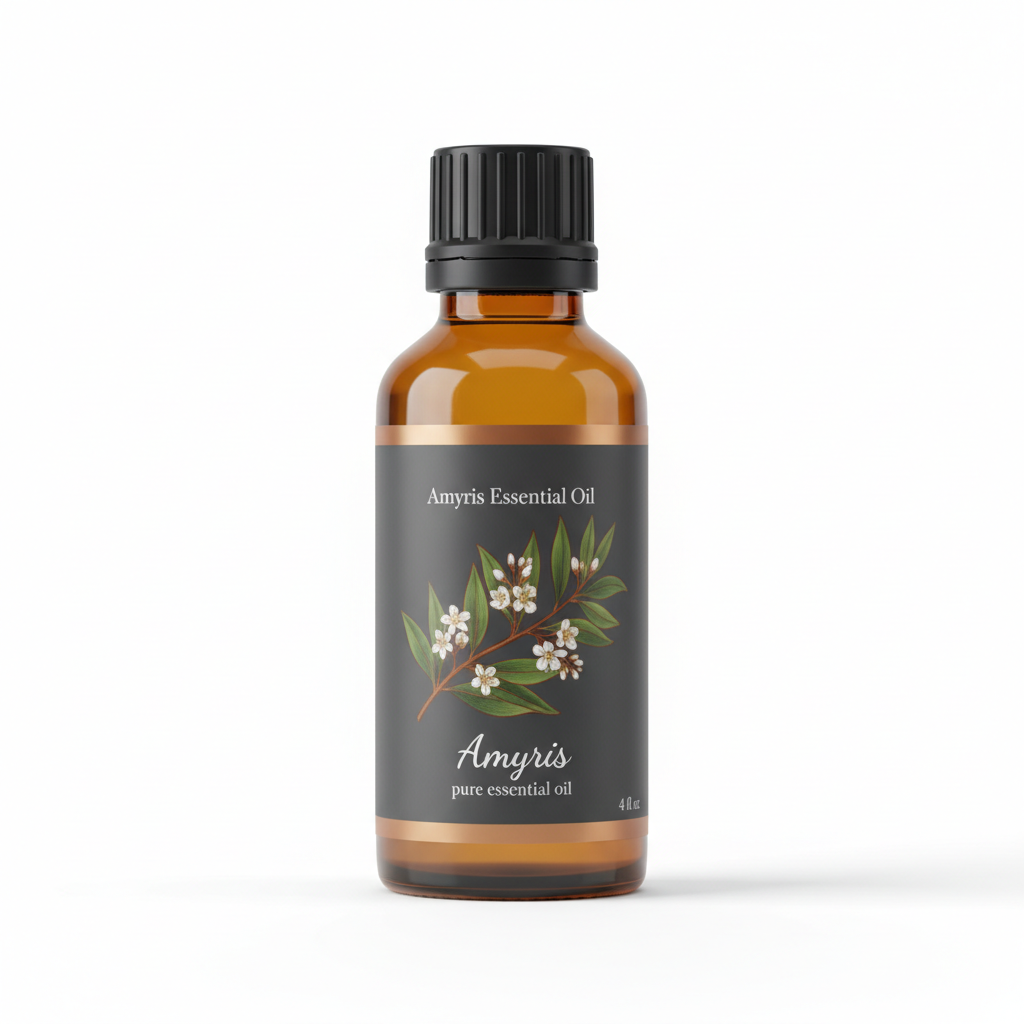
Amyris Essential Oil
Our own Amyris Essential Oil, in sizes from 0.5 oz to bulk.
From $23.99
Shop Now →What a skin scent actually is
Fragrance writers define it by behavior, not by recipe: low projection, soft, intimate. The two trend pieces we read, a fragrance magazine's 2025 trends round-up (updated in 2026) and a retailer's list of skin musks, both build the style on musks, ambrette and soft woods. Neither mentions amyris. The magazine also notes that by 2026 skin scents had settled into "simply a category," so the moment has become a lasting shelf section. The retailer's ingredient lists show something else worth knowing: these perfumes are mostly modern musk and amber molecules with a wood or two in support. Skin scents are a finished design with many materials, so no single oil gets the credit.
The easiest way to understand a skin scent is to think about who gets to smell it. A bold perfume announces you from across the room. A skin scent is something other people notice only when they lean in close, and even then they may not be able to say what it is. That intimacy is the appeal, and it is also why a gentle, creamy wood makes sense as one ingredient among several.
Why a quiet wood suits the idea
Two things make a scent sit close to the skin. One is strength. A body oil or a lightly dosed roll-on throws less than a bold perfume simply because less material evaporates. The other is the choice of ingredients. A review of perfume engineering describes base notes as the part of a composition with real staying power, lasting more than four hours on skin, and perfumery references list amyris with base-note volatility. Arctander's 1960 monograph describes amyris oil as faintly woody and not dry, very tenacious in the body of the scent, fading to a very soft woody note. Put those together and a low dose of amyris is a sensible quiet wood to place under lighter materials. That is reasoning from the sources, and the nose is the final judge.
What amyris adds, and what it leaves to others
We describe our oil as creamy, woody and balsamic, and as a base note. It will give you the wood. The clean, powdery "just showered" effect that defines a skin musk comes from musk materials, which we do not sell, so if that is the effect you want, a perfumery-supplies seller is the right stop. Amyris is also not sandalwood, though it carries the nickname West Indian sandalwood. Arctander himself called that old name a misnomer. It is a lovely wood in its own right, and our comparison of amyris and cedarwood shows how it compares with another soft wood.
If you like the idea but have never made a scent for yourself, keep it humble. A skin scent does not need ten ingredients or a clever name. Often one wood and one lighter oil, in a carrier you already like, is a better first experiment than a long formula. You will learn what each part is doing, and you can always add to it later.
If you want to try a close-to-skin wood
Start from the dilution, not the scent. We recommend 0.5% to 2% in a carrier oil with a patch test first. The Tisserand Institute gives 1 to 3% for body oils and lotions and 0.5 to 1.2% for the face and other sensitive areas, so for anything near the face we would stay at or below 1.2%. The arithmetic is gentle: an ounce is about 29.6 ml, so 1% is roughly 0.3 ml, or around 6 drops at a common 20 drops per ml. Drop sizes vary, so check your numbers with our dilution chart.
A few friendly pointers:
- Judge it on skin, not a paper strip. Jellinek noted in 1960 that a material can behave differently on skin than on a blotter.
- Keep the dose low and the recipe simple, with one new thing at a time. Our DIY body oil and DIY roll-on perfume posts both work backward from strength.
- Remember every oil in a blend counts toward the total. If you make a blend to sell, look up the IFRA standard for each oil yourself, since limits depend on the oil and the product type.
- If you have a known fragrance allergy, ask a dermatologist before wearing anything new.
A simple first experiment: make a small bottle of body oil at the low end of the range, and wear it on a day when everything else you use is unscented. Skip perfume, scented soap and scented lotion, so you can notice the oil by itself. Pay attention to how it feels when you first put it on, again in the afternoon, and again when you get home. If you can still catch it when you lift your wrist, but a friend across the table cannot, you have made a skin scent.
Whether amyris really helps a short-lived scent last is a fun question to test on your own wrists, and our post on amyris as a fixative shows how.
Amyris Essential Oil
Amyris Essential Oil from our own shop, in sizes from 0.5 oz to bulk.
From $23.99
Shop Now →Sources & Further Reading
- WhatScent (Clara Wen), 2025, updated 2026. Fragrance Trends 2025. whatscent.app
- Scento, 2026. Best skin musk perfumes, the quiet luxury trend ranked. scento.com
- Rodrigues AE, Nogueira I, Faria RPV, 2021. Perfume and Flavor Engineering: A Chemical Engineering Perspective. Molecules 26(11):3095. pmc.ncbi.nlm.nih.gov
- Arctander S, 1960. Perfume and Flavor Materials of Natural Origin. archive.org
- Tisserand Institute. Essential oil dilution. tisserandinstitute.org
- Jellinek JS, 1960. Evaporation and the Odor Quality of Perfumes. J Cosmet Sci 12(3). library.scconline.org