What Does Amyris Smell Like? Creamy, Smoky or Sweet
Ask three people what amyris smells like and you will get creamy, sweet and smoky. We describe our oil as creamy, woody and balsamic with a soft vanilla undertone. The reference description on the Certificate of Analysis we publish reads woody, earthy and smoky. A supplier's sheet for a Haitian batch says sweet and woody. It sounds like a disagreement, but it is mostly three noses standing in three different places.
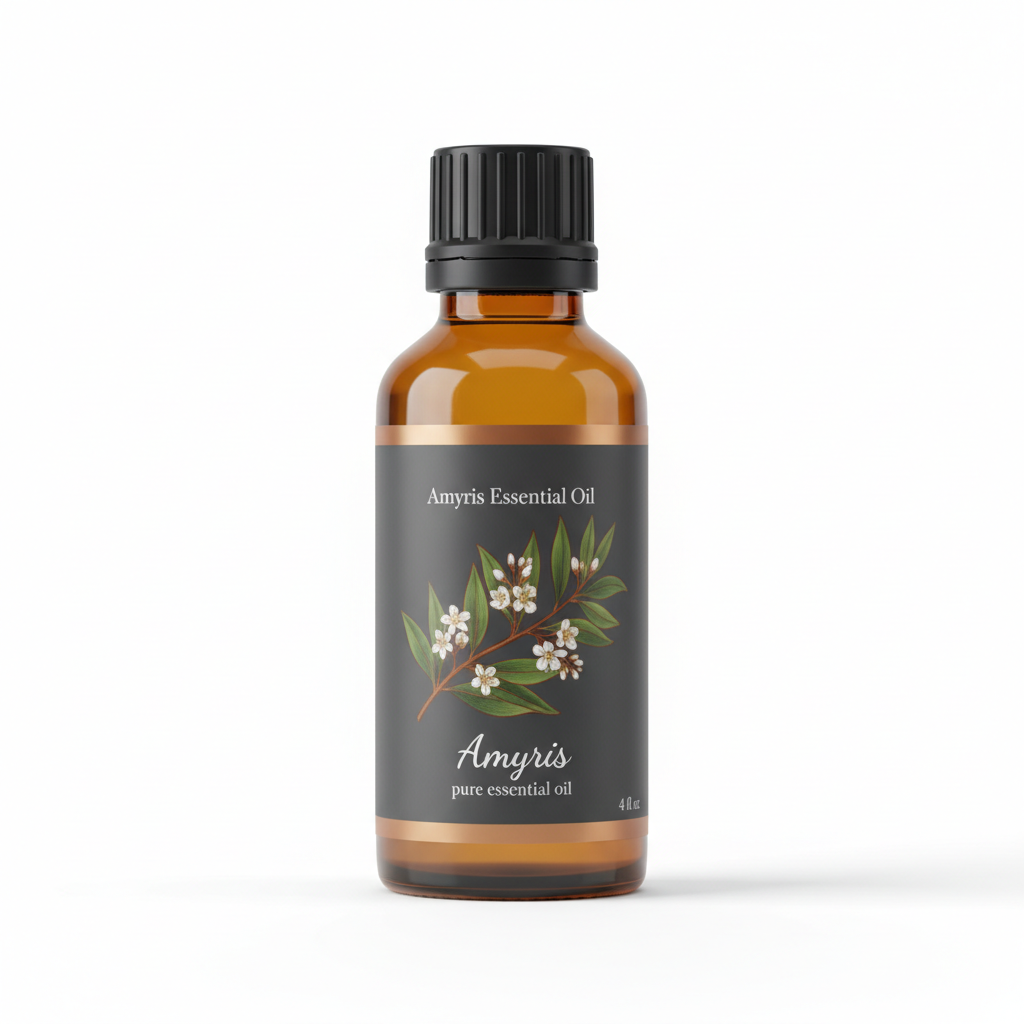
Amyris Essential Oil
Our own Amyris Essential Oil, in sizes from 0.5 oz to bulk.
From $23.99
Shop Now →Why the words differ
A wood oil changes as it sits in the air, and a description depends on when you smell it. Straight from the bottle you meet the most volatile edge of the oil first, which tends to read drier and more earthy. On a blotter an hour later, or in a blend, what is left is the soft, rounded base, which is where "creamy" and "balsamic" live. Our perfumery shorthand is that amyris is a base note, meant to stay after lighter notes have gone. Arctander, writing in 1960, described the oil as faintly woody and not dry, with a very tenacious body that eventually fades to a quiet woody note. That fits: a gentle wood that lingers.
It also helps that nobody has pinned down which molecule carries which part of the smell. A 2012 study of alpha-santalol showed how touchy scent is: change the geometry of a single bond and a woody molecule turns odorless or fatty. The leading molecules in amyris are valerianol, elemol and eudesmols, and no published work assigns the aroma to any one of them. So every description, ours included, is a human impression, and that is why we would rather hand you a method than a single adjective.
A better way to meet it
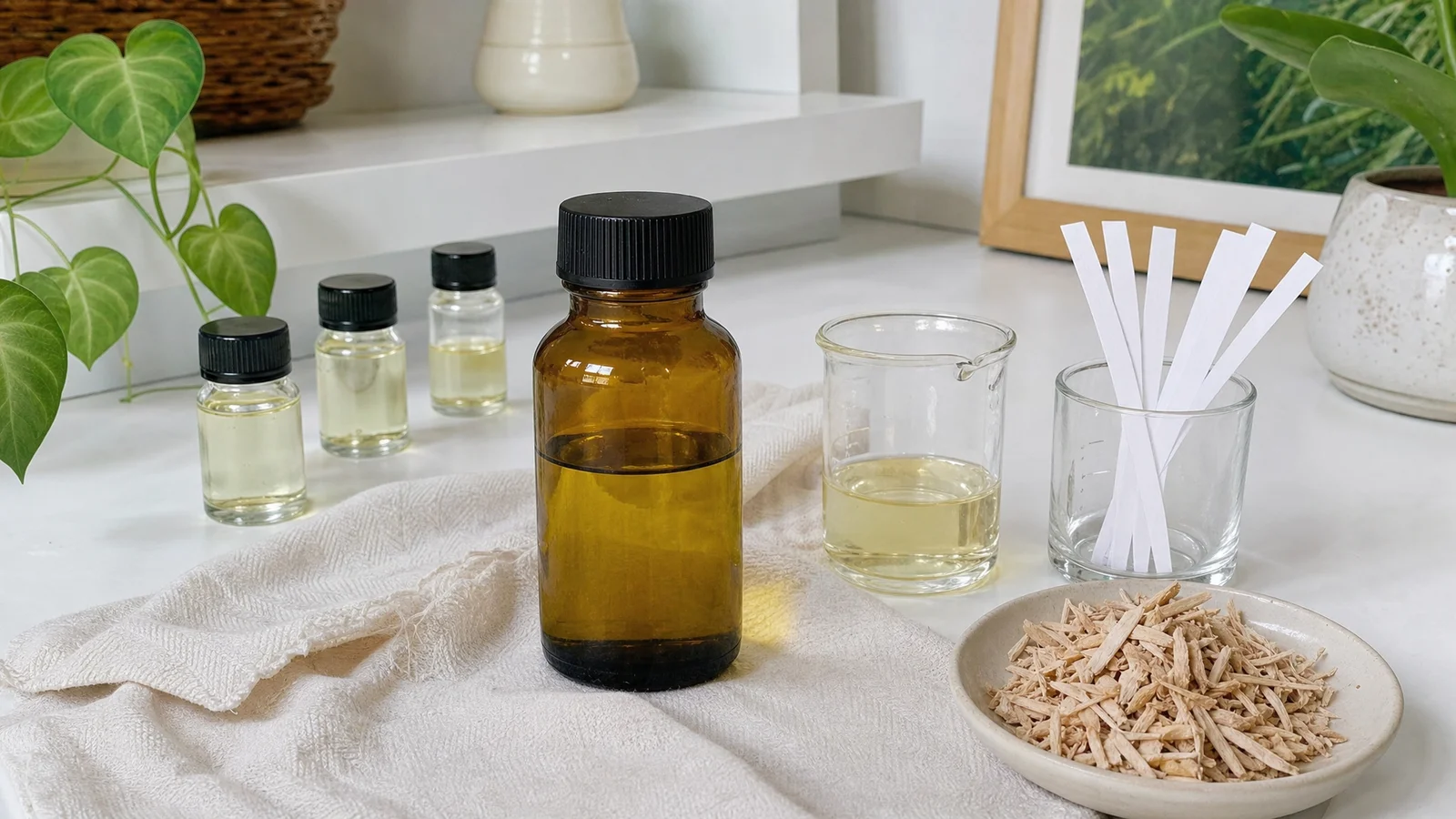
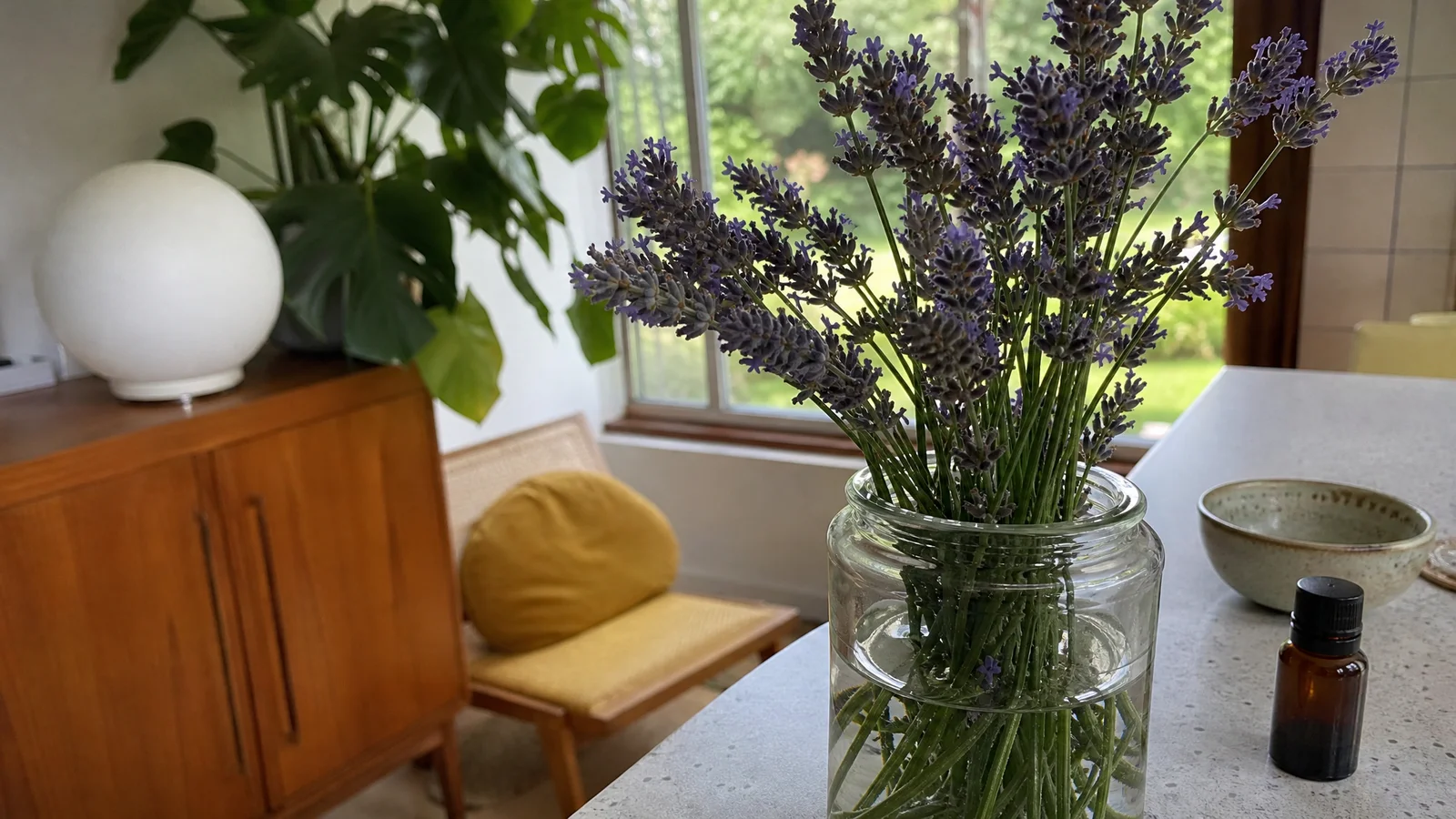
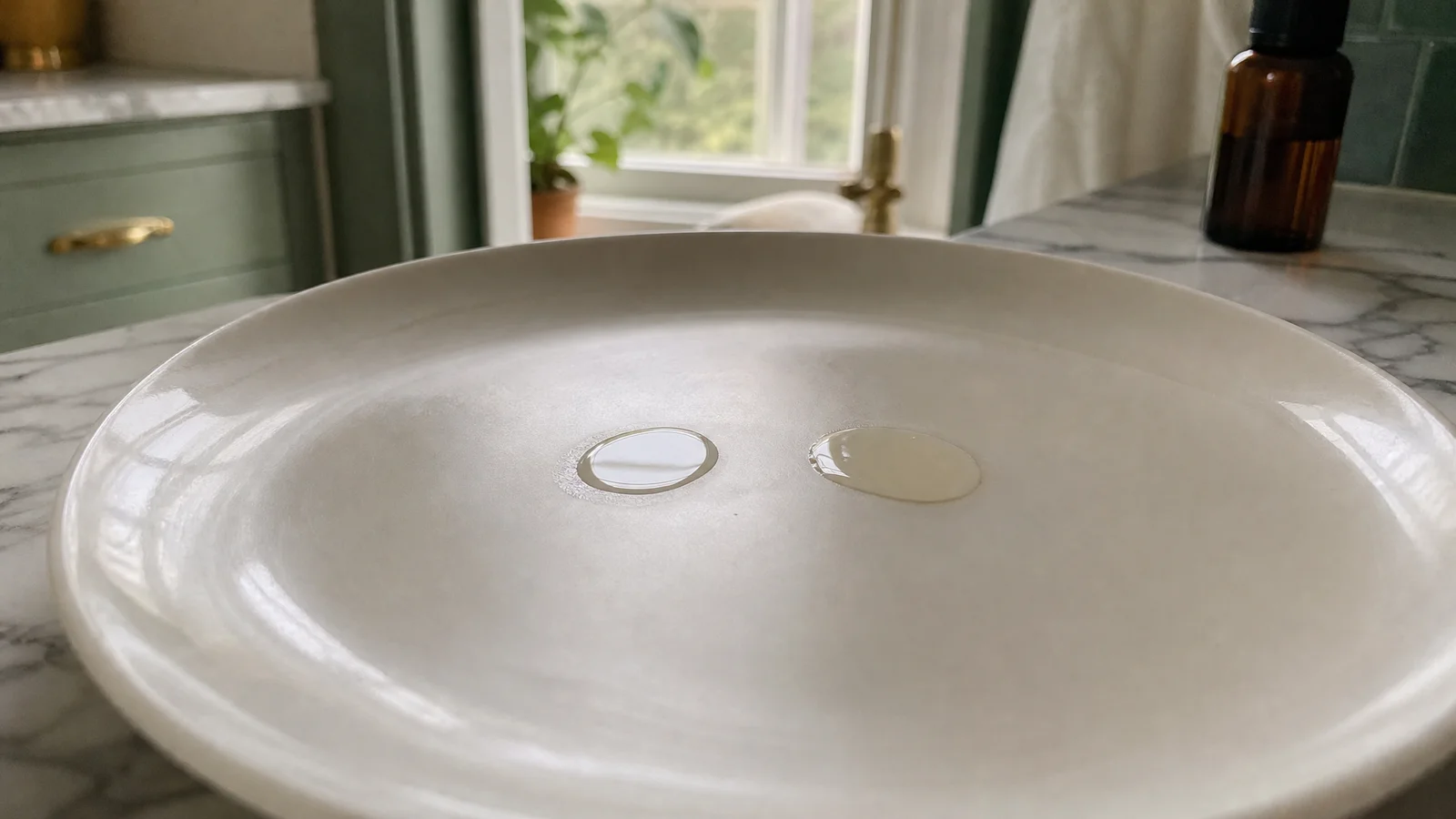
- Use a paper blotter, not the neck of the bottle. One drop is plenty.
- Check it at the start, after about 15 minutes, after an hour, and the next morning. Write down your own words each time.
- Smell it alone before you blend it. A wood that feels creamy in a blend can seem drier on its own, so decide which impression you are after.
- Put it beside a neighbor. Set a blotter of cedarwood or sandalwood next to it and the differences become obvious in seconds. Our amyris vs cedarwood post compares two of them.
If you want to try it on skin, dilute first: we recommend 0.5% to 2% in a carrier oil, with a patch test beforehand. Neat oil on skin is not a way to judge a scent.
Finding your own words
If you are stuck for words when you smell it, ask yourself small questions instead. Is it warm or cool? Dry or soft? Does it seem to sit low, near the table, or does it drift upward? Is there anything sweet in it, or is it more like a plain wood? You do not need fancy vocabulary. "Soft, a bit dry, a little sweet at the end" is a perfectly good description, and it will mean more to you later than any adjective from a catalogue.
Try smelling with your eyes closed, and take a break between sniffs. Your nose tires quickly, and a breath of fresh air or a sniff of your own sleeve will reset it.
Why two bottles of amyris can smell a little different
Two published amyris data sets give noticeably different shares of valerianol and eudesmols, which is a good reminder that this is a natural product and lots vary. Different shares would be expected to nudge the balance of the aroma, though nobody has measured that for amyris. Storage matters too. We say our oil typically keeps 4 to 6 years unopened in a cool, dark place, and that a slight darkening is normal. For how oils change with time, see shelf life and storage.
Meeting it in a room
A blotter shows you the oil, but a diffuser shows you how it behaves in a space. Try a single drop in a diffuser, then leave the room for a little while and come back in. The first breath you take when you walk back in is often the most honest one, because your nose has had a rest. You will notice whether the wood reads creamy, dry or somewhere in between, and whether it feels like part of the room or something that has just been switched on.
Where it sits among other scents
We pair it with lavender, bergamot, geranium, sandalwood and ylang ylang, and we like it as a fixative-style base under citrus and floral top notes. If you want ratios, our diffuser blends are a good place to start, and essential oil scent families explains why fragrance wheels disagree about where woods belong.
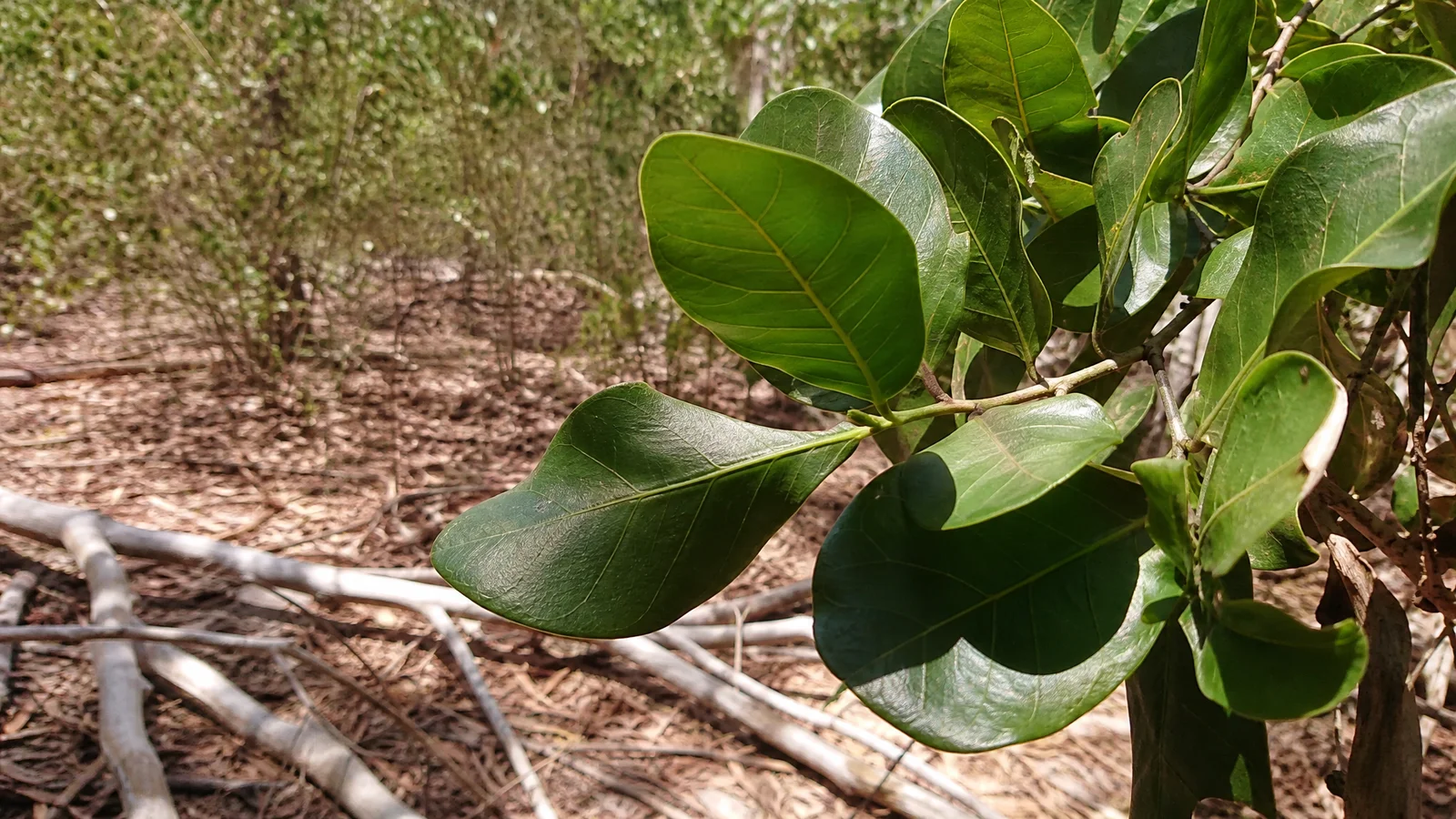
One honest note on sandalwood. Amyris is nicknamed West Indian sandalwood, but it is a different tree with different chemistry, and we do not describe it as a stand-in. Sandalwood's character comes from its santalols, which amyris does not lead with, so an amyris that reminds you of sandalwood is resembling it, not reproducing it. If you write a scent line for your own candle or soap label, "soft wood" or "dry, woody base" is easy to stand behind, and any word like "smoky" or "vanilla" is best confirmed by your own nose on your own lot.
Whatever you decide, give it an hour on the blotter before you judge.
Amyris Essential Oil
Amyris Essential Oil from our own shop, in sizes from 0.5 oz to bulk.
From $23.99
Shop Now →Sources & Further Reading
- Arctander S, 1960. Perfume and Flavor Materials of Natural Origin, amyris oil monograph. archive.org
- Hasegawa T et al., 2012. Structure-Odor Relationships of alpha-Santalol Derivatives with Modified Side Chains. Molecules 17(2):2259. pmc.ncbi.nlm.nih.gov
- Kucharska M et al., 2021. Composition of selected commercial sandalwood oils. Molecules 26(8):2249. pmc.ncbi.nlm.nih.gov
- Yan X et al., 2024. Biological Properties of Sandalwood Oil and Microbial Synthesis of Its Major Sesquiterpenoids. Biomolecules 14(8):971. pmc.ncbi.nlm.nih.gov