Does Aromatherapy Work? What the Reviews Actually Found
Aromatherapy has some evidence for modest, short-lived changes in how people rate relaxation or sleep, and very little rigorous evidence for anything clinical. The strongest studies are small, the odour makes proper blinding close to impossible, and in at least one placebo-controlled lab study the expectation set by the experimenter mattered more than the scent. This page walks through what the main reviews found, what each one cannot tell you, and what that means if you are buying an oil.
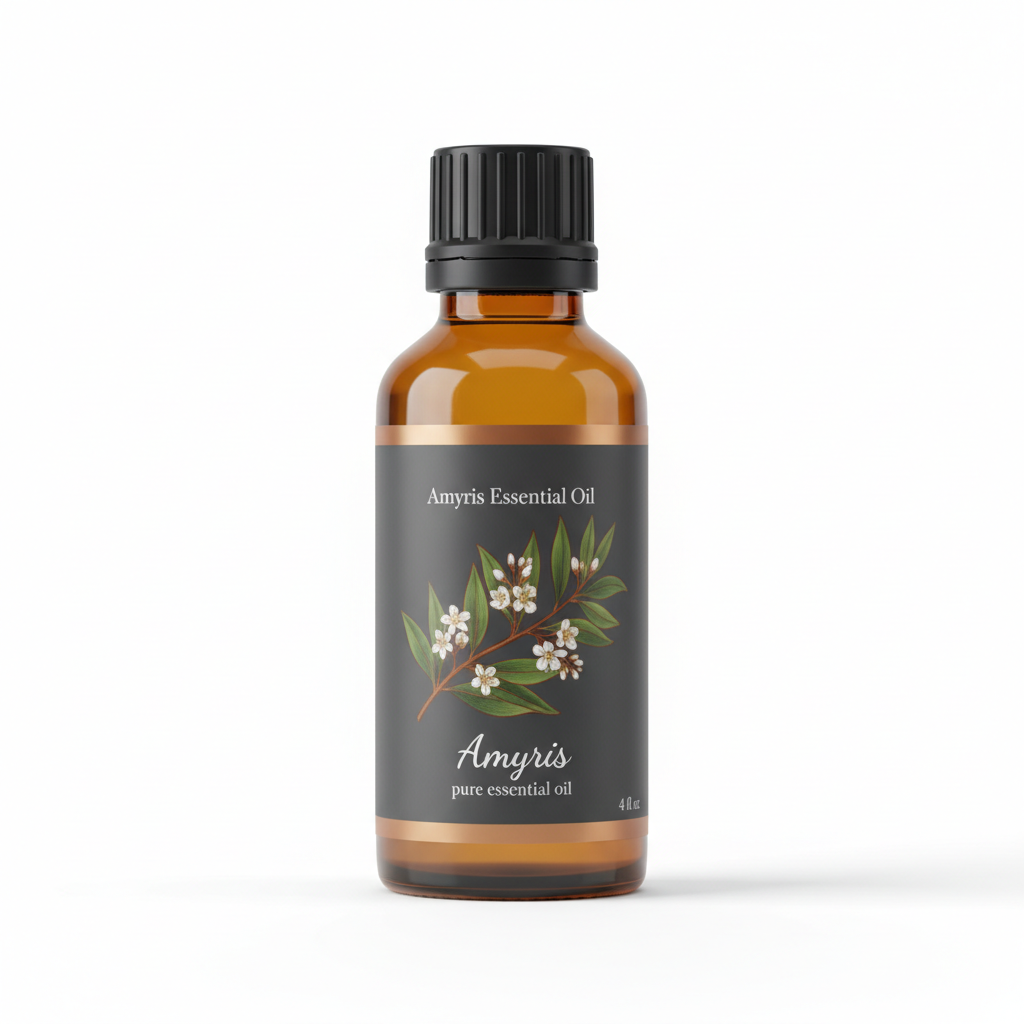
Amyris Essential Oil
Our own Amyris Essential Oil, in sizes from 0.5 oz to bulk.
From $20.99
Shop Now →What "work" has to mean before the question has an answer
"Does it work" bundles three different questions. Does inhaling an aroma change a measurable body signal such as skin conductance or blood pressure? Does it change how a person rates their own mood, anxiety or sleep on a questionnaire? And does it change a clinical outcome such as labour pain or the symptoms of dementia? The evidence differs sharply by question, and the three are easy to blur together. The table below keeps them apart. Each row is one published review or trial, with the number of studies or people it covered, the finding as the authors reported it, and the caveat the authors or the design put on it.
How these were chosen: this is a targeted read, not a systematic search. In October 2026 we searched and read the Cochrane Library pages, the NCCIH aromatherapy page and Europe PMC records for reviews on the use cases people most often ask about. A review that exists and was not found is possible, and a table of seven rows is a sample, not the literature.
| Use case | Source | What it found | Caveat | Evidence level |
|---|---|---|---|---|
| Pain in labour | Smith, Collins and Crowther, Cochrane, 2011 | Two randomized trials, 535 women in all (one of 513, one of 22). No difference between groups for pain intensity, and no significant difference in assisted vaginal birth or caesarean section. | The authors describe a "lack of studies" and say more research is needed before recommendations can be made. Dated 2011 as read here; we did not check for a later update. | Insufficient |
| Dementia symptoms | Ball et al., Cochrane, 2020 | 13 trials, 708 participants. "No convincing evidence" that aromatherapy is beneficial for people with dementia. | Authors rate the overall quality of evidence as poor, trial results did not agree with one another, and most studies were very small. | Low quality, no convincing benefit |
| Anxiety (any cause) | Cooke and Ernst, 2000 | 12 randomized trials found. Six, on aromatherapy massage for relaxation, suggested a mild, short-lived anxiety-reducing effect. The authors judged it probably too weak to justify use for anxiety. | Older review. Six of the twelve trials lacked independent replication. The effect cannot be separated from the massage. | Low |
| Test anxiety in college students | Luan et al., 2023 | Seven randomized trials, 425 students. Overall effect on test anxiety favoured aromatherapy (standardized mean difference -0.67), with high heterogeneity (I-squared 72%). | Authors rate bias risk as moderate and call for more and higher-quality studies. The abstract reports the comparison against placebo specifically as not significant (p = 0.25). | Low to moderate |
| Sleep quality (lavender) | Shen, Zhang and Zhu, 2025 | 11 randomized trials, 628 adults. Pooled effect on sleep quality favoured lavender (standardized mean difference -0.56, 95% CI -0.96 to -0.17). | Heterogeneity was high (I-squared 82%), bias risk moderate, and most studies did not report enough to judge blinding. Authors say the conclusion needs verification. | Low to moderate |
| Insomnia, stress indicators, pain | NCCIH, aromatherapy page, updated January 2020, read October 2026 | For sleep problems, "we don't know whether it's helpful because little rigorous research has been done." In one study of stressed people, lemon improved mood while neither lemon nor lavender affected stress indicators. | A summary page, not a review. It was last updated in 2020, so newer trials such as the 2025 meta-analysis above are not in it. | Unknown to low |
| Relaxation, lavender vs placebo aroma | Howard and Hughes, 2008 | 96 healthy women, double-blind and placebo-controlled. The aroma had no effect on skin conductance during relaxation. What participants had been told to expect did affect it. | One lab study, healthy young women only, short exposure. It does not show lavender never works, only that expectation can produce or hide an effect. | Single trial |
The blinding problem is the reason the numbers stay soft
A drug trial can give a sugar pill that looks identical to the real one. An odour cannot be hidden from the person smelling it. Most trials get around this with a "placebo aroma" or a no-aroma control, but a participant who smells lavender and is told it is relaxing is no longer blinded in any useful sense. The sleep meta-analysis above notes that most of its studies did not report enough to assess blinding, and the Luan review's own placebo-controlled comparison was the one that lost significance.
Howard and Hughes ran the cleanest version of the test in the table: they told some participants to expect the aroma to help relaxation and others to expect it to hinder it, and measured skin conductance. The aroma itself did nothing measurable. The expectation did, and in the direction opposite to the one intuition predicts: those primed to expect inhibition relaxed more. Their own self-reported anxiety was not moved by the priming, which matters, because most aromatherapy trials rely on exactly that kind of self-report. Reasoning from this one study, the sensible reading is that a trial showing a self-reported benefit tells you the whole package (smell, ritual, quiet time, being told it will help) is associated with feeling better, not that the molecules did it. That reading is an extrapolation from one trial, not a finding the authors drew across the field.
Where the evidence is most and least believable
Reading the table as a buyer rather than a researcher, three patterns stand out.
- Self-rated outcomes in healthy or mildly stressed adults have the most positive results and the weakest controls. Test anxiety and sleep quality both came out favourable, both with high heterogeneity, and both depend on how a person rates themselves.
- Hard or clinical outcomes have the least support. In two Cochrane reviews, covering labour pain and dementia, the evidence was either too thin to judge or "no convincing" benefit.
- The newest and largest pooled effects are also the most variable. A pooled effect size with I-squared above 70% means the individual trials disagree widely. The average is real arithmetic, but it does not describe any one trial.
Two further points. First, the sleep review and the lab study concern lavender, and the NCCIH example compares lemon with lavender; none of the sources above concerns a woody, balsamic oil, so a lavender result is not a result for amyris. Second, the NCCIH page is a short summary dated January 2020. It is a fair statement of the position then and it does not say "aromatherapy does not work"; it says the research is limited.
What this means for our own oil
We sell one oil, amyris, and we do not make a medicinal claim for it. Its listing makes no claim for sleep, mood or stress, and nothing in the table above tests it: none of the sources we read studied amyris. People buy it for its scent, a creamy, woody, balsamic note with a soft vanilla undertone, and for use as a base note in blends. If the question is "will this oil lower my anxiety or fix my sleep," the honest answer is that none of the sources we read supports that for amyris, and the evidence for aroma in general is modest and uncertain. The page on what amyris oil can and cannot be said to do covers this for our oil specifically, and the sleep question is taken up in amyris oil and sleep.
Limits and who should skip aromatherapy as a plan
Aromatherapy is not a substitute for care. A person with persistent anxiety, low mood, insomnia that lasts weeks, or any condition in the table should see a physician; no review above supports replacing medical care with an oil. Anyone in acute distress should contact local emergency services or a crisis line rather than an oil. Pregnant or breastfeeding readers, parents of young children and pet owners should read the essential oil safety guide and ask a physician, pediatrician or veterinarian before diffusing, since several of the reviews above did not study those groups. Fragrance can also trigger headaches or breathing symptoms in some people. ANSES, the French health safety agency, reported in 2020 that essential-oil sprays and diffusers were linked to eye, nose and throat irritation and respiratory effects even under normal use, and advised people with asthma or other respiratory conditions against using essential oils.
A fair way to use the evidence
If you enjoy a scent and use it as part of a wind-down or a quiet moment, nothing in this evidence argues you should stop. Reasoning from the table, the most defensible expectation is a small, individual and unpredictable change in how you feel, probably shared with the ritual around it. Judge it by your own notes over a few weeks, not by a headline. If you want the starting vocabulary and a safe habit set first, the aromatherapy beginner guide sets it out, and the pages on oils for sleep and oils for stress take the two most common questions in more detail.
Amyris Essential Oil
Amyris Essential Oil from our own shop, in sizes from 0.5 oz to bulk.
From $20.99
Shop Now →Sources & Further Reading
- Smith CA, Collins CT, Crowther CA, 2011. Aromatherapy for pain management in labour. Cochrane Database of Systematic Reviews. cochrane.org
- Ball EL, Owen-Booth B, Gray A, Shenkin SD, Hewitt J, McCleery J, 2020. Aromatherapy for dementia. Cochrane Database of Systematic Reviews. cochrane.org
- Cooke B, Ernst E, 2000. Aromatherapy: a systematic review. British Journal of General Practice 50(455):493-496. pmc.ncbi.nlm.nih.gov
- Luan J, Yang M, Zhao Y, Zang Y, Zhang Z, Chen H, 2023. Aromatherapy for test anxiety in college students: systematic review and meta-analysis. Frontiers in Psychology. frontiersin.org
- Shen H, Zhang L-J, Zhu W-Y, 2025. The sleep-enhancing effect of lavender essential oil in adults: a systematic review and meta-analysis. Holistic Nursing Practice. pmc.ncbi.nlm.nih.gov
- NCCIH, undated page (updated January 2020), read October 2026. Aromatherapy. nccih.nih.gov
- Howard S, Hughes BM, 2008. Expectancies, not aroma, explain impact of lavender aromatherapy on psychophysiological indices of relaxation in young healthy women. British Journal of Health Psychology 13(4):603-617. pure.ul.ie
- ANSES, 28 April 2020. ANSES calls for vigilance concerning essential-oil based sprays and diffusers. anses.fr