Amyris History: Torchwood, Candlewood, and Haiti
The story of amyris that circulates online is mostly older than the evidence for it. Eighteenth-century botanical catalogues, colonial merchants renaming a cheap wood, nineteenth-century shipments to Europe: these show up in popular accounts, but none traces back to a primary source we could open. The documented history is shorter and more recent, and it is more useful to anyone buying the oil today than the legend.
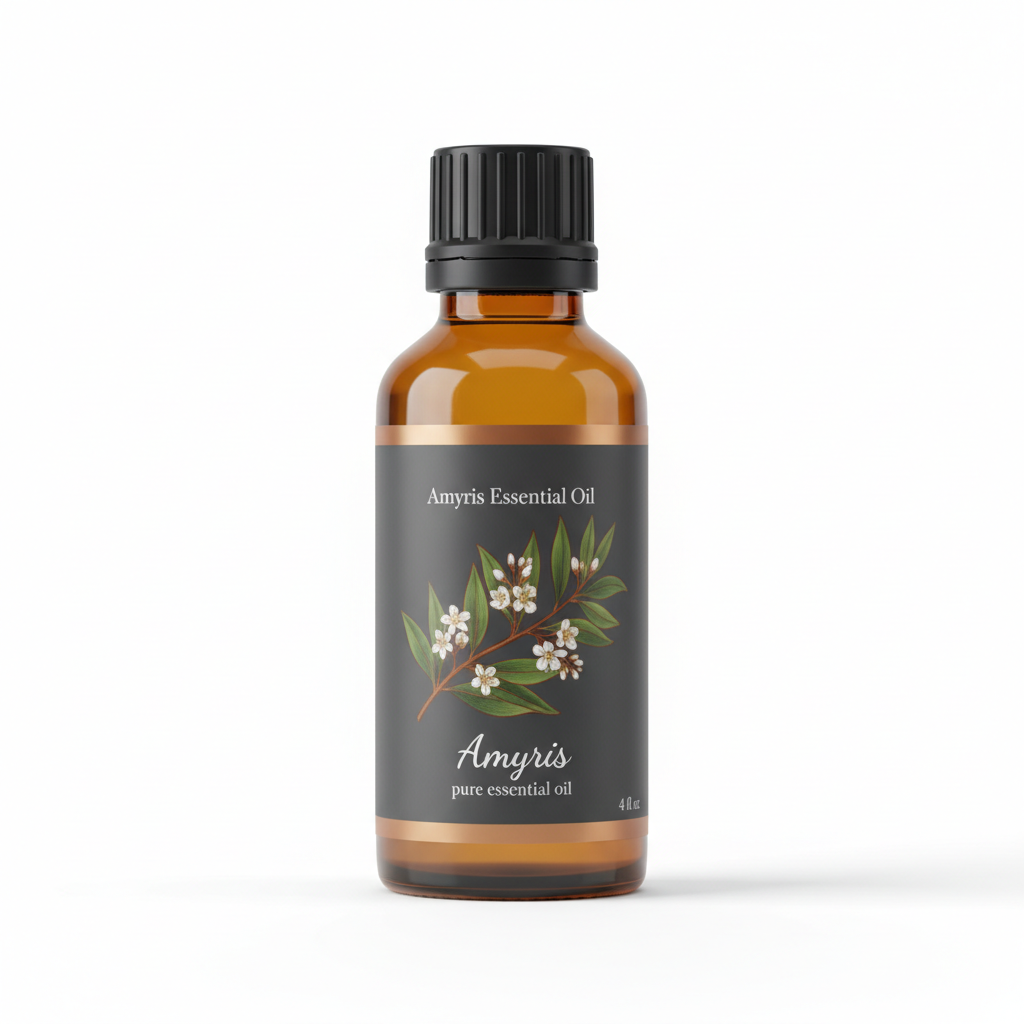
Amyris Essential Oil
Our own Amyris Essential Oil, in sizes from 0.5 oz to bulk.
From $23.99
Shop Now →A timeline you can date
The best single source is an October 2016 case study by ETC Group, a research and advocacy organization, on Haiti's essential-oil crops. It gathers older documents about amyris, and the dates below come from it. They are second-hand, since ETC is quoting USAID, a 2003 study, a trade magazine and individual distillers, and individual statements are labelled as such.
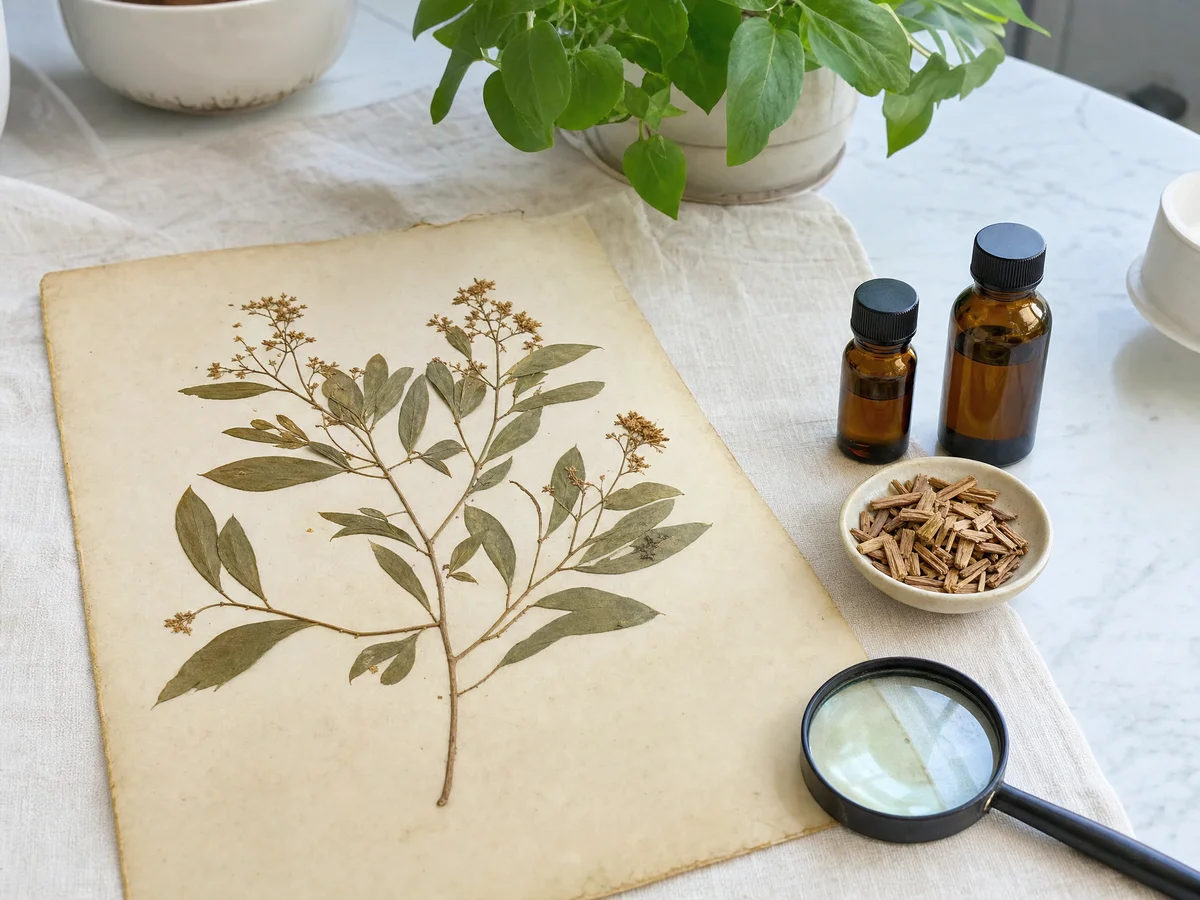
- 1943-44: exports of Haitian amyris oil first began from a plant at Chalons outside Miragoane, according to a 1987 USAID agricultural assessment.
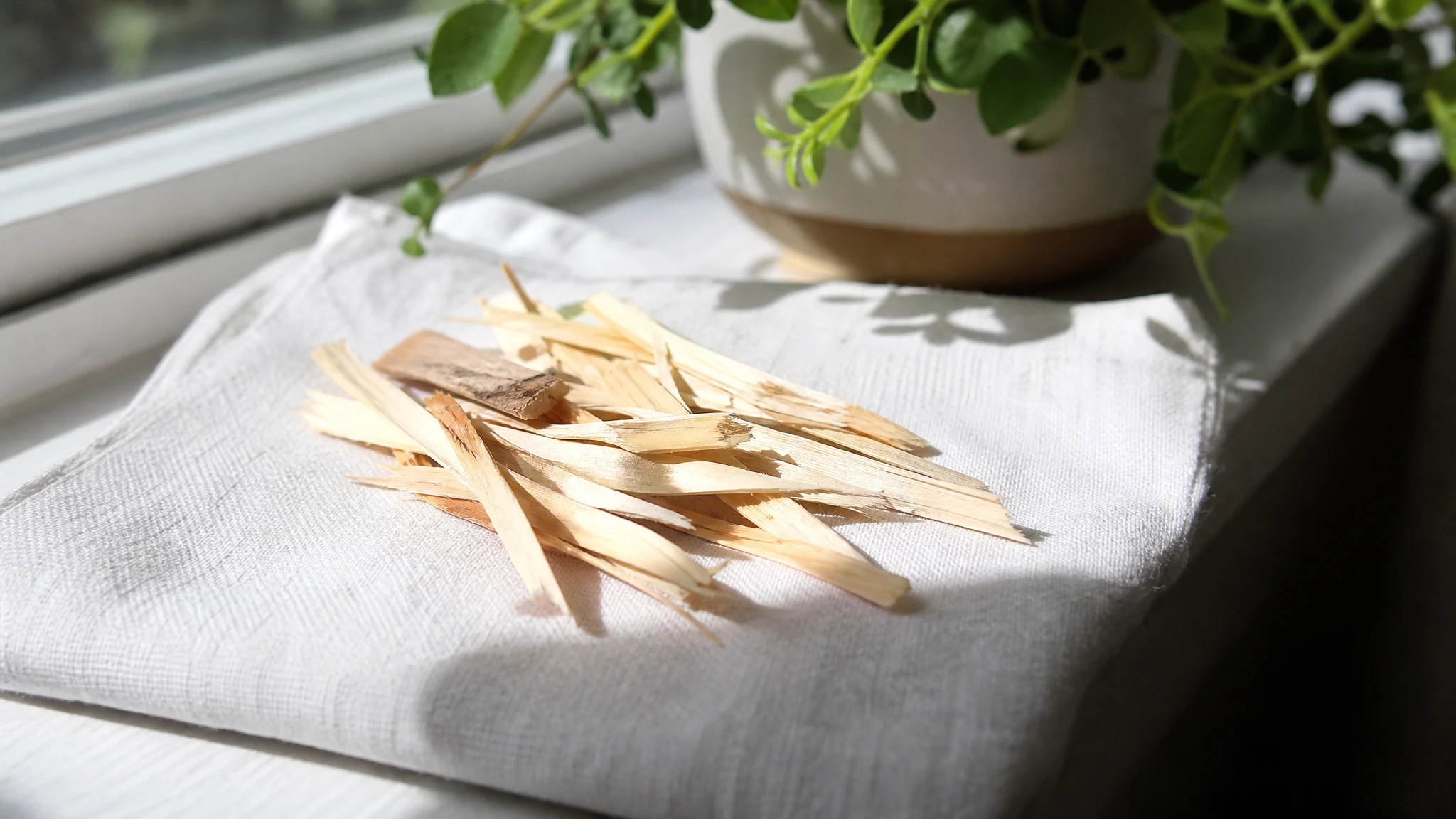
- 1983: a study by Leslie Delatour, summarised by USAID, named Tortuga Island and Mole-Saint-Nicolas as the main supply areas. It described wood dried for at least six months, chipped by hand and ground to sawdust, processed only in stainless steel because it is corrosive, with distillation lasting up to 168 hours.
- 2001: Bernard Champon of the Haiti Essential Oil Company wrote that only wood from naturally dead trees was used, and that rumours of shortage had come and gone for fifty years.
- 2003: a study cited by ETC placed amyris distilleries at Ducis, Maniche, Miragoane and Jacmel in southern Haiti.
- 2000s: Perfumer & Flavorist magazine, per ETC, put Haiti's annual amyris oil production at 60 metric tonnes.
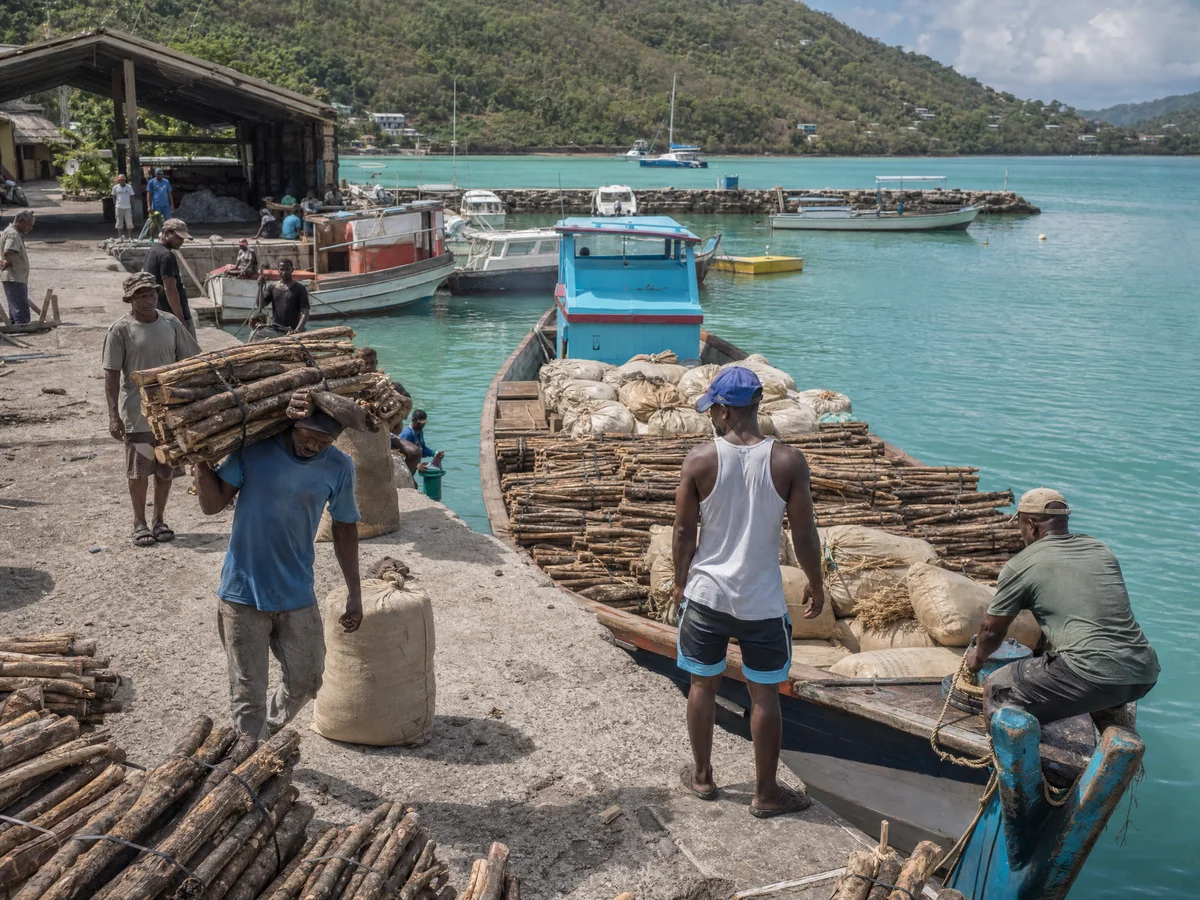
- 2015: Haitian exporter Gilbert Assad told ETC that amyris production was virtually non-existent, citing depleted native wood and changed Dominican export regulations.
Put together, the picture is a Haitian industry with a documented start in the 1940s, tens of tonnes a year in the 2000s, and by the mid-2010s real disagreement about how much local wood remained. It is not a single tidy tradition, and ETC itself says it lacked on-the-ground research to settle the question.
What strikes us about this list is how human it is. It is a story of distillers, exporters and officials, each describing what they saw in their own years, and none of them claiming the whole picture. That is a more believable account than a single tidy legend, and it is a good reminder to keep stories and sources apart when you read about any oil.
Candlewood and torchwood
The names have a plausible practical origin. The same report passes along a French fragrance company's account that the resinous wood was called candlewood because its high oil content made it burn long, that Haitian fishermen made torches to catch crabs at night, and that country people carried it to market before sunrise. The account is undated, so it supports a simple statement: this oily wood was used for fuel and light. GBIF lists bois chandelle (Haiti) and candlewood among the tree's vernacular names, and the genus is called torchwood because the wood burns readily. Both support the name, though neither gives a date.
How "West Indian sandalwood" got onto bottles
Who first used the name, and when, is not documented in anything we could open, so we do not repeat the popular story about merchants selling a cheaper wood as sandalwood. What the GBIF list does show is that the name traveled. The tree has sandalwood names in German (westindisches Sandelholz), French (santal du Venezuela) and Italian (sandalo della India Occidentale) as well as English. That points to a trade habit that spread across languages, not one English marketing line.
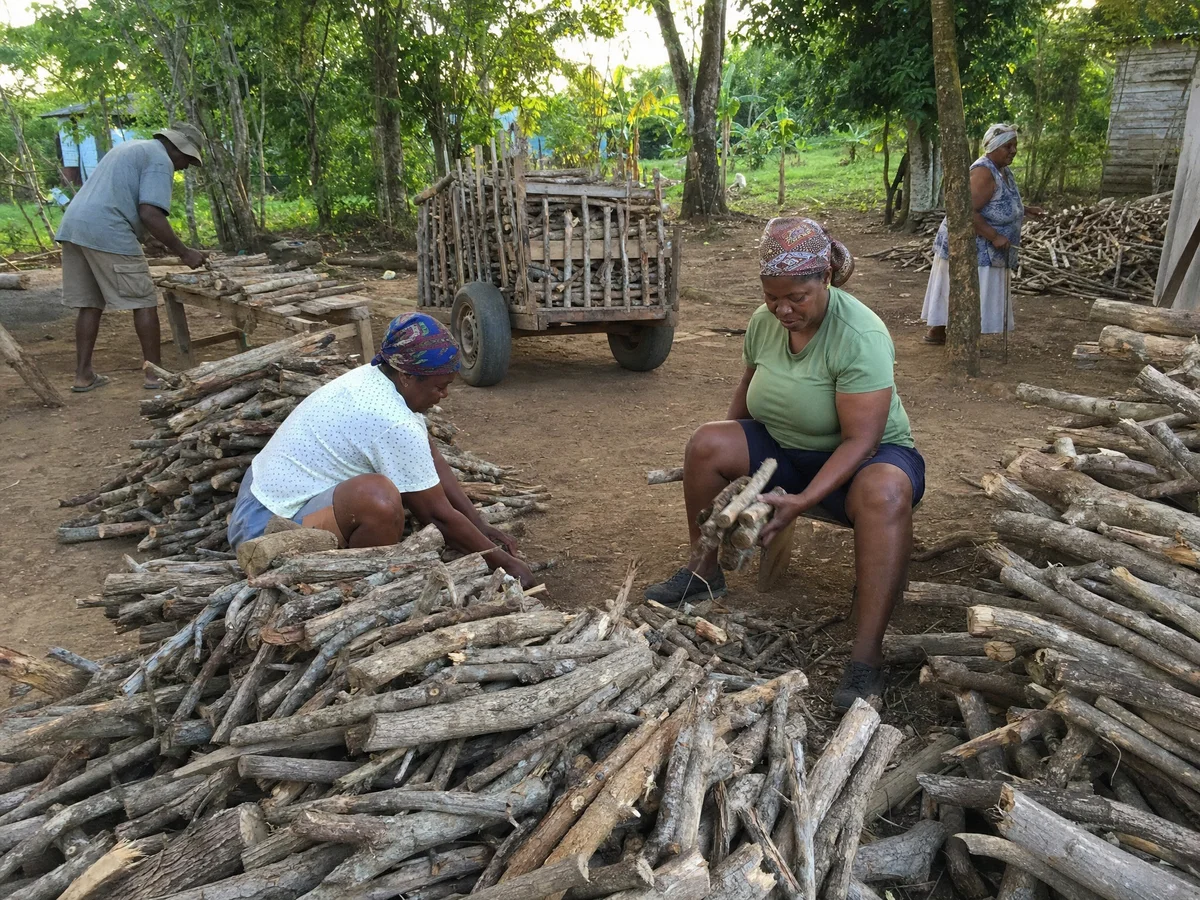
Chemistry is the check on the name. ETC notes that Haitian amyris contains no santalols, the sesquiterpene alcohols thought to carry most of East Indian sandalwood's odor, and that the two trees are unrelated. A 2021 GC-MS comparison found three of six commercial "sandalwood" oils were amyris-type, identified by valerianol and eudesmol isomers instead of santalols (Kucharska et al., 2021). Our position is simple: amyris is not sandalwood, and we do not price or describe it as though it were. It has its own warm, woody, creamy character and stands well enough on its own. Our posts Is Amyris Really Sandalwood? and Amyris vs Sandalwood Oil go further.
Reading old stories with care
The next time you see a romantic origin story on a bottle, you can ask a few simple questions:
- Is there a date, and who gave it?
- Can the claim be traced to something you can open and read?
- Does the story say anything about the oil in your hand, or only about the tree?
A good story is a pleasure, and we enjoy one as much as anyone. We would simply rather you buy on what can be checked.
Why the history matters when you buy
A supply chain that began with one plant in the 1940s, drew wood from named regions in the 1980s, and was described by its own participants in the 2010s as possibly short of local wood is one where "where did this wood come from?" is a fair question. It is a fair question for any supplier, including us, and you can put it to us in writing through the contact page. Our post on sourcing claims lists what to ask, and our distillation post explains what those old drying and still-time figures mean in practice. For the plant itself, see the species post.
Amyris Essential Oil
Amyris Essential Oil from our own shop, in sizes from 0.5 oz to bulk.
From $23.99
Shop Now →Sources & Further Reading
- ETC Group, October 2016. Haiti, Essential Oils & Synthetic Biology: Potential Impacts on Haiti's Farming Communities. etcgroup.org
- GBIF Secretariat. Amyris balsamifera L., vernacular names. api.gbif.org/v1/species/5421190
- Kucharska M, Frydrych B, Wesolowski W, Szymanska JA, Kilanowicz A, 2021. A Comparison of the Composition of Selected Commercial Sandalwood Oils with the International Standard. Molecules 26(8):2249. PMC8070282