Amyris Oil Safety: Dilution and Patch Test Basics
Amyris is a gentle-smelling oil, and it is easy to forget that it is still a concentrated plant extract. A few drops in a carrier oil is a lovely thing; a few drops straight from the bottle is not how essential oils are meant to be used. Three habits cover almost everything: dilute, test sensibly, and store the bottle out of reach.

Amyris Essential Oil
Our own Amyris Essential Oil, in sizes from 0.5 oz to bulk.
From $23.99
Shop Now →Dilution is the habit that matters most
Our guidance is to dilute amyris to 0.5% to 2% in a carrier oil for skin, which works out to roughly 3 to 12 drops per ounce of carrier. The Tisserand Institute gives slightly different ranges depending on where the oil goes (Tisserand Institute):
| Use | Range | Drops in 1 oz (about 20 drops per ml) |
|---|---|---|
| Reaction-prone skin | 0.2 to 1% | about 1 to 6 |
| Face and sensitive areas | 0.5 to 1.2% | about 3 to 7 |
| Body oils and lotions | 1 to 3% | about 6 to 18 |
Drop counts are approximate because bottle openings and oils vary, so treat the drops column as a guide. In practice we would stay at the low end of our range for anything near the face, such as a beard oil, and use the fuller range for a body oil. The dilution chart and our body oil post do the arithmetic for bigger bottles. Carrier oils are at any craft supply shop or grocery; we sell only the essential oil.
Making the first dilution feel easy
Start with a clean, dry glass bottle and put the carrier oil in first. Add the drops of amyris next, cap the bottle and tilt it gently a few times to mix. Writing the date and the number of drops on the label takes ten seconds and saves you from guessing later if you want to repeat the blend or adjust it.
Count drops on a steady surface with the bottle held upright, and give each drop its own moment to fall. If two come out at once, you know the total is a little high, so make a fresh batch rather than trying to fix it. A small towel under your work area catches any spills before they reach the table.
What a patch test can and cannot do
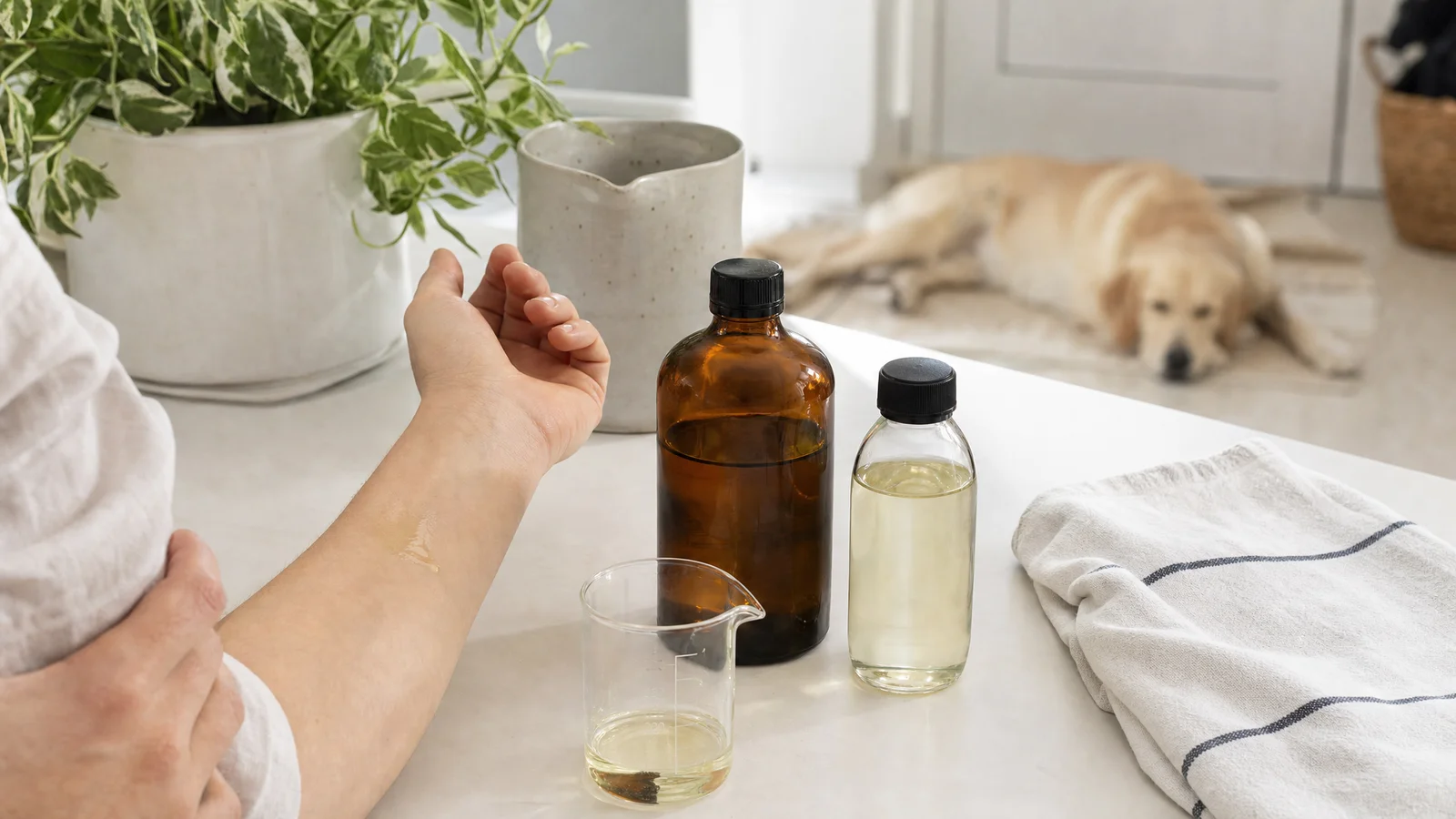
A patch test is a small, cheap precaution: put a little diluted oil on the inner forearm and watch for redness or itching. It is worth doing. It is also not a guarantee, and the Tisserand Institute is candid about that, noting that patch tests are not 100% reliable and that allergic reactions can be delayed (Tisserand Institute). For people prone to reactions it suggests starting near 1% and moving up in small steps. If anything looks irritated, wash the oil off, stop using it and ask a dermatologist. Our patch test post walks through the method.

Keep oil out of your eyes. Undiluted essential oil dripped into the eye can cause a chemical burn (Tisserand Institute safety guidelines). If you blend amyris with citrus, give the citrus its own check, since several citrus oils are phototoxic; our phototoxic oils post lists them.
It also helps to set up your space before you open the bottle. Clear the table, lay out your carrier oil, a clean bottle, a label and a pen, and wash your hands. When everything is within reach you are far less likely to knock something over or reach for the wrong bottle halfway through.
Small habits that make it routine
- Wash your hands after blending, and before you touch your face or eyes.
- Wipe up spills straight away, and keep oil off surfaces you will lean on later.
- Label every bottle, including the little ones, with the oil, the strength and the date.
- Close the amyris bottle as soon as you have counted your drops, and put it back in its cool, dark spot.
- Change one thing at a time when you adjust a blend, so you know what made the difference.
None of this is difficult, and after a couple of batches it becomes second nature. The aim is simply that making something with amyris feels tidy and unhurried from start to finish.
Children, pets and storage
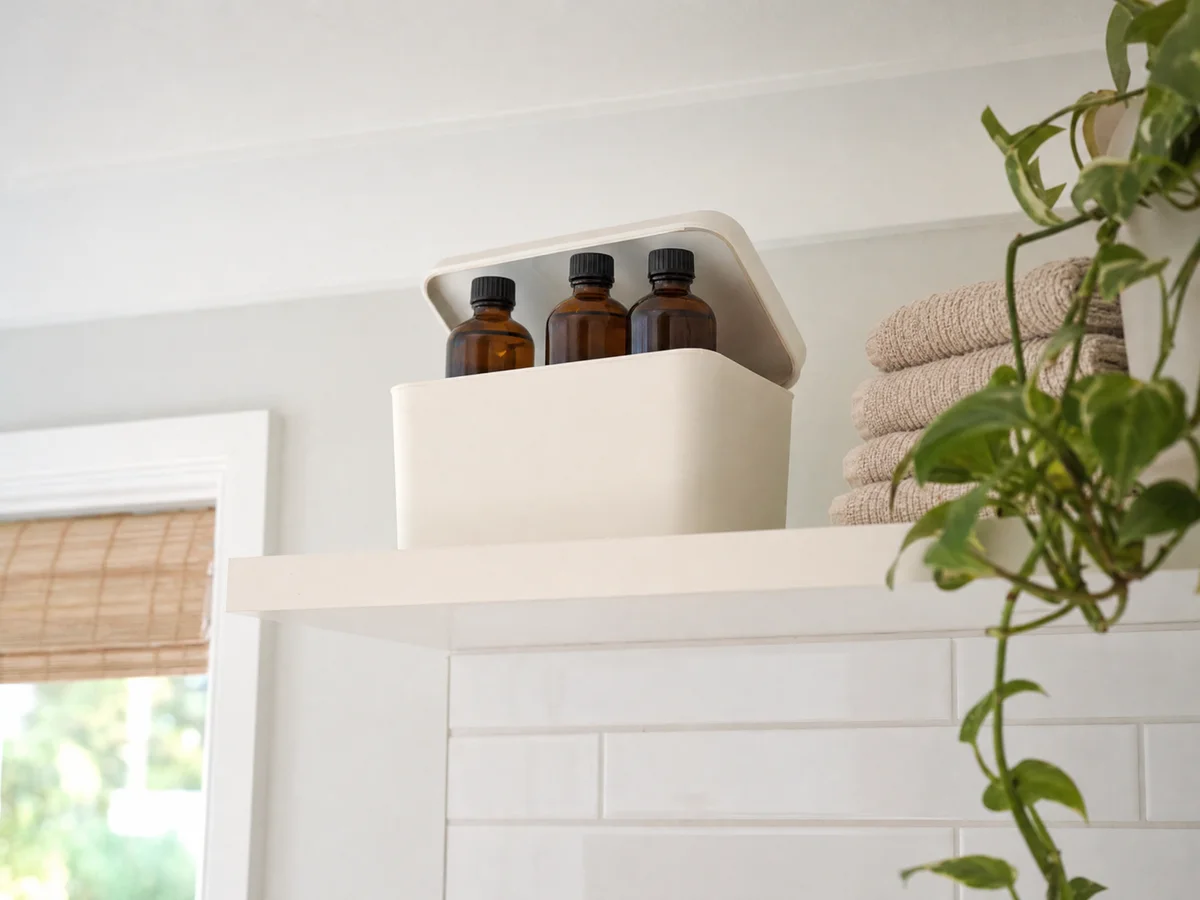
The National Capital Poison Center advises locking essential oil bottles away from children and pets, and notes that children's thin skin and immature livers may make them more susceptible to toxic effects than adults (National Capital Poison Center). Our oil is for external, cosmetic use only and should never be swallowed. If a child swallows any essential oil, call poison control at 1-800-222-1222, which is free and answers around the clock.
Pets deserve the same respect. Cats in particular lack liver enzymes that humans rely on, which Robert Tisserand describes as a theoretical risk of greater toxicity (Tisserand Institute). Keep amyris off animals, keep the bottle closed and out of reach, and ask a veterinarian before diffusing around cats, dogs or birds. For a possible exposure call your vet or the Pet Poison Helpline at (855) 764-7661. More in our pets post.
Anyone who is pregnant, has a skin condition or a medical question should talk to their doctor first.
Amyris Essential Oil
Amyris Essential Oil from our own shop, in sizes from 0.5 oz to bulk.
From $23.99
Shop Now →