Do Essential Oils Help Sleep? What Research Shows
Search for the best essential oil for sleep and you will find the same list everywhere: lavender, chamomile, cedarwood, sandalwood, and a few more. It reads like settled science. Underneath, only one name on that list has been studied enough for researchers to pool the results, and even those results come with big caveats. Here is a straight look at where things stand, from a business that sells an oil for its scent.
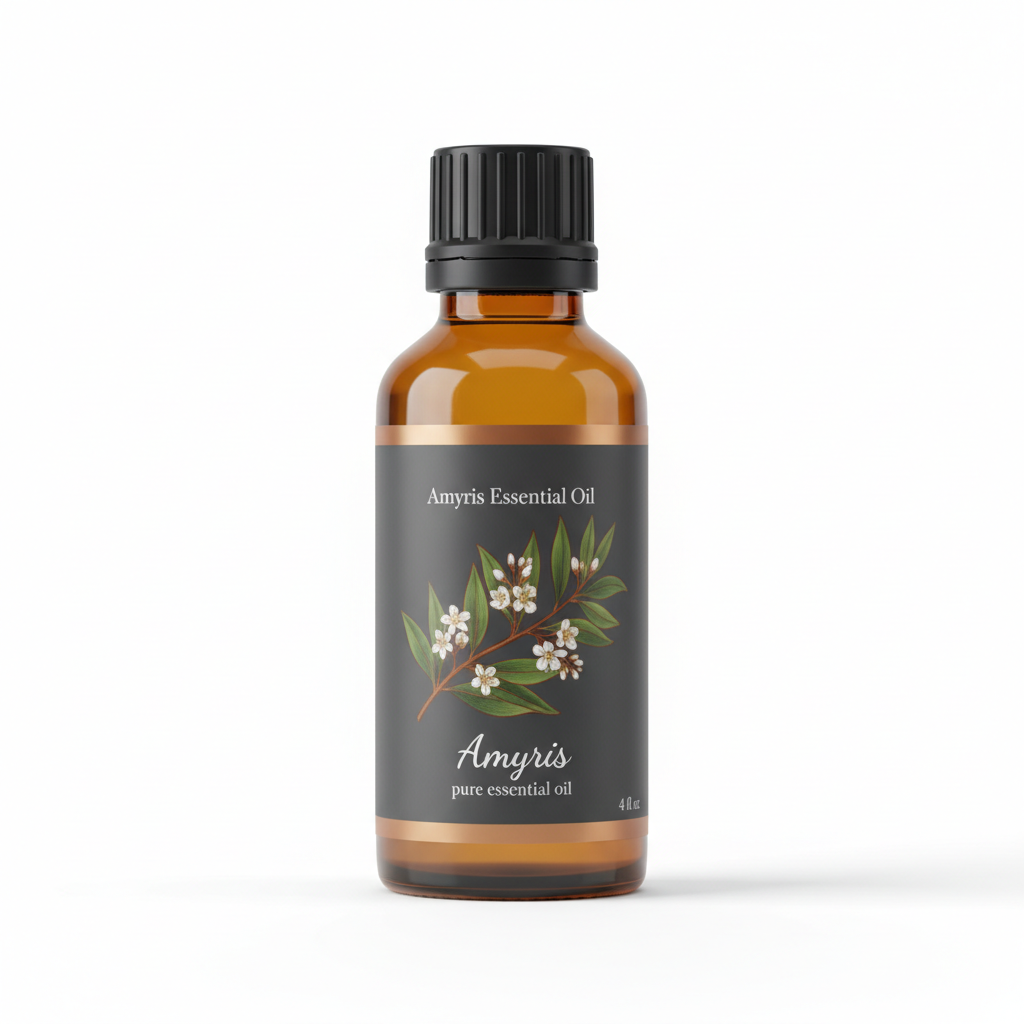
Amyris Essential Oil
Our own Amyris Essential Oil, in sizes from 0.5 oz to bulk.
From $23.99
Shop Now →Lavender is the one with trials
A 2025 meta-analysis in Holistic Nursing Practice by Shen and colleagues pooled 11 randomized trials with 628 adults, nine of them using inhaled lavender, and reported better self-rated sleep quality in the lavender groups. The authors also note that the trials differed a lot from one another, and that the result depended on which sleep questionnaire was used. A broader 2021 review of 34 studies of aroma inhalation reported positive overall effects while flagging a high risk of bias and wide variation between studies. The earliest review of lavender and sleep, from 2012, called the benefit small to moderate and asked readers to take it cautiously.
So the fair summary is this: lavender has the most research of any oil, the research leans positive, and the studies are small and uneven. Chamomile, bergamot, sweet orange and marjoram turn up inside some pooled trials without a separate result of their own. For the woods, including cedarwood, sandalwood and vetiver, the reviews we read contain no sleep trials at all.
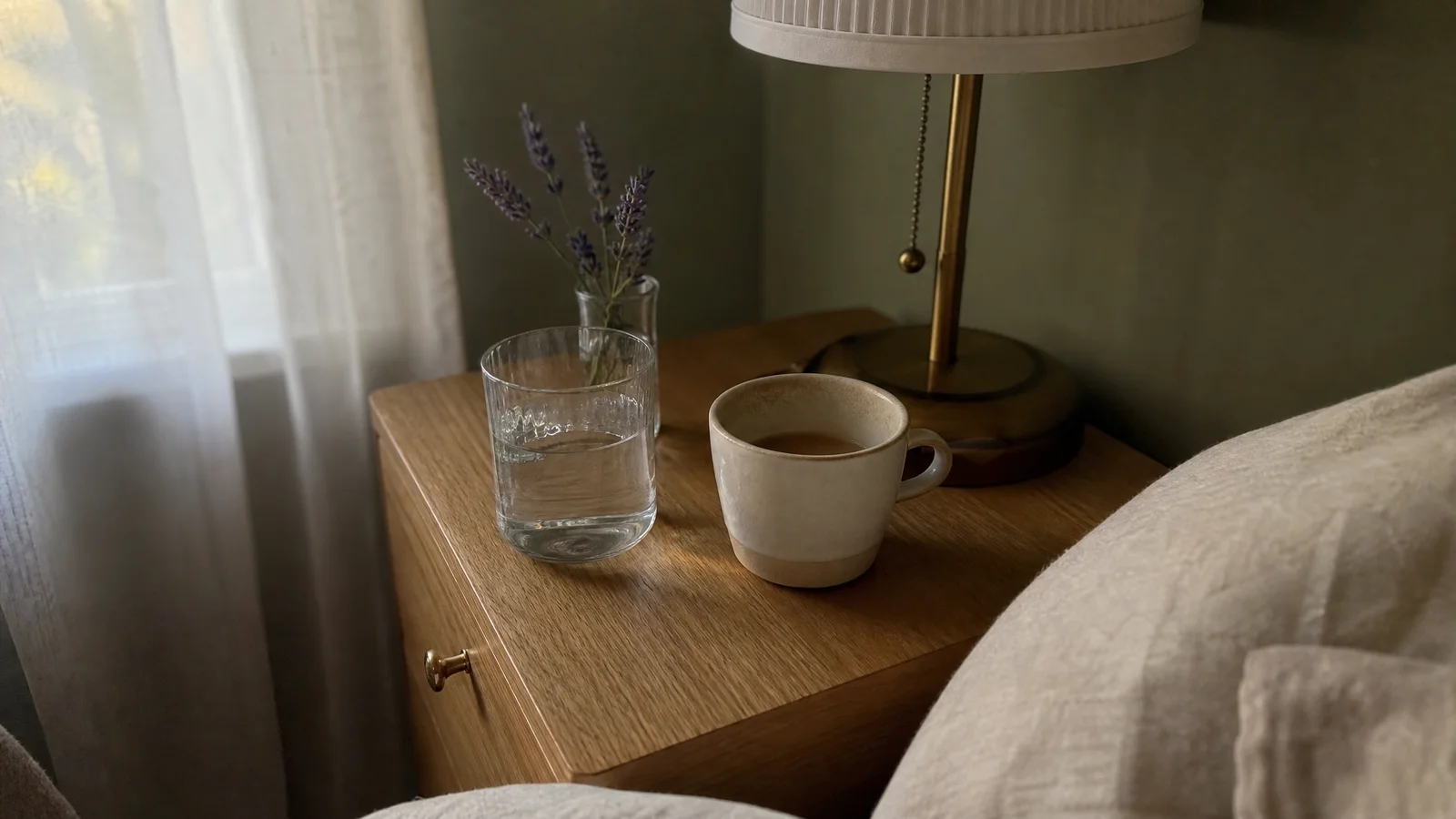
It is worth saying that a good night is built from a lot of small things, and a scent is only one of them. Think about the room you sleep in. Is it dark enough, cool enough and quiet enough? Is the bed somewhere you associate with sleep, or with scrolling and answering emails? These everyday choices are free, and they are where most people can make a real difference.
What the sleep authorities put first
When researchers who treat sleep problems write guidelines, the first recommendation is not a scent. The American Academy of Sleep Medicine's guideline on chronic insomnia in adults makes one strong recommendation, cognitive behavioral therapy for insomnia, and conditional recommendations for several other behavioral approaches. You can read the summary in the AASM announcement.
For rougher weeks, the NHS page on insomnia points to habits: a regular wake-up time, an hour of winding down, a dark and quiet bedroom, and no alcohol, caffeine or nicotine in the six hours before bed. It suggests seeing a GP if trouble sleeping lasts for months or starts to hurt daytime life. In the United States, a physician or sleep specialist is the right person to ask about sleep that has been disrupted for weeks.
Where a scent fits
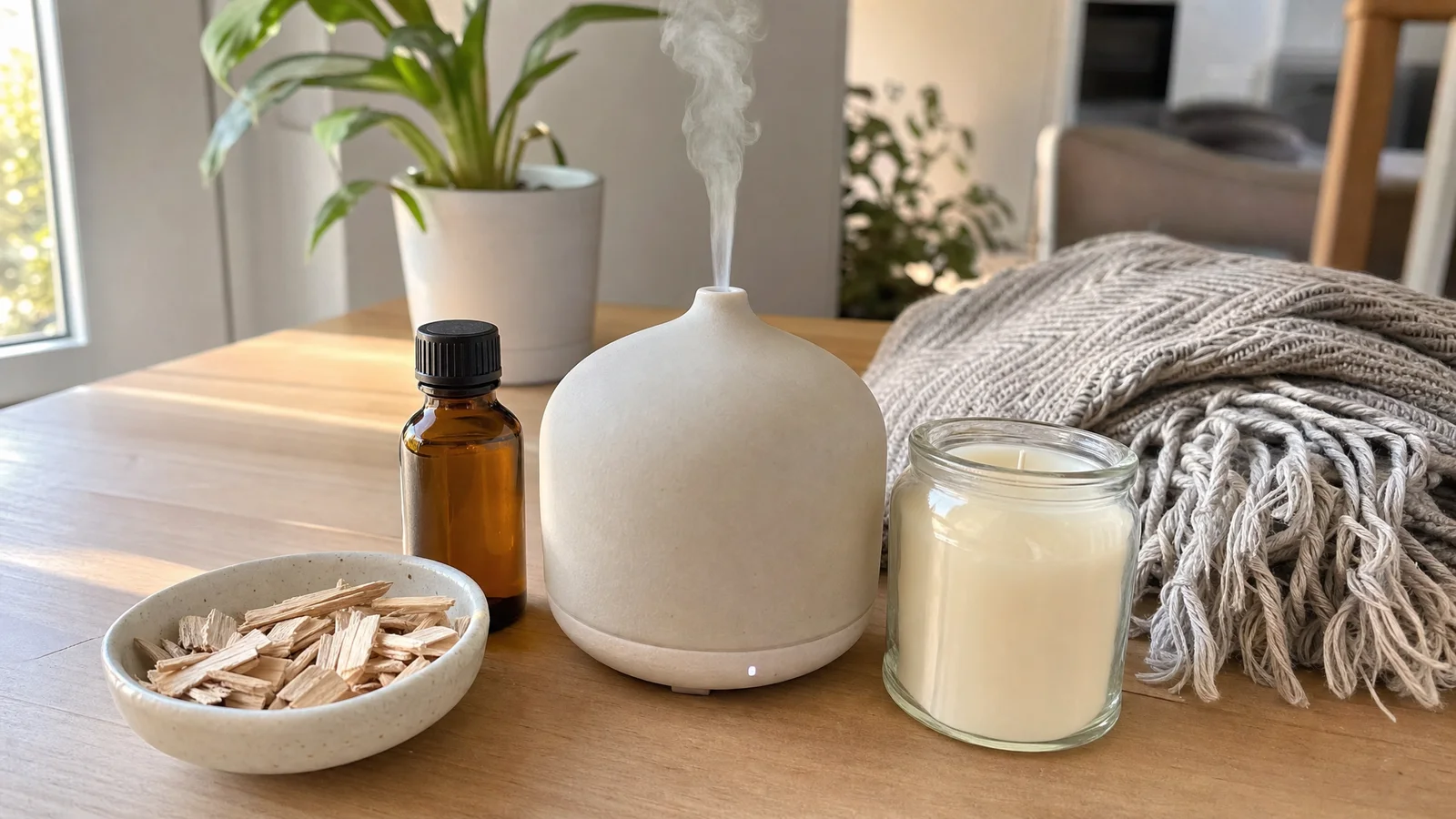
If you like the idea of an evening scent ritual, make it a small, gentle one. Put a drop on a tissue and keep it a little distance from the pillow, rather than right by your face. Choose a time, such as after you brush your teeth, and do the same thing each evening. The ritual is the lovely part: a pause, a slow breath and the sense that the day is closing. You will notice that you start to look forward to it, and that is enough.
If a scent ever feels too strong, or you wake up with a headache, stop and air the room. You are allowed to change your mind, and a scent should never be something you put up with.
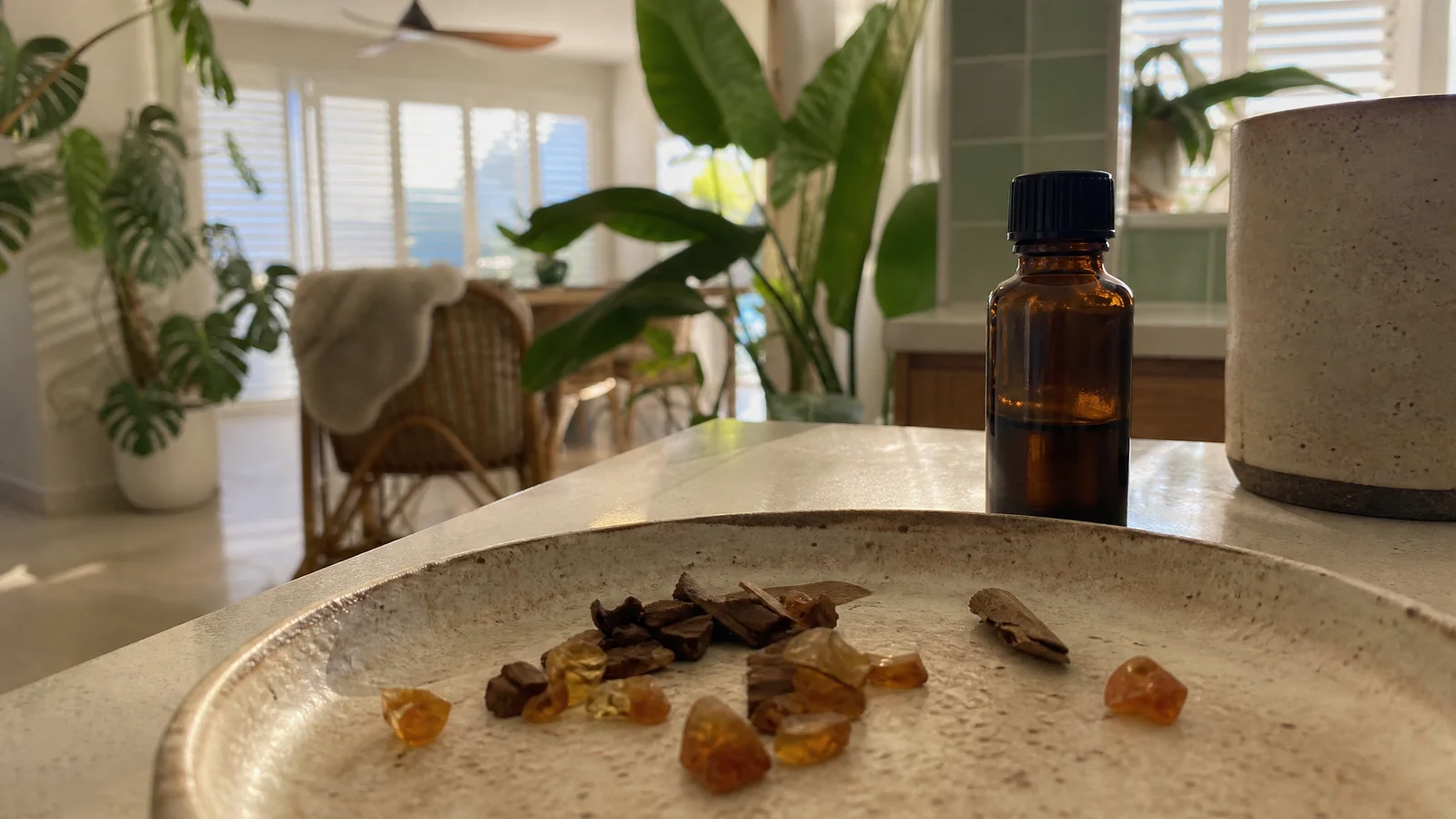
A pleasant smell can still be a lovely part of an evening. A scent you enjoy, used at the same point every night, can become a cue that the day is over. That is personal preference rather than a sleep treatment, and it is how we think about our own oil. We sell Amyris balsamifera as an external cosmetic oil, and we do not make sleep claims for it, because the US Food and Drug Administration's page on aromatherapy treats claims like helping with sleep as drug claims. What our oil offers is its aroma, which we describe as creamy, woody and balsamic. If a warm wood scent appeals to you, it is a good oil to know. Our post on amyris and sleep says more about where we stand.
Keeping it comfortable
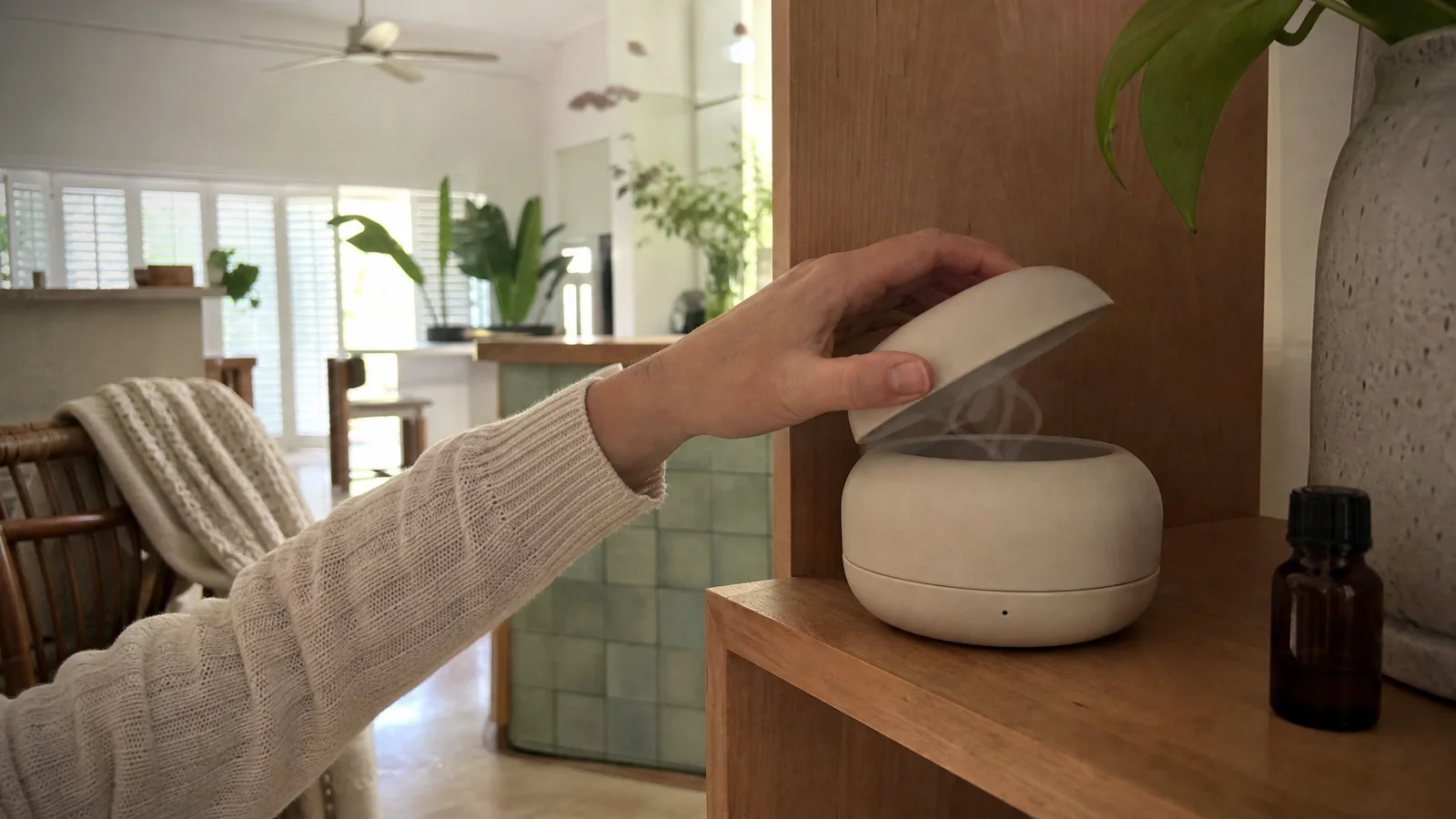
A few easy habits keep scent pleasant. The Tisserand Institute's safety guidelines describe diffusing intermittently, 30 to 60 minutes on and 30 to 60 minutes off, with some fresh air exchange. A diffuser on a timer, or a drop on a tissue, suits the guidance better than an open bottle beside your pillow all night. Our guides to using a diffuser and to diffusing safely cover the details.
The National Center for Complementary and Integrative Health notes on its lavender page that inhaled lavender is considered possibly safe but can cause headache or coughing, that it may interact with sedatives, and that little is known in pregnancy or breastfeeding. If you take sedating medicines, are pregnant or nursing, or are choosing for a young child, check with a physician, pharmacist or pediatrician first. Essential oils are not for swallowing.
If you want the wider picture of what aromatherapy can and cannot do, our beginner's guide is a good next stop, and our post on stress and scent looks at the same question for daytime.
Amyris Essential Oil
Amyris Essential Oil from our own shop, in sizes from 0.5 oz to bulk.
From $23.99
Shop Now →Sources & Further Reading
- Shen H., Zhang L.-J., Zhu W.-Y., 2025. The sleep-enhancing effect of lavender essential oil in adults: a systematic review and meta-analysis. Holistic Nursing Practice. pmc.ncbi.nlm.nih.gov
- Cheong M.J. et al., 2021. Clinical effects of aroma inhalation therapy on sleep problems. Medicine (Baltimore) 100(9):e24652. pmc.ncbi.nlm.nih.gov
- Fismer K.L., Pilkington K., 2012. Lavender and sleep: a systematic review of the evidence. European Journal of Integrative Medicine. researchportal.port.ac.uk
- American Academy of Sleep Medicine, December 2020. New guideline supports behavioral and psychological treatments for insomnia. aasm.org
- NHS. Insomnia. nhs.uk
- NCCIH. Lavender: usefulness and safety. nccih.nih.gov
- Tisserand Institute. Safety guidelines. tisserandinstitute.org
- US Food and Drug Administration. Aromatherapy. fda.gov