Scented Hair Oil: Why the Carrier Comes First
Imagine a small bottle of hair oil on your shelf. If you made it with a 1% blend of essential oil, 99% of what is in the bottle is carrier. That one fact reshapes how to think about scented hair oils: the oil you choose to carry the fragrance matters more than the fragrance, and the fragrance is where the fun is.
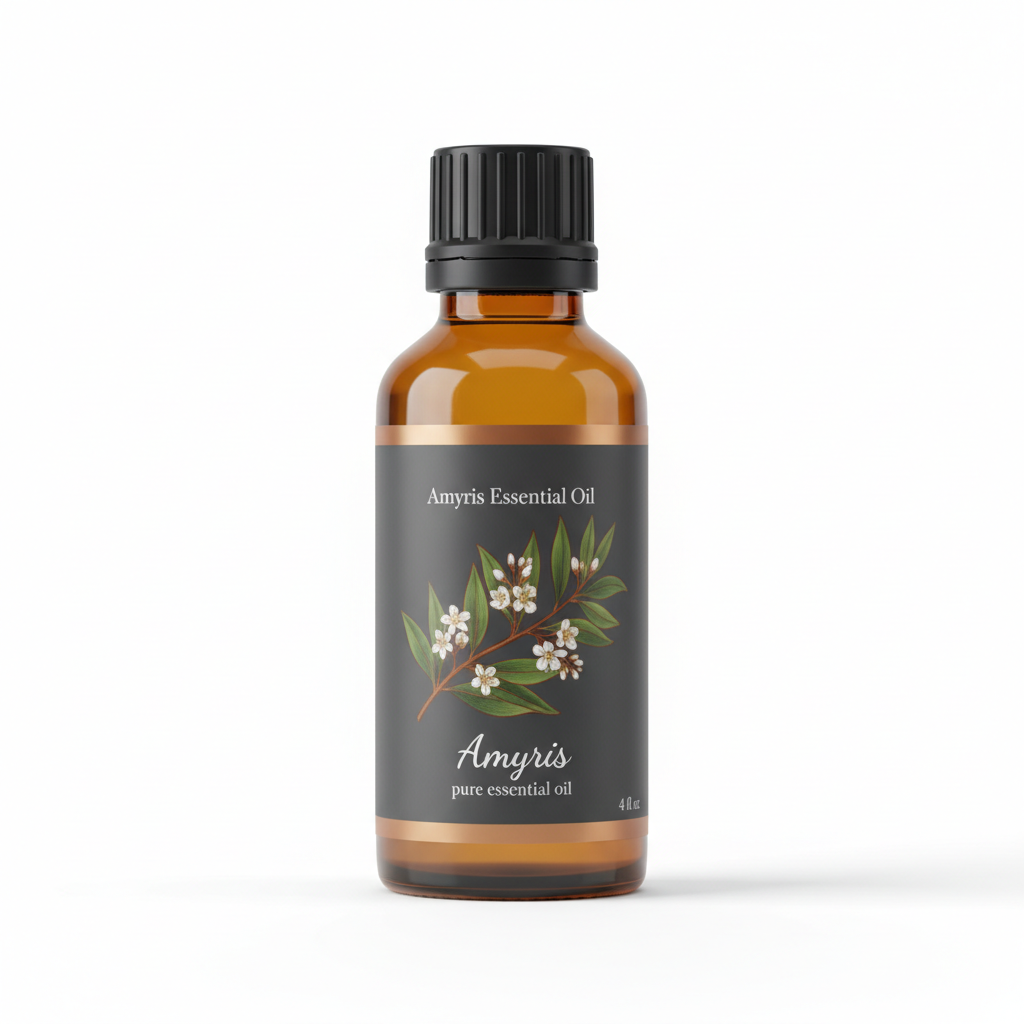
Amyris Essential Oil
Our own Amyris Essential Oil, in sizes from 0.5 oz to bulk.
From $23.99
Shop Now →The carrier does the work on the hair
The best-documented finding about oil and hair fibre involves a carrier, not an essential oil. Rele and Mohile (Journal of Cosmetic Science, 2003) compared mineral, sunflower and coconut oil for protein loss from hair, in laboratory and in-use tests. Coconut oil was the only one of the three that clearly reduced protein loss, on both undamaged and damaged hair. The authors credit its small, straight-chained lauric acid triglyceride, which they say can enter the hair shaft. That is a laboratory result about one carrier, and it is not something we claim for our oil.

The practical lesson is a happy one. Choose a carrier you like on your hair first. We do not sell carriers, so look to a craft shop, pharmacy or grocery, and our carrier oils guide compares the common options. Then add fragrance on top.
Where a woody scent fits
Amyris is a good example of a fragrance oil people like to carry in a hair or scalp-massage oil: a creamy, woody, balsamic aroma that sits low and lasts. We sell it undiluted as an external cosmetic oil, so it needs a carrier before it goes near skin, which is exactly what you are making. We make no claims about hair growth, thickness or scalp conditions for it, and none of the blending below is meant to treat anything. It is about scent.
Choosing the scent itself
Fragrance in your hair sits right under your nose all day, so quiet is better than loud. A soft woody base note like amyris is easy to live with because it stays low rather than announcing itself. Smell your blend on a paper strip, wait ten minutes, and ask whether you would still like it at noon. If it already feels strong at the lowest amount in the table below, that is your answer.
How much to use
Robert Tisserand's dilution guidance lists 0.5 to 1.2% for facial cosmetics and other sensitive areas, 1 to 3% for body oils and lotions, and 2 to 4% for wash-off products. It has no scalp category. The scalp is closer to the sensitive range than to body massage, so our reasoning is to stay at or below 1% for a leave-in oil, even though our own guidance for amyris is 0.5% to 2% in a carrier. At about 30 drops per millilitre, the arithmetic looks like this:
| Finished volume | 0.5% | 1% |
|---|---|---|
| 10 mL | 1.5 drops | 3 drops |
| 30 mL (about 1 oz) | 4.5 drops | 9 drops |
| 60 mL (about 2 oz) | 9 drops | 18 drops |
Drop size runs from about 20 to 40 per millilitre, according to the Tisserand Institute, so the 1% column really lands between roughly 0.75% and 1.5%. Starting at 0.5% is a gentle way to begin, and our dilution chart shows two drop sizes side by side.
Making a small first bottle
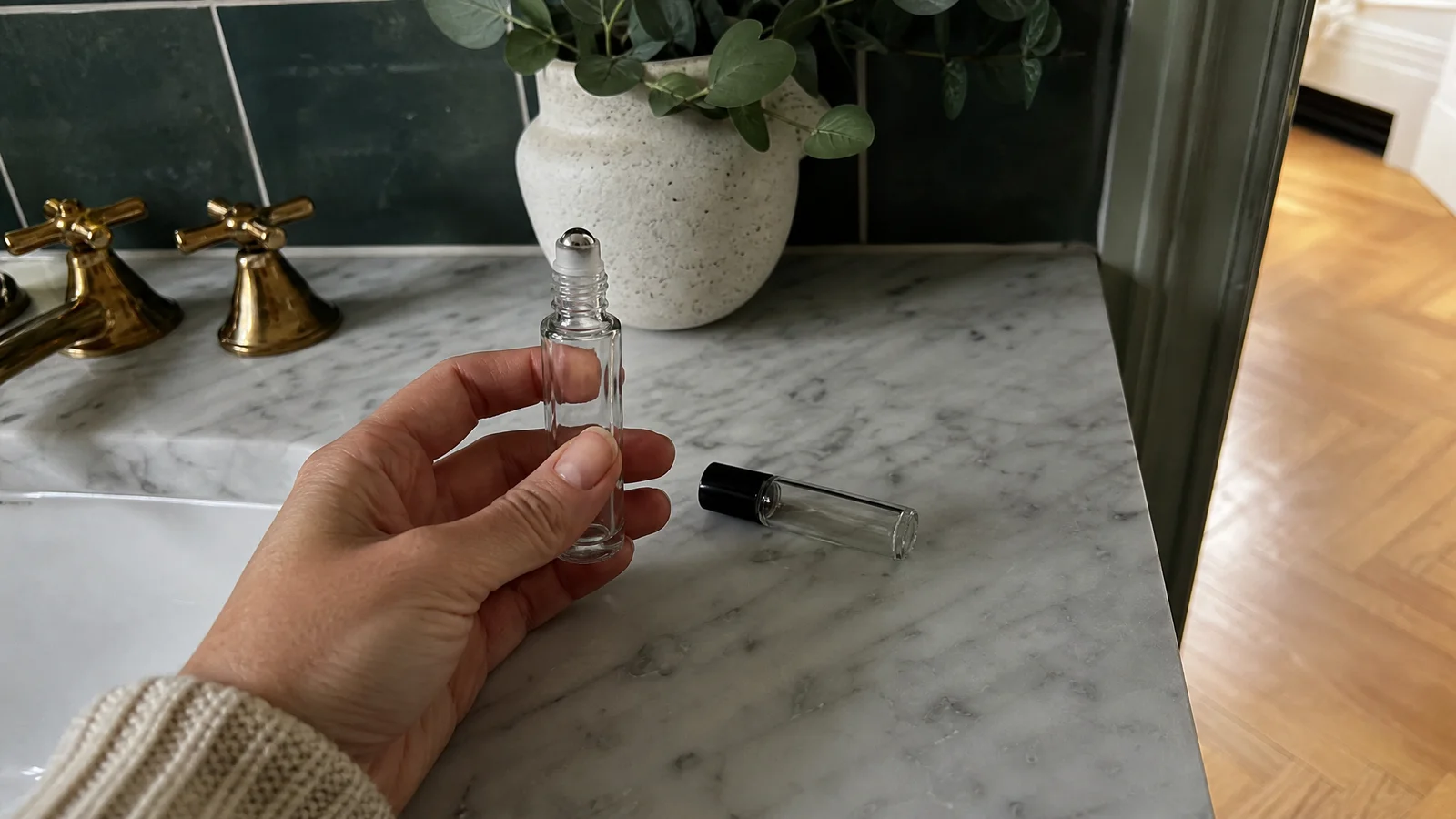
- Start with a clean, dry amber glass bottle of about 30 mL, so a mistake is a small one.
- Fill it with your carrier, leaving a little room at the top.
- Add the drops from the table above, then cap and roll the bottle between your palms.
- Label it with the carrier, the oil, the percentage and the date.
- Wait a day and smell it again before you decide it needs changing.
To use it, warm a few drops between your palms and work them through the lengths and ends. Go lighter than you think you need to, since oil marks pillowcases and collars.

Keeping the oil fresh
A daily hair oil gets opened a lot, so storage is worth a thought. Hausen, Reichling and Harkenthal (1999) found that oxidized tea tree oil was a much stronger skin sensitizer than fresh oil in guinea pigs, with peroxides rising quickly in light and air. We would not read that across to every oil, but the habit is sound for any of them: keep bottles closed, cool and dark, and replace a bottle that has changed in smell. Do the patch test before you use a new blend on your scalp, and keep it away from your eyes.
Keeping the habit simple
A scented hair oil does not need a long ingredient list. One carrier you like and one fragrance you enjoy is a better starting point than a shelf of experiments, because you will know exactly which part you are smelling and feeling. If you change something, change only one thing at a time and write it on the label. Small, dated bottles make that easy, and they use up quickly enough that nothing sits around getting stale.
When to see someone
If you are worried about shedding, thinning, patchy loss or a scalp that is itchy, sore or flaky, a dermatologist can work out what is going on, and that is a different conversation from choosing a scent. Skip scented scalp oils on broken or inflamed skin, and ask an OB-GYN or midwife first if you are pregnant. Keep oils away from children and pets.
A scented hair oil is a small everyday luxury: a carrier you like, a few drops of a woody fragrance, a label with the date.
Amyris Essential Oil
Amyris Essential Oil from our own shop, in sizes from 0.5 oz to bulk.
From $23.99
Shop Now →Sources & Further Reading
- Rele A.S., Mohile R.B., 2003. Effect of mineral oil, sunflower oil, and coconut oil on prevention of hair damage. Journal of Cosmetic Science. europepmc.org
- Tisserand Institute. Dilution for essential oils. tisserandinstitute.org
- Tisserand Institute. How big is a drop? tisserandinstitute.org
- Hausen B.M., Reichling J., Harkenthal M., 1999. Degradation products of monoterpenes are the sensitizing agents in tea tree oil. American Journal of Contact Dermatitis. pubmed.ncbi.nlm.nih.gov