Sandalwood Alternatives Compared: Amyris, Cedarwood, and Ho Wood
Genuine sandalwood oil is extraordinary. It is also expensive, often ethically complicated to source, and increasingly difficult to find in consistent quality. If you have ever tried to build a woody base note on a real budget, you already know the problem. Three oils come up again and again as sandalwood alternatives: amyris, cedarwood, and ho wood. Each has genuine strengths. None is a perfect replacement. What they offer depends entirely on what you need.
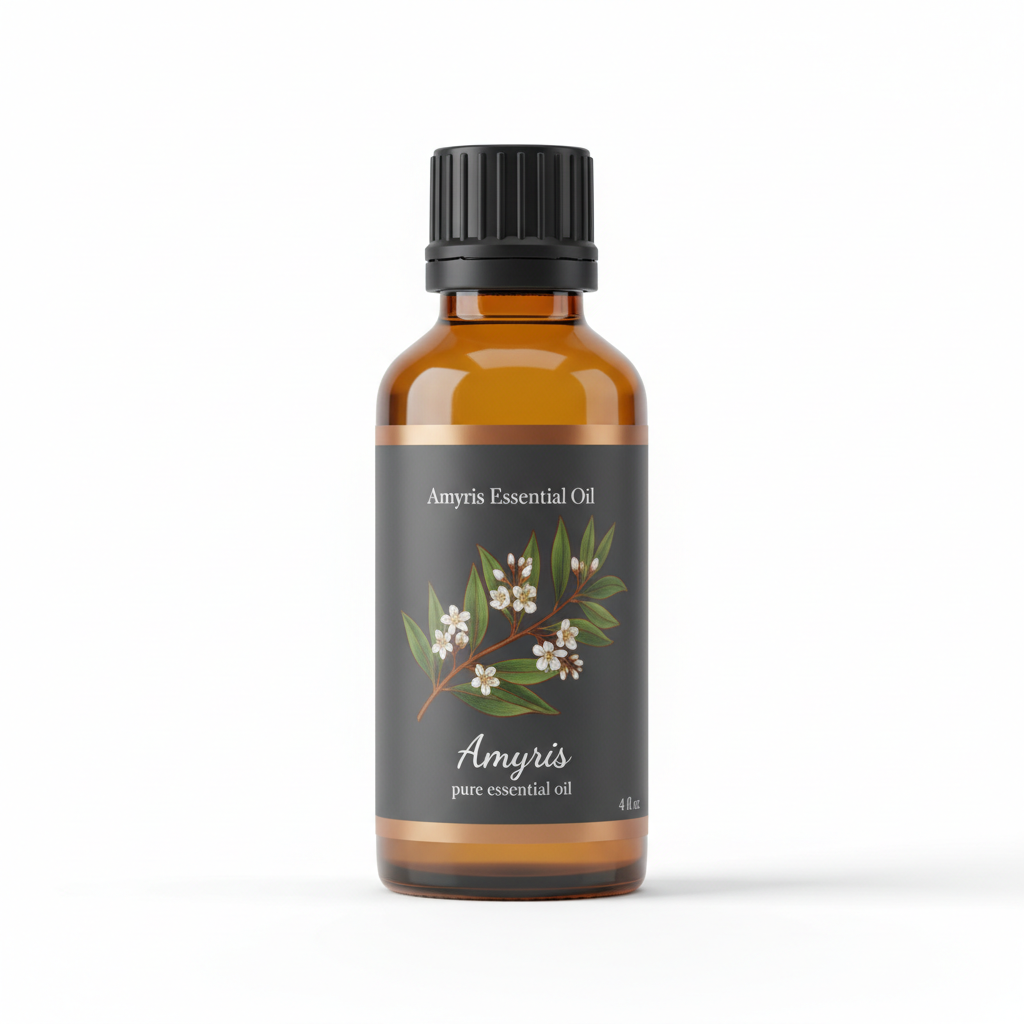
Amyris Essential Oil
Our own Amyris Essential Oil, in sizes from 0.5 oz to bulk.
From $23.99
Shop Now →This guide breaks down all three honestly, with a structured comparison, clear pros and cons, and practical recommendations by use case. No hype. Just the details you need to make a smarter purchasing decision.
Why People Look for a Cheaper Sandalwood Substitute
Mysore sandalwood (Santalum album) costs anywhere from several hundred to over a thousand dollars per kilogram at wholesale, depending on grade and origin. Australian sandalwood (Santalum spicatum) is more accessible but still sits at a significant price point. For small-batch perfumers, indie cosmetic formulators, and home DIY enthusiasts, that cost adds up fast.
Beyond price, there are sourcing concerns. Sandalwood has a documented history of overharvesting in its native regions. Certified sustainable sources exist, but they command a premium. Many formulators prefer to build woody base structures with more readily available, lower-impact materials while reserving true sandalwood for signature blends or special editions.
That is where amyris, cedarwood, and ho wood enter the conversation. Each brings something different to the table, and understanding those differences is what separates a flat-smelling base from a genuinely satisfying one.
Quick Profiles: Know What You Are Working With
Amyris (Amyris balsamifera)
Amyris is steam-distilled from the wood of a small tree native to Haiti and other parts of the Caribbean. It earned the nickname "West Indian sandalwood" in the trade, though botanically it has no relation to true sandalwood. The scent is soft, milky-woody, and faintly sweet with a smooth, almost creamy dry-down. Its key chemical constituent is valerianol, which gives it that distinctive mellow character. It is one of the most affordable woody base oils available, and it functions as a natural fixative that helps fragrance blends last longer on skin.
Cedarwood
"Cedarwood" is actually a family of oils, most commonly Virginia cedarwood (Juniperus virginiana), Atlas cedarwood (Cedrus atlantica), and Himalayan cedarwood (Cedrus deodara). Virginia cedarwood is the most widely sold, with a dry, pencil-shaving woody scent that is crisp and clean. Atlas tends toward a warmer, slightly smoky and balsamic character. The chemistry varies across types, but cedrol is a dominant constituent in most, contributing to their fixative properties and round, earthy dryness.
Ho Wood (Cinnamomum camphora ct. linalool)
Ho wood is distilled from the wood of the camphor tree, specifically from a chemotype that produces high levels of linalool rather than camphor. The result is a gentle, clean, floral-woody scent. It is often used as a more sustainable alternative to rosewood (Aniba rosaeodora), which is critically endangered, but its soft creaminess also places it in comparisons with sandalwood. Ho wood tends to sit in the middle register between floral and woody, making it more versatile in some blends.
Amyris Cedarwood Comparison: Scent Side by Side
Scent descriptions only go so far. If you are choosing between these oils for a specific project, the nuances matter.
- Amyris reads as warm, smooth, and slightly milky. It blends almost invisibly into a composition, supporting other notes without asserting itself. People often describe it as "quiet" or "soft-focused."
- Cedarwood (Virginia) is dry and woody with a clean, almost office-supply sharpness from the pencil-cedar quality. It reads as more masculine and linear in the opening, rounding out in the dry-down.
- Cedarwood (Atlas) is warmer, slightly resinous, and more complex than Virginia. It sits closer to amyris in character, though it still has a crisper, drier edge.
- Ho wood is the most floral of the three. Its linalool-forward profile gives it a shared quality with lavender and rose, layered beneath a light, clean woodiness. It is the least "earthy" option here.
For a deeper dive into how amyris specifically fits into scent structures, the complete guide to amyris in perfumery covers blending ratios, accords, and notes families in detail.
Comparison Table: Key Attributes at a Glance
| Attribute | Amyris | Cedarwood (Virginia) | Cedarwood (Atlas) | Ho Wood |
|---|---|---|---|---|
| Scent character | Soft, milky-woody, sweet dry-down | Dry, pencil-cedar, clean | Warm, slightly smoky, balsamic | Floral-woody, clean, linalool-bright |
| Note position | Base, fixative | Base to mid | Base | Mid to base |
| Typical price range | Very low ($3-$8 per oz retail) | Very low ($3-$7 per oz retail) | Low-moderate ($8-$15 per oz retail) | Moderate ($10-$20 per oz retail) |
| Fixative strength | High | Moderate-high | Moderate-high | Moderate |
| Sandalwood similarity | Moderate (milky warmth) | Low (drier, sharper) | Low-moderate (warmer, but dry) | Low-moderate (creamy, but floral) |
| Skin use suitability | Good (well-tolerated) | Good (patch test advised) | Good (patch test advised) | Good (well-tolerated) |
| Sustainability profile | Generally positive | Generally positive | Look for certified sources | Generally positive |
| Primary cosmetic uses | Perfume, lotion, beard oil, soap | Perfume, diffuser, hair care | Perfume, skincare, diffuser | Perfume, lotion, diffuser |
Price ranges are approximate retail figures and vary by supplier, grade, and batch size. Always verify current pricing with your chosen supplier.
Pros and Cons
Amyris
- Pro: Exceptionally affordable. One of the lowest-cost base notes available.
- Pro: Strong fixative properties help anchor a blend and extend longevity.
- Pro: Smooth, non-polarizing scent that layers well with almost any accord.
- Pro: Widely available from reputable suppliers.
- Con: Scent is quiet rather than distinctive. It supports blends rather than starring in them.
- Con: The milky-woody quality is the closest to sandalwood, but the creaminess is softer and less complex than genuine Santalum album.
- Con: Some batches can smell slightly medicinal if quality control is poor. Sourcing from a reputable supplier matters.
Cedarwood (Virginia)
- Pro: Widely available, very affordable, and reliable in quality.
- Pro: Clean, dry woodiness works beautifully in masculine and fresh accords.
- Pro: Useful fixative for longer-lasting blends.
- Con: Scent is distinctly different from sandalwood. The pencil-cedar note can dominate lighter compositions.
- Con: Less creamy or warm than amyris or Atlas cedarwood.
- Con: The label "cedarwood" covers multiple species with different profiles. Knowing which type you are buying is important.
Cedarwood (Atlas)
- Pro: Warmer and more complex than Virginia. Sits closer to a resinous, balsamic character that complements oriental and woody fragrance families.
- Pro: Strong fixative with good blending versatility.
- Con: Higher price point than Virginia cedarwood.
- Con: Sustainability sourcing requires more attention. Look for suppliers with clear origin documentation.
- Con: Still considerably drier than sandalwood. Not a close substitution in a sandalwood-forward formula.
Ho Wood
- Pro: Clean, gentle scent that bridges floral and woody. Excellent for personal care products targeting soft, fresh profiles.
- Pro: High linalool content gives it a naturally smooth skin feel in cosmetic applications.
- Pro: Generally well-tolerated.
- Con: More expensive than amyris or Virginia cedarwood.
- Con: The floral aspect can pull a blend away from a purely woody direction.
- Con: Less commonly stocked by small suppliers, so availability can be inconsistent.
Best For: Recommendations by Use Case
Soap and Candle Making
Best choice: Amyris or Virginia Cedarwood. Both survive high-temperature processes reasonably well and are priced low enough for large-batch use. Amyris adds warmth and a soft, powdery quality. Virginia cedarwood brings a clean, dry woodiness that pairs well with citrus and green top notes in candle accords.
Natural Perfumery (Alcohol-Based)
Best choice: Amyris for a sandalwood-adjacent base. Atlas Cedarwood for a resinous oriental anchor. In alcohol-based perfume, amyris performs particularly well as a supportive base note and fixative. For a deeper look at how it functions in fragrance structures, the side-by-side comparison of amyris and sandalwood is worth reading before you finalize your formula.
Facial and Body Skincare (Diluted in Carrier Oil)
Best choice: Ho Wood or Amyris. Both are well-suited to skin applications at standard dilution rates (typically 1-2% for facial use, up to 3% for body). Always perform a patch test before applying any essential oil blend to a larger skin area, and consult a qualified formulator or dermatologist if you have sensitive skin or specific concerns.
Beard Oils and Hair Care
Best choice: Amyris. Its smooth, creamy-woody scent performs well in oil-based cosmetic products and does not overpower lighter carrier oils. It blends naturally with complementary notes like vetiver, patchouli, and light citruses that are common in beard care formulas.
Reed Diffusers and Room Sprays
Best choice: Virginia Cedarwood or Atlas Cedarwood. The drier, more assertive character of cedarwood registers more clearly in open-air diffusion than the softer amyris. Atlas cedarwood in particular creates a warm, grounding atmosphere in a room that many people associate with calm evening environments.
Budget-Conscious Blending (Large Batches)
Best choice: Amyris or Virginia Cedarwood. For cost-per-ounce, these two are consistently the most accessible options. Amyris delivers more warmth per drop in a sandalwood direction. Virginia cedarwood is the better choice if you want a clean, dry wood note without worrying about budget.
Safety Notes for All Three Oils
All essential oils require proper dilution before any skin contact. Standard guidelines recommend 1-3% dilution in a carrier oil for most adult cosmetic applications, with lower rates for facial products. Patch testing on a small area of skin 24 hours before full use is always a sensible step. Keep all essential oils away from children and pets, and store them away from heat and direct sunlight.
Consult a qualified healthcare provider before using any essential oil product if you are pregnant, nursing, or have any existing health considerations.
The Verdict
No single oil replaces sandalwood across every application. That is the honest answer. But if the goal is finding a genuinely useful, affordable woody base note that carries a warm and slightly milky character, amyris is the most practical starting point. It is inexpensive, widely available, blends cooperatively, and its fixative qualities add real value to a formula.
Virginia cedarwood is the better pick when you want a clean, dry woodiness and price is the primary consideration. Atlas cedarwood earns its slightly higher cost in oriental and resinous blends where warmth and complexity matter. Ho wood is the choice for soft, floral-woody profiles where the linalool quality is a feature rather than a compromise.
For most formulators building a woody base on a working budget, the practical move is to start with amyris as your foundation and layer cedarwood or ho wood to add dimension. A blend of two or three of these oils will often come closer to a full sandalwood character than any single substitute can on its own. Start with small test batches, take notes, and adjust ratios until the accord reads as the profile you are building toward.
The cost savings compared to true sandalwood are real enough that you can afford to experiment.