Organic vs Conventional Essential Oils: What the Label Means
"Organic" describes how a crop was grown and handled, not what a lab would find in the bottle. Our amyris oil is not certified organic and we do not claim it is. Whether that matters to you depends on which of three things you are really buying: a label, a lower pesticide risk, or an ingredient for a product you plan to call organic yourself.
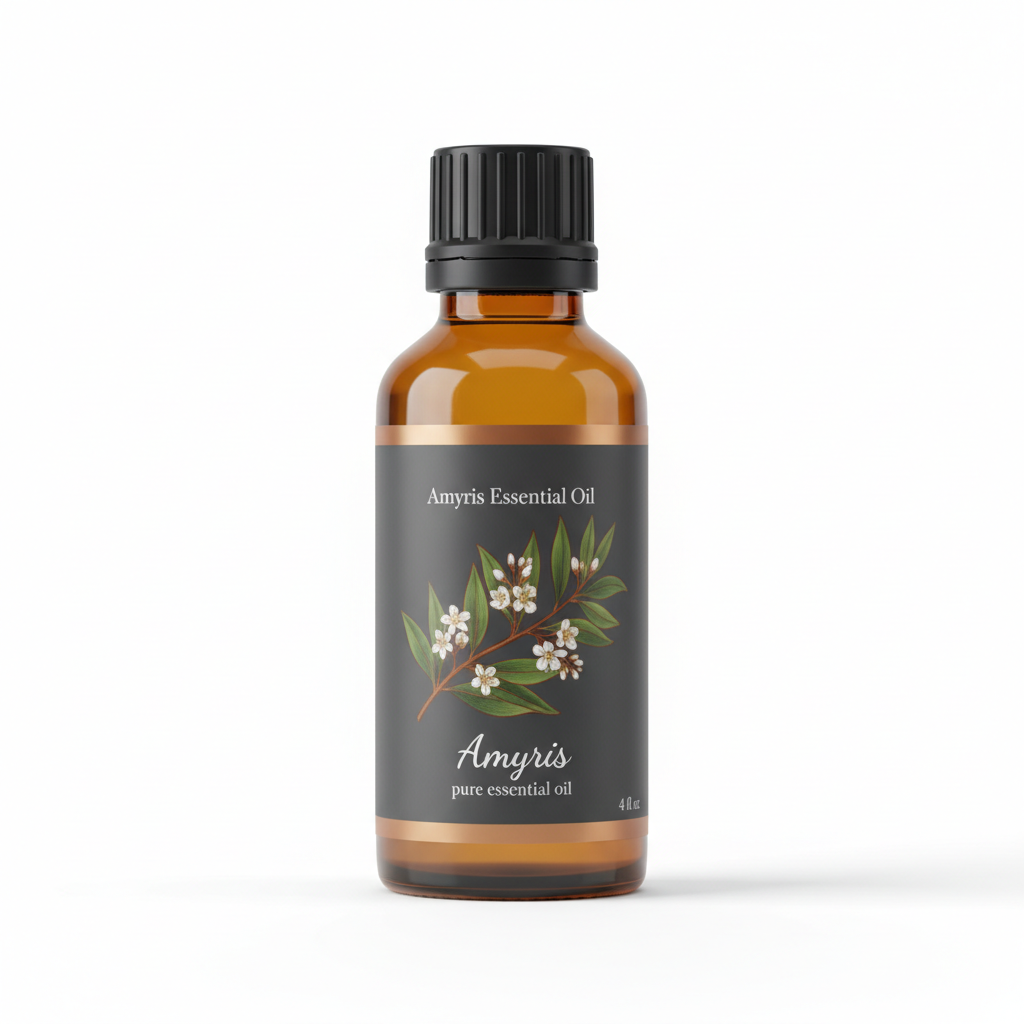
Amyris Essential Oil
Our own Amyris Essential Oil, in sizes from 0.5 oz to bulk.
From $20.99
Shop Now →What the word can legally mean on a US bottle
The FDA does not define "organic" for cosmetics. Its page on organic cosmetics (content current as of February 2022) says the term "is not defined in either of these laws or the regulations that FDA enforces," and sends readers to the USDA National Organic Program (NOP). The USDA's fact sheet on cosmetics and personal care products (April 2008) lays out the rules for anything that contains agricultural ingredients:
- The operations that grow the organic ingredients, the handlers of those ingredients and the manufacturer of the finished product must all be certified by a USDA-accredited certifying agent.
- Certified products fall into four label categories: "100 percent organic," "organic" (at least 95 percent organic ingredients, excluding water and salt), "made with organic ingredients" (at least 70 percent), and under 70 percent, which cannot use the word "organic" on the front panel.
- The first two categories must show the certifying agent's name and address.
- A product that does not meet the standards "may not state, imply, or convey in any way" that it is USDA-certified organic or meets the USDA organic standards.
- Private standards, including foreign organic standards and eco-labels, can still be used in the US, and the fact sheet says the NOP does not regulate those labels.
The fact sheet is from 2008, so check the current NOP pages before relying on a threshold. The structure is what matters for a buyer. Reasoning from it: a bottle that says "organic" and names no certifier is making either a private-standard claim or an unverifiable one, and the certifier's name and address on a USDA-labelled product is the thing to look for and ask about.
What certification does not promise about residues
A common assumption is that organic means "tested free of pesticides." The regulation is narrower. Under 7 CFR 205.671, a product is excluded from organic sale when residue testing finds prohibited substances at more than 5 percent of the EPA tolerance for that residue, or finds unavoidable residual environmental contamination. The section does not say that any detectable residue disqualifies a product; the level is the trigger. Certification concerns production, handling and processing standards. A residue result is a separate piece of paper, and the two should not be confused.
What distillation does to pesticides, and why it depends on the oil
The comforting claim is that steam distillation leaves pesticides behind in the plant material. Sometimes it does not. A 2005 Egyptian field study of malathion on dill and coriander (Mohamed and colleagues, abstract in the FAO AGRIS record) reported that the steam-distilled oil contained more insecticide than the seed it came from: about sevenfold more in dill oil (5.21 mg/kg) and nineteenfold more in coriander oil (10.16 mg/kg). The authors concluded that malathion co-distils with the oil. That is one insecticide on two seed crops, so it shows a mechanism is possible, not that every oil behaves this way.
The large-scale picture is more reassuring for distilled oils and less so for pressed ones. Klier and colleagues (2015, Pharmeuropa Bio & Scientific Notes) evaluated a database of 127,517 data sets compiled over eight years for a possible European Pharmacopoeia test. Positive results appeared in 1,150 cases (0.90 percent), and limits were exceeded in 392 cases (0.31 percent), "particularly in cases of oils produced by cold pressing." Their proposal was to test only where the production process or active pesticide use in cultivation makes residues a real concern. A 2025 Italian pilot study (Stefanelli and colleagues, Food Additives & Contaminants) sampled twelve essential oils from the market and found citrus oils the most contaminated, with variation between batches; it estimated no consumer health risk from the residues found.
What we did not find is a study comparing residues in certified-organic and conventional distilled oils head to head. The belief that organic oils carry fewer residues is plausible, since fewer synthetic inputs go on the crop, but nothing we read measured it. Treat it as reasoning, not as a result.
When organic is worth paying attention to
This ranking is our reasoning from the sources above, not a published rule.
- Cold-pressed citrus oils. Both the Klier database and the Stefanelli pilot point here. Cold pressing is the process both sources single out. If you would choose organic for any oil, these are the ones where the sources give a reason to.
- Oils from seed, herb and flower crops that are sprayed while growing. The dill and coriander study is this case. Klier and colleagues explicitly name crops where pesticides are actively used as the place residue testing is worth doing.
- Oils from wood or resin of tree species that are not sprayed as a crop. A residue report on the specific lot tells you more than an organic label does.
- Any oil going into a product you will label organic. Under the USDA structure above, the ingredient chain has to be certified, so the label on your finished product depends on the label on your oil.
Where our amyris stands, and who should look elsewhere
Our amyris is distilled from wood gathered in Haiti: naturally fallen branches and trunks, and pruning by-product, from farms where amyris grows as a boundary or shade tree. No living tree is felled for it. It is not a sprayed field crop, which puts it nearer the third group above than the first two. That is a description of the source, not a residue claim.
The USDA does have a route for wild-gathered material. 7 CFR 205.207 requires a designated area with no prohibited substances applied for the three years before harvest, and harvesting that is not destructive to the environment. We are not certified under it, or under any organic standard, so nobody independent has audited either condition for our wood. We also hold no pesticide residue data for our oil. Each lot goes to an independent third-party laboratory and the reports are available on request, but we cannot tell you a residue level, and we will not imply one.
So look elsewhere if you need a certificate: if you intend to label a finished product organic, if your own rule is certified-only, or if a buyer of your product requires it. If your concern is residues specifically, ask any supplier, us included, for a pesticide residue report on the lot you will receive, with the method and the limits it was judged against. Organic status also says nothing about skin safety, which comes from an oil's constituents and how far it is diluted; see our essential oil safety guide.
Four questions that sort out an "organic" claim
- Who is the certifier, and does the product show the certifier's name and address?
- Does the certificate's scope cover essential oils or the plant material, and is it current?
- Is there a lot-specific residue report, with the method and the limit it was compared with?
- Is the oil cold-pressed or distilled? The answer changes how much the residue question matters.
The same habit of asking for the document rather than trusting the word runs through our guides on choosing essential oils, adulteration, why prices vary and sustainability. How the oil itself is made is on our sourcing page.
Organic is a useful filter when a certificate or a citrus oil is involved, and a weak one for a distilled wood oil, where the lot's own test report says more. We would rather tell you plainly that our oil carries no organic certification than let a word on a label do work it has not earned.
Amyris Essential Oil
Amyris Essential Oil from our own shop, in sizes from 0.5 oz to bulk.
From $20.99
Shop Now →Sources & Further Reading
- FDA, content current as of February 2022. "Organic" Cosmetics. fda.gov
- USDA Agricultural Marketing Service, National Organic Program, April 2008. Cosmetics, Body Care Products, and Personal Care Products. ams.usda.gov
- US Code of Federal Regulations, Title 7, section 205.671, read October 2026. Exclusion from organic sale. law.cornell.edu
- US Code of Federal Regulations, Title 7, section 205.207, read October 2026. Wild-crop harvesting practice standard. law.cornell.edu
- Mohamed et al., 2005. Dissipation of malathion in dill and coriander plants and their oils (abstract). agris.fao.org
- Klier, Knödler, Peschke, Riegert and Steinhoff, 2015. Pesticide residues in essential oils: evaluation of a database. Pharmeuropa Bio & Scientific Notes. europepmc.org
- Stefanelli, Buratti, Girolimetti and Testai, 2025. Determination of pesticide residues in essential oils and related risk assessment for consumers: a pilot study. europepmc.org