Natural Home Fragrance: What the Air-Quality Studies Say
"Natural" tells you where a scent came from, not what it puts into the air of your home. The emissions studies on scented products that we read for this guide found no meaningful difference for products sold as green, and none of them treated a natural label as a measure of what ends up in the air. The sensible plan for a home that smells good is therefore not to buy the right kind of natural product but to remove odour sources first, ventilate, choose one scent source at a time, and keep the total small.
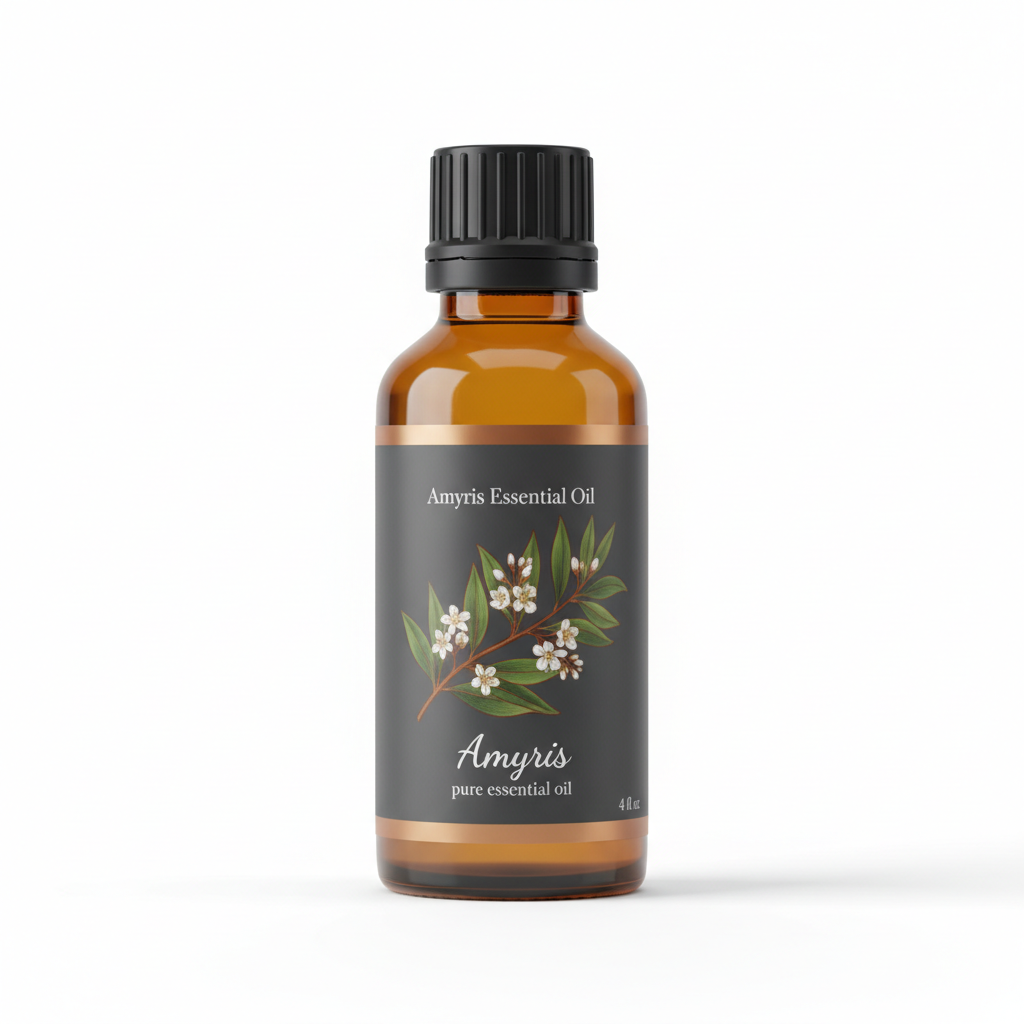
Amyris Essential Oil
Our own Amyris Essential Oil, in sizes from 0.5 oz to bulk.
From $20.99
Shop Now →What the emissions studies measured, and what they did not
The U.S. EPA's page on volatile organic compounds and indoor air quality (undated page, read October 2026) lists air fresheners among household sources of VOCs and reports that levels of several organic compounds average 2 to 5 times higher indoors than outdoors, based on its 1985 TEAM study. Its steps to reduce exposure begin with increasing ventilation when using products that emit VOCs and, where possible, identifying and removing the source.
Two papers by Anne Steinemann and colleagues put numbers on fragranced products. Steinemann et al. (Environmental Impact Assessment Review, 2011) measured 25 fragranced products, including air fresheners, laundry, cleaning and personal care items, and identified 133 different VOCs, about 17 per product. Of those, 24 are classed as toxic or hazardous under U.S. federal law, and every product emitted at least one. Emissions from the products sold as "green" did not differ significantly from the rest. Only one of the VOCs appeared on any label and only two on any safety data sheet, which the authors link to U.S. rules that do not require listing the ingredients of a "fragrance" mixture. A 2015 follow-up by Steinemann in Air Quality, Atmosphere and Health covered 37 products, found 156 VOCs, 42 of them classed as toxic or hazardous, again in every product, and found terpenes to be the most common chemicals in fragranced products and absent from the fragrance-free versions. Under 3% of the volatile ingredients were disclosed.
The limit, in the authors' own words: both studies measured what products emit and what labels list, not exposure or health effects, so they make no claim about risk from use. They also did not test essential oils as such; terpenes are the chemistry of both synthetic and plant-derived fragrance. What the studies do support is narrower and still useful: a "green" or "natural" claim is not evidence of lower emissions, and the label will not tell you what is in the air.
What a label claim legally has to mean
The Federal Trade Commission's Green Guides, at 16 CFR 260, say that it is deceptive to misrepresent that a product offers a general environmental benefit (section 260.4) and that a "non-toxic" claim likely conveys that the product is non-toxic for humans and the environment generally, so the marketer should have competent and reliable scientific evidence or qualify the claim (section 260.10). Those are guides for marketers, not a safety standard for you, but they are a good reading rule: an unqualified "non-toxic home fragrance" is a claim that is hard to substantiate. We do not use that wording for our oil. On cosmetics, the FDA's fragrance page shows the same single-word disclosure: fragrance and flavor ingredients can be listed simply as "Fragrance," and the agency says it lacks the legal authority to require allergen labeling for cosmetics that it has for food.
Step one is the source, not the scent
The EPA's first step is to find and remove the source. In a home, that means the thing that smells: the bin, the drain, the damp towel, the pet bed, the fridge shelf. A scent added on top of an odour source adds a second set of airborne chemicals to the first. That ordering is reasoning from the EPA's guidance, not a tested method, but we would not skip it. Our own oil is a good example of what it does not do: amyris is a woody, balsamic base note, and it cannot cancel a smell; it layers on top of one.
Step two is ventilation. The EPA advises opening windows and increasing ventilation when using VOC-emitting products. Run the scent source while you can open a window, rather than in a closed room for the evening.
Diffusers: the best-studied format
Ultrasonic diffusers are the format with the most published emissions work, and the findings are specific:
- Schwartz-Narbonne, Du and Siegel (Indoor Air, 2021) ran lemon, lavender, eucalyptus and unscented grapeseed oil through ultrasonic diffusers in a chamber. Particulate matter below 1 micrometre was emitted at about 2 mg per hour for lemon, 0.1 mg per hour for lavender and eucalyptus, and 3 mg per hour for the grapeseed oil, with eucalyptus about fivefold higher using tap water than deionized water. The authors conclude that reasonable use of these diffusers can contribute substantially to indoor particulate matter, depending on the oil and the water. The unscented control matters: it means some of the particles come from the mist itself and the water, not only the fragrance.
- Zisook et al. (Journal of Occupational and Environmental Hygiene, 2025) compared an ultrasonic and a heat diffuser running tea tree oil in a household simulation. Terpene levels with the ultrasonic unit stayed below the applicable exposure limits; with the heat diffuser they were roughly an order of magnitude higher, and several terpenes exceeded long-term derived no-effect levels. It was a pilot-scale test of one oil.
- Kim et al. (Science of the Total Environment, 2023) gave 50 volunteers wearable samplers and found that diffuser use raised limonene, pinenes and gamma-terpinene in cars and studio apartments, with average limonene in cars reaching 11 micrograms per cubic metre, about 30 times the pre-use level. The authors called for cautious use in small spaces.
- Du et al. (Indoor Air, 2022) randomised 59 students to lemon oil in an ultrasonic diffuser against deionized water, and reported that exposure shortened reaction time but worsened response inhibition and memory sensitivity; unscented grapeseed oil gave similar effects. It is one small simulated-office experiment.
Terpene chemistry does not stop at the air you breathe. Patra et al. (ACS ES&T Air, 2024) measured scented products in a residential building and reported that they raised indoor terpene levels to 10 to 1,000 parts per billion and that terpenes reacting with indoor ozone formed new nanoparticles, with respiratory dose rates the authors describe as comparable to or higher than gas stoves and diesel engines. That finding is from field measurements in one setting, and the authors' dose comparison is a modelled one. Our diffusing safety article and the guides to using a diffuser and diffuser types go further on the machines.
The other formats, honestly graded
For sprays, reed diffusers, simmer pots and candles we read no emissions study of the kind above, so the table says "no source read" and gives only reasoning.
| Format | What a source supports | Reasoning only |
|---|---|---|
| Ultrasonic diffuser | Emits VOCs and fine particles; water type and oil change the amount (2021); stays below limits in one tea tree test (2025) | Run it intermittently, in a ventilated room |
| Heat diffuser or simmer pot | One tea tree pilot found terpene levels about ten times higher with a heat diffuser (2025) | Heating raises evaporation rate; a simmering pot is the same logic and should be treated like a heat diffuser |
| Room spray, linen spray | No source read | Short bursts, away from fabric you will not wash; see the room and linen spray recipe |
| Reed diffuser | No source read | Passive and continuous; a small neck opening limits the rate; see the reed diffuser recipe |
| Candle | No source read | Combustion adds to emissions; see the soy candle fragrance guide for load |
A room-by-room plan (reasoning, not a test)
Reasoning from the sources above, here is how we would approach the house. These are suggestions, not trialled routines.
- Kitchen and bathroom: source control and the extractor fan first, scent second. If you want a scent, a few drops on a cloth kept out of the cooking area is easier to remove than a diffuser running all day.
- Living room: one source, one room, with a window you can open. Use the diffuser for a set time, not all evening, because the emission rates in these studies are per hour of running.
- Bedroom: Kim et al. measured diffusers running while people slept in studio apartments, with raised terpene levels. We would not run any scent source continuously overnight.
- Car and other small spaces: the 30-times rise in limonene was in cars. Lower the dose or skip it.
- Rooms with children, pets or someone with asthma: skip scent sources unless a pediatrician, veterinarian or physician says otherwise; see our guides on children and pets. We also do not make claims for how essential oils affect lungs; a physician or allergist is the person to ask.
One more rule follows from the disclosure findings: limit the number of scented products in a room, because every scented laundry product, cleaner, candle and spray is its own emission source. If you want to know whether a product is an essential oil or a synthetic fragrance, our essential oil versus fragrance oil guide explains the labels.
Where amyris fits, and where it does not
We sell one oil, pure and undiluted Amyris balsamifera, and it does not make a home fragrance cleaner or safer; being plant-derived gives it no emissions advantage over the studies above. It does have one property that suits the "limit total fragrance" rule: it is a base note that helps citrus and floral top notes hold, so if you use it you are choosing it for how it anchors a blend, not for any air-quality benefit (we have no emissions or longevity data for amyris, and we have not trialled any home fragrance recipe). Sprays, reed bases, diffusers and candle wax are not products we sell, and we do not sell any other oil. The shop's own guidance applies to skin use only: dilute to 0.5% to 2% in a carrier oil, keep it away from eyes, children and pets, and do not take it internally.
The practical summary is five habits: remove the source, open a window, run one scent source at a time, keep it intermittent, and ignore the word "natural" on the label.
Amyris Essential Oil
Amyris Essential Oil from our own shop, in sizes from 0.5 oz to bulk.
From $20.99
Shop Now →Sources & Further Reading
- U.S. EPA, undated page, read October 2026. Volatile organic compounds' impact on indoor air quality. epa.gov
- Steinemann et al., 2011. Fragranced consumer products: chemicals emitted, ingredients unlisted (Environmental Impact Assessment Review). researchonline.jcu.edu.au
- Steinemann, 2015. Volatile emissions from common consumer products (Air Quality, Atmosphere and Health). researchonline.jcu.edu.au
- Federal Trade Commission, current e-CFR text read October 2026. Guides for the use of environmental marketing claims, 16 CFR Part 260. ecfr.gov
- U.S. FDA, undated page, read October 2026. Fragrances in cosmetics. fda.gov
- Schwartz-Narbonne, Du and Siegel, 2021. Volatile organic compound and particulate matter emissions from an ultrasonic essential oil diffuser (Indoor Air), abstract read via Europe PMC. ebi.ac.uk
- Zisook et al., 2025. Volatile organic compound and particle emissions from the use of tea tree oil in essential oil diffusers (Journal of Occupational and Environmental Hygiene), abstract read via Europe PMC. ebi.ac.uk
- Kim et al., 2023. Determination of terpene levels after the use of essential oil diffusers in vehicles and studio apartments (Science of the Total Environment), abstract read via Europe PMC. ebi.ac.uk
- Du et al., 2022. The impact of emissions from an essential oil diffuser on cognitive performance (Indoor Air), abstract read via Europe PMC. ebi.ac.uk
- Patra et al., 2024. Rapid nucleation and growth of indoor atmospheric nanocluster aerosol during the use of scented volatile chemical products in residential buildings (ACS ES&T Air), abstract read via Europe PMC. ebi.ac.uk