
How to Use Amyris Oil in Soy Candles: Fragrance Load and Cold Throw
Amyris essential oil brings a soft, woody backbone to soy candles that reads a little like sandalwood without the price tag. It is often used by candle makers as a base note to round out brighter top notes like citrus or lavender, or on its own for a quiet, warm profile. But amyris behaves differently than synthetic fragrance oils in wax: it is thinner, more volatile, and less standardized bottle to bottle. Getting a good cold throw (the scent strength you smell from an unlit candle) takes some testing, not guesswork. This guide walks through fragrance load percentages, pour steps, and how to run a proper cold throw test so your batches come out consistent.
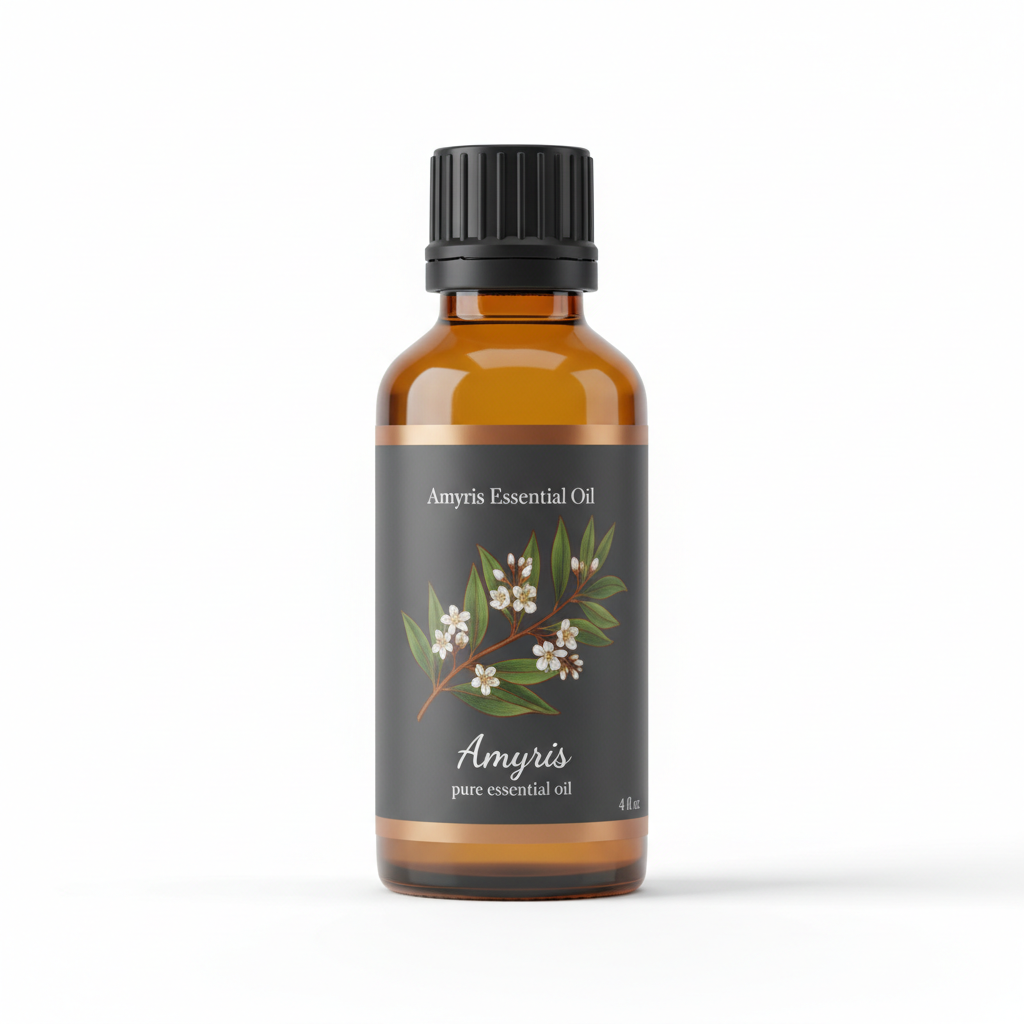
Amyris Essential Oil
Our own Amyris Essential Oil, in sizes from 0.5 oz to bulk.
From $22.99
Shop Now →What You'll Need
- Amyris essential oil (100% pure, from a supplier that provides a batch-specific GC/MS report)
- Natural soy wax flakes, additive-free or a soy blend rated for container candles
- Pre-tabbed cotton or wood wicks sized to your container diameter
- Heat-safe glass jars or tins
- A double boiler or dedicated wax melting pot (never melt wax directly over open flame)
- A pouring pitcher with a spout
- A digital kitchen scale that reads in grams
- A candle thermometer
- Wooden stir sticks or a metal whisk
- Wick stickers or hot glue dots, plus wick centering tools (clothespins work)
- A notebook or spreadsheet to log fragrance load, pour temperature, and results for each test batch
- Optional: complementary oils for blending, such as cedarwood, patchouli, or a light citrus
Understanding Fragrance Load for Amyris Oil in Soy Candles
Fragrance load is the percentage of fragrance oil by weight compared to the wax. Most soy wax manufacturers cap fragrance load between 6% and 10%, and it's worth checking your specific wax's data sheet before you start, since going over that limit can cause the oil to weep out of the finished candle or create a fire safety issue during burning.
Amyris essential oil has a naturally strong, resinous character, so many candle makers find that a 7% to 8% load gives a noticeable cold throw without pushing past the wax manufacturer's ceiling. Because amyris is a single-note essential oil rather than a pre-blended fragrance oil, its throw can run lighter than synthetic blends at the same percentage. If your first test batch smells too faint, raise the load in small half-percent increments on your next batch rather than jumping straight to the maximum.
Always weigh fragrance oil, never measure by volume. Essential oils vary in density, and a scale is the only way to get a repeatable fragrance load from batch to batch.
Step-by-Step: Making an Amyris Soy Candle
- Calculate your fragrance load. Weigh your empty pouring pitcher, then decide how much wax you'll melt (for a first test, 16 ounces of wax is a manageable amount). Multiply the wax weight by your chosen fragrance load percentage to get the amount of amyris oil in grams. For example, 450 grams of wax at 7% load calls for about 31.5 grams of amyris oil.
- Prep your workspace. Line up your containers, wicks, and tools before you start melting. Wax sets up faster than beginners expect, and scrambling to find a stir stick while wax cools can throw off your pour temperature.
- Melt the wax slowly. Use a double boiler on low to medium heat. Stir occasionally and monitor with your thermometer. Soy wax generally melts fully between 170°F and 180°F, though check your specific wax's guidance.
- Add the amyris oil at the right temperature. Most soy waxes ask you to add fragrance once the melted wax cools to somewhere between 160°F and 185°F, depending on the wax. Adding oil to wax that's too hot can burn off the top notes and weaken your cold throw before the candle even sets.
- Stir thoroughly. Stir for a full two minutes minimum, scraping the sides and bottom of the pitcher so no pockets of unmixed oil remain. Uneven mixing is one of the most common reasons a finished candle smells inconsistent from top to bottom.
- Set your wicks. Attach the wick to the base of each container with a sticker or glue dot, then use a centering tool to hold it straight and centered while you pour.
- Pour at the recommended temperature. Most soy wax pours cleanly between 120°F and 135°F. Pouring too hot increases the chance of frosting or sinking; pouring too cool can cause poor adhesion to the glass.
- Let the candles rest undisturbed. Set finished candles somewhere free of drafts and let them sit for at least 24 to 48 hours before moving or testing them. Many makers find scent strength keeps improving for up to two weeks as the fragrance oil fully binds with the wax.
- Trim the wick. Once fully set, trim the wick to about a quarter inch before the first burn.
- Run your cold throw test, then a burn test. Details on both are below.
How to Test Cold Throw
Cold throw is the scent strength you pick up from a candle that hasn't been lit. It's the first thing most shoppers notice when they pick up a candle in a store, so it's worth testing carefully before you commit to a fragrance load for a full batch.
- Wait for the rest period. Test too early and you'll get an inaccurate read, since the fragrance oil is still settling into the wax.
- Test in a neutral room. Avoid testing near an open window, a kitchen with cooking smells, or a room with other scented products running.
- Smell from about a foot away with the lid off (if using a tin) for ten to fifteen seconds. Note whether the scent is faint, moderate, or strong, and whether it reads true to the amyris oil itself or feels muted.
- Repeat at multiple points during the rest period. Testing at 48 hours, one week, and two weeks gives you a much clearer picture than a single sniff test the day after pouring.
- Log your results next to the fragrance load and pour temperature for that batch. Over several test batches, this log becomes the fastest way to dial in your ideal amyris fragrance load for soy candles.
Once cold throw is where you want it, burn the candle for two to three hours to check hot throw and how evenly it burns across the surface (the melt pool). A candle can have a lovely cold throw and still underperform once lit, so don't skip this second test.
Common Mistakes to Avoid
- Overloading the fragrance oil. More amyris oil doesn't always mean a stronger scent. Past your wax's maximum load, oil can pool on the surface or seep out of the sides of the container over time.
- Adding oil at the wrong temperature. Pouring amyris oil into wax that's too hot burns off its lighter aromatic compounds before the candle ever sets, leaving a flatter cold throw.
- Skipping the rest period. Judging a candle's scent the same day it was poured is one of the most common reasons candle makers give up on a fragrance oil too soon.
- Using the wrong wick size. A wick that's too small won't create enough of a melt pool to release scent while burning; one that's too large can cause soot or an oversized flame.
- Not weighing consistently. Switching between volume measurements and weight measurements between batches makes it impossible to compare cold throw results reliably.
- Ignoring the wax's own guidance. Every soy wax brand publishes its own recommended fragrance load ceiling and pour temperature range. Amyris oil doesn't override those numbers; work within them.
Tips for Best Results
- Amyris pairs well as a base note under brighter oils like bergamot, sweet orange, or lavender if you want a more layered candle rather than a single-note profile.
- Keep test batches small (under a pound of wax) so you can run several fragrance load variations without wasting large amounts of oil.
- Label every test candle with its fragrance load percentage and pour date directly on the container bottom. It's easy to lose track after the third or fourth batch.
- Room temperature and humidity can shift how a candle's cold throw reads on different days, so note the conditions in your testing log if you're comparing results across a longer stretch of time.
- Source amyris oil from a supplier that discloses batch testing, since natural aromatic profiles can shift slightly from harvest to harvest.
What to Expect
Results vary by wax brand, container size, and the specific amyris oil batch you're working with, so it's worth treating your first few candles as a testing round rather than a finished product line. Some candle makers report that amyris performs best in the 7% to 8% fragrance load range in soy wax, with a cold throw that reads soft and woody rather than sharp. Hot throw can differ from cold throw, sometimes noticeably, which is why the burn test matters as much as the sniff test. If a batch underperforms, adjusting fragrance load, pour temperature, or rest time one variable at a time is generally more useful than changing everything at once.
Safety Notes
Work in a ventilated space when melting wax and handling essential oils. Never leave melting wax unattended, and always melt over a double boiler or dedicated wax warmer rather than direct heat. Stay within your wax manufacturer's published maximum fragrance load, and never lit-test a candle unattended. Keep essential oils, melted wax, and finished candles out of reach of children and pets. If you are pregnant, nursing, or have specific sensitivities, check with a qualified healthcare provider before working with concentrated essential oils in an enclosed space.