Essential Oils and Pets: What Vets and Poison Lines Say
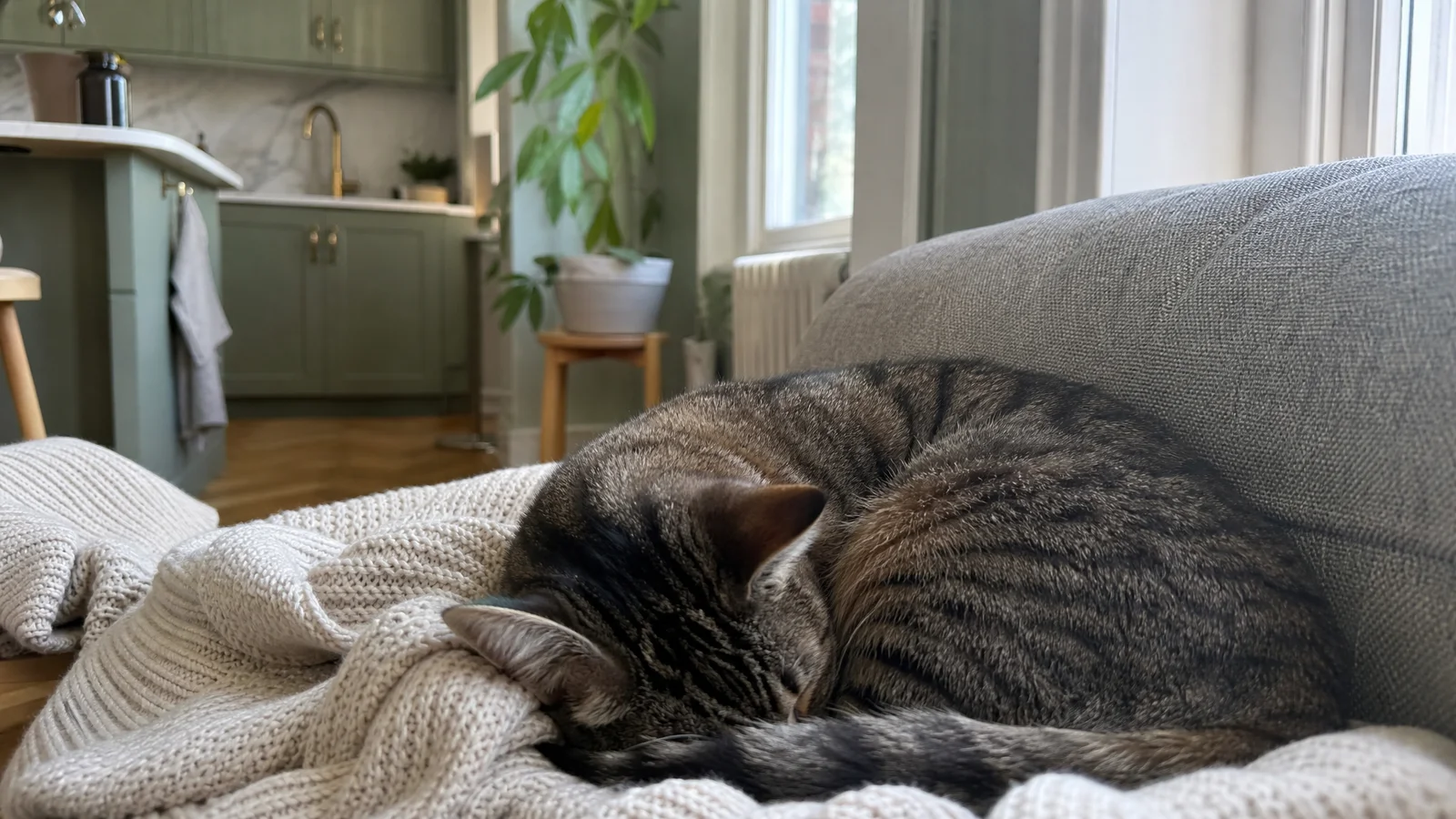
The published advice on diffusers around pets does not agree with itself, and that disagreement is the most useful thing to know. One source says a cat does fine near a diffuser if the cat can walk out of the room. Another says diffusing is not likely to be an issue if the pet cannot get to the area at all. A third says birds should not be near a diffuser, ever. The common thread is that pets are not small people: the species, the oil, the strength and the route all change the answer, and your veterinarian is the person to ask.
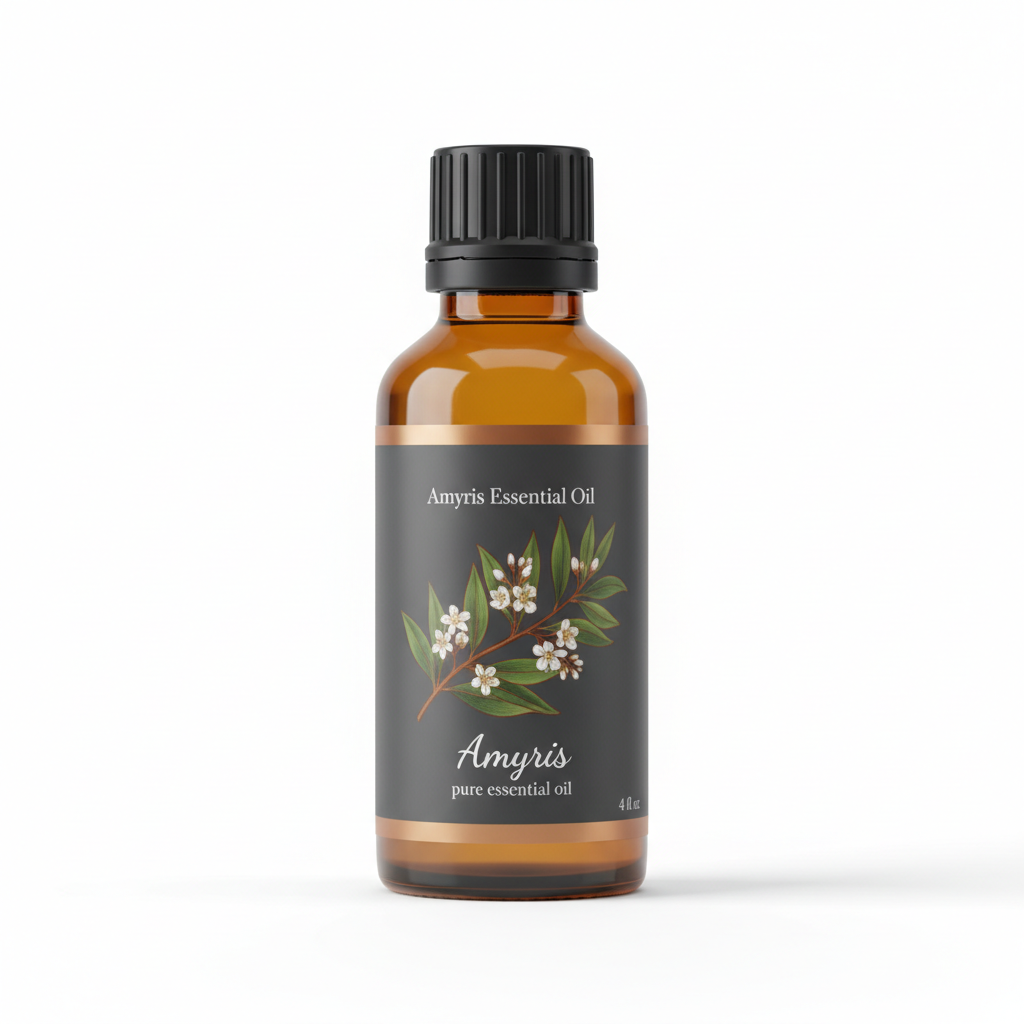
Amyris Essential Oil
Our own Amyris Essential Oil, in sizes from 0.5 oz to bulk.
From $20.99
Shop Now →Cats: the real reason, and an honest uncertainty
Robert Tisserand's article on cats and essential oil safety (Tisserand Institute, undated page, read October 2026) gives the main mechanism. Cats largely lack liver enzymes that humans have, including UGT1A6, UGT1A9 and UGT2B7, which creates what he calls a "theoretical risk of increased toxicity to cats." He cites menthol as an example, reporting it as 3-4 times more toxic to a cat than to a rat (Opdyke, 1976), and he notes the link between the enzyme gap and toxicity is likely but not proven. The Pet Poison Helpline makes the same argument in its page on essential oils and cats and adds that oils are absorbed quickly through the mouth and skin and then processed by the liver.
The case literature is small. Tisserand summarizes a 1998 report by Bischoff and Guale in which 60 mL of undiluted tea tree oil was applied to three cats for flea bites (about 20 mL each, or 4.0 to 6.6 mL/kg). The cats had hypothermia, incoordination and an inability to stand; after intensive treatment two recovered and one died, with elevated liver enzymes in the cat that died. He also cites Villar and colleagues (1994), who reported that most topical overdoses caused depression, weakness, incoordination and tremors, with recovery in 2 to 3 days after supportive care. Both are summarized in the Tisserand article, which is the only place we read them; we did not open the original papers.
Reasoning from this: the doses in the best-documented cat case were large and undiluted, a different situation from a diffuser running in another room. But the case shows the direction of the risk, and Tisserand's own position is that overall exposure matters more than a list of "safe" and "toxic" oils.
Diffusers: where the sources split
Tisserand's view for cats is that diffusing is acceptable with good ventilation, short sessions and a cat free to leave, and that "a few parts per million of aromatic vapor in the air is not likely to be harmful" as long as vapor does not build up over many hours. The ASPCA's 2018 news post says short-term diffuser use in a secured area dogs and cats cannot access is "not likely to be an issue," per the ASPCA Animal Poison Control Center, and says pets with a history of breathing problems should avoid diffusers altogether. On birds it is direct: avoid diffusers entirely, because "birds' respiratory tracts are very sensitive," and it says the same concerns apply to rabbits, guinea pigs and hamsters.
The Pet Poison Helpline distinguishes the device. Passive diffusers (reed, heat, non-motorized) mainly cause respiratory irritation unless oil reaches the skin or is swallowed. Active diffusers (nebulizing and ultrasonic) emit microdroplets that can settle on fur and be absorbed or swallowed during grooming, which adds risk, especially for cats.
These are not contradictions about the same fact. They are different risk judgments. Tisserand's rests on the cat being able to leave and the vapor being low. The ASPCA's rests on the pet not being exposed at all. Our reading (reasoning, not a finding) is that the closed-door version is the one that does not depend on your estimate of "a few parts per million." If you diffuse, use a room the animal does not enter, ventilate it afterwards, and never in a room containing a bird. For the human side of diffuser questions, see is diffusing essential oils safe.
Species quick reference
| Species | What the sources say | Who to ask |
|---|---|---|
| Cats | Most vulnerable; lack key liver enzymes (Tisserand Institute, Pet Poison Helpline); oils named by the helpline include wintergreen, sweet birch, citrus, pine, ylang ylang, peppermint, cinnamon, pennyroyal, clove, eucalyptus and tea tree; concentrated oil never applied directly | Veterinarian; Pet Poison Helpline (855) 764-7661 |
| Dogs | Not affected by the same enzyme gap but can be poisoned; helpline names tea tree, pennyroyal, wintergreen and pine oils as the most common toxicities; concentrated oil on skin or by mouth | Veterinarian; Pet Poison Helpline |
| Birds | ASPCA: avoid diffusers entirely; respiratory tracts very sensitive | Avian or exotic-animal veterinarian |
| Rabbits, guinea pigs, hamsters | ASPCA says the same concerns apply as for dogs and cats; no species-specific data in the sources we read | Exotic-animal veterinarian |
| Fish and reptiles | Not covered by any source we could open | Veterinarian |
Skin and swallowing: what the poisoning sources describe
The Pet Poison Helpline's page on dogs and essential oils describes tea tree oil on the skin or by mouth causing depression, an uncoordinated gait, rear-leg paralysis, vomiting and low body temperature, with signs lasting up to four days even with aggressive care, and notes that the low concentrations in dog shampoos are not the issue. Pennyroyal is described as capable of causing fatal liver failure, and wintergreen as producing aspirin-like toxicity. The ASPCA post says concentrated tea tree oil can cause problems in as few as seven or eight drops, though it does not give the animal's size. We would not compare that figure with the cat case above: they are different species, different oils, different designs.
One more disagreement belongs here. Tisserand writes that tea tree oil up to 5% is considered fine for occasional use on cats, while the helpline and ASPCA say concentrated oil should never be applied directly. These are compatible only if you read "concentrated" strictly, and neither source tells you how to verify a 5% dilution on a squirming animal. Our position is simpler: do not put essential oils on a pet. If a veterinarian prescribes or approves a specific use, follow that instruction and not a blog.
What our oil adds to this
We did not find any pet-safety data specific to amyris, so we cannot tell you whether it is safe near any species, and the sources above do not name it in any list. Our shop guidance is to keep amyris away from children and pets, and not to take it internally, and we make no medicinal claim for it. That is the whole of our position: we do not offer it as a pet product. The general rules for storage, dilution and diffusing are in the essential oil safety guide, and our own amyris safety basics covers the single-oil version.
If your pet is exposed
- Breathing symptoms: the helpline says to move the animal to fresh air immediately and seek emergency care if signs do not resolve quickly. Watery eyes, drooling, vomiting, labored or fast breathing, panting, coughing or wheezing are listed as signs, and in cats none are "normal." A cat's cough can look like a hairball attempt without the hairball.
- On the coat: we did not read a decontamination protocol for skin exposure in the pages we opened, so call a veterinarian or poison line before bathing the animal, and do so at once for a bird or exotic pet.
- Swallowed: do not induce vomiting, because of aspiration risk (Pet Poison Helpline). Call your veterinarian, the Pet Poison Helpline at (855) 764-7661 (listed as 24 hours), or the ASPCA Animal Poison Control Center at (888) 426-4435. These services may charge a fee; we did not verify that from the pages we read.
The limits of this piece
We read pages from the Tisserand Institute, the Pet Poison Helpline and the ASPCA; we could not open the AVMA's household hazards page (it returned no text) and did not read the original veterinary papers. There is no peer-reviewed pet-safety study of amyris that we could find. Pets with liver, kidney or breathing conditions, young animals and pregnant animals are cases where only a veterinarian can say anything useful.
Amyris Essential Oil
Amyris Essential Oil from our own shop, in sizes from 0.5 oz to bulk.
From $20.99
Shop Now →Sources & Further Reading
- Tisserand R, Tisserand Institute, undated page, read October 2026. Cats and essential oil safety. tisserandinstitute.org
- Pet Poison Helpline, undated page, read October 2026. Essential oils and cats. petpoisonhelpline.com
- Pet Poison Helpline, undated page, read October 2026. Essential oils are toxic to dogs. petpoisonhelpline.com
- Pet Poison Helpline, undated page, read October 2026. Updates on essential oils. petpoisonhelpline.com
- ASPCA, January 17, 2018. Is the latest home trend harmful to your pets? aspca.org