Best Essential Oils for Sleep, Ranked by the Evidence
Only one essential oil, lavender, has enough sleep trials to pool, and even that evidence is small, mixed in quality and uncertain about how much is the smell and how much is the bedtime routine. Every other oil on a "best for sleep" list is either inside those pooled lavender-dominated trials without a separate result, or has no trial behind it at all. This page ranks by evidence type, says what each trial could and could not show, and puts the habits that carry the first-line guidance ahead of any bottle.
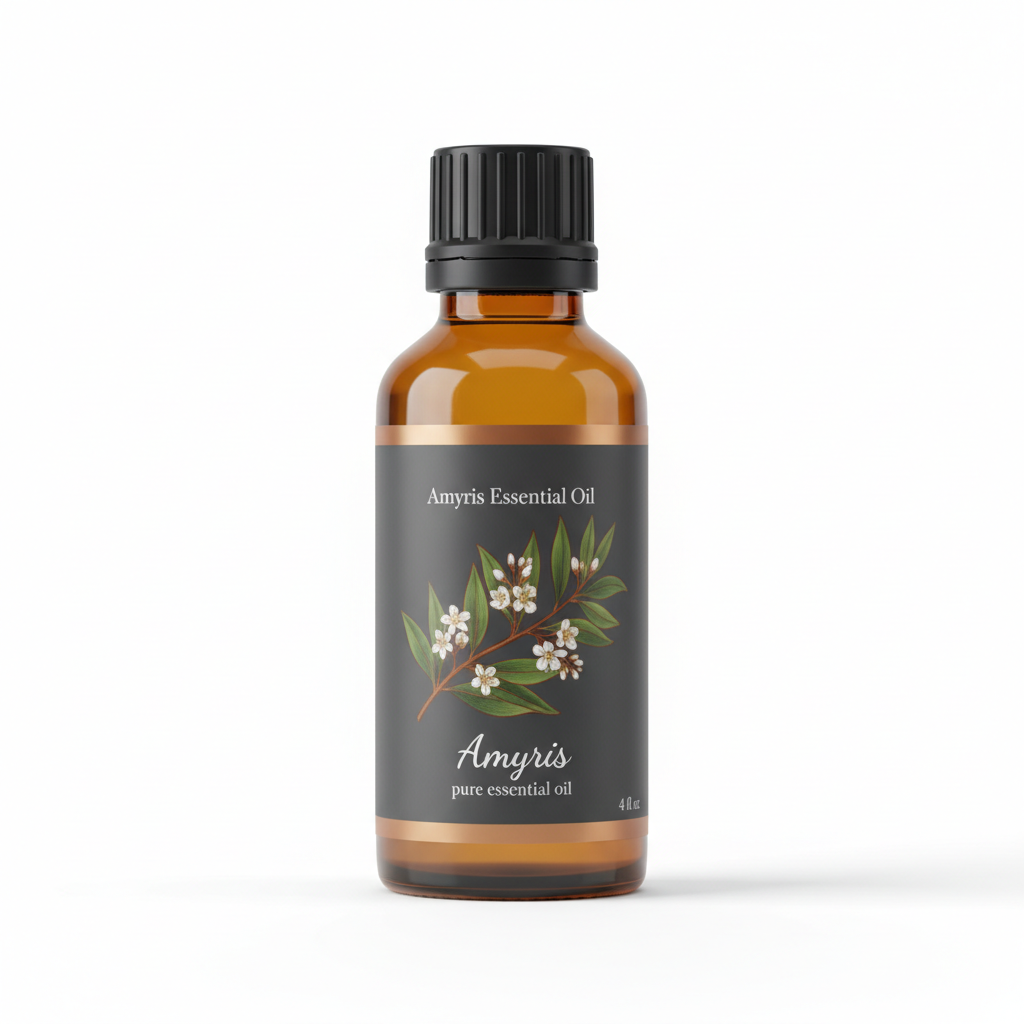
Amyris Essential Oil
Our own Amyris Essential Oil, in sizes from 0.5 oz to bulk.
From $20.99
Shop Now →The ranking, by the strongest evidence found
"Best" here means best supported, not best working for you. The table reports what the sources we opened say, and the last column is our grade of how far you can lean on it.
| Oil | Strongest evidence we could open | Our grade |
|---|---|---|
| Lavender | Four reviews (details below): 8 to 34 included studies each, mostly inhalation, small trials, moderate to high risk of bias, high heterogeneity | Most evidence of any oil, but low to moderate confidence |
| Chamomile, bergamot, sweet orange, marjoram | Used in some of the trials inside the older-adult meta-analysis by Xu et al. (2024) and the 34-study review by Cheong et al. (2021); we read no oil-specific result for any of them | Cannot be graded from what we read |
| Cedarwood, sandalwood, vetiver and other woods | No trial found in the reviews we opened | No evidence found |
| Amyris (our oil) | A search for human trials of Amyris balsamifera oil and sleep, stress or cognition returned none (October 2026) | No evidence found |
What the lavender trials found
Shen, Zhang and Zhu, 2025. This meta-analysis in Holistic Nursing Practice pooled 11 randomized trials with 628 adults and reported a standardized mean difference (a unit-free gap measured in standard deviations) of -0.56 on sleep quality (95% CI -0.96 to -0.17). Nine of the 11 trials used inhalation (SMD -0.62). Heterogeneity was 82%, risk of bias was rated moderate, and most trials gave too little detail to judge blinding. The authors also report that one sleep questionnaire (RCSQ) showed no significant effect while another (PSQI) did, so the result depends on which instrument you trust.
Cheong et al., 2021. A systematic review and meta-analysis of 34 studies of aroma inhalation in Medicine reported an overall effect size of g = 0.65 (95% CI 0.54 to 0.76), with heterogeneity near 84%. The authors flag a high risk of performance and selection bias, and an inconsistency in how many effect sizes the paper reports (172 in one section, 273 in another). Single oils performed better than blends in their subgroups (g = 0.72 versus 0.58), and inhalation shortly before sleep did better than 24-hour indirect exposure (g = 0.66 versus 0.48). Those subgroup comparisons are observational and could reflect confounding, as the authors say.
Xu et al., 2024. In a meta-analysis of 10 trials in older adults, aromatherapy improved sleep quality (SMD -1.02, 95% CI -1.38 to -0.66; heterogeneity 79%). Samples were small (18 to 46 per group), seven of the 10 trials came from China, and only two blinded the person delivering the intervention.
Fismer and Pilkington, 2012. The earliest review we opened, in the European Journal of Integrative Medicine, found eight eligible studies, four of them randomized trials, most with small samples and methodological limits, and described a "small to moderate benefit" to be read cautiously. That the newest reviews are positive on a thin base of the same kind of trials is the main reason we grade lavender low to moderate.
Where the best numbers disagree with common advice
Common advice says to put lavender beside the pillow overnight. In the Shen subgroup analysis, trials with the oil placed beside the pillow were significant (SMD -1.03, 95% CI -1.60 to -0.47, three studies) and trials with the oil 15 cm or more away were not (SMD -0.41, 95% CI -1.06 to 0.24, six studies). Diluted oil was significant (three studies) and 100% oil was not (six studies). Those are subgroup splits within 11 trials, so treat them as hypotheses, not instructions.
They also sit awkwardly beside safety guidance. The Tisserand Institute advises diffusing intermittently (30 to 60 minutes on, 30 to 60 minutes off) with some fresh-air exchange and does not advise direct intensive inhalation beyond 15 to 20 minutes. The sleep trials are not evidence that all-night close exposure is harmless; the Yoo and Park lavender review noted adverse events were mostly reported as "none" or "not assessed". Reasoning from both, a cautious reading is a few drops on a tissue or a timer-controlled diffuser, not a bottle open on the pillow all night. For the diffuser details see our diffusing safety article and the diffuser how-to.
First-line advice comes before any oil
The American Academy of Sleep Medicine's 2021 guideline on behavioral treatments for chronic insomnia disorder in adults, led by Edinger and described in the AASM announcement of December 2020, makes one strong recommendation: cognitive behavioral therapy for insomnia (CBT-I). It makes conditional recommendations for brief multi-component therapies, stimulus control, sleep restriction and relaxation therapy, and suggests that sleep hygiene alone should not be used as a single treatment for chronic insomnia disorder. In other words, "tidy up your bedroom habits" is not first-line for chronic insomnia, and a bottle of oil is not either.
For ordinary rough weeks, the NHS insomnia page says insomnia usually gets better by changing sleeping habits: a consistent wake-up time, winding down for an hour, a dark, quiet bedroom, and no alcohol, caffeine or nicotine in the 6 hours before bed. It advises seeing a GP if changing habits has not helped, if trouble sleeping has lasted months, or if it is hard to cope with daytime life. The same page mentions lavender only as an ingredient of some over-the-counter sleep aids that may help for 1 to 2 weeks at most, with a check with your doctor first. In the United States, a physician or sleep specialist is the right person for sleep that has been disrupted for weeks.
Why we make no sleep claim for our oil
The FDA's aromatherapy page lists helping with sleep among the claims that make a product a drug, even when the ingredient comes from a plant. We sell a pure, undiluted amyris oil, we make no medicinal claim for it, and no human sleep trial of it turned up. What it has is a scent, described in our shop copy as creamy, woody and balsamic with a soft vanilla undertone. If you like that smell, using it as part of an evening routine is a personal choice, not a sleep product. For what we do and do not say about amyris and rest, see our amyris and sleep article.
A low-cost way to find out if a scent does anything for you
This is reasoning, not a protocol from a source. Because trials that compare smell against another smell are weaker than trials against nothing, the most useful test is on yourself with a control. Pick one oil and keep everything else about your evening fixed. For two weeks, use the scent on alternate nights (a tissue, away from the bed or a timer diffuser), and write a single 1 to 5 sleep rating each morning. At the end, compare the two sets of ratings. If the difference is small or goes in no clear direction, the scent is a pleasant habit rather than a sleep tool. If you sleep better on scented nights, that fits the expectancy effect shown in Chamine and Oken (2015), who found a claim card changed post-stress performance in 81 adults regardless of aroma, and it still counts as a routine that works for you.
Safety and who should skip this
NCCIH (February 2025) says inhaled lavender is considered possibly safe but may cause headache or coughing, that lavender may theoretically interact with sedatives, which matters before surgery, and that little is known about safety in pregnancy or breastfeeding. Anyone who takes sedating medicines, is pregnant or breastfeeding, or has a child under 6 should check with a physician, pharmacist or pediatrician first. Keep oils away from infants' faces. In a 2003 randomized trial of 144 healthy adults, Moss and colleagues found lavender odor impaired working memory and slowed reaction times on memory and attention tasks in awake people. That is a reason not to use lavender right before driving or other attention-demanding work, which is our reasoning and not a conclusion the authors drew. Do not take essential oils by mouth for sleep; for oral lavender products, NCCIH's page reports a separate evidence base and a different set of side effects, and that is a conversation for a pharmacist or physician.
For the full evidence on aromatherapy generally, see our beginner's guide. If your concern is stress rather than sleep, the stress article covers it separately.
If you try an oil for sleep, use it as a bedtime cue you enjoy, keep it intermittent and well ventilated, and put the habit changes and any medical conversation ahead of it.
Amyris Essential Oil
Amyris Essential Oil from our own shop, in sizes from 0.5 oz to bulk.
From $20.99
Shop Now →Sources & Further Reading
- Shen H., Zhang L.-J., Zhu W.-Y., 2025. The sleep-enhancing effect of lavender essential oil in adults: a systematic review and meta-analysis. Holistic Nursing Practice. pmc.ncbi.nlm.nih.gov
- Cheong M.J. et al., 2021. A systematic literature review and meta-analysis of the clinical effects of aroma inhalation therapy on sleep problems. Medicine (Baltimore) 100(9):e24652. pmc.ncbi.nlm.nih.gov
- Xu K. et al., 2024. Effects of aromatherapy on sleep quality in older adults: a meta-analysis. Medicine (Baltimore) 103(49):e40688. pmc.ncbi.nlm.nih.gov
- Fismer K.L., Pilkington K., 2012. Lavender and sleep: a systematic review of the evidence. European Journal of Integrative Medicine 4(4):e436-e447. researchportal.port.ac.uk
- American Academy of Sleep Medicine, December 2020. New guideline supports behavioral and psychological treatments for insomnia. aasm.org
- NHS, undated page, read October 2026. Insomnia. nhs.uk
- NCCIH, updated February 2025. Lavender: usefulness and safety. nccih.nih.gov
- Tisserand Institute, undated page, read October 2026. Safety guidelines. tisserandinstitute.org
- U.S. Food and Drug Administration, undated page, read October 2026. Aromatherapy. fda.gov
- Chamine I., Oken B.S., 2015. Expectancy of stress-reducing aromatherapy effect and performance on a stress-sensitive cognitive task. Evidence-Based Complementary and Alternative Medicine. pmc.ncbi.nlm.nih.gov
- Yoo O., Park S.-A., 2023. Anxiety-reducing effects of lavender essential oil inhalation: a systematic review. Healthcare 11(22):2978. pmc.ncbi.nlm.nih.gov
- Moss M., Cook J., Wesnes K., Duckett P., 2003. Aromas of rosemary and lavender essential oils differentially affect cognition and mood in healthy adults. International Journal of Neuroscience 113(1):15-38. researchportal.northumbria.ac.uk