
Choosing Your First Woody Essential Oil: A Starter Comparison
Woody essential oils have a way of grounding a fragrance blend or a room. They feel substantial. They linger. And for someone just building a collection, they offer something that citrus or floral oils rarely do: longevity, versatility, and a kind of quiet complexity that gets more interesting the longer you work with it.
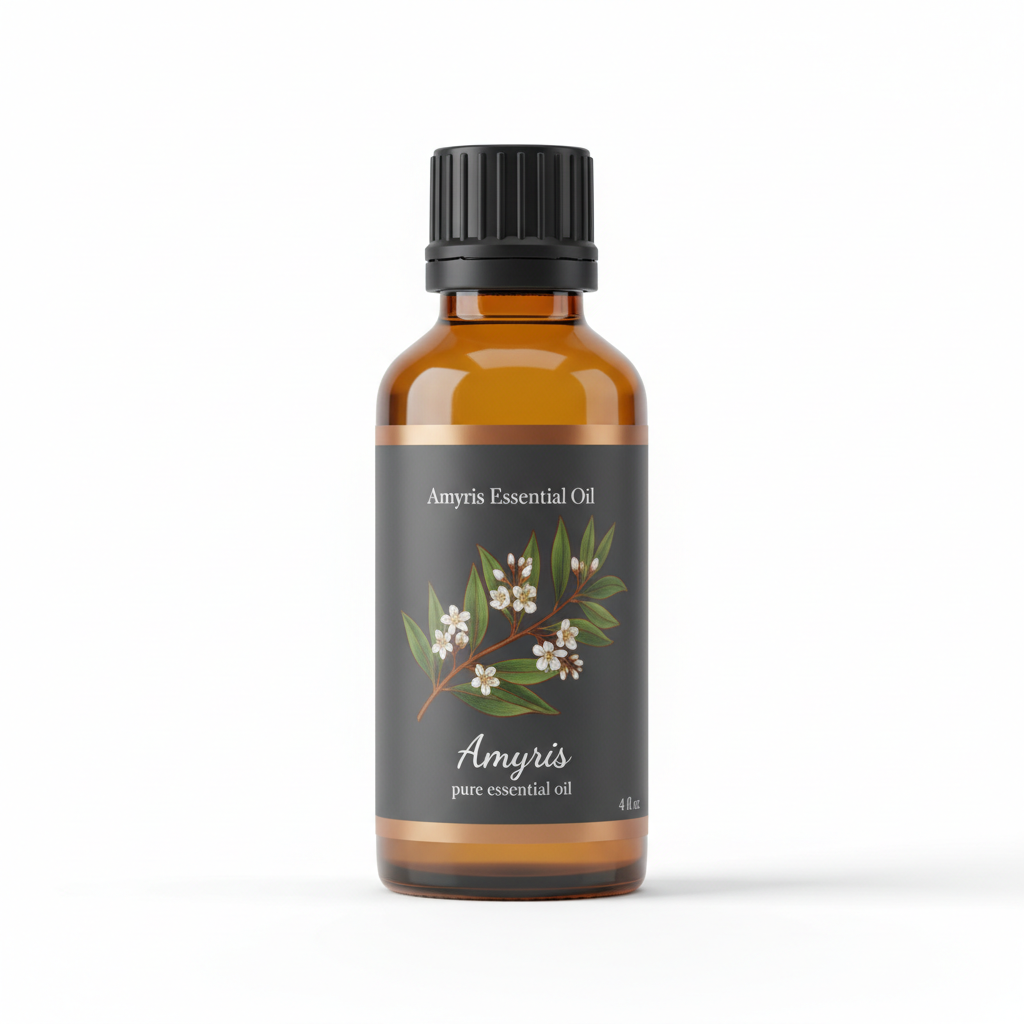
Amyris Essential Oil
Our own Amyris Essential Oil, in sizes from 0.5 oz to bulk.
From $23.99
Shop Now →The challenge is that "woody" covers a surprisingly wide territory. Cedarwood smells like a pencil sharpener in the best possible way. Vetiver can smell like damp earth and smoke. Sandalwood is soft and creamy. Amyris sits somewhere between all of them, gentle and approachable, with a light sweetness that makes it unusually easy to use.
If you are searching for the best woody essential oils to start with, this guide compares five of the most accessible options side by side. The goal is to give you an honest picture of each one so you can make a confident first purchase.
The Five Oils in This Comparison
Each oil below was selected because it is widely available, well-documented in aromatic and cosmetic literature, and genuinely useful for everyday home blending and personal care. These are not obscure specialty items. They are foundational.
- Amyris (Amyris balsamifera)
- Virginian Cedarwood (Juniperus virginiana)
- Atlas Cedarwood (Cedrus atlantica)
- Sandalwood (Santalum album or S. austrocaledonicum)
- Vetiver (Chrysopogon zizanioides)
Quick-Reference Comparison Table
| Oil | Scent Profile | Price Range | Sustainability | Viscosity | Beginner-Friendliness |
|---|---|---|---|---|---|
| Amyris | Soft, milky-woody, slightly sweet | Low to moderate | Good (uses fallen wood) | Medium | Very high |
| Virginian Cedarwood | Dry, pencil shavings, clean | Low | Generally good | Medium-low | High |
| Atlas Cedarwood | Warmer, slightly resinous, woody | Low to moderate | Watch sourcing carefully | Medium | High |
| Sandalwood | Creamy, rich, warm, smooth | High to very high | Complex; source matters greatly | Medium-high | Moderate (cost barrier) |
| Vetiver | Deep, smoky, earthy, rooty | Moderate | Generally good | High (thick) | Moderate (strong, takes practice) |
Individual Oil Profiles
Amyris (Amyris balsamifera)
Amyris is the starter woody essential oil that rarely gets the credit it deserves. It is steam-distilled from the wood of a shrubby tree native to Haiti and other parts of the Caribbean, and it has a scent that many people describe as a softer, more accessible version of sandalwood. Creamy, faintly sweet, and genuinely woody without being sharp or aggressive.
For cosmetic use, it blends into lotions, balms, and hair products smoothly. It acts as a mild fixative in fragrance work, helping other notes last longer on the skin. The price is one of its strongest practical arguments: you can buy a quality bottle without the significant investment that genuine sandalwood requires.
Sustainability is another point in its favor. Responsible producers source amyris from fallen or harvested-rotation wood rather than clear-cutting. If this matters to you (and for many buyers it does), you can read more about how amyris is harvested and why sourcing practices matter before you buy.
Pros:
- Affordable and widely available in genuine quality
- Very easy to blend; unlikely to overpower other notes
- Performs well as a fixative in DIY perfume and body care
- Sustainability story is largely positive when sourced well
- Works in both aromatic and cosmetic applications
Cons:
- Sometimes sold as "West Indian Sandalwood," which can obscure what you are actually buying; always check the Latin name
- The scent is mild, which is a strength for blending but may disappoint anyone wanting a bold standalone note
- Quality varies between suppliers, so label reading matters
Best for: Beginners building a first collection, anyone who finds pure sandalwood out of budget, blenders who want a reliable base note, and makers of natural cosmetics.
Virginian Cedarwood (Juniperus virginiana)
This is probably the most familiar woody smell for many people in North America. Pencil shavings, closet liners, campground air. Virginian cedarwood is dry, clean, and clearly woody without being warm or sweet. It is one of the least expensive essential oils available in any category, which makes it a genuinely low-risk first purchase.
Pros:
- Very inexpensive
- Instantly recognizable, crowd-pleasing scent
- Blends well with citrus and green notes
- Good availability from reputable suppliers
Cons:
- The dry, slightly sharp quality can feel one-dimensional in some blends
- Not as long-lasting on skin as amyris or vetiver
- Can fade faster in diffuser blends
Best for: Budget-conscious beginners, anyone who loves fresh, clean aromas, and blenders pairing with citrus or herbal notes.
Atlas Cedarwood (Cedrus atlantica)
Atlas cedarwood comes from the Atlas Mountains of Morocco and Algeria, and it smells noticeably warmer and more resinous than its Virginian counterpart. There is a faint sweetness to it. It blends more easily with floral and oriental-style fragrances than the drier Virginian variety.
One note of caution: Cedrus atlantica has faced sustainability concerns in the past due to overharvesting pressures on natural forests. Reputable suppliers will source from managed or plantation-grown material. Ask before you buy.
Pros:
- Richer, warmer character than Virginian cedarwood
- Pairs well with rose, jasmine, and oriental bases
- Moderate price point
Cons:
- Sustainability requires careful supplier vetting
- Sometimes confused with other cedarwood species on poorly labeled products
Best for: Blenders interested in warm, slightly exotic woody bases and those building oriental or floral-woody fragrance profiles.
Sandalwood (Santalum album and related species)
Sandalwood is the legendary woody oil. Rich, smooth, creamy, and deeply complex, it has been used in perfumery and personal care for centuries. The problem for beginners is twofold: price and sourcing complexity.
Genuine Santalum album (Indian or Mysore sandalwood) can be extraordinarily expensive, and much of what is sold cheaply under the name "sandalwood" is either heavily diluted, adulterated, or derived from a different species entirely. Santalum austrocaledonicum (Vanuatu sandalwood) and Santalum spicatum (Australian sandalwood) are legitimate alternatives with their own distinct scent profiles, generally at lower price points than Indian sandalwood.
Pros:
- Arguably the most beautiful of all woody essential oils
- Exceptional fixative and blending oil
- Works across perfumery, skin care, and hair care
Cons:
- Genuine quality costs significantly more than other woody oils
- The market has significant adulteration problems
- Sustainability is complicated; sourcing knowledge is essential before buying
- Easy to overspend on inferior product without understanding labels
Best for: Intermediate to experienced buyers with a clear supplier relationship, or beginners who are willing to research deeply before their first purchase.
Vetiver (Chrysopogon zizanioides)
Vetiver is the bold one. Steam-distilled from the roots of a grass native to South Asia, it smells like deep earth, smoke, dried wood, and something almost leathery. It is one of the most complex essential oils available, and it is also thick and viscous, which takes some getting used to when measuring and blending.
Beginners who try vetiver for the first time are often either immediately enchanted or briefly overwhelmed. It is not a quiet oil. Used in small proportions, it adds remarkable depth and staying power to a blend. Used too heavily, it dominates everything around it.
Pros:
- Extraordinary depth and longevity
- Small amounts go a long way, making a bottle last
- A genuine perfumer's tool once you learn to use it
Cons:
- Very strong; beginners may find it challenging to dose
- High viscosity requires warming or careful handling
- Not universally loved; the smoky-earthy character is not for everyone
Best for: Curious beginners who want an unusual challenge, or anyone drawn to deep, earthy, and smoky aromatic profiles.
Head-to-Head: Use Case Recommendations
For Diffuser Blending
Virginian cedarwood and amyris are the easiest starting points. Both diffuse cleanly and blend well with citrus, lavender, and herbal oils. Vetiver can be interesting in a diffuser but requires a light hand.
For Skin and Body Care Formulation
Amyris is the practical choice. It blends smoothly into lotions and balms, performs as a fixative, and does not demand a large investment. For those interested in going deeper with skin-focused work, genuine sandalwood is worth the research, but make sure you understand what you are buying. The article on reading labels and spotting diluted blends applies to sandalwood even more than it does to amyris.
For Natural Perfumery Beginners
Start with amyris as your base note anchor. It is forgiving, affordable enough to experiment with, and genuinely useful in almost any fragrance direction. Once you are comfortable, bring in vetiver for depth or sandalwood (with a trusted source) for luxury.
For Budget-Conscious Shoppers
Virginian cedarwood is the lowest-cost entry point. Amyris offers slightly more versatility for a modest step up in price. Both represent good value. Avoid inexpensive sandalwood: if the price seems too low for genuine material, it almost certainly is.
For Eco-Conscious Buyers
Amyris has one of the cleaner sustainability stories among woody oils when sourced responsibly. Vetiver is also generally well-regarded on this front. If environmental sourcing is a priority in your purchasing decisions, it is worth spending a few minutes with the full picture of what to look for when buying amyris essential oil before committing to a supplier.
Safety Notes for All Woody Oils
No essential oil should be applied undiluted to skin. The standard dilution for most adult body care applications is 1 to 3 percent, which works out to roughly 6 to 18 drops per ounce of carrier oil or unscented lotion. Facial products should sit at the lower end of that range or below.
Always perform a patch test before using any new oil on a larger area of skin. Apply the diluted product to a small area on the inner arm, wait 24 hours, and check for any reaction before proceeding.
Vetiver's thick consistency means it can clog fine-gauge dropper inserts. Warm the bottle gently in your hands before measuring, or use a larger-bore dropper. Pregnant individuals and those with specific health considerations should consult a qualified healthcare provider before incorporating new essential oils into their routines.
The Verdict
If you are choosing your first woody essential oil and want something that is easy to use, reasonably priced, versatile across cosmetic and aromatic applications, and backed by a relatively straightforward sustainability story, amyris is the most practical starting point. It does not ask much of you. It blends readily, lasts well on skin, and gives you a genuine woody character without the cost or complexity that genuine sandalwood requires.
Virginian cedarwood is a close second for anyone drawn to dry, clean aromas or working on a tight budget. And vetiver belongs on every serious collector's shelf eventually, even if it is not the place to start.
The best woody essential oils for beginners are not necessarily the most famous ones. They are the ones you will actually reach for, use confidently, and enjoy working with as your skills grow. For most people, that points clearly toward amyris as a starter woody essential oil worth coming back to.