
Amyris Oil Sustainability: Harvesting Fallen Wood the Right Way
There is a quiet logic to how amyris essential oil enters the world. Unlike many botanicals that require cutting live growth, the most responsible amyris producers work almost entirely with wood that has already fallen, dried, or been left behind as agricultural byproduct. That detail matters enormously, both for forest health and for the character of the oil itself. This deep dive examines what sustainable amyris oil actually involves at the chemical and sourcing level, and what to look for when you are evaluating a supplier.
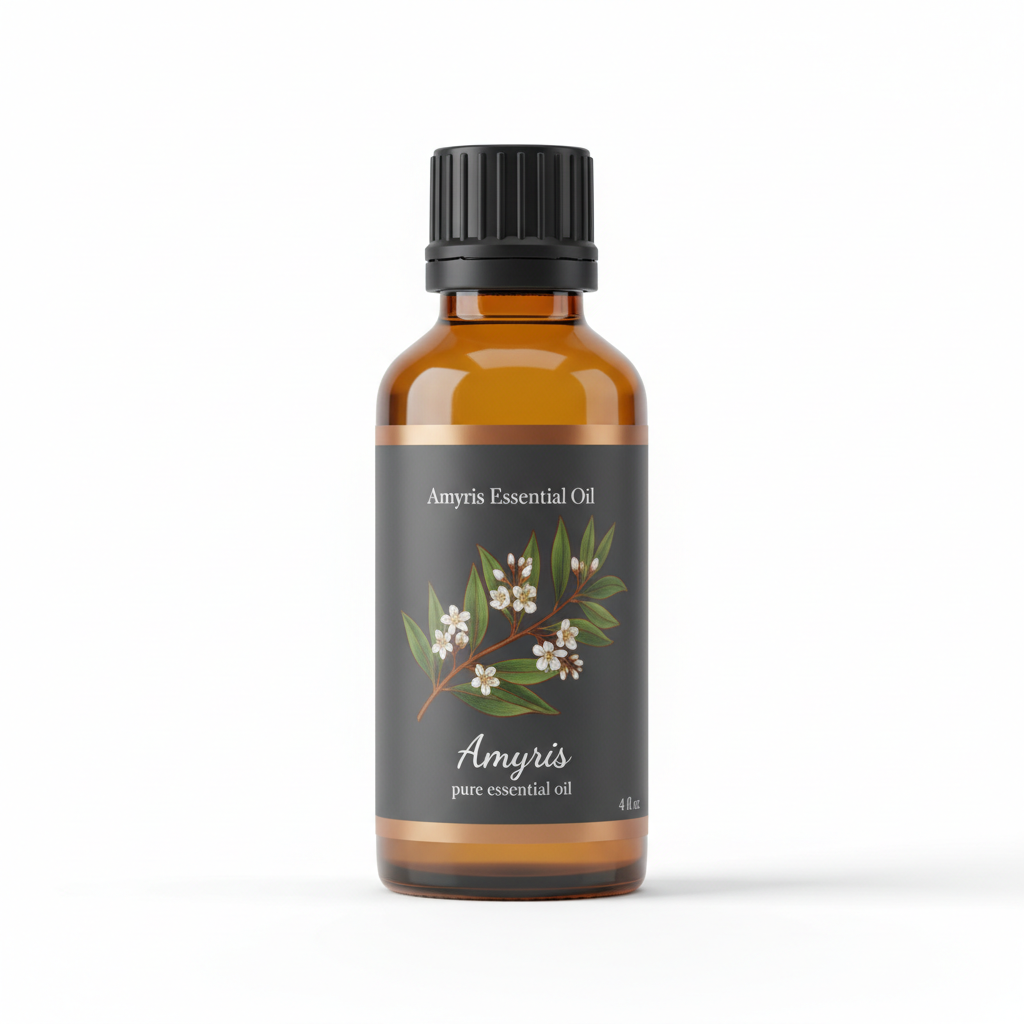
Amyris Essential Oil
Our own Amyris Essential Oil, in sizes from 0.5 oz to bulk.
From $23.99
Shop Now →What Amyris Actually Is (and What It Is Not)
Amyris balsamifera is a small flowering tree native to the Caribbean and Central America, most commonly associated with Haiti and the Dominican Republic. It is sometimes called West Indian sandalwood or torchwood, names that have caused persistent confusion in the fragrance industry. Amyris is not a true sandalwood. It belongs to the Rutaceae family, while genuine sandalwood species fall under Santalaceae. The similarity in scent profile has led suppliers to market amyris as a sandalwood substitute, which is accurate in a practical blending sense but misleading about botanical identity.
This distinction is worth raising in any conversation about amyris sustainability. True sandalwood species, particularly Santalum album, face serious conservation pressure. Amyris does not carry the same CITES listing or the same ecological fragility. That relative abundance, combined with responsible harvesting practices, is precisely what positions amyris as a credible ethical essential oil sourcing choice for perfumers and formulators who want a woody base note without contributing to overharvested species.
Chemical Composition: The Sesquiterpene Story
Amyris essential oil is produced by steam distillation of the dried wood, branches, and roots of Amyris balsamifera. Its chemistry is dominated by sesquiterpene alcohols, a class of compounds known for low volatility and good fixative properties in fragrance work.
Key compounds identified in amyris oil through gas chromatography analysis include:
- Valerianol: Typically the dominant compound, often comprising 30 to 50 percent of the total profile depending on origin and distillation method. Valerianol contributes a smooth, woody, slightly earthy facet to the oil.
- 10-epi-gamma-Eudesmol: A sesquiterpene alcohol that appears consistently across analyzed samples, associated with the dry, slightly resinous quality of the dry-down.
- Elemol: Present in varying concentrations, elemol contributes a softer, rounder woody note.
- Gamma-Eudesmol and Beta-Eudesmol: These eudesmol isomers round out the sesquiterpene alcohol profile and contribute to the oil's staying power on skin and in formulations.
- Bulnesol: Found in lower concentrations but notable for its structural similarity to compounds in guaiacwood oil, another sustainably sourced botanical.
The high sesquiterpene alcohol content gives amyris oil a low evaporation rate, which is why it functions effectively as a base note and fixative. Research suggests that the specific ratio of valerianol to the eudesmol compounds can serve as a quality marker, varying based on geographic origin and the age or condition of the wood used.
The Fallen Wood Principle: Why Sourcing Method Changes Everything
The phrase "fallen wood harvesting" gets used loosely in marketing materials. Here is what it actually means in practice, and why the distinction has real consequences for amyris sustainability.
Amyris balsamifera grows across degraded and secondary forest landscapes in Haiti, often in areas that have already experienced significant deforestation from historical land use. The trees grow relatively quickly and resprout readily. In productive harvesting programs, distillers collect wood from several sources:
- Naturally fallen branches and trunks, collected after storms or natural die-off.
- Agricultural pruning waste from farms where amyris grows as a boundary tree or shade tree alongside other crops.
- Root wood and stumps from land clearance that would otherwise be burned or discarded.
The best operations do not fell living amyris trees specifically for oil production. This is the ethical core of responsible sourcing. When the wood is already fallen or is a byproduct of other land management, distillation converts waste into value without adding pressure to standing tree populations.
Some suppliers go further, working within structured agroforestry programs where amyris is intentionally cultivated on degraded land. These programs can contribute to soil stabilization and provide income for rural communities in regions with limited economic alternatives. When evaluating a supplier's ethical essential oil sourcing claims, asking specifically whether they source from agroforestry programs or from wild harvest is a meaningful question.
Research Observations on Amyris Compounds
Most published research on amyris oil focuses on its chemical composition rather than applied outcomes. A 2013 analysis published in the Journal of Essential Oil Research confirmed valerianol as the primary constituent in commercially available amyris oil samples and noted variation in minor compound ratios across different geographic sources. This kind of variation is expected in any plant-derived oil and underscores the importance of batch-level testing.
Some research suggests that sesquiterpene alcohols as a class show interesting properties in cosmetic stability studies, including potential contributions to skin-feel and absorption characteristics in emulsion formulations. These observations are noted in cosmetic science literature rather than clinical contexts. They do not constitute evidence of specific outcomes and should be read as directional findings for formulators, not as substantiated efficacy data.
The fixative function of amyris in fragrance blends has been observed consistently across perfumery literature. This is a well-documented aromatic property rather than a biological claim: the low volatility of sesquiterpene alcohols simply means they evaporate slowly, anchoring more volatile top notes in a blend and extending the overall scent life on skin and fabric.
Safety Profile and Contraindications
Amyris essential oil has a generally favorable safety profile based on existing assessments. The Research Institute for Fragrance Materials (RIFM) has evaluated amyris oil and its primary constituents, and it is considered non-sensitizing at standard use concentrations in cosmetic formulations.
Practical safety guidelines for working with amyris oil include:
- Dilution: As with all essential oils, amyris should be diluted before skin application. Standard cosmetic formulations typically use concentrations between 0.5 and 3 percent in leave-on products. Always work within established dilution guidelines from recognized sources such as the International Fragrance Association (IFRA).
- Patch testing: Before using any new essential oil in a leave-on formula, a patch test on a small area of skin over 24 hours is strongly recommended. Individual skin sensitivities vary.
- Pregnancy and nursing: Consult a qualified healthcare provider before using any essential oil if you are pregnant, nursing, or managing a health condition.
- Children: Particular caution is warranted with essential oils around young children. Follow age-appropriate dilution recommendations and consult a healthcare provider.
- Eye and mucous membrane contact: Avoid direct contact. If contact occurs, flush with a carrier oil followed by water.
Amyris is not known to be phototoxic, which distinguishes it from citrus-derived oils that require sun avoidance after skin application. That said, individual formulation context always matters. If you are combining amyris with other ingredients, evaluate the safety of the full formula rather than the oil in isolation.
Sourcing Indicators and Quality Markers
Evaluating sustainable amyris oil requires more than reading a product description. The following indicators help distinguish genuinely sourced, quality oil from commodity product where provenance is unclear.
Certificates of Analysis (COA)
A reputable supplier provides a batch-specific COA showing GC/MS (gas chromatography/mass spectrometry) results. For amyris, look for valerianol as the dominant peak, typically above 30 percent. Absence of COA documentation or reliance on generic species-level data rather than batch-level data is a meaningful red flag. Our complete quality guide to buying amyris essential oil walks through how to read and interpret these documents.
Geographic Origin Disclosure
Haiti is the primary commercial source for amyris oil. Suppliers who disclose specific country of origin and ideally name their distillation partner or cooperative are demonstrating a level of supply chain transparency that commodity suppliers typically do not offer. Origin matters because terroir, wood age, and distillation practices all influence the final chemical profile.
Adulteration Awareness
Amyris is occasionally blended with synthetic sesquiterpene compounds or extended with carrier oils to reduce cost. GC/MS analysis identifies both adulterants and carrier oil dilution. If a price point seems unusually low for the stated purity, that is worth investigating. Our article on pure amyris oil versus diluted blends covers what label language actually signals about concentration and purity.
Packaging and Shelf Life
Amyris oil is relatively stable due to its high sesquiterpene alcohol content, but it should still be stored in dark glass, away from heat and direct light. Amber or cobalt glass is standard. Shelf life for properly stored amyris is generally given as four to five years. If you are deciding between bottle sizes for cost efficiency versus freshness, the breakdown of amyris bottle sizes covers the practical trade-offs for both personal and professional use.
Third-Party Certifications
Organic certification (USDA or equivalent), fair trade certification, or documented membership in responsible sourcing programs adds a layer of verification beyond supplier self-reporting. These certifications are not infallible, but they represent an external audit of at least some supply chain practices.
The Bigger Picture on Amyris Sustainability
Amyris occupies an interesting position in the essential oil landscape. It grows in one of the most economically challenged regions in the Caribbean, and its production can genuinely support rural livelihoods when structured responsibly. The fallen wood model means that skilled distillers are adding value to material that would otherwise decompose or be burned. That is a meaningful example of circular use within an agricultural system.
It is not a perfect story. Wild harvest pressures exist wherever demand grows faster than supply chain oversight. The "sandalwood substitute" marketing framing creates demand spikes that can push producers toward less careful sourcing. Staying informed as a buyer, asking supply chain questions, and choosing suppliers who publish verifiable data are the practical ways to support the ethical side of this trade.
Amyris will not win any prizes for glamour. It is a modest tree, producing a quiet woody oil from material that other industries discard. But that modesty is precisely what makes sustainable amyris oil a sensible, defensible ingredient choice for formulators and blenders who care about where their materials come from and what their purchasing decisions support.