Wholesale Amyris Oil: A Bulk Buying Guide for Makers and Blenders
If you're scaling up a soap line, building out a fragrance collection, or sourcing raw materials for a cosmetic brand, wholesale amyris oil deserves a serious look. It's an affordable, genuinely useful base note with a soft, woody, slightly sweet character that blends beautifully with florals, resins, and citrus alike. But buying in bulk introduces real decisions: which grade, which supplier, what price point, and what to avoid.
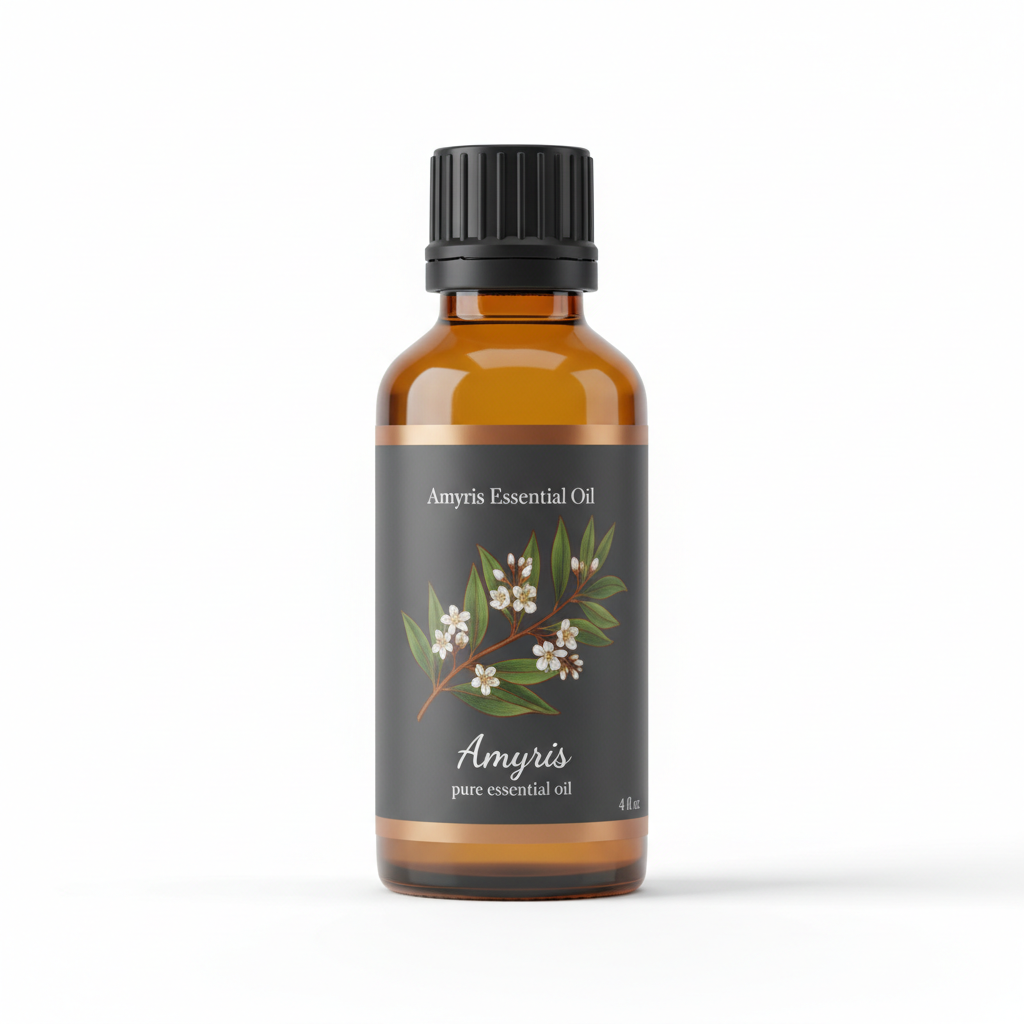
Amyris Essential Oil
Our own Amyris Essential Oil, in sizes from 0.5 oz to bulk.
From $23.99
Shop Now →This guide walks through all of it. Quality markers, pricing structures, red flags, and where to actually buy. Whether you're placing your first 1-kilogram order or scaling to drums, the principles are the same.
What Is Wholesale Amyris Oil, and Why Do Makers Use It?
Amyris essential oil is steam-distilled from the wood chips and branches of Amyris balsamifera, a small tree native to Haiti and the wider Caribbean. The oil has a long history in perfumery as a sandalwood extender and fixative. If you want to understand more about the naming confusion that surrounds this oil, our deep dive into the sandalwood naming myths covers it thoroughly.
For product makers, amyris offers a few practical advantages at scale:
- It's significantly more affordable than true sandalwood.
- The scent profile is stable and consistent across reputable suppliers.
- It has a low volatility rate, which helps anchor lighter notes in a blend.
- It performs well in both leave-on cosmetics and wash-off products.
- Customers and perfumers recognize and appreciate the wood base note.
At a wholesale level, that cost-to-performance ratio becomes even more compelling. A kilo of quality bulk amyris essential oil costs a fraction of equivalent volumes of East Indian or Australian sandalwood, yet it carries real aromatic weight.
Quality Indicators: What to Look For Before You Order
Buying bulk means you're committing volume to a single lot. Evaluating quality before that commitment matters more than it does at retail scale.
Gas Chromatography/Mass Spectrometry (GC/MS) Reports
Any serious wholesale amyris oil supplier should provide a GC/MS report for each batch. This document shows the chemical composition of the oil and allows you to verify authenticity. Genuine amyris oil is rich in sesquiterpene alcohols, with elemol, eudesmol isomers, and guaiol typically dominating the profile. If a supplier cannot or will not share a GC/MS report, that's worth noting immediately.
Specific Gravity and Refractive Index
These two physical parameters give you a quick cross-check on purity. Amyris oil typically shows a specific gravity in the range of 0.940 to 0.970 and a refractive index around 1.502 to 1.514. Suppliers should list these on the Certificate of Analysis (COA). Values far outside these ranges can indicate adulteration or poor distillation.
Organoleptic Assessment
Before committing to a large order, request a sample. A quality amyris oil should smell clean and woody, with a slight sweetness and a subtle creaminess on dry-down. It should not smell sharp, burnt, or heavily synthetic. Murkiness in the liquid or an off-putting chemical edge are both signs of low-grade distillation or adulteration with carrier oils or synthetic extenders.
Country of Origin and Distillation Method
Haiti remains the primary source for genuine amyris. Some suppliers source from other Caribbean islands or Central American regions, which can produce slightly different aromatic profiles. Steam distillation is the standard and preferred method. Solvent extraction is occasionally used but produces a different aromatic character and may introduce residues unsuitable for cosmetic applications.
Shelf Life and Storage Information
Amyris oil is relatively stable, with a typical shelf life of two to three years when stored properly. At bulk quantities, storage conditions matter. Look for suppliers who store oil in cool, dark warehouses and ship in nitrogen-flushed or well-sealed containers. Poor storage before shipping accelerates oxidation.
Key Features to Compare Across Suppliers
Once you have basic quality confirmation in place, the comparison between suppliers gets more nuanced. Here's what to put side by side.
| Feature | What to Ask | Why It Matters |
|---|---|---|
| Batch consistency | Do you supply from a consistent source or spot-market? | Formulation stability depends on consistent raw material |
| Minimum order quantity (MOQ) | What is your MOQ, and are there tiered breaks? | Affects cash flow and storage planning |
| Certifications available | Organic, COSMOS, ISO, Fair Trade? | Required for certain product claims or retail channels |
| Documentation package | Do you provide COA, GC/MS, SDS, and IFRA conformity? | Required for compliance and retail buyers |
| Lead time | What is standard lead time from order to ship? | Affects production scheduling |
| Sample availability | Can I order a sample before committing? | Essential for sensory and formulation testing |
| Packaging options | Available in what container sizes? | Affects handling, storage, and dispensing |
Amyris Oil Bulk Pricing: What to Expect at Different Tiers
Pricing for bulk amyris essential oil varies considerably based on volume, supplier type, and certification level. Our full amyris oil price and value breakdown covers retail-to-wholesale comparisons in detail, but here's a working overview for bulk buyers.
Entry-Level Bulk (100g to 500g)
This is the starting range for small-batch makers who want better pricing than retail without committing to a kilogram. Expect to pay roughly $8 to $18 per 100 grams depending on supplier and grade. At this tier, you're often buying from a mid-tier distributor rather than a primary importer, so documentation may be thinner. Still useful for testing a supplier relationship.
Mid-Tier Bulk (500g to 5kg)
This is where most independent makers and small cosmetic brands operate. Pricing generally falls in the range of $5 to $12 per 100 grams, with better documentation, more reliable batch consistency, and often the option to choose between standard and certified organic grades. At this tier, you should be receiving full COA and GC/MS documentation without having to ask twice.
Large-Scale Wholesale (5kg to Drum Quantities)
At 5 kilograms and above, you're dealing directly with importers or distillation partners in most cases. Pricing can drop to $3 to $7 per 100 grams at the high end of volume. Drums (typically 25kg to 200kg) are available from major importers and require proper storage infrastructure on your end. At this scale, supply agreements, batch testing protocols, and lead time discussions become part of the purchasing process.
Top Supplier Types at Different Price Points
The supplier landscape for wholesale amyris oil falls into a few recognizable categories.
Specialty Essential Oil Importers
Companies like Eden Botanicals, Jedwards International, and Bulk Apothecary source directly from distillers or primary importers. They typically offer solid documentation, reasonable MOQs, and reliable batch consistency. Pricing is mid-tier, which is appropriate for the quality and support level. These are good starting points for makers at the 500g to 5kg range.
Raw Material Distributors
Larger distributors such as Brenntag, Ungerer, or Vigon cater to commercial manufacturers and fragrance houses. MOQs are higher, pricing is competitive at volume, and full regulatory documentation is standard. These suppliers are built for buyers who need consistent large-volume supply with traceability paperwork.
Direct Haitian Exporters and Co-operatives
Buying closer to the source is possible for larger buyers willing to navigate import logistics. Some Haitian producer co-operatives and small exporters sell directly to international buyers, particularly those seeking fair-trade or certified organic supply. Lead times are longer and communication can require more coordination, but the traceability story for your brand is compelling.
Marketplace Platforms (Use with Caution)
Platforms like Alibaba and similar B2B marketplaces list wholesale amyris oil at very low prices. Some listings are legitimate; many are not. If you go this route, request verified third-party testing before any significant purchase, and consider any listing without readily available documentation as a red flag.
Red Flags to Avoid
Bulk purchasing amplifies mistakes. A bad 100ml retail bottle costs you a small amount. A bad 5-kilogram order costs significantly more and may compromise finished products you've already sold. Watch for these warning signs.
- No GC/MS report available. This is non-negotiable for any serious bulk purchase.
- Unusually low pricing. Amyris has a cost floor based on distillation and logistics. Prices well below market rate usually signal adulteration or misrepresentation of species.
- Vague country of origin. "Caribbean" or "South America" without specifics suggests the supplier doesn't know or doesn't want to say where the oil actually came from.
- No sample option. Reputable bulk suppliers offer samples. A refusal to provide one before a significant order is unusual.
- Claims of medicinal properties. Suppliers making health claims about their oils are signaling either ignorance of regulations or a willingness to misrepresent products. Neither is what you want in a raw material partner.
- Inconsistent documentation between batches. If one batch COA lists very different parameters than a previous one without explanation, ask questions before reordering.
- No Safety Data Sheet (SDS). An SDS is a basic requirement for any commercial raw material. Its absence suggests a non-professional operation.
Where to Buy Wholesale Amyris Oil
Beyond the supplier categories above, a few practical channels are worth knowing.
Direct from importers: Search for established essential oil importers with U.S., EU, or UK bases. Many have wholesale portals or dedicated accounts for business buyers. Look for importers who publish batch-specific GC/MS data on their website.
Trade shows: Events like in-cosmetics, Cosmoprof, and the Alliance of International Aromatherapists (AIA) conference bring together suppliers and buyers in person. Sampling and relationship-building at trade shows often leads to better long-term supply terms.
Industry buying groups: Some maker communities and co-ops organize group buys to reach volume pricing thresholds. This can be a cost-effective way to access bulk amyris pricing at a smaller individual scale.
For a thorough walkthrough of evaluating any amyris supplier, not just bulk ones, the complete amyris oil quality buying guide covers sensory evaluation, documentation review, and supplier vetting in full detail.
Practical Steps Before Placing Your First Bulk Order
- Request a sample and evaluate it against your existing formulations or scent benchmarks.
- Ask for the full documentation package: COA, GC/MS, SDS, and country of origin declaration.
- Cross-check the physical parameters on the COA against published norms for amyris.
- Confirm MOQ, lead time, and available packaging sizes in writing.
- Ask about batch consistency policies: will they notify you if the source or profile changes between batches?
- Start with a smaller bulk order to validate the supplier relationship before committing to larger volume.
- Store your bulk oil in a cool, dark location, in tightly sealed containers, and away from direct light or heat sources.
A Note on Certified Organic and Fair-Trade Grades
If your brand positions around organic or ethical sourcing, certified organic and fair-trade amyris oil is available at a premium. Organic certification (USDA NOP, COSMOS, or Ecocert) requires documentation throughout the supply chain, so sourcing certified grades takes more lead time and costs more per kilogram. The premium is typically 20 to 50 percent above conventional bulk pricing, depending on volume and supplier.
For brands where that story matters to customers, the premium is often worth it. For makers focused primarily on formulation performance and margin, conventional grades from a well-documented supplier serve the purpose well.
The wholesale amyris oil market rewards buyers who do their homework. A little time spent on documentation review and sample evaluation before placing a bulk order pays back significantly in product consistency and supplier reliability down the line.