
How Much Does Amyris Oil Cost? A Price and Value Breakdown
Amyris essential oil sits in an interesting position in the market. It is affordable enough for everyday blending, yet misunderstood enough that shoppers frequently overpay for poor quality or, worse, underpay for something that barely resembles the real thing. If you have been trying to figure out what a fair amyris oil price actually looks like, this guide will walk you through the numbers, the quality signals, and the traps to avoid.
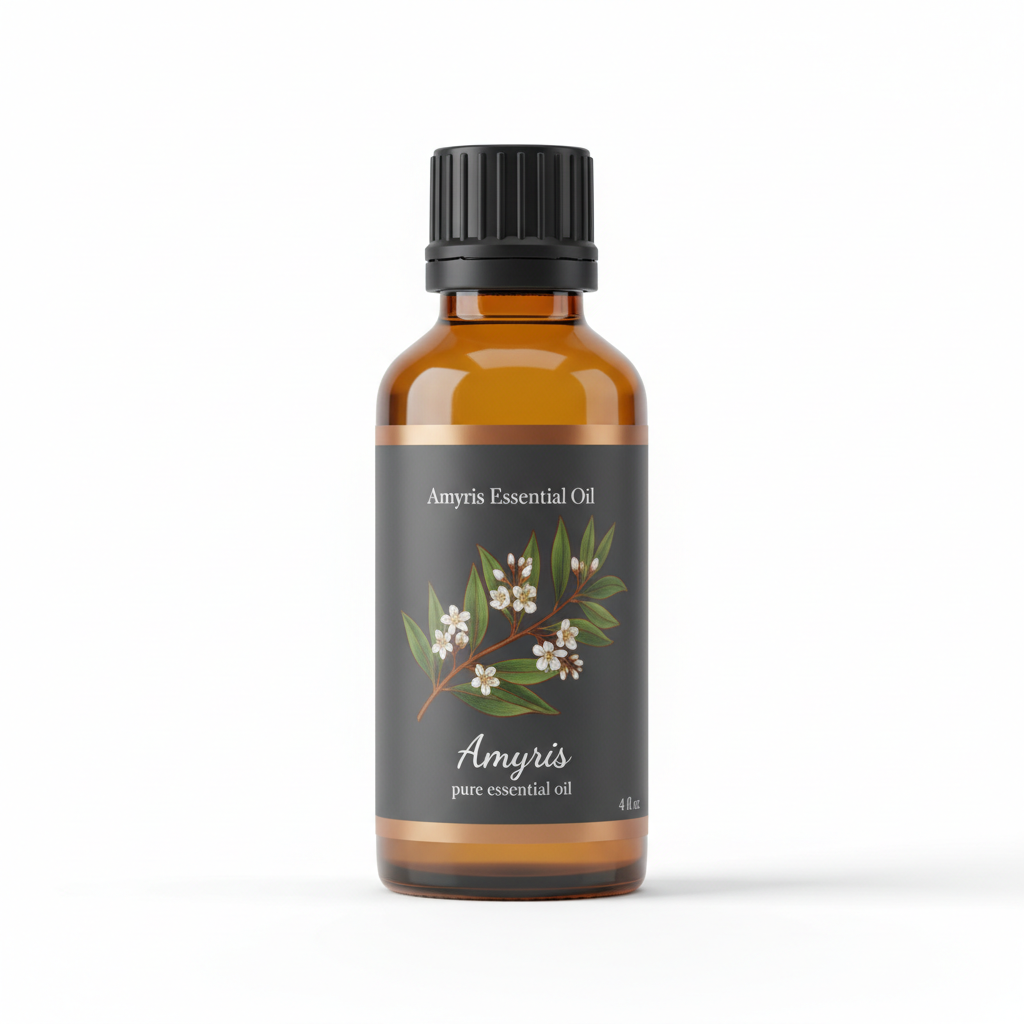
Amyris Essential Oil
Our own Amyris Essential Oil, in sizes from 0.5 oz to bulk.
From $23.99
Shop Now →The Short Answer on Amyris Oil Cost
Most shoppers will find amyris essential oil priced somewhere between $5 and $40 for a 10 ml to 30 ml bottle, depending on the supplier, purity, and sourcing transparency. That is a wide spread. Understanding what moves the price up or down will save you money and frustration.
For context: amyris (Amyris balsamifera) is sourced primarily from Haiti, where the wood of the torchwood tree is steam-distilled into a pale, viscous oil with a soft, creamy, woody scent. Because it shares some surface-level aroma similarities with East Indian sandalwood, it is sometimes marketed under confusing names. Before diving into pricing, it is worth reading about the naming myths surrounding amyris and sandalwood so you know exactly what you are shopping for.
What Drives the Price of Amyris Oil?
Unlike true sandalwood, amyris is not a threatened species and does not require decades of cultivation before harvest. That keeps baseline costs relatively low. Still, several factors push prices higher or lower.
1. Country of Origin and Sourcing Practices
Haitian-sourced amyris from established farming cooperatives tends to cost more than oil sourced from less traceable supply chains. Ethical sourcing, fair-trade certifications, and direct relationships with distillers all add to the cost of goods. That is a premium worth paying. Suppliers who can name the region and distiller are showing you something real.
2. Distillation Quality
Steam distillation of amyris wood produces a heavier, slightly viscous oil. Lower-quality operations may rush distillation cycles, producing oil that smells sharper or thinner than it should. Well-distilled amyris has a warm, almost balsamic smoothness. Rushed oil can smell faintly acrid or flat.
3. Bottle Size and Concentration
Always calculate cost per milliliter, not cost per bottle. A $6 bottle sounds like a bargain until you realize it contains 5 ml. A $22 bottle with 30 ml works out to roughly $0.73 per ml versus $1.20 per ml for the cheaper-looking option.
4. Testing and Certification
Gas chromatography and mass spectrometry (GC/MS) testing verifies chemical composition. Suppliers who publish batch-specific GC/MS reports are investing in quality assurance, and that cost is reflected in the price. It is money well spent on your end.
5. Packaging
UV-protective amber or cobalt glass, properly sized orifice reducers, and tamper-evident caps all indicate a supplier who understands oil preservation. Cheap plastic or clear glass is a red flag on its own.
Amyris vs. Sandalwood Price: Why the Gap Matters
This comparison comes up constantly, and it matters for buyers. Authentic East Indian sandalwood (Santalum album) is one of the most expensive essential oils in the world, often retailing at $80 to $200+ for just 5 ml. Australian sandalwood (Santalum spicatum) is more accessible, typically $20 to $60 for 5 ml, but still a significant investment.
Amyris, by contrast, averages $0.50 to $1.50 per ml from reputable suppliers. That price difference is enormous, and it reflects genuine botanical and aromatic differences. Amyris does not smell like sandalwood on a technical level. It has its own character: softer, lighter, with a slightly creamy woodiness and good fixative properties in blending.
The problem arises when suppliers use the amyris vs. sandalwood price gap to deceive. If you see a product labeled "West Indian Sandalwood" at an amyris price point, look closely. It may well be amyris, which is not a scam on its own, but the mislabeling is. Informed shoppers who understand these naming myths are far less likely to be misled.
Quality Indicators: What to Look for When Buying
Price tells part of the story. These signals tell the rest.
- Botanical name on the label: Look for Amyris balsamifera specifically. Generic names like "amyris" alone or "West Indian sandalwood" without the Latin name should prompt more investigation.
- Country of origin disclosed: Haiti is the primary source. If the supplier cannot tell you where the oil comes from, that is a concern.
- GC/MS report available: Batch-specific reports, not generic ones, are the gold standard. Many reputable suppliers post these on their websites or provide them on request.
- Appropriate viscosity and color: Quality amyris oil is pale yellow to almost colorless, with a slightly thicker consistency than, say, lavender oil. Very watery texture can indicate dilution or adulteration.
- Scent profile: Warm, creamy, softly woody, with a mild balsamic sweetness. If it smells sharp, synthetic, or has a strong chemical edge, trust your nose.
- Amber or cobalt glass packaging: This protects photosensitive compounds and signals that the supplier cares about shelf life.
For a deeper look at identifying quality through hands-on methods, see this guide on simple at-home checks for amyris oil quality.
Price Point Breakdown: Top Picks by Budget
The following tiers reflect general market patterns rather than endorsements of specific brands, since pricing and availability shift frequently. Use these as benchmarks when shopping.
Budget Tier: Under $10
You can find 10 ml bottles of amyris in this range from mass-market suppliers and marketplaces. These are not automatically bad, but due diligence is essential. Look for the botanical name, check for any available testing information, and read reviews specifically about scent authenticity. Avoid any product that does not disclose country of origin.
Best suited for: First-time buyers testing the scent before committing to a larger purchase, or blenders who want a low-stakes trial batch.
Mid-Range: $10 to $25
This is where the most reliable value tends to live. Established essential oil companies with transparent sourcing practices typically price their 10 ml to 15 ml amyris offerings in this range. You should be able to find GC/MS reports, clear labeling, and responsive customer service. Several well-regarded US and UK suppliers fall here.
Best suited for: Regular blenders, candle and soap makers, and anyone building a core collection of fixative base notes.
Premium: $25 to $45
At this level, you are often paying for certified organic sourcing, fair-trade premiums, larger bottle sizes (30 ml or more), or supplier reputation built on rigorous testing standards. Some aromatics-focused brands also offer artisanal or small-batch distillations in this range.
For a 30 ml bottle, $30 to $40 from a quality supplier is actually competitive on a per-ml basis. Do the math before assuming a higher price means poor value.
Best suited for: Professional formulators, perfumers, and buyers who prioritize certified sourcing and full traceability.
Red Flags to Avoid
Some warning signs are subtle. Others are obvious once you know what to look for.
- "100% pure" as the only quality claim: This phrase costs nothing to print on a label. It tells you nothing without supporting evidence like GC/MS data.
- No botanical name: Legitimate suppliers always list the Latin name. Absence suggests either ignorance or intentional vagueness.
- Unusually low price on a large volume: A 30 ml bottle priced at $3 is almost certainly adulterated, diluted in a carrier oil, or not amyris at all.
- "Sandalwood" in the name without clear disclosure: If a product is labeled "sandalwood" but priced like amyris, read every line of the description carefully before purchasing.
- Clear glass or plastic packaging: Light degrades essential oils. Suppliers who do not protect their product during storage are not protecting your purchase either.
- No return or satisfaction policy: Reputable suppliers stand behind their product. No recourse should make you hesitant.
- Overly medical or condition-focused marketing: Any supplier making dramatic wellness claims is signaling that they may be cutting corners elsewhere, including on quality and sourcing.
Where to Buy Amyris Essential Oil
The channel matters as much as the brand. Here is how the main options compare.
| Purchase Channel | Pros | Cons |
|---|---|---|
| Specialty essential oil retailers (online) | Transparent sourcing, GC/MS reports, expert customer service | Higher price point, shipping time |
| Large online marketplaces | Wide selection, competitive pricing, fast delivery | Quality highly variable, easier for mislabeled products to appear |
| Natural health or co-op stores | Can inspect packaging before purchase, knowledgeable staff at good shops | Limited selection, turnover may affect freshness |
| Direct from distillers or cooperatives | Maximum traceability, often bulk-friendly pricing | Minimum order quantities, requires more research to vet |
For a full breakdown of what to evaluate across each of these channels, the complete quality guide to buying amyris essential oil covers the process step by step.
Getting the Best Value: A Practical Summary
Amyris oil cost is genuinely reasonable compared to most other base-note woody oils. That accessibility is one of its best qualities for blenders and formulators. But reasonable pricing also attracts shortcuts from less scrupulous suppliers. The following checklist keeps your purchases on track.
- Calculate cost per milliliter before comparing bottles.
- Confirm the botanical name: Amyris balsamifera.
- Ask for or look up a batch-specific GC/MS report.
- Check that the country of origin is disclosed (ideally Haiti).
- Assess packaging quality before anything else arrives.
- Trust your nose on first use. Smooth and creamy is right. Sharp or synthetic is not.
Amyris is one of the most underrated fixative oils in natural perfumery and cosmetic formulation. Paying a fair price from a transparent supplier is the single best decision you can make when adding it to your collection.