
What Does Amyris Essential Oil Smell Like? A Full Scent Profile
Amyris essential oil is one of those quiet workhorses of the fragrance world. It rarely headlines a blend, yet perfumers and formulators reach for it constantly. If you have ever opened a bottle and struggled to place the scent, you are not alone. The oil occupies a subtle, layered aromatic space that sits somewhere between sandalwood, soft cedar, and dry cream. Understanding what amyris essential oil smells like means looking at both the sensory experience and the chemistry underneath it.
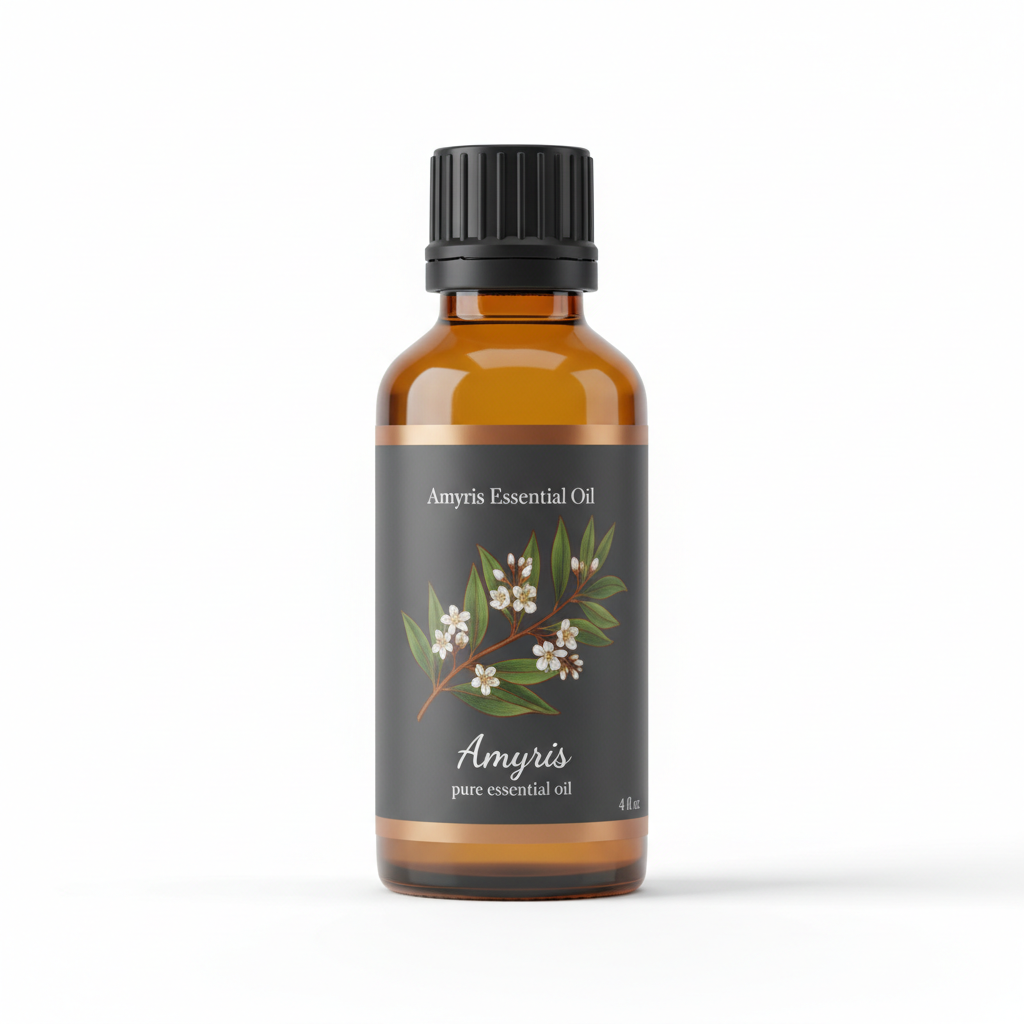
Amyris Essential Oil
Our own Amyris Essential Oil, in sizes from 0.5 oz to bulk.
From $23.99
Shop Now →This deep-dive walks through the amyris scent profile from first impression to dry-down, explains the key chemical compounds responsible for its character, and covers what research observations tell us about the oil's composition. We will also touch on quality indicators and safety considerations so you can source and use amyris confidently.
The Sensory Experience: Describing the Amyris Oil Smell
Open a bottle of good-quality amyris and the first thing you notice is warmth. The opening is dry rather than sweet, with a faint dustiness that settles quickly into something smoother. Most people register it as woody, but it is a softer wood than cedar or vetiver. Think of cedar that has been sanded down and rubbed lightly with beeswax.
As it opens on skin or on a diffuser blotter, a creamy quality emerges. Some describe a very faint milky undertone, almost vanillic but without any actual sweetness. There is a subtle balsamic quality in the base, contributing to the oil's well-known fixative effect in blends. The overall impression is muted, smooth, and slightly resinous.
Compared to true sandalwood (Santalum album), amyris is drier, less milky, and considerably lighter in body. It is sometimes marketed as "West Indian sandalwood," a label that can mislead expectations. The two oils are not botanically related. They share a family resemblance in the woody-creamy direction, but amyris is more transparent, less tenacious, and significantly more affordable. For a fuller picture of where the oil comes from and how it is positioned commercially, the article on what amyris essential oil is and its West Indian origins covers that context well.
Fragrance Family and Pyramid Position
Amyris sits firmly in the woody-balsamic family. In a traditional fragrance pyramid it functions as a base note, though its tenacity is moderate rather than exceptional. It extends blends and softens sharper top notes without dominating them. Perfumers often layer it with citrus, florals, and spice, where its role is structural rather than expressive.
- Opening impression: dry wood, faint smokiness, a touch of earthiness
- Heart: creamy wood, soft resin, very subtle milky undertone
- Base and dry-down: warm balsamic, smooth, slightly powdery
Chemical Composition: The Molecules Behind the Amyris Scent Profile
Scent is chemistry made perceptible. The amyris scent profile is a direct expression of its sesquiterpene-rich composition, and understanding the key compounds helps explain every sensory note described above.
Primary Sesquiterpene Alcohols
Amyris essential oil is dominated by sesquiterpene alcohols, which are a class of compounds associated with smooth, woody, and sometimes creamy olfactory qualities. Research published on the chemistry of Amyris balsamifera wood oil consistently identifies the following as major constituents.
| Compound | Typical Range (%) | Olfactory Association |
|---|---|---|
| Valerianol | 15–30% | Woody, earthy, faintly sweet |
| 10-epi-γ-Eudesmol | 10–20% | Dry wood, subtle earthiness |
| γ-Eudesmol | 5–15% | Woody, slightly herbal |
| β-Eudesmol | 5–12% | Warm wood, soft balsamic |
| Elemol | 5–10% | Creamy, faintly floral wood |
| α-Eudesmol | 3–8% | Earthy wood |
| Zizaene and related sesquiterpenes | variable | Dry, smoky background |
Valerianol tends to be the dominant compound in most properly distilled samples and is largely responsible for the warm, slightly earthy woody note that characterizes amyris. The eudesmol isomers collectively contribute smoothness and depth. Elemol is the compound most commonly associated with the creamy quality that softens the overall profile.
Why Composition Varies
The exact percentages shift depending on the age of the harvested wood, the geographic microclimate within Haiti (the primary source region), and distillation conditions. Older, denser heartwood tends to yield oil with higher sesquiterpene alcohol concentrations and a correspondingly richer, creamier character. Younger material can produce a thinner, more sharply woody oil. The relationship between wood age, distillation method, and final scent character is explored in detail in the guide to how amyris oil is distilled from aged heartwood.
Adulteration is a real consideration in this market. Because amyris is often sold as a sandalwood alternative, some suppliers extend the oil with synthetic sesquiterpene alcohols or carrier oils. Gas chromatography-mass spectrometry (GC-MS) testing is the standard method for confirming authentic composition. When you are sourcing amyris for serious cosmetic or aromatic formulation work, a GC-MS certificate of analysis from a third-party lab is worth requesting.
Research Observations on Amyris Chemistry
A modest but growing body of research has examined the composition and properties of Amyris balsamifera essential oil. It is important to frame these findings accurately: the studies observe chemical characteristics and document constituent profiles. They do not establish the oil as a drug or a clinical intervention.
Research published in the Journal of Essential Oil Research and related journals suggests that the eudesmol isomers present in amyris oil exhibit interesting interactions at the molecular level in various laboratory assays. Some research suggests that sesquiterpene alcohols as a class may play a role in skin feel and sensory perception when used in topical cosmetic formulations, which would align with the anecdotal reports from formulators who note that amyris contributes a smooth after-feel in lotions and balms.
Compositional studies have also documented variation across geographic origins. Haitian-sourced amyris generally shows higher valerianol content compared to samples from other Caribbean regions, which some researchers suggest may explain the sensory differences between lots that formulators frequently observe.
One area of ongoing research interest involves the fixative behavior of sesquiterpene alcohols in fragrance applications. Some studies suggest that higher molecular weight sesquiterpenols slow the evaporation rate of more volatile compounds when blended together, which would support the long-standing practical knowledge that amyris extends the life of citrus and floral top notes. This is an observation from controlled studies, not a verified mechanism, and further research would be needed to fully characterize the effect.
Sourcing and Quality Indicators
Quality in amyris oil is not difficult to assess once you know what to look for. The oil should be mobile but slightly viscous, noticeably denser than a light carrier like fractionated coconut oil but thinner than vetiver. Color ranges from pale yellow to light amber. A very pale, almost water-white amyris is sometimes an indicator of either very young wood distillate or dilution.
What Good Amyris Smells Like (and What to Avoid)
A high-quality batch smells rounded and cohesive. The woody and creamy notes are integrated rather than one dominating the other. There should be no harsh chemical undertone, no synthetic sharpness, and no rancid or sour notes that would indicate oxidation or adulteration with low-grade fatty material.
Be cautious with oils described only as "amyris blend" or "amyris-type." These are frequently synthetic fragrance products rather than steam-distilled essential oils. They may smell pleasant, but they do not carry the chemical profile of genuine distilled amyris and should not be used interchangeably in formulations where botanical authenticity matters.
The Amyris balsamifera species and its sourcing story deserve more attention than they typically receive. The deep-dive on Amyris balsamifera and the Caribbean torchwood tree covers the botany, harvesting practices, and sustainability context.
Safety Profile and Contraindications
Amyris essential oil has a well-established safety record in both fragrance and cosmetic use. The International Fragrance Association (IFRA) and the Research Institute for Fragrance Materials (RIFM) have reviewed the available data and amyris is not subject to the same sensitization restrictions as many other fragrance ingredients.
Skin Use and Dilution
For topical cosmetic applications, the standard dilution guidelines apply. A maximum of 2 to 3 percent in leave-on products (such as lotions, serums, and balms) is considered appropriate for most adult skin. Higher concentrations may be used in rinse-off products but are generally unnecessary given the oil's gentle character.
Patch testing is always recommended before applying any essential oil blend to a larger skin area. Apply a small amount of the diluted preparation to the inner forearm, wait 24 hours, and observe for any reaction before wider use. Individuals with known sesquiterpene sensitivities should take additional care and consult a qualified aromatherapy or dermatology professional before incorporating amyris into their routines.
Populations Requiring Caution
- Pregnancy: Essential oil use during pregnancy should always be discussed with a qualified healthcare provider before beginning any aromatic or topical routine.
- Young children: Dilution requirements for pediatric use differ significantly from adult guidelines. Consult a certified aromatherapy practitioner for guidance on age-appropriate concentrations.
- Individuals on medication: If you take any prescribed medication or are under the care of a healthcare provider for any condition, discuss the addition of essential oils to your routine with that provider before proceeding.
Storage and Oxidation
Amyris oil is relatively stable compared to high-limonene citrus oils, but oxidation will still degrade the scent over time. Store in a dark glass bottle away from heat and direct light. A properly stored bottle should maintain its character for two to three years. Oxidized oil loses its creamy warmth and takes on a sharper, more acrid edge. If the scent changes noticeably, the oil is past its prime for cosmetic use.
Blending by Scent: Putting the Profile to Work
Once you understand the amyris oil smell as a composition of dry wood, creamy resin, and soft balsamic depth, the blending logic becomes intuitive.
Amyris extends and softens. Pair it with sharp citrus (bergamot, yuzu, lemon) and it bridges the gap between the bright top and any deeper notes below, preventing a sense of fragrance disconnect. With soft florals like rose or ylang ylang, it adds a woody grounding without the heaviness that sandalwood or vetiver might bring. In earthy blends featuring vetiver, patchouli, or oakmoss, amyris contributes lightness and a creamy buffer that keeps the blend from feeling too dense.
For candle and diffuser work, amyris performs well at 5 to 10 percent of a blend. In solid perfumes and balm-based fragrance products, slightly higher concentrations can be used effectively because the waxy base slows release further.
It is a supporting note, not a star. That is not a limitation. It is precisely the quality that makes amyris such a reliable, versatile part of a well-considered aromatic palette.