How to Store Amyris Essential Oil: Shelf Life and Why It Improves with Age
Most essential oils come with a quiet expiration anxiety. You buy a bottle, use it occasionally, and then wonder six months later whether it has "gone off." Amyris is different. This slow-aged, resinous wood oil has a reputation for longevity that sets it apart from citrus oils and delicate florals. Stored correctly, a good bottle of amyris essential oil can last for years, and many experienced formulators will tell you the scent only deepens over time.
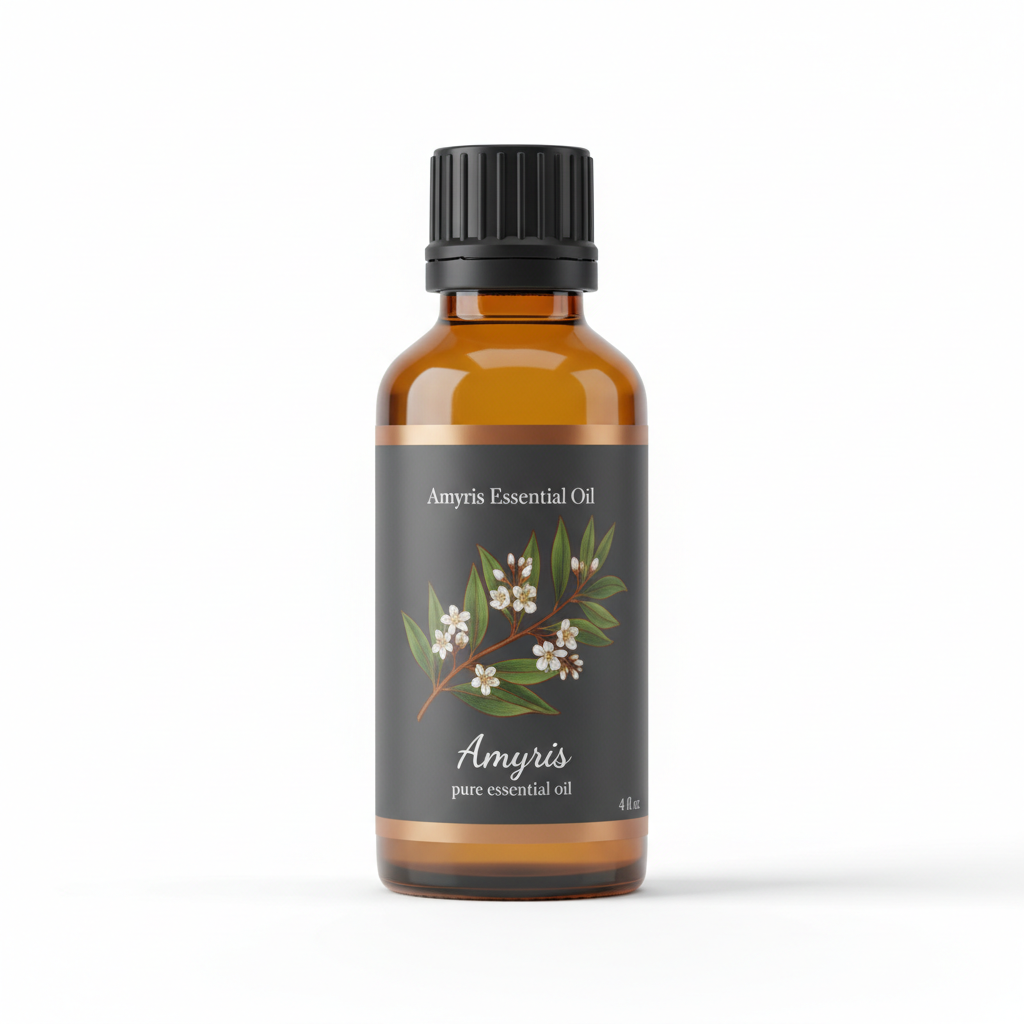
Amyris Essential Oil
Our own Amyris Essential Oil, in sizes from 0.5 oz to bulk.
From $23.99
Shop Now →This guide walks through everything you need to know about how to store amyris oil, what drives its amyris oil shelf life, and how to tell the difference between a bottle that has aged gracefully and one that has genuinely degraded. If you are new to this oil, it is worth starting with a complete introduction to amyris essential oil before diving into storage specifics.
Why Storage Matters More Than You Might Expect
Amyris essential oil is steam-distilled from the wood and branches of Amyris balsamifera, a small tree native to Haiti and other parts of the Caribbean. The oil is dense, viscous, and rich in sesquiterpene compounds, particularly valerianol and elemol. These heavier molecules oxidize far more slowly than the lighter monoterpenes found in oils like lemon or bergamot.
That chemical composition is the reason amyris oil shelf life is measured in years rather than months. But slow oxidation is not the same as no oxidation. Poor storage conditions can still accelerate degradation, compromise the scent profile, and reduce the oil's suitability for cosmetic formulations. Getting storage right protects your investment and keeps the oil performing as expected.
Does Amyris Oil Expire?
The question does amyris oil expire comes up often, and the honest answer is: yes, eventually, but the timeline is generous. Most reputable suppliers list amyris essential oil with a shelf life of four to six years from the date of distillation. Some blenders work with bottles well beyond that window and report the oil remains beautifully complex.
What actually changes as amyris ages is subtle. The fresh distillate can carry a slightly raw, almost milky edge alongside its warm wood and balsamic sweetness. After one to two years in stable storage, that sharpness often rounds out into a richer, creamier base note. This is the same principle that applies to aged sandalwood oil or aged patchouli. Time, in the right conditions, is an asset rather than an enemy.
Oxidation becomes a concern only when the oil has been exposed to repeated heat fluctuations, prolonged light exposure, or excessive air contact. These conditions break down sesquiterpene alcohols over time, producing an off, slightly rancid, or flat odor that signals the oil has passed its peak for aromatic and cosmetic use. You can learn more about the nuances of this oil's scent profile in this detailed breakdown of what amyris essential oil smells like.
What You Will Need
Before walking through the steps, gather the following materials. Most are straightforward, and several you may already have on hand.
- Amber or cobalt blue glass bottles with tight-fitting orifice reducers and caps (original packaging works if intact)
- A cool, dark storage location such as a drawer, cabinet, or dedicated oil box
- Labels or a labeling system with the date of purchase and distillation date if known
- A small notebook or digital log for tracking your inventory
- Nitrogen spray (optional, for long-term storage of partially used bottles)
- A secondary airtight container or zip-seal bag for travel or transport
Step-by-Step: How to Store Amyris Oil Correctly
Step 1: Check Your Bottle Before You Even Open It
When your amyris oil arrives, inspect the bottle carefully. Look for a tight seal, an intact orifice reducer, and no visible cloudiness or sediment beyond the oil's natural slight viscosity. Amyris is thick at room temperature and may appear slightly hazy in cooler conditions. That is normal. What you are looking for is any sign that the bottle was not sealed properly during shipping, which would mean air has already been introduced.
If the supplier includes a distillation date or a batch number, record it immediately. This is your baseline for tracking amyris oil shelf life over time.
Step 2: Choose the Right Container
Amyris essential oil should always be stored in dark glass. Amber is the industry standard for good reason: it filters out the UV wavelengths most likely to accelerate oxidation. Cobalt blue offers similar protection. Clear glass offers almost none.
If you purchase amyris in bulk and decant it for workshop or formulation use, transfer it into appropriately sized amber bottles. A nearly full bottle is better than a half-empty one because less air space means less oxygen contact. When you work through a larger bottle, consider transferring the remaining oil into a smaller vessel to minimize headspace.
Step 3: Seal It Properly Every Time
This step is easy to overlook in the middle of a busy formulation session. Every time you open your amyris bottle, replace the cap firmly and completely before setting it down. A loose cap is an invitation for evaporation and oxidation.
For bottles you use infrequently, consider adding a thin layer of food-grade or cosmetic-grade parafilm around the cap between uses. This creates an additional barrier against air infiltration without altering the oil itself.
Step 4: Store Away from Light and Heat
Find a cool, consistently dark spot. A closed wooden box, a cabinet away from the stove, or a drawer in a room that stays at a relatively stable temperature are all good options. The ideal storage temperature for most essential oils falls between 50 and 65 degrees Fahrenheit (10 to 18 degrees Celsius), though amyris tolerates slightly warmer conditions better than most oils because of its sesquiterpene-rich composition.
Avoid these locations entirely:
- Windowsills or counters exposed to direct sunlight
- Shelves above or beside the stove or oven
- Bathroom medicine cabinets that experience steam and humidity fluctuations
- Car gloveboxes or trunks, especially in summer
Heat cycles, not just sustained heat, are particularly damaging. A bottle that moves repeatedly between warm and cool conditions degrades faster than one kept at a steady, moderate temperature.
Step 5: Keep It Away from Moisture
Pure essential oils and water do not mix, and moisture introduction can compromise your oil over time. Store amyris bottles upright to prevent any contact between the oil and the cap's inner surface, and keep them away from humidity-prone environments. If you live in a very humid climate, a small silica gel packet placed inside your storage box (not in the bottle) can help manage ambient moisture.
Step 6: Use Nitrogen Spray for Long-Term Storage (Optional)
This step is optional but worth knowing if you purchase larger quantities of amyris for formulation use. Nitrogen spray cans, sold in cosmetic and winemaking supply shops, allow you to displace the oxygen in a partially used bottle with inert nitrogen gas before sealing. This dramatically slows oxidation and extends usable life. It is the same principle used for preserving wine after opening.
A quick one-second burst into the bottle before capping is all that is needed. Do not overfill with gas. The goal is simply to displace the oxygen, not to pressurize the bottle.
Step 7: Label and Log Everything
Create a simple log of every bottle you purchase. Note the supplier, the distillation date (if provided), your purchase date, and the date you first opened the bottle. This removes all guesswork when you later want to evaluate whether a bottle is still at its best.
For blenders and formulators who work with multiple bottles simultaneously, a numbered label system tied to a spreadsheet or notebook saves significant confusion over time.
Tips and Common Mistakes to Avoid
Do Not Refrigerate Unless Necessary
Some sources recommend refrigerating essential oils for long-term storage. With amyris, this is generally unnecessary and can actually create a problem. The oil's natural viscosity increases significantly in cold temperatures, making it difficult to pour or measure accurately. Repeated warming and cooling cycles as you take it in and out of the refrigerator introduce more instability than simply keeping it in a cool cabinet.
Do Not Transfer to Plastic
Essential oils degrade plastics over time, and some plastics leach compounds back into the oil. Always use glass or, for very short-term use, high-density polyethylene (HDPE) containers rated for essential oil contact. Even then, glass is the far safer default.
Do Not Ignore the Sniff Test
Your nose is your most reliable quality indicator. Amyris that has stored well should smell warm, woody, slightly sweet, and balsamic. If the oil smells sharp, rancid, musty, or simply flat and thin compared to when you first opened it, it has likely oxidized beyond its best use window for cosmetic applications.
Do Not Assume All Bottles Age the Same Way
The quality of the original distillate matters. Amyris from a reputable supplier who uses proper distillation methods will age more gracefully than a lower-quality oil that contained more water or adulterants to begin with. Sourcing matters as much as storage. Our amyris essential oil FAQ covers common questions about sourcing and quality indicators.
How to Tell If Your Amyris Oil Is Still Good
Run through this quick evaluation whenever you return to a bottle after an extended break.
- Visual check: The oil should be pale to medium yellow, slightly viscous. Unusual darkening or haziness beyond normal temperature-related thickening warrants a closer look.
- Scent check: Open the bottle and allow it to breathe for thirty seconds before evaluating. Fresh amyris has warm, soft, woody character. Oxidized amyris tends to smell dull or slightly acrid.
- Consistency check: If the oil has thickened substantially beyond its usual viscosity even at room temperature, this can indicate significant evaporation or partial solidification of heavier compounds. Gentle warming in your palm for a minute should loosen it. If it does not, the oil may have changed considerably.
A bottle that passes all three checks is still a pleasure to work with, even if it is well past its original purchase date.
The Case for Patience with Amyris
There is something satisfying about an oil that rewards you for simply leaving it alone. Most of the fragrance world moves at a frantic pace, always chasing the newest ingredient. Amyris operates on a different timeline. A bottle stored well and allowed to mature over two or three years often delivers a depth of character that newer distillates simply do not have.
That aged quality is part of why amyris holds such a respected position in natural perfumery as a base note and fixative. It anchors other materials, slows their evaporation, and contributes its own quiet, resinous warmth to a blend. Good storage does not just preserve that character. It allows it to develop.
If you are curious about how amyris fits into blending and formulation alongside its scent profile and origins, the articles linked throughout this guide will take you further. Start with the complete introduction if you are still building your foundational knowledge. For those further along, the question of how to store amyris oil is ultimately a question of respecting what the oil already is, and giving it the conditions it needs to become something even better.