Amyris Essential Oil FAQ: Your Top Questions Answered
Amyris essential oil sits quietly at the back of many blenders' shelves, sometimes mislabeled, occasionally underestimated, and almost always underexplained. This amyris essential oil FAQ gathers the questions that come up most often, from first-time buyers wondering about the scent to experienced formulators asking about shelf life and sustainability. Consider this your single, honest reference point.
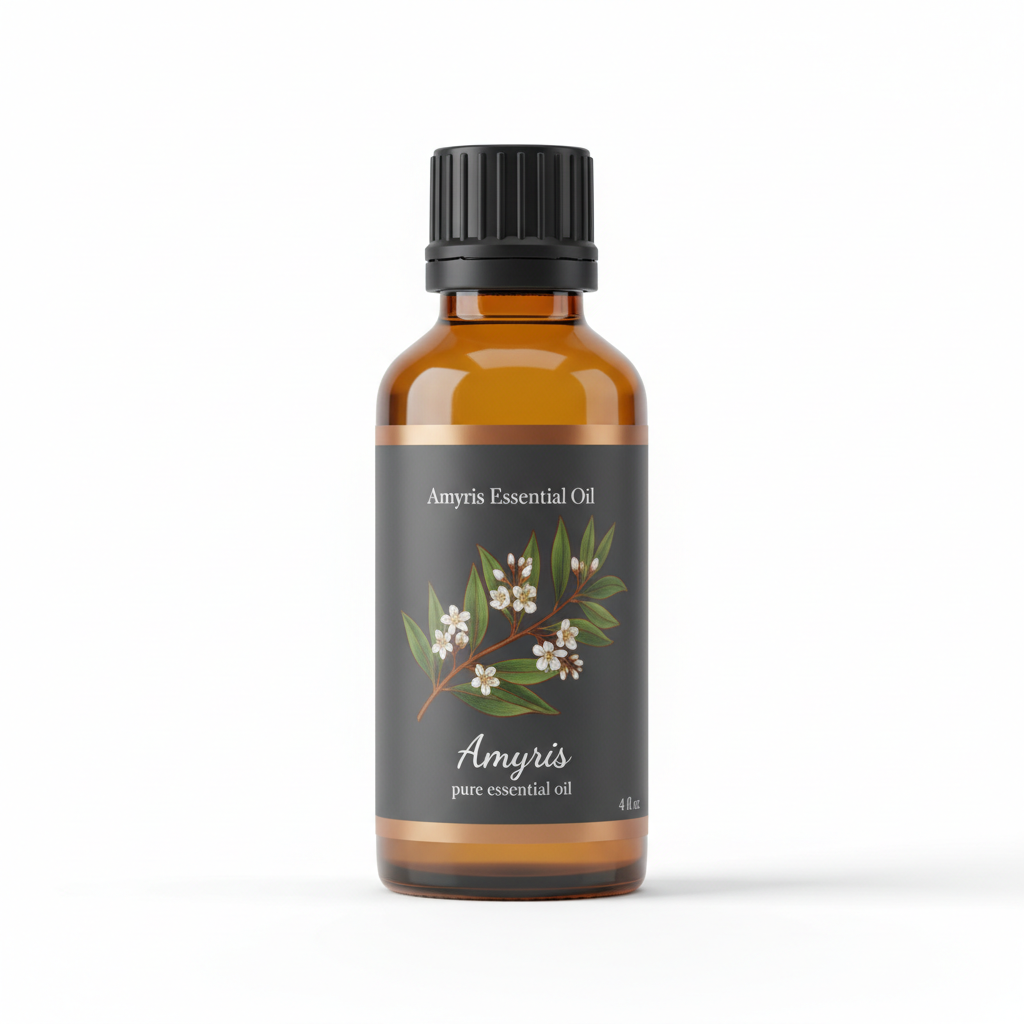
Amyris Essential Oil
Our own Amyris Essential Oil, in sizes from 0.5 oz to bulk.
From $23.99
Shop Now →The Basics: What Amyris Actually Is
What is amyris essential oil?
Amyris essential oil is steam-distilled from the wood and branches of Amyris balsamifera, a small flowering tree native to the Caribbean and Central America. It produces a soft, creamy, woody scent that makes it popular in perfumery and cosmetic formulation. For a full botanical and sourcing overview, see our guide on what amyris essential oil is.
Is amyris the same as sandalwood?
No. Sandalwood amyris essential oil is a nickname used in trade, and the two oils come from entirely different plant families. True sandalwood (Santalum species) is botanically unrelated to Amyris balsamifera. The nickname stuck because amyris carries a similarly warm, creamy, wood-forward scent and has long been used as a more affordable alternative in fragrance work.
Where does amyris come from?
The tree grows primarily in Haiti, the Dominican Republic, and other parts of the Caribbean basin. Haiti is by far the largest producer of amyris oil, and much of the world's supply passes through Haitian distilleries. You can read more about the tree's origins in our article on Amyris balsamifera and the Caribbean torchwood tree.
Why is it called "torchwood"?
Amyris balsamifera earned the common name torchwood because the wood is so resin-rich that it burns readily and was historically used as a torch by local communities. That same resin density is what gives the distilled oil its long-lasting, deep woody character. The nickname is a useful reminder that this is a genuinely resinous botanical, not a light or fleeting wood note.
Scent Profile and Blending
What does amyris essential oil smell like?
The scent is soft, dry, and creamy with a mild sweetness underneath. Most people describe it as warm wood with a faint milky or balsamic undertone. It lacks the sharp, camphoraceous edge of some other wood oils, which makes it approachable for a wide range of formulators. Our detailed amyris scent profile guide breaks down the top, middle, and base impressions in depth.
Is the scent strong or subtle?
Amyris is a relatively quiet oil. It does not project loudly the way cedarwood or black pepper might. Instead, it settles into a blend and adds warmth and depth without competing with other notes. This subtlety is exactly why perfumers value it as a base note and fixative.
What essential oils blend well with amyris?
Amyris pairs naturally with other warm, resinous, or floral oils. Good starting partners include:
- Vetiver (deepens the woody base)
- Ylang ylang (adds floral sweetness)
- Bergamot (brightens the blend)
- Frankincense (adds resinous complexity)
- Rose or geranium (lifts the blend into floral territory)
- Cedarwood (reinforces the wood accord)
- Vanilla CO2 (enhances the creamy undertone)
Start with amyris as a base note at around 10 to 20 percent of your blend and adjust from there.
Can amyris be used as a fixative in perfumery?
Yes, this is one of its most valued roles. Amyris contains sesquiterpene compounds that help anchor lighter, more volatile notes and extend the longevity of a fragrance on skin or in a room. It is a practical, cost-effective option for natural perfumers who want a fixative without using a restricted or endangered botanical.
Does amyris work well in diffusers?
It does, though its quiet nature means it benefits from pairing with a brighter top note in a diffuser blend. On its own, amyris creates a warm, grounding atmosphere that many people find conducive to evening wind-down routines or focused work sessions. Use 3 to 5 drops as a base and build around it with citrus or herbal notes for variety.
Quality and Sourcing
How can I tell if my amyris oil is good quality?
Look for a supplier that provides a GC/MS (gas chromatography/mass spectrometry) report for the specific batch. A quality amyris oil should show a dominant sesquiterpene profile, with compounds such as valerianol and eudesmol appearing prominently. The oil should be viscous, pale yellow to golden in color, and free from any sharp or solvent-like off-notes.
Is amyris often adulterated?
Adulteration is a known issue in the amyris oil market. Because the oil is already affordable relative to true sandalwood, adulteration is less financially motivated than with pricier oils, but synthetic extenders and lower-quality wood distillates do appear. Buying from suppliers who publish batch-specific GC/MS reports is the most reliable way to verify what you are getting.
Is amyris essential oil sustainable?
This is a nuanced question. Amyris balsamifera is not currently listed as an endangered species, unlike true sandalwood, and it grows relatively quickly compared to slow-maturing tropical hardwoods. That said, unmanaged wild harvesting in Haiti has raised some concerns among sustainability advocates. Look for suppliers who source from operations that replant and manage their groves responsibly.
What should a bottle of amyris essential oil cost?
Amyris is one of the more affordable woody essential oils on the market. Retail prices typically range from roughly $5 to $20 for a 10 ml bottle, depending on the supplier's sourcing standards, testing transparency, and brand positioning. If a price seems unusually low even by amyris standards, it is worth asking for a GC/MS report before committing to a large purchase.
Safety and Dilution
Is amyris essential oil safe to use on skin?
Amyris is generally considered well-tolerated by most adults when properly diluted in a carrier oil before skin contact. It is not intended for use undiluted. As with any essential oil, patch testing before broader application is always the sensible first step.
What is the recommended dilution rate for amyris in skincare?
For body products such as lotions and massage oils, a 1 to 2 percent dilution is a common starting point. For facial products, staying at or below 1 percent is generally considered more appropriate. Given amyris's viscosity, measure carefully and shake or stir your blend well before use.
Can amyris essential oil be used during pregnancy?
There is not enough well-documented research on amyris use specifically during pregnancy to offer a confident recommendation either way. The cautious approach is to avoid non-essential aromatic product use during the first trimester and to consult a qualified healthcare provider or midwife before use at any stage of pregnancy.
Is amyris safe for children?
Essential oils require extra care around young children, and amyris is no exception. If you do use it in a child-friendly diffuser blend or diluted product, a significantly lower concentration (0.5 percent or less for children over two) is the conservative approach followed by many formulators. Always keep undiluted essential oils out of reach of children, and seek guidance from a pediatric healthcare provider if you are unsure.
Can amyris cause skin sensitization?
Sensitization from amyris is considered uncommon, but no essential oil is entirely without risk for every individual. People with known sensitivities to wood-based botanicals or those with reactive skin should patch test carefully. Stop use and consult a healthcare provider if any irritation or reaction occurs.
Practical Use and Formulation
What carrier oils work well with amyris?
Amyris blends comfortably with most carrier oils. Jojoba, fractionated coconut, and sweet almond oil are popular choices for body and massage formulations. For richer skincare products, rosehip or marula oil can add their own beneficial fatty acid profiles alongside amyris's aromatic contribution.
How do I use amyris in a homemade candle or wax melt?
Amyris is well-suited to candle work because its naturally high resin content gives it reasonable scent throw in wax. A typical starting point is 6 to 10 percent fragrance load in soy wax, though you should always follow your specific wax manufacturer's guidelines. Pair with a citrus or lighter wood note to ensure the scent reads clearly once the wax is warm.
Does amyris work in cold-process soap?
Yes, and it behaves better than many essential oils in the high-pH environment of cold-process soap making. Its heavy sesquiterpene composition makes it relatively stable through saponification. Many soap makers use it as a natural wood base note at 1 to 2 percent of the total oil weight, often blending it with a brighter citrus or herbal note to round out the bar.
Can amyris be used in hair care products?
It shows up in rinse-off conditioners, scalp oils, and hair serums as a scent component. Properly diluted in a carrier oil, it can be incorporated into pre-shampoo scalp oils or finishing serums. Keep dilution rates appropriate (1 to 2 percent in a leave-on product) and avoid applying undiluted oil directly to the scalp.
Storage and Shelf Life
How long does amyris essential oil last?
Amyris has a notably long shelf life compared to many essential oils. Its high sesquiterpene content and low volatility mean it oxidizes slowly. Stored correctly, a bottle of quality amyris oil can remain in good condition for four to six years or longer. This is one of the practical advantages of working with heavier wood-based oils.
How should amyris essential oil be stored?
Store it in a dark glass bottle (amber or cobalt) away from direct sunlight, heat sources, and humidity. A cool, stable environment is ideal: a cupboard or drawer works well. Keeping the cap tightly closed after each use will slow oxidation further and help the oil maintain its aromatic quality over time.
How do I know if my amyris oil has gone off?
Oxidized amyris will often develop a flatter, slightly stale, or sharp edge to its scent where fresh oil is smooth and creamy. The viscosity may also change, becoming thicker or gummy in older or poorly stored samples. If the scent no longer smells pleasant or has developed an off-note you cannot blend past, it is time to replace the bottle.
Amyris Oil Questions at a Glance
| Topic | Quick Answer |
|---|---|
| Same as sandalwood? | No. Different genus entirely. Similar scent profile only. |
| Typical shelf life | 4 to 6 years when stored correctly |
| Blending role | Base note and fixative |
| Standard dilution (body) | 1 to 2 percent in carrier oil |
| Sustainability status | Not endangered; sourcing practices vary by supplier |
| Primary origin | Haiti and the wider Caribbean basin |
| Price range (10 ml retail) | Approximately $5 to $20 depending on supplier |
Amyris oil questions tend to cluster around the same core concerns: is it real sandalwood, is it safe, and is it worth buying. The honest answers are no, yes with proper dilution, and genuinely yes for anyone who values a grounding, long-lasting wood note in their formulations. It is a quiet oil that rewards patience and a little extra curiosity about what is actually in the bottle.