
How to Spot Low-Quality Amyris Oil: Simple At-Home Checks
Amyris oil occupies a quiet corner of the essential oil world. It is not as famous as sandalwood or as trendy as frankincense, which means it attracts less scrutiny from buyers and, unfortunately, more opportunity for sellers to cut corners. If you have ever opened a bottle and wondered whether you got what you paid for, you are not alone. Adulterated essential oils are more common than most people realize, and amyris is a frequent target because its soft, creamy, woody scent is easy to approximate cheaply with synthetic fixatives or cheaper wood distillates.
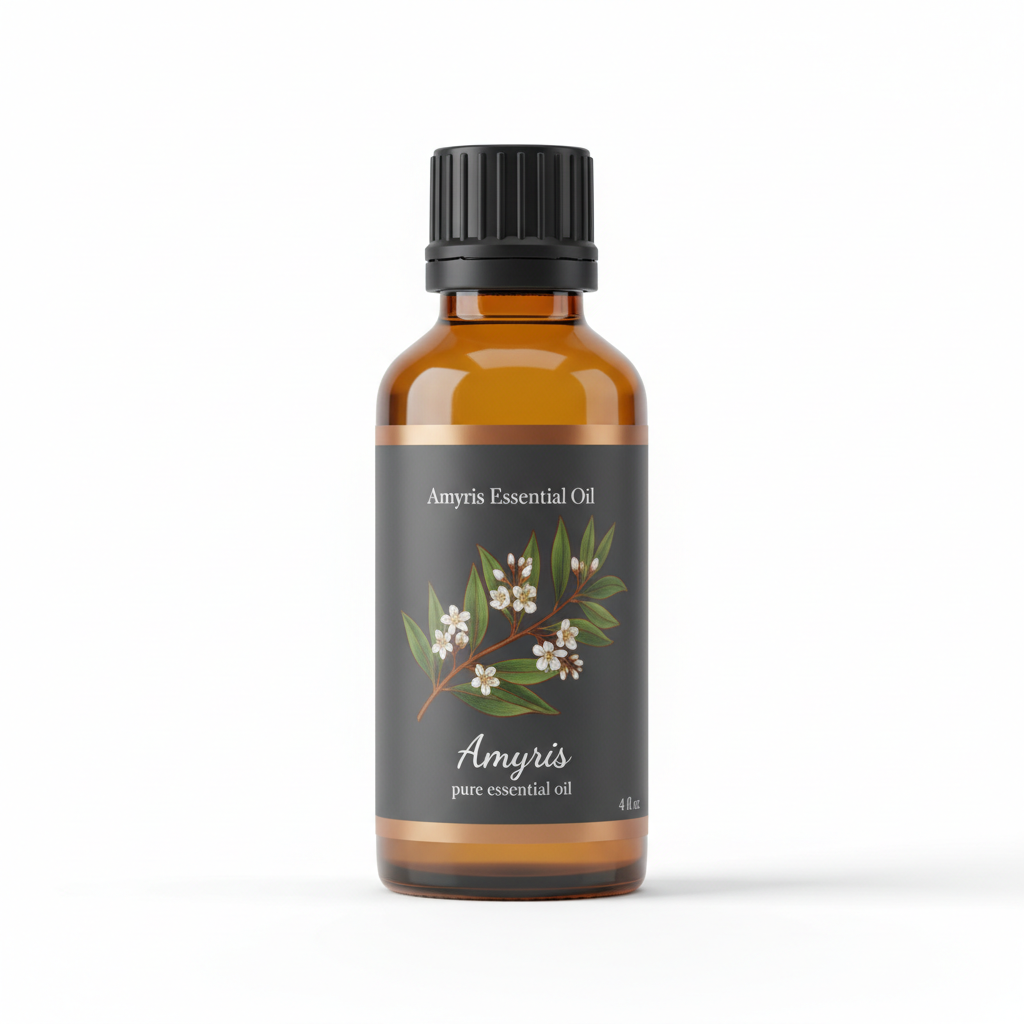
Amyris Essential Oil
Our own Amyris Essential Oil, in sizes from 0.5 oz to bulk.
From $23.99
Shop Now →This guide walks you through a set of practical amyris oil quality tests you can perform at home, without lab equipment. None of these checks are definitive on their own. Together, they build a picture. Think of it as a first-pass audit before you invest in larger quantities or use an oil in a finished product.
Why Amyris Gets Adulterated
Genuine amyris oil is steam-distilled from the wood chips and branches of Amyris balsamifera, a shrub native to Haiti and parts of the Caribbean. The distillation process is slow. The yield is modest. Good sourcing relationships matter. All of that costs money.
Suppliers looking to protect margins sometimes dilute amyris oil with carrier oils such as fractionated coconut or mineral oil. Others blend it with synthetic sesquiterpene compounds, which can mimic the scent profile well enough to fool a casual nose. A third practice involves substituting or extending the oil with cheaper wood distillates from unrelated species. The result looks like amyris oil and, at first sniff, may even smell roughly like it. The difference shows up in texture, behavior, and depth.
To understand more about where genuine amyris originates and what ethical sourcing looks like, read our overview of Haiti and the amyris trade. That context helps you ask the right questions when you approach a supplier.
What You Need Before You Start
Gather these items before running any of the checks below. Most are already in your home.
- The amyris oil you want to test (a bottle from your current supplier)
- A known reference sample, ideally from a reputable supplier you already trust
- White printer paper or uncoated cardstock (a few sheets)
- A small glass bowl or ceramic dish
- Isopropyl alcohol at 91% or higher (not rubbing alcohol with additives)
- A digital kitchen scale accurate to 0.1 g
- A small graduated glass measuring cup or a 10 ml graduated cylinder
- A clean glass dropper or pipette
- A white paper coffee filter
- A refrigerator
- A notepad for recording observations
You do not need all of these for every test. Pick the checks that match the tools you have available.
The Checks, Step by Step
Check 1: The Paper Evaporation Test
This is the simplest starting point for spotting a carrier oil dilution. Pure essential oils are volatile. They evaporate from paper and leave little to no greasy residue. Carrier oils do not evaporate. They leave a permanent stain.
- Place a sheet of white cardstock on a flat surface at room temperature.
- Using your dropper, apply one small drop of the amyris oil to the paper. Label it with the supplier name and the date.
- If you have a reference sample, apply one drop of that beside it, leaving a few centimeters of space between drops.
- Allow the paper to sit undisturbed for 30 minutes, then check it. Allow it to sit for a full 24 hours before making a final judgment.
- Hold the paper up to a window or bright light source and examine the spot.
What to expect from quality oil: A faint translucent ring may appear initially, but after 24 hours the spot should be largely dry. Amyris is naturally more viscous than many oils, so a very slight residual sheen is not automatically alarming. A pronounced wet, greasy circle that persists after 24 hours is a stronger indicator that carrier oil is present.
Common mistake: Applying too large a drop. A big drop of any liquid will leave more residue. Keep drops small and consistent between samples.
Check 2: The Viscosity and Pour Observation
Genuine amyris oil is notably viscous for an essential oil. It pours slowly, almost lazily, and clings to glass in a way that lighter oils do not. This thickness comes from its high sesquiterpene content, particularly elemol and eudesmol.
- Bring your oil to room temperature. Cold oil is thicker and will skew your observation.
- Hold the bottle upside down briefly and watch the speed at which oil moves toward the cap.
- Apply one drop to the back of your hand and tilt your hand slightly. Note how quickly or slowly the drop moves.
- Compare the same observation with your reference sample if you have one.
What to expect from quality oil: Genuine amyris pours slowly. It moves with the consistency of a light syrup rather than water. If the oil you are testing runs freely and quickly, almost like a lightweight carrier oil, that behavior warrants further investigation.
Common mistake: Testing a cold bottle straight from a cool storage area. Warm your sample to around 20 to 22 degrees Celsius before observing.
Check 3: The Scent Profile and Dry-Down
Scent is subjective, but a trained or careful nose picks up a great deal. Amyris has a distinctive aromatic character: soft, milky wood with a slight sweetness and a subtle waxy depth. It is quieter than sandalwood, less sharp than cedarwood.
- Apply one drop of the oil to a scent strip or the inside of your wrist and smell it immediately. This is the top note impression.
- Wait 15 minutes and smell again. This is the mid-stage, where the heart of the oil begins to reveal itself.
- Wait another 30 to 45 minutes and smell a final time. This is the dry-down, which shows the base character and fixative quality of the oil.
- Repeat the same process with your reference sample on the other wrist, keeping the two separate.
What to expect from quality oil: Good amyris softens and deepens as it dries down. The woodiness becomes warmer and slightly creamier over time. A synthetic substitute often smells sharper and more chemical on first contact, and may fade quickly rather than lingering. An oil heavily cut with carrier oil will often smell muted or flat from the start, with little evolution across the dry-down.
Common mistake: Smelling coffee beans between samples. Coffee is a popular palate cleanser, but research suggests it may not reset your olfactory sense as effectively as simply smelling clean air or the skin on your own inner elbow.
Check 4: The Specific Gravity Estimate
This check requires a scale and a graduated cylinder, but it gives you useful data quickly. Essential oils have known specific gravity ranges. Adulteration with carrier oils or synthetic extenders shifts that range.
The general specific gravity range for genuine amyris oil falls between approximately 0.940 and 0.980 at 20 degrees Celsius. These figures appear in published reference sources including ISO standards for the oil.
- Weigh your empty graduated cylinder and record the weight in grams.
- Carefully fill it to exactly 10 ml with your amyris oil.
- Weigh the cylinder again with the oil inside and subtract the empty weight.
- Divide the weight of the oil (in grams) by 10 to get a rough specific gravity figure.
- Compare this figure to the accepted range above.
What to expect from quality oil: A result within the 0.940 to 0.980 range is consistent with genuine amyris. A result significantly below this range (below 0.900, for example) suggests lighter carrier oil dilution. A result significantly above the range could indicate adulteration with heavier compounds. This test is an approximation at home; professional lab analysis via gas chromatography gives far more precise results.
Common mistake: Not zeroing the scale with the empty cylinder before weighing. Tare properly each time.
Check 5: The Alcohol Solubility Check
Essential oils dissolve readily in high-percentage alcohol. Fixed carrier oils do not dissolve cleanly and create a cloudy or oily mixture.
- Add 1 ml of 91% isopropyl alcohol to a small, clean glass dish.
- Add 1 drop of your amyris oil to the alcohol and swirl gently.
- Hold the dish up to light and observe clarity.
What to expect from quality oil: The mixture should remain clear or become only very slightly hazy. If you see pronounced cloudiness, oily globules floating, or a distinct separation forming, carrier oil dilution is a likely explanation.
Common mistake: Using lower-percentage alcohol such as 70% rubbing alcohol. The water content in lower percentages interferes with the result. Use 91% or higher.
What To Do With Your Results
No single check tells the whole story. If one test raises a flag but the others seem fine, note it and retest. If multiple checks produce concerning results together, that pattern is worth acting on.
A few steps worth taking when results are unclear:
- Contact your supplier and ask directly for a Certificate of Analysis (COA) and a Gas Chromatography and Mass Spectrometry (GC/MS) report. Reputable suppliers provide these without hesitation.
- Cross-reference the GC/MS data against published profiles for Amyris balsamifera. The main constituents should include elemol, eudesmol, and other sesquiterpene alcohols.
- Consider sending a sample to a third-party testing lab if you are purchasing in volume for product formulation. The cost is modest relative to the protection it provides.
For a fuller guide on what documentation to request and how to evaluate supplier claims, visit our resource on how to buy amyris essential oil. It covers questions to ask, red flags to watch for, and how to build a sourcing relationship that holds up over time.
Keeping Perspective on These Tests
Home tests identify obvious adulteration. They are not a substitute for laboratory analysis. An experienced blender who has worked with genuine amyris for years will read these checks more fluently than someone new to the oil. If amyris is new to you, try to source a small verified reference sample first, ideally from a botanical supplier who publishes their GC/MS data openly. That gives you a baseline to compare against.
If you are still choosing which woody oil suits your formulation needs, our starter comparison of woody essential oils places amyris alongside cedarwood, sandalwood, and vetiver so you can understand where each sits in terms of scent, price, and sourcing transparency.
Fake amyris oil and adulterated essential oils are real market problems. The good news is that genuine amyris has a distinctive character that is hard to replicate perfectly. With a consistent testing routine and reliable reference materials, you give yourself a reasonable first line of defense before any bottle makes it into your blends.