Cozy Winter Diffuser Blends with Amyris and Warm Spices
When the days shorten and temperatures drop, there is something deeply satisfying about coming home to a room that smells like a warm, woody retreat. Winter is the season that calls most loudly for the diffuser. Spiced citrus, smoky woods, resinous bases: these are the scents that make January evenings feel intentional rather than just cold.
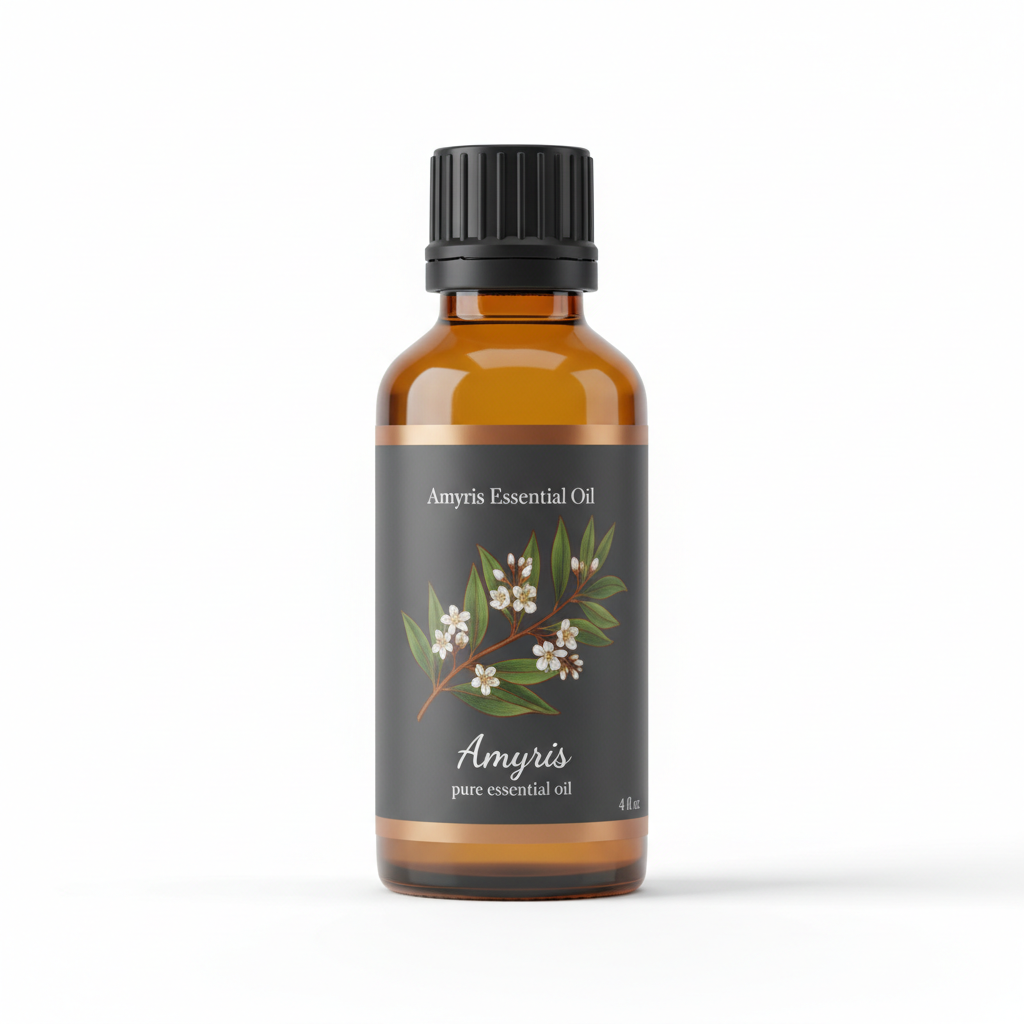
Amyris Essential Oil
Our own Amyris Essential Oil, in sizes from 0.5 oz to bulk.
From $23.99
Shop Now →Amyris essential oil is the unsung hero of winter blending. It is soft, creamy, and unmistakably woody, without the high price tag of sandalwood. If you have not yet built your winter rotation around it, this guide will walk you through exactly how to do that, with six ready-to-use blends and the rationale behind every ingredient choice.
Why Amyris Works So Well in Winter Diffuser Blends
Amyris essential oil (distilled from the wood of Amyris balsamifera, a small Haitian tree) has a scent profile that reads as soft sandalwood with a slight vanilla undertone and a mild, almost milky creaminess. It is a fixative by nature, meaning it slows the evaporation of lighter top and middle notes diffused alongside it. In practical terms, that means your blend lingers longer and smells more cohesive over time.
Winter blending often leans on high-impact notes: clove bud, cinnamon bark, cardamom. These are potent and can tip from cozy to sharp if they are not properly anchored. Amyris provides exactly the kind of soft base that grounds spice-forward blends without competing with them. It lets cinnamon stay warm rather than harsh, and it keeps cardamom smelling like a spiced drink rather than a medicine cabinet.
For a deeper look at how amyris behaves in fragrance compositions, the Amyris in Perfumery: The Ultimate Guide to an Affordable Sandalwood Alternative covers its role as a base note in detail.
A Note on Diffuser Safety and Dilution
Before the recipes: a few practical points worth stating plainly.
- Most ultrasonic diffusers hold 100 to 300 ml of water. The drop counts below are calibrated for a 100 ml fill. Scale proportionally for larger reservoirs.
- Run your diffuser in 30 to 60 minute cycles with breaks in between. Continuous diffusion in an unventilated space is unnecessary and can cause sensory overload.
- Keep pets, particularly cats and birds, out of the diffusion room or ensure it is well ventilated. Many essential oils are not appropriate around animals; consult your veterinarian.
- Spice oils (cinnamon bark, clove bud) are among the more potent in any collection. Use them conservatively, especially in small rooms.
- Pregnant women, nursing mothers, and anyone with respiratory sensitivities should consult a qualified healthcare provider before using essential oil diffuser blends regularly.
Six Cozy Winter Diffuser Blends Featuring Amyris
1. Fireside Evening
This is the blend for a slow Sunday evening. It is smoky and warm without being heavy, and the frankincense adds a contemplative quality that suits long winter nights.
| Essential Oil | Drops (per 100 ml water) |
|---|---|
| Amyris | 4 |
| Frankincense (Boswellia carterii) | 3 |
| Black pepper | 2 |
| Sweet orange | 2 |
Blender's note: Black pepper brings a dry, slightly woody sharpness that pairs beautifully with amyris. The sweet orange lifts the whole blend without making it feel summery.
2. Spiced Library
Cardamom and cedarwood with an amyris base. This one smells like old books, warm leather, and a cup of something spiced. It is the cozy essential oil blend equivalent of a well-worn armchair.
| Essential Oil | Drops (per 100 ml water) |
|---|---|
| Amyris | 4 |
| Cedarwood (Virginian) | 3 |
| Cardamom | 2 |
| Clary sage | 2 |
Blender's note: Clary sage is an underused winter note. It has a slightly nutty, herbaceous quality that works surprisingly well alongside cardamom. If you want something more straightforwardly woody, swap it for vetiver (1 drop only, as vetiver is intense).
3. Winter Citrus Grove
Not every winter blend needs to be heavy. This one stays bright, pairing amyris with the kind of citrus that actually shows up in winter markets: blood orange, pink grapefruit, yuzu if you have it.
| Essential Oil | Drops (per 100 ml water) |
|---|---|
| Amyris | 3 |
| Blood orange (or sweet orange) | 4 |
| Grapefruit | 2 |
| Ginger | 2 |
Blender's note: Ginger adds a spiced warmth that bridges the citrus and the wood without overpowering either. This is a good morning or mid-afternoon blend when you want lift rather than settling.
4. Candlelit Chai
This is the amyris diffuser blend most likely to make a guest walk into your hallway and immediately ask what is in the diffuser. Cinnamon, clove, and star anise are used sparingly to evoke spiced warmth rather than a full-volume spice rack.
| Essential Oil | Drops (per 100 ml water) |
|---|---|
| Amyris | 4 |
| Cardamom | 2 |
| Cinnamon leaf (not bark) | 1 |
| Clove bud | 1 |
| Star anise | 1 |
Blender's note: Use cinnamon leaf rather than cinnamon bark in diffuser blends. Bark oil is far more potent and can be irritating to mucous membranes at higher concentrations. Leaf gives you the warmth with considerably less intensity. The same caution applies to clove bud: one drop is enough.
5. Nordic Forest
Pine, fir, and amyris. This is the winter diffuser blend for people who would rather their home smell like a Scandinavian forest walk than a spice market. It is clean and resinous, with amyris providing depth beneath the evergreen notes.
| Essential Oil | Drops (per 100 ml water) |
|---|---|
| Amyris | 3 |
| Scotch pine (or Siberian fir) | 4 |
| Juniper berry | 2 |
| Eucalyptus globulus | 2 |
Blender's note: Juniper berry is one of the most underrated winter oils. It has a dry, slightly berry-like quality that bridges forest and spice without landing firmly in either camp.
6. Velvet Dusk
This is the evening wind-down blend: deep, quiet, and genuinely beautiful. Patchouli and amyris are natural companions, both earthy and wood-forward. Ylang ylang keeps it from becoming too austere.
| Essential Oil | Drops (per 100 ml water) |
|---|---|
| Amyris | 4 |
| Patchouli | 2 |
| Ylang ylang (complete) | 2 |
| Bergamot (bergapten-free) | 2 |
Blender's note: Ylang ylang is potent and floral. Two drops in 100 ml of water is the ceiling for most people. If you find it overpowering, drop to one drop and increase amyris to five. Bergapten-free bergamot is specified here because it removes the photosensitizing compound, which is not relevant for diffusion but is good practice to specify for accuracy.
How to Build Your Own Amyris Diffuser Blend
The blends above are starting points, not rules. Once you understand the structural logic, you can build your own winter diffuser blends with confidence.
Think in three layers:
- Base (2 to 4 drops): Amyris is your anchor. You can supplement it with vetiver, patchouli, or cedarwood for additional depth.
- Middle (2 to 3 drops): This is where warmth lives. Cardamom, frankincense, clary sage, ginger, black pepper. Choose one or two.
- Top (2 to 3 drops): The first thing you smell, and the first to fade. Citrus oils, pine, juniper, eucalyptus. These brighten and lift the blend.
The total drop count for a 100 ml diffuser sits comfortably between 6 and 10 drops. More than that and the blend becomes muddled; the individual notes lose definition.
Keep a small notebook near your diffuser. Jot down what you used, in what quantities, and your honest first impression. Blending intuition builds faster when you have a record to return to.
Seasonal Variations to Try
Winter is not a single mood. The blends appropriate for a festive December gathering are different from what suits a grey January afternoon or a February evening when spring feels impossibly far away.
Early winter (November to December): Lean into brightness and festivity. Citrus, cinnamon leaf, fir needle, cardamom. Amyris in the base keeps things grounded without weighing down the celebratory energy.
Deep winter (January to February): Go richer and quieter. Patchouli, frankincense, vetiver, amyris. These are the blends for long evenings and slower mornings.
Late winter (late February into March): Start introducing lighter woods and greener notes. Amyris with a touch of rosemary or geranium bridges the gap between winter depth and early spring freshness.
Sourcing Amyris for Diffusion
Quality matters more than many buyers expect with amyris. The oil should smell clean, softly woody, and faintly creamy. Poorly distilled or adulterated amyris can smell flat, slightly synthetic, or oddly sour. Look for suppliers who provide GC/MS reports and who source from Haiti, where the majority of reputable amyris oil originates.
Amyris is sometimes compared to cedarwood and ho wood as a sandalwood substitute, each with a distinct character. If you are weighing your options for a winter blend, the comparison in Sandalwood Alternatives Compared: Amyris, Cedarwood, and Ho Wood lays out the differences in scent, longevity, and use case clearly.
For the direct comparison that most buyers eventually want to make, Amyris vs. Sandalwood Oil: Scent, Price, and When to Use Each addresses how to choose based on your actual needs and budget.
Storing Your Winter Blends
If you find a combination you love, pre-blend a small batch in a dark glass bottle. Label it with the formula and the date. A well-stored essential oil blend in a sealed amber or cobalt bottle, kept away from heat and direct light, holds its character for several months. This makes your diffusing ritual faster and more consistent: open, add water, drop in your blend, done.
Winter mornings are not the time to be measuring drops. Make the good habit easy.
The diffuser is one of the simplest ways to shape the atmosphere of your home. With amyris as your foundation and warm spices layered thoughtfully around it, your winter evenings can smell as considered as they feel. Start with one blend from the list above, adjust it to your preference, and let the season unfold one aromatic layer at a time.