Amyris Essential Oil Bottle Sizes: Which One Should You Order First
Picking up a bottle of amyris essential oil for the first time sounds simple enough. Then you open a supplier's product page and find six size options, three grades, and prices that range from suspiciously cheap to eye-wateringly expensive. The question isn't just which size to buy. It's which size makes sense given how you plan to use it, how confident you are in the supplier, and whether you're likely to reach for it every week or once in a while.
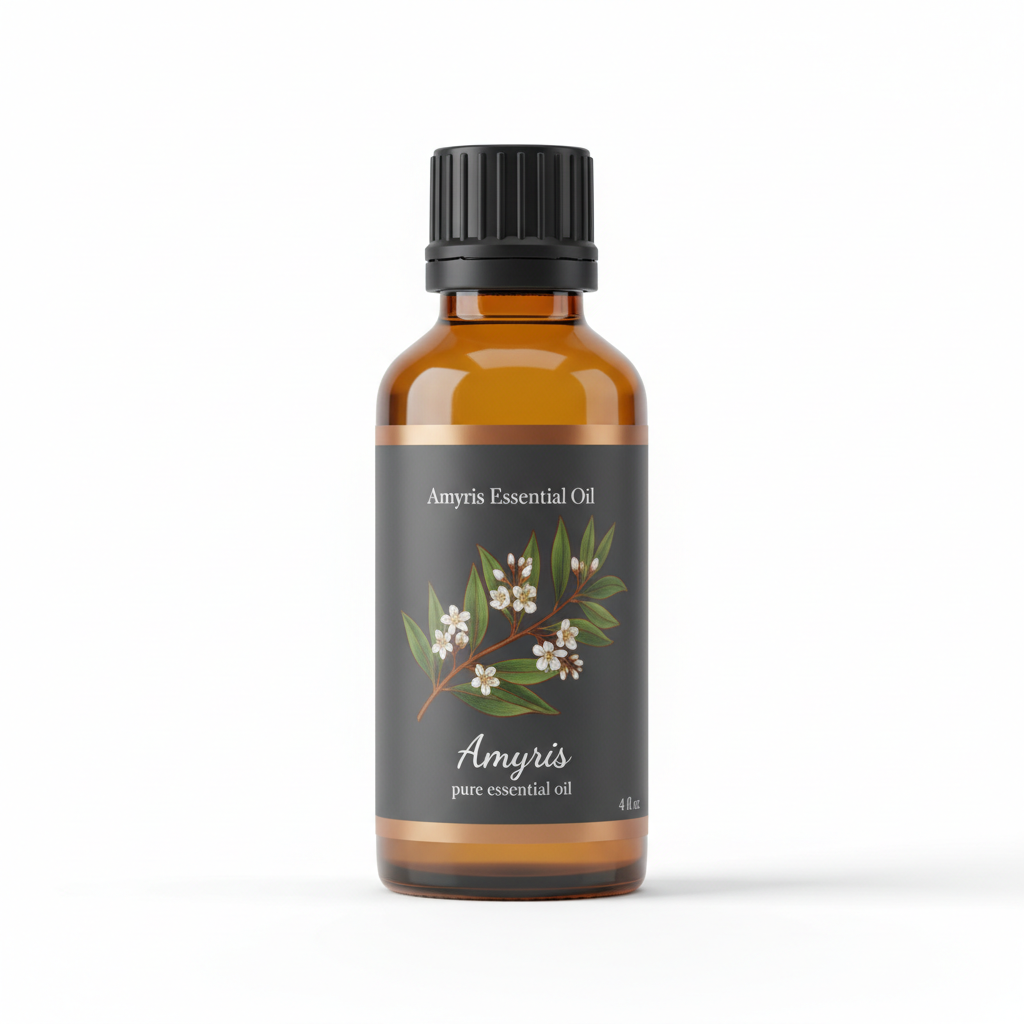
Amyris Essential Oil
Our own Amyris Essential Oil, in sizes from 0.5 oz to bulk.
From $23.99
Shop Now →This guide walks through every major amyris oil size category, explains what quality signals to look for before you order, and flags the patterns that suggest a product isn't worth your money. By the end, you'll know exactly which essential oil bottle size fits your situation right now.
A Quick Word on What Amyris Actually Is
Amyris (Amyris balsamifera) is a woody shrub native to Haiti and other parts of the Caribbean. The essential oil is steam-distilled from the wood and branches, which gives it a soft, creamy, sandalwood-adjacent scent without the endangered-species concerns that come with true sandalwood sourcing. It's used widely in perfumery as a base note and fixative, and it blends beautifully into body oils, beard balms, wood-scented candles, and soap.
Because amyris oil is relatively affordable compared to other woody base notes, it's genuinely worth buying a larger amount once you've confirmed a supplier you trust. The trick is confirming that trust first.
Quality Indicators: What to Look for Before You Pick a Size
The bottle size conversation only matters if the oil inside is worth buying. Here are the quality signals that apply regardless of how much you're ordering.
Gas Chromatography (GC/MS) Testing
A reputable supplier will provide a GC/MS report for each batch. This analysis identifies the chemical constituents in the oil and their percentages. For amyris, you'd expect to see sesquiterpene alcohols (particularly elemol and eudesmol) as primary components. If a supplier can't or won't share this data, that's worth noting before you commit to a large purchase.
Botanical and Origin Information
Look for the full botanical name (Amyris balsamifera), the country of origin (Haiti is the most common and most reputable source), the plant part used (wood), and the extraction method (steam distillation). Any listing that omits these details is giving you less information than you need to assess quality.
Packaging
Amyris oil, like all essential oils, degrades when exposed to light and heat. It should be packaged in dark amber or cobalt blue glass. Clear glass bottles are a red flag, and plastic is unsuitable for undiluted essential oils. A tight-fitting orifice reducer and a tamper-evident seal are both good signs in a retail product.
Aroma Profile
Quality amyris has a soft, slightly milky woodiness with faint vanilla undertones. It's rounder and less sharp than cedarwood. If a sample smells harsh, solvent-like, or has a chemical edge, the oil may be adulterated or poorly distilled. Many suppliers offer sample sizes for exactly this reason.
For a deeper look at sourcing and quality evaluation, see our complete quality guide to buying amyris essential oil.
Amyris Oil Sizes: The Full Breakdown
Essential oil bottle sizes follow a fairly consistent pattern across the industry. Here's how each size category works for amyris specifically.
Sample Sizes (1 ml to 2 ml)
These tiny vials are primarily for scent evaluation. If you're considering amyris for a new fragrance blend or want to compare two supplier versions side by side, a sample is the right starting point. You won't be able to do much formulation work with 1 ml, but you will know whether the aroma suits your project before spending more.
Some suppliers include samples with larger orders or sell them as part of a discovery set. If a supplier doesn't offer samples at all, that's not necessarily a red flag, but it does mean you're taking on more risk with a first purchase.
5 ml Bottles
The 5 ml bottle is a solid first purchase for hobbyist blenders and those new to amyris. It gives you enough oil to experiment with dilution ratios in a carrier, test it in a few candle batches, or build a couple of small perfume trials. At this size, the per-milliliter cost is higher than buying in bulk, but the commitment is low.
If you're adding amyris to a personal skincare blend at a 1 to 2 percent dilution, a 5 ml bottle will last quite a while. It's also the easiest size to travel with.
10 ml Bottles
The 10 ml bottle is arguably the most popular size for serious hobbyists and small-batch makers. It's enough to put amyris through its paces across multiple formulas without the pressure of using it up quickly. Price per milliliter starts to become more favorable here, and most quality suppliers stock this size consistently.
If you're not sure whether you love working with amyris but want more than a token amount to test, 10 ml is the right call.
30 ml (1 oz) Bottles
At 30 ml, you're in regular-use territory. This size makes sense for formulators who have already confirmed they like a particular supplier's amyris and plan to include it as a recurring ingredient. Candle makers, soap makers, and body care formulators who produce small runs for craft markets or personal use will find this size practical and cost-effective.
The price-per-ml drop from 10 ml to 30 ml is usually meaningful, often in the range of 20 to 35 percent depending on the supplier.
100 ml (3.38 oz) Bottles
This is where hobbyist use ends and professional small-batch production begins. A 100 ml bottle of amyris is appropriate for anyone making regular batches of product for sale or for a household with multiple amyris fans. Storage matters more at this size: keep it in a cool, dark cabinet and use it within two years of the distillation date (not the purchase date, if you can get batch information).
Wholesale and Bulk Quantities (250 ml and Above)
Bulk amyris oil typically starts at 250 ml, with common sizes continuing through 500 ml, 1 kg, and kilogram quantities well above that. These sizes are for manufacturers, professional perfumers, and larger small-batch brands. Per-unit cost drops significantly, but the investment requires confidence in both the supplier and your own usage volume.
For a thorough look at bulk purchasing, including minimum order quantities and supplier vetting at scale, see our wholesale amyris oil buying guide for makers.
Top Picks at Different Price Points
Rather than naming specific brands (supplier quality and availability shift over time), here's a framework for evaluating options at three general price tiers.
Budget Tier: Under $10 for 10 ml
Amyris is not an expensive oil, so very low prices are achievable with honest products. That said, bottles in this range warrant extra scrutiny. Check for GC/MS availability, read reviews that comment specifically on scent accuracy, and look for botanical transparency. Some budget options are genuinely good; others are diluted in a carrier or blended with cheaper wood oils without disclosure.
Mid-Range Tier: $10 to $25 for 10 ml
This is where most reputable retail essential oil brands land for a quality 10 ml amyris. At this price, you should reasonably expect full botanical labeling, batch-specific GC/MS reports either included or available on request, dark glass packaging, and a clear distillation or best-by date. This tier is the safest starting point for a first amyris essential oil bottle purchase.
Premium Tier: Above $25 for 10 ml
Premium pricing on amyris usually reflects either exceptional sourcing transparency (direct relationships with Haitian distillers, certified organic status, or artisan small-batch distillation) or high overhead retail packaging. Both can be legitimate. Ask what specifically justifies the price: organic certification, direct trade sourcing, and third-party testing are verifiable. Attractive branding alone is not.
For a detailed price-versus-value analysis across supplier categories, our amyris oil cost and value breakdown covers the full picture.
Red Flags to Avoid
- No botanical name on the label. If the product just says "amyris oil" without Amyris balsamifera listed, the supplier is not giving you complete information.
- Clear glass bottles. Light degrades essential oils. A supplier using clear glass for undiluted oil is either cutting costs or unaware of basic storage chemistry.
- "Fragrance oil" or "blend" language buried in the fine print. Amyris fragrance oil is a synthetic product. It is not the same as amyris essential oil. Read listings carefully.
- No GC/MS data available, even on request. Reputable suppliers test their batches. If this information simply doesn't exist, you can't verify what you're buying.
- Prices wildly below the market average for a given size. Amyris is affordable, but it's not free to distill and ship. Extremely low prices often signal adulteration or mislabeling.
- Vague origin information. "Imported" or "natural origin" without a country and plant-part specification is not enough detail for an ingredient you're formulating with.
Where to Buy Amyris Essential Oil
Your best options depend on your volume needs and how much supplier vetting you want to do yourself.
Specialty Essential Oil Retailers
Companies that focus exclusively on essential oils tend to offer the most transparent sourcing information and the most consistent GC/MS documentation. They also tend to stock a wider range of sizes, from 1 ml samples up to 500 ml. This is the best starting point for most buyers.
General Natural Products Retailers
Large natural products retailers and health-focused grocery chains sometimes carry a small selection of essential oils, including amyris. Selection is usually limited to retail sizes (5 ml and 10 ml), and sourcing transparency varies widely by brand. These can be convenient for a first purchase but rarely offer the batch documentation that specialty suppliers provide.
Online Marketplaces
Marketplaces like Amazon host both reputable essential oil brands and less scrupulous sellers side by side. If you buy through a marketplace, look for listings that direct you to the brand's own GC/MS documentation rather than relying on marketplace reviews alone. Verified brand storefronts within those marketplaces offer more accountability than third-party resellers.
Wholesale and B2B Suppliers
For bulk sizes, B2B essential oil suppliers and raw material companies are typically the most cost-effective route. Most require a business account or minimum order. See the wholesale buying guide linked above for more on navigating this channel.
So: Which Size Should You Order First?
Here's a straightforward way to decide.
| Your Situation | Recommended First Size |
|---|---|
| New to amyris, want to evaluate the scent | 1 ml to 2 ml sample |
| Hobbyist blender, first amyris purchase | 5 ml or 10 ml |
| Confirmed fan, regular personal use | 10 ml to 30 ml |
| Small-batch maker producing for sale | 30 ml to 100 ml |
| Professional formulator or manufacturer | 250 ml and above (wholesale) |
Start one size smaller than you think you need if you haven't tried this particular supplier before. Amyris is a gentle, forgiving base note to work with, and the cost of a 10 ml trial is low enough that even a disappointing batch won't sting too much. Once you find a supplier whose oil smells right and whose documentation checks out, moving up to a 30 ml or 100 ml purchase becomes a straightforward, confident decision.
The amyris essential oil bottle sitting on your shelf should earn its place there. Take the extra ten minutes to vet your first purchase, and the larger orders that follow will feel a lot less like a gamble.