
Amyris Oil for Skin: Cosmetic Uses in Lotions and Body Oils
Amyris essential oil has a quiet reputation. It does not announce itself the way citrus or peppermint oils do. Instead, it settles into a formula with a soft, woody warmth that lingers on the skin for hours. That staying power, combined with its relatively affordable price point compared to true sandalwood, makes it a genuinely useful ingredient in homemade lotions and body oils.
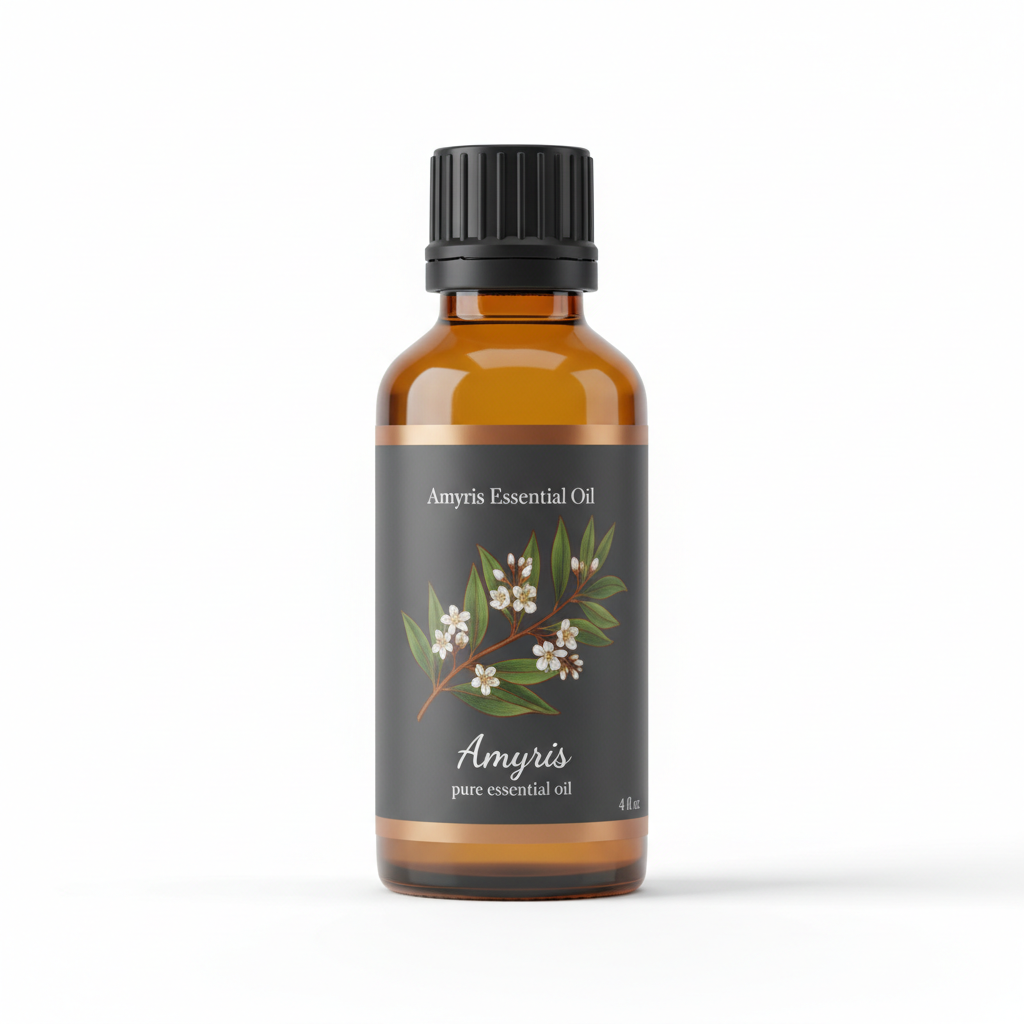
Amyris Essential Oil
Our own Amyris Essential Oil, in sizes from 0.5 oz to bulk.
From $23.99
Shop Now →This guide walks through the practical side of working with amyris in cosmetic applications: what materials you need, how to build a basic body oil and a richer lotion, and where beginners tend to go wrong. If you are new to the oil itself, start with our overview on what amyris essential oil is and where it comes from before diving into recipes.
Why Amyris Works Well in Skin-Care Formulations
Amyris balsamifera is steam-distilled from the wood and branches of a small tree native to the Caribbean, particularly Haiti. The resulting oil is pale yellow and viscous, noticeably thicker than most essential oils. That texture is your first clue about how it behaves in a formula.
Because amyris is rich in sesquiterpene alcohols, particularly valerianol and eudesmol, it blends smoothly into carrier oils and emulsions without sitting on top or feeling greasy. It functions beautifully as a fixative, meaning it slows the evaporation of lighter aromatic notes in a blend. Add a few drops to a formula containing bergamot or lavender, and those brighter top notes will linger noticeably longer on warm skin.
From a cosmetic standpoint, formulators value it for its skin feel, its fixative quality, and its compatibility with nearly every carrier oil and wax on the market. Some users also note that it contributes a subtle softening sensation to finished products, though individual results vary and depend heavily on the other ingredients in your formula.
For a deeper look at the history behind this wood and why it earned the nickname "candlewood," visit our piece on the history of amyris, candlewood, and torchwood.
Safety First: What You Need to Know Before You Start
Essential oils are potent. Amyris is considered one of the gentler options in the aromatic palette, but that does not mean it can be applied undiluted to skin. Always dilute it in a carrier oil or lotion base before any skin contact.
- Standard dilution for body products: 1 to 2 percent for daily-use body oils and lotions. That works out to roughly 6 to 12 drops of essential oil per 30 ml (1 ounce) of carrier.
- Patch testing: Apply a small amount of your finished blend to the inner forearm and wait 24 hours before wider use. Look for redness, itching, or any unusual reaction.
- Pregnancy and specific health situations: Consult a qualified healthcare provider before using any essential oil if you are pregnant, nursing, or managing any health concern.
- Pets: Keep finished products away from cats and dogs. Essential oils can be harmful to animals even at low concentrations.
For a thorough breakdown of dilution math and patch-testing protocol, read our dedicated guide on amyris oil safety basics, dilution, and pets.
Recipe 1: Simple Amyris Body Oil
This is the easiest entry point into working with amyris essential oil for skin. A body oil requires no emulsification, no preservatives, and very little equipment. It is ideal for applying after a shower when skin is still slightly damp, which helps lock in moisture.
Materials and Ingredients
- 60 ml (2 ounces) carrier oil (jojoba, sweet almond, or fractionated coconut oil are all excellent choices)
- 12 to 24 drops amyris essential oil (for a 1 to 2 percent dilution)
- Optional: 6 drops of a complementary essential oil such as cedarwood, vetiver, or lavender
- A dark glass bottle (2-ounce amber or cobalt dropper bottle works well)
- A small funnel
- A label with the date and contents
Step-by-Step Instructions
- Choose your carrier oil. Jojoba is technically a liquid wax and has an exceptionally long shelf life, making it a smart base for any body oil you plan to use over several months. Sweet almond oil is slightly richer and suits drier skin types. Fractionated coconut oil absorbs quickly and leaves minimal residue.
- Measure your carrier oil. Pour 60 ml into your glass bottle using a small funnel. Work slowly to avoid spills. Essential oil stains fabric and can damage certain surfaces.
- Count your drops carefully. Add amyris essential oil one drop at a time using the orifice reducer on the bottle or a clean pipette. For a 1 percent dilution, use 12 drops. For a 2 percent dilution, use 24 drops. If you are adding a secondary essential oil, reduce amyris accordingly to stay within total dilution limits.
- Cap and roll. Secure the cap tightly and roll the bottle gently between your palms for about 30 seconds. Rolling (rather than shaking) helps blend the oils without introducing air bubbles.
- Label immediately. Write the date, ingredient names, and dilution percentage on the label before you forget. A body oil made with jojoba will keep well for up to 12 months if stored in a cool, dark spot.
- Patch test before full use. Apply two to three drops to your inner forearm and wait 24 hours. If no reaction occurs, you are ready to use the oil on larger areas.
How to Use It
After bathing, pat skin until it is just slightly damp rather than fully dry. Dispense four to six drops of the body oil into your palm, rub your hands together to warm it, and massage it into skin using long upward strokes. The amyris note will deepen as the oil warms against your body. Many people find it especially pleasant as part of an evening wind-down routine because the woody, balsamic scent feels settled and grounding.
Recipe 2: Amyris and Shea Butter Body Lotion
A body oil is simple, but a lotion brings water into the equation. That means you need an emulsifier to hold oil and water together, and a broad-spectrum preservative to prevent microbial growth in the finished product. This recipe uses an all-in-one emulsifying wax for accessibility.
Materials and Ingredients
- 70 g distilled water (or rose hydrosol for a softer scent profile)
- 15 g emulsifying wax NF (widely available from cosmetic suppliers)
- 10 g shea butter (refined or unrefined; refined has a more neutral scent that lets amyris shine)
- 5 g jojoba oil
- 1 g broad-spectrum preservative (Optiphen, Leucidal Liquid, or similar: follow the supplier's usage rate exactly)
- 12 drops amyris essential oil (approximately 0.5 ml; adjust to stay within a 1 percent total dilution)
- Optional: 6 drops complementary oil such as frankincense or bergamot
- A kitchen scale accurate to 0.1 g
- Two heat-safe glass beakers or Pyrex measuring cups
- A small whisk or stick blender
- A reliable thermometer
- A sterilized 4-ounce jar or pump bottle
Step-by-Step Instructions
- Sterilize your equipment. Wipe all containers, tools, and your final jar with isopropyl alcohol (70 percent) and allow them to air-dry completely. This step is non-negotiable when you are making a water-containing product.
- Build your oil phase. In one glass beaker, combine the emulsifying wax, shea butter, and jojoba oil. Place this beaker in a double boiler or a pot of simmering water and heat gently until everything is fully melted. Aim for around 70 to 75 degrees Celsius.
- Heat your water phase. In a separate beaker, heat the distilled water (or hydrosol) to the same temperature: 70 to 75 degrees Celsius. Matching temperatures is the key to a stable emulsion.
- Combine the phases. Pour the water phase slowly into the oil phase while stirring continuously with your whisk. Keep stirring. The mixture will turn opaque and begin to thicken as it cools. Use a stick blender in short pulses if you prefer a faster, smoother result.
- Monitor the temperature. Continue stirring as the lotion cools. Wait until it reaches below 40 degrees Celsius before adding your preservative and essential oils. Adding them while the mixture is too hot can degrade both.
- Add the cool-phase ingredients. Stir in your preservative according to the manufacturer's recommended usage rate. Then add your amyris essential oil drops, stirring gently but thoroughly to distribute them evenly.
- Transfer and label. Pour or spoon the lotion into your sterilized jar or pump bottle. Cap it, then label with the date, ingredients, and a use-by date of roughly 3 to 4 months (or per your preservative supplier's guidance). Store at room temperature away from direct sunlight.
Blending Ideas: What Pairs Well with Amyris
One of the pleasures of working with an amyris body oil or lotion is building a scent profile around it. Because amyris reads as soft and woody rather than sharp, it plays well with a wide range of aromatic partners.
| Pairing Oil | Character It Adds | Suggested Ratio (with Amyris as Base) |
|---|---|---|
| Lavender (Lavandula angustifolia) | Floral, calming aromatic note | 50% amyris / 50% lavender |
| Bergamot (expressed, FCF) | Bright citrus lift in the top note | 60% amyris / 40% bergamot |
| Cedarwood (Cedrus atlantica) | Deeper, dryer wood contrast | 50% amyris / 50% cedarwood |
| Vetiver | Earthy, smoky depth | 70% amyris / 30% vetiver |
| Frankincense | Resinous, slightly citrus warmth | 60% amyris / 40% frankincense |
These ratios refer to the proportions of essential oils within your total essential oil portion, not within the finished product. Keep your combined essential oil load within the 1 to 2 percent dilution range regardless of how you blend them.
Common Mistakes to Avoid
Skipping the Patch Test
It bears repeating. Even gentle oils can cause reactions in sensitive individuals. The 24-hour patch test before first use is a small step that prevents a much larger problem.
Measuring by Volume Instead of Weight
Drop counting works well for essential oils, but for butters, waxes, and water, use a kitchen scale. Volume measurements for solid ingredients are inconsistent and can throw off your emulsion ratio.
Adding Essential Oils While the Lotion Is Still Hot
Amyris essential oil contains aromatic compounds that can volatilize at higher temperatures. Adding it above 40 degrees Celsius may diminish the scent in your finished lotion. Patience here is worth it.
Skipping a Preservative in Water-Based Products
A body oil does not need a preservative because it contains no water. The moment you add water, hydrosol, or any water-soluble ingredient, a preservative becomes essential. Unpreserved water-based products can develop problems invisible to the naked eye within days. This is not an optional step.
Storing Finished Products Incorrectly
Heat, light, and air are the enemies of any oil-based product. Store your amyris body oil and lotions in dark glass containers, away from windowsills, and out of steamy bathroom environments if possible. A bedroom dresser or a cool cabinet is a much better spot.
What to Expect from Your Finished Products
The amyris essential oil benefits for skin in a cosmetic context center largely on the sensory experience of the finished product. Your body oil will feel lightweight or rich depending on the carrier you choose. The scent will be quietly present rather than loud: a warm, balsamic woodiness that deepens with skin heat and may persist for several hours, especially if you used jojoba or a heavier carrier.
With the lotion, texture will depend on your emulsifying wax and the ratio of water to oil phase. The amyris note will be somewhat softer in a lotion than in a pure body oil because the water phase dilutes the overall aromatic concentration. Some people prefer this subtlety; others add a few extra drops to compensate.
People who use amyris in their evening skin-care rituals often report that the woody, rounded scent helps signal the body toward a quieter, more settled state of mind. That response is personal and varies, but it is one reason this oil has found a loyal following among those who prefer their bedtime routine to feel intentional rather than just functional.
Amyris is an oil worth getting to know slowly. Start with the simple body oil. Get familiar with its scent character, its texture in the bottle, and how it behaves on your skin. Then move to the lotion when you are ready to explore emulsion-making. The oil is forgiving, the learning curve is gentle, and the results, even from a first batch, tend to be genuinely pleasant.